10 Kitchen Design Principles That Make a Kitchen Feel More Beautiful and Functional
Start With a Kitchen That Feels Effortlessly Balanced
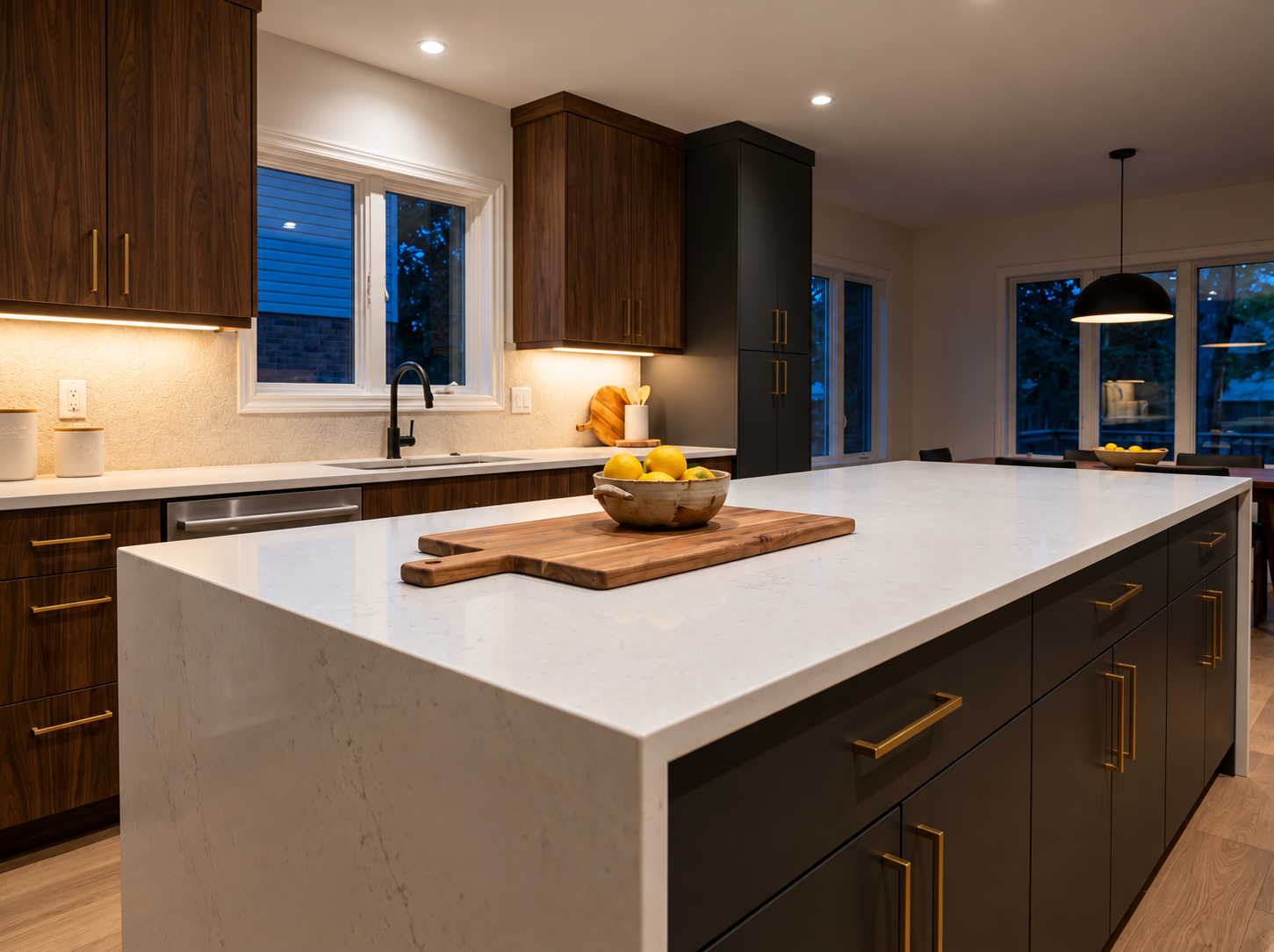
A kitchen that feels genuinely considered is rarely the result of spending more. It comes from understanding what the room needs to feel calm — and having the discipline to stop there. A balanced kitchen design is one where nothing competes for attention and everything earns its place.
The most beautiful kitchens tend to share a similar quality — they feel settled. The eye moves through them without catching on clutter or confusion. That ease is designed, not accidental.
Balance comes from restraint as much as from selection. Every cabinet, surface, and object should contribute to a single, unified mood rather than introduce a new one.
Key Points
Make the Layout Work With Your Everyday Life
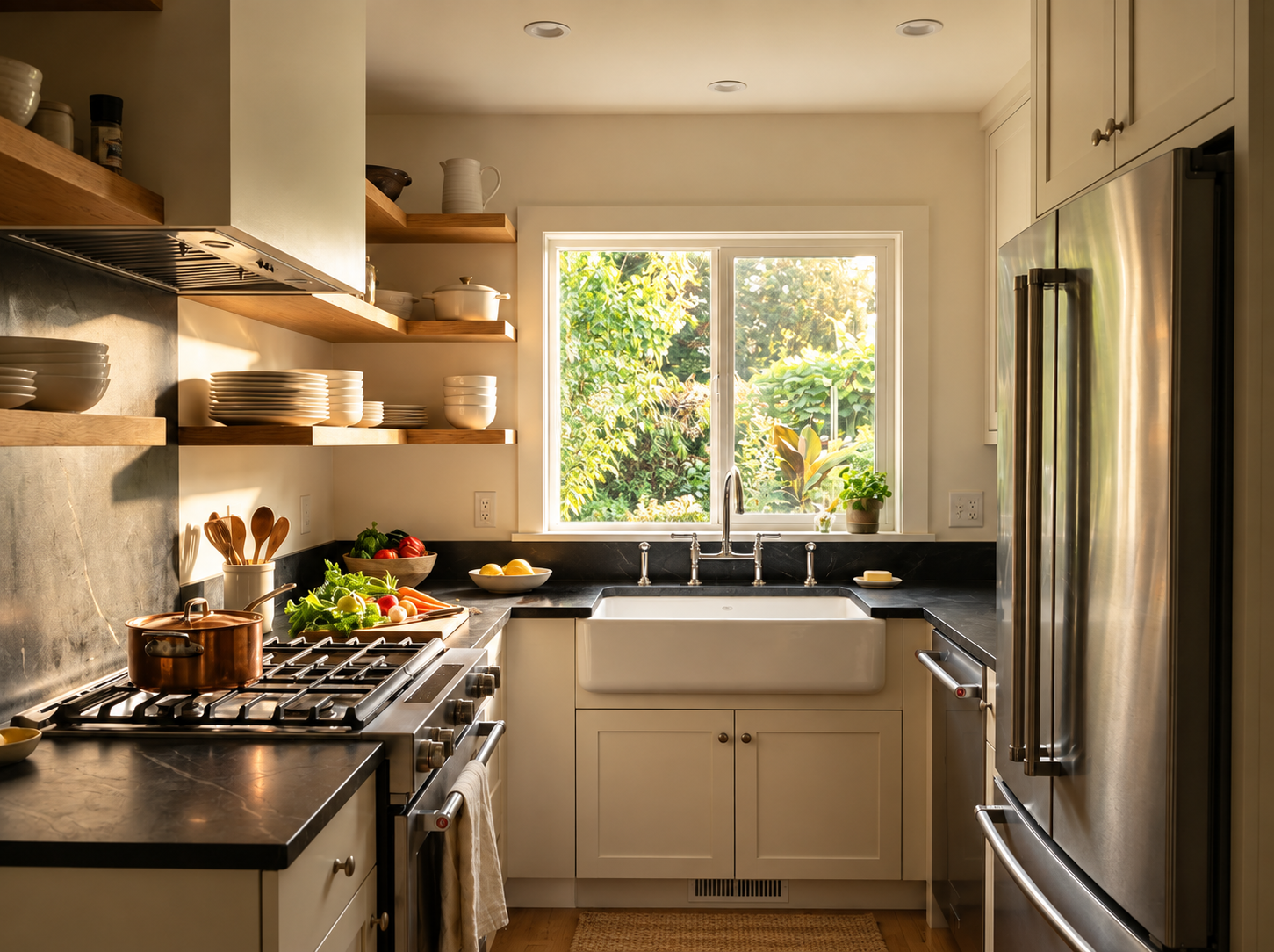
The best kitchen layouts are never theoretical. They are designed around actual patterns — where you stand when you cook, how you move between the sink and the stove, where things naturally tend to land. A kitchen layout that works with your daily life removes friction without your ever having to think about it.
Consider the path between your three most-used points — the refrigerator, the sink, and the hob. When those three are arranged in a natural triangle, cooking stops feeling like a series of interruptions and starts feeling like a sequence.
Storage positioned along those natural routes makes the biggest difference. The things you reach for most should require the least effort to access.
Let Open Shelves Add Warmth, Not Clutter
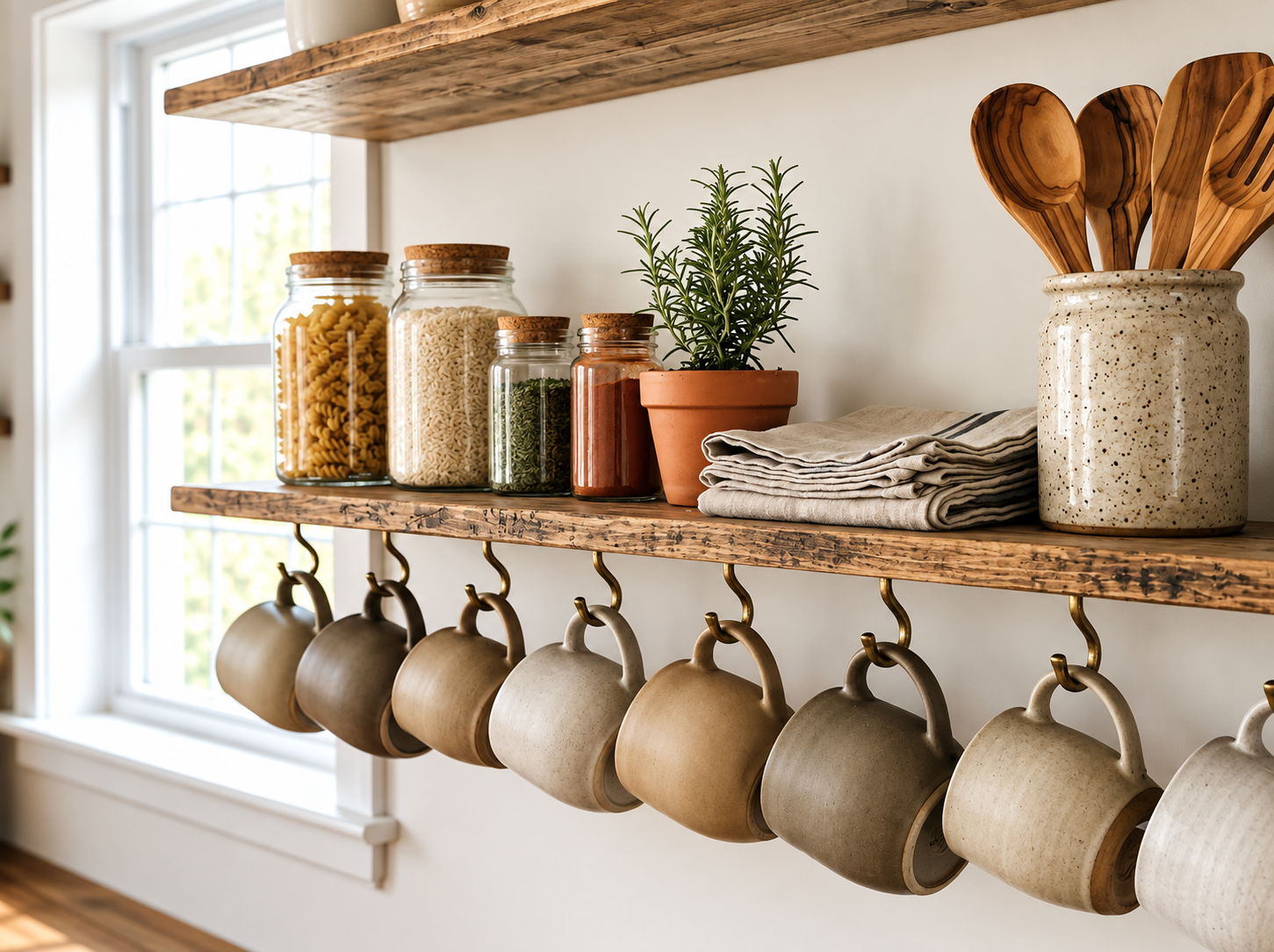
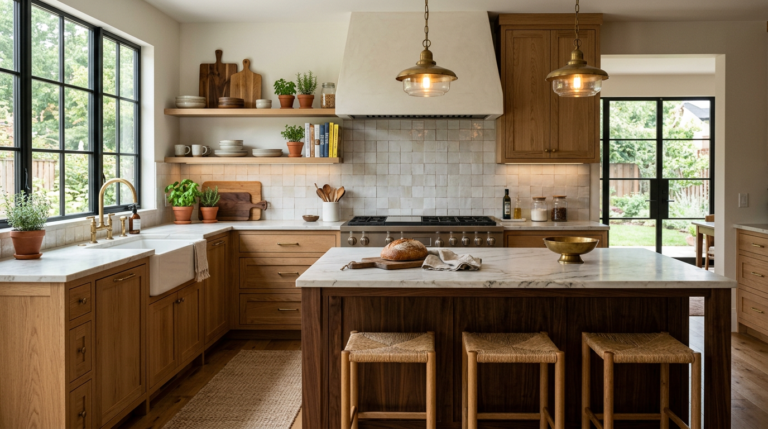
Open shelving works beautifully when it is edited rather than filled. A shelf lined with identical glass vessels, a few linen-bound books, and a single object of interest communicates confidence in a way that a crowded shelf never can. Considered open shelving adds warmth to a kitchen that closed cabinetry alone cannot provide.
The key is to treat open shelves as a display rather than as overflow storage. If something lives there only because there is nowhere else for it, it probably belongs behind a door instead.
Negative space on a shelf is not emptiness — it is breathing room. The objects that remain become more considered, more beautiful, simply by having space around them.
Give Everything a Place to Belong
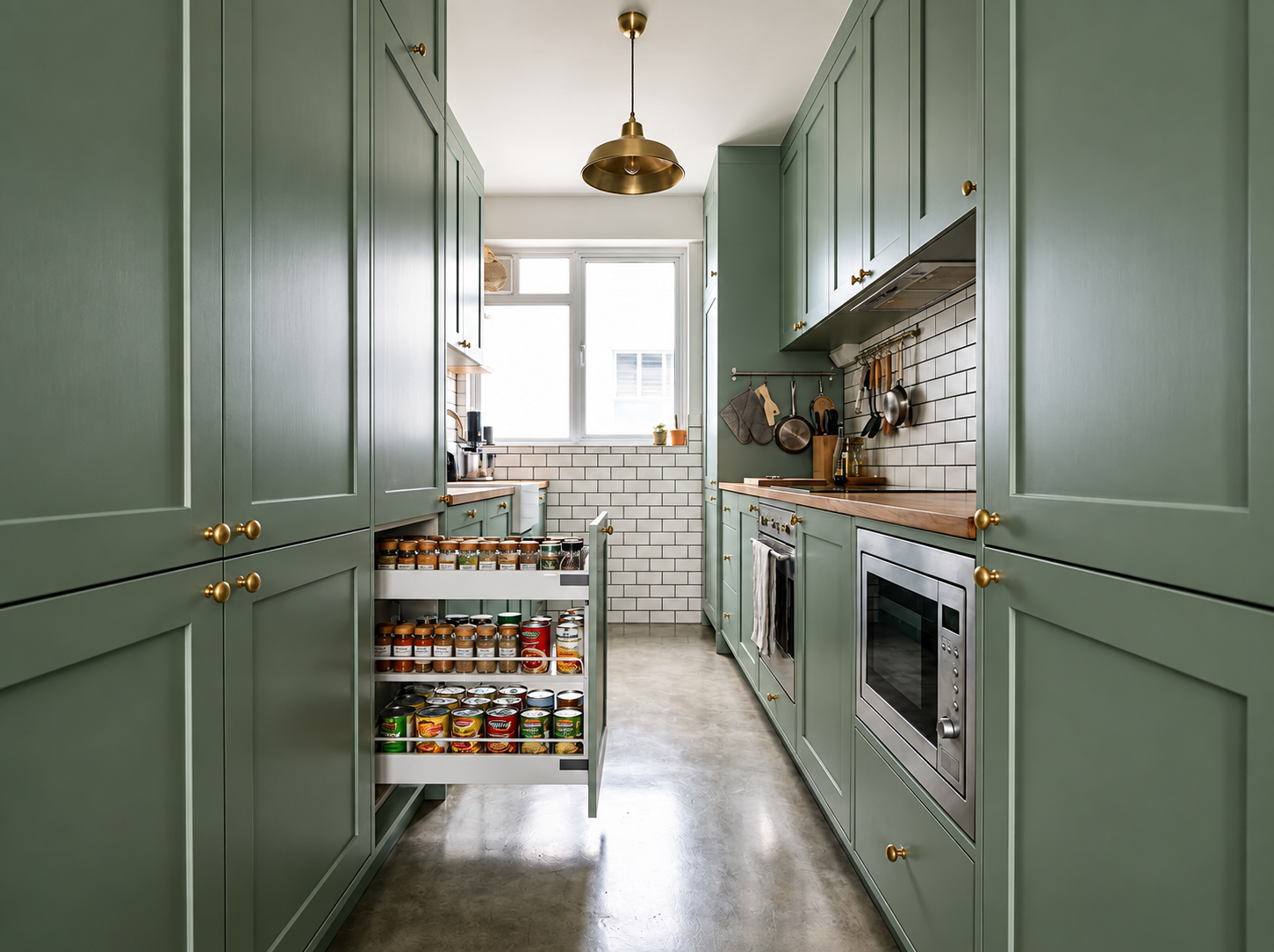
A kitchen that feels calm is almost always one where every object has a specific home. Not just a drawer or a shelf — a precise place, chosen intentionally. Thoughtful kitchen storage organisation is what separates a kitchen that feels lived-in and considered from one that simply feels used.
When items are stored near where they are used, the kitchen starts to feel almost effortless. Pots near the hob, boards near the prep area, cups near the kettle — proximity creates flow.
Editing down what you own matters as much as organising what remains. A drawer with twelve things in it is always calmer than one with thirty.
Let Color Give the Kitchen Its Personality
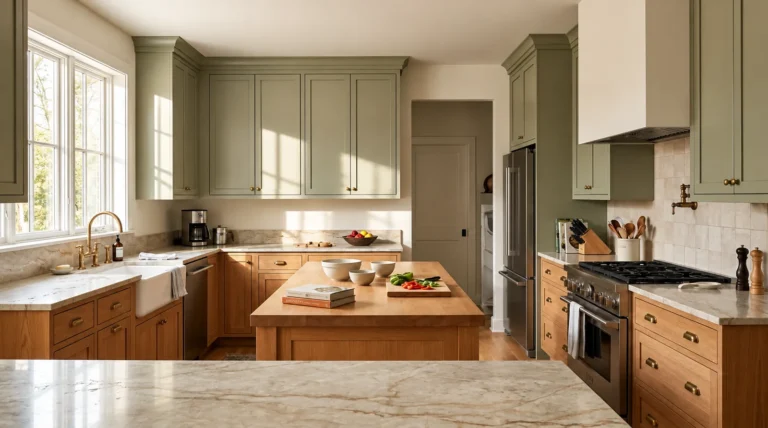
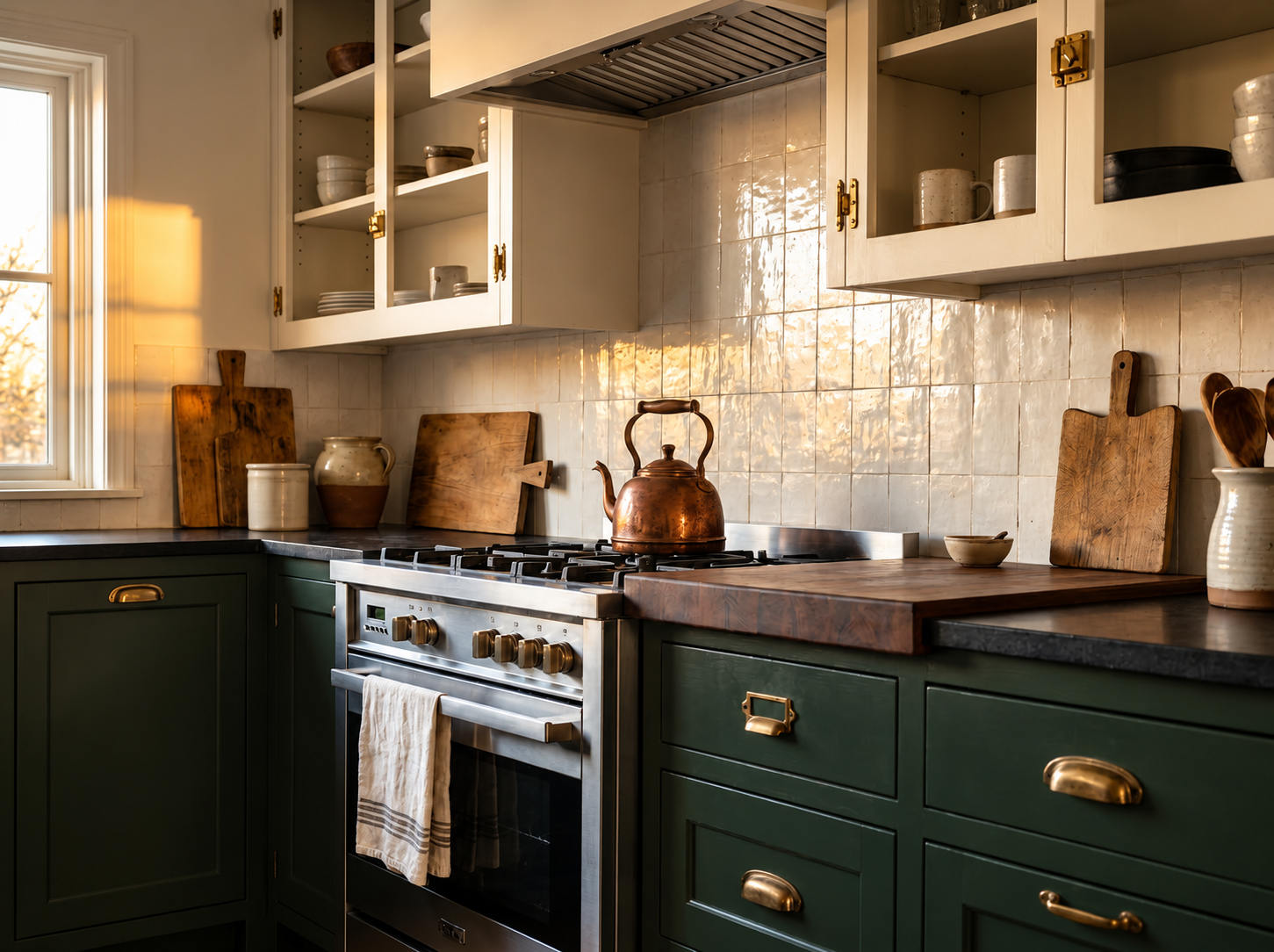
Colour in a kitchen should feel like a decision, not a default. The most enduring kitchen colour schemes are those built from a single, quiet anchor — a warm sage, a chalky off-white, a muted terracotta — and allowed to breathe rather than compete. A considered kitchen colour scheme gives the room its entire personality.
Cabinetry colour sets the tone for everything else. Choose it carefully and the rest of the room tends to fall into place around it naturally.
Even the smallest kitchen can carry a strong colour with confidence, provided the rest of the room stays quiet enough to let it lead.
Choose Surfaces That Feel Beautiful to Use
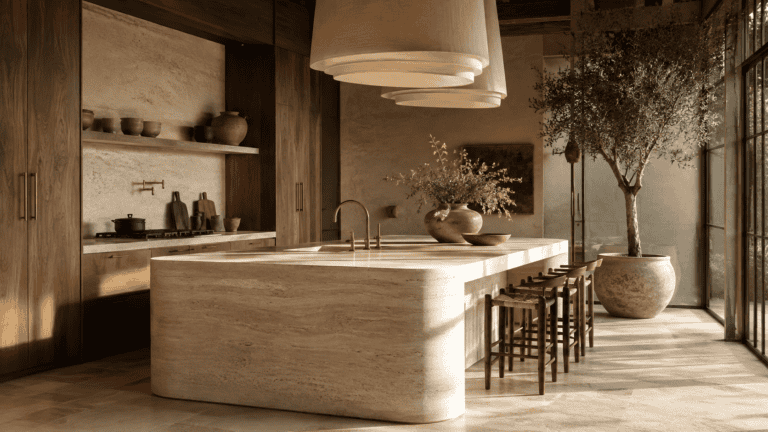
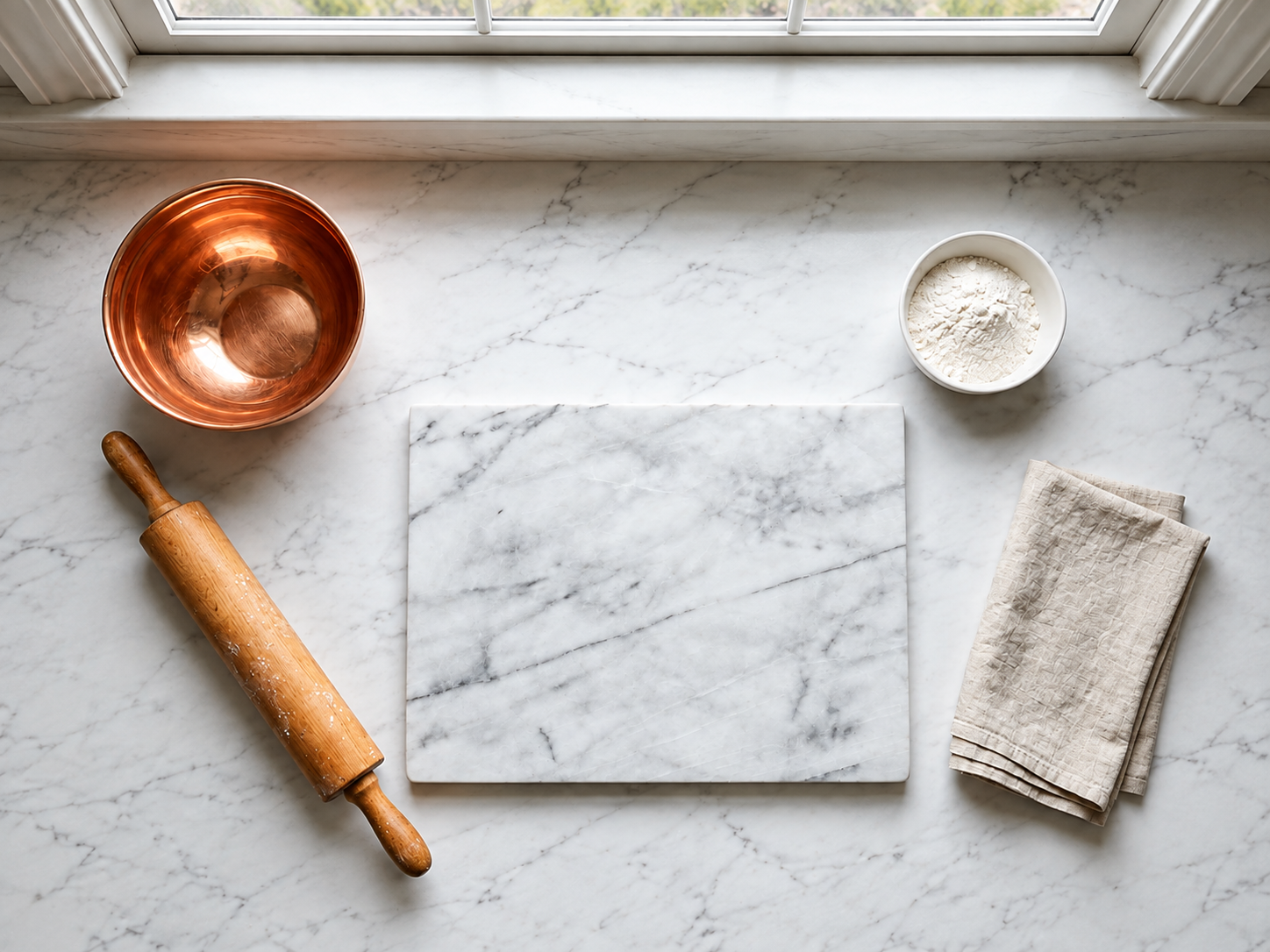
The surfaces you touch every day deserve more attention than almost anything else in a kitchen. A countertop that feels cool and solid underhand, a backsplash tile with a surface that rewards looking at it closely — these are the details that make a kitchen genuinely enjoyable to spend time in. Beautiful kitchen surface materials age with the room and improve over time.
Natural stone develops character. Solid timber warms with use. Handmade tile holds imperfections that mass-produced alternatives never can. These qualities are worth choosing deliberately.
Surfaces that look beautiful in a showroom but are difficult to maintain in daily life create a subtle, constant frustration. Choose materials that work with how you actually live.
Design Storage Around the Way You Cook
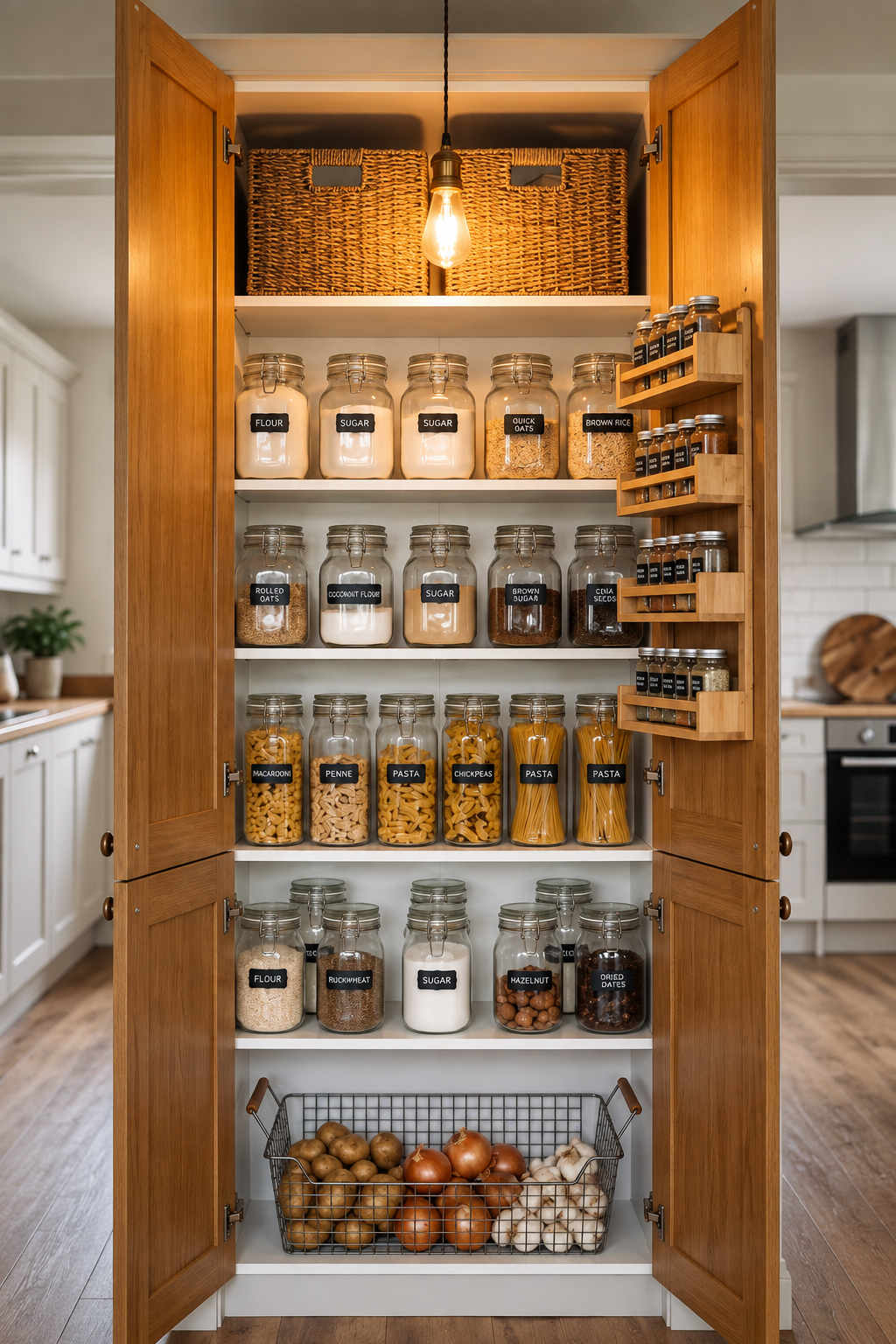
Generic storage rarely suits anyone perfectly. The most considered kitchens are those where the storage has been thought through around actual cooking habits — not around what a showroom template assumes those habits might be. Storage designed around how you cook removes daily friction in a way that no amount of organisation can compensate for.
Think about the rhythm of a typical meal from start to finish. Where do you reach first? What do you use together? Storage that reflects those patterns makes cooking feel natural rather than effortful.
Deep drawers almost always outperform base cabinets. Pull-out shelves, internal drawer dividers, and door-mounted racks each solve a specific problem rather than simply providing space.
Use Materials to Give the Kitchen Character
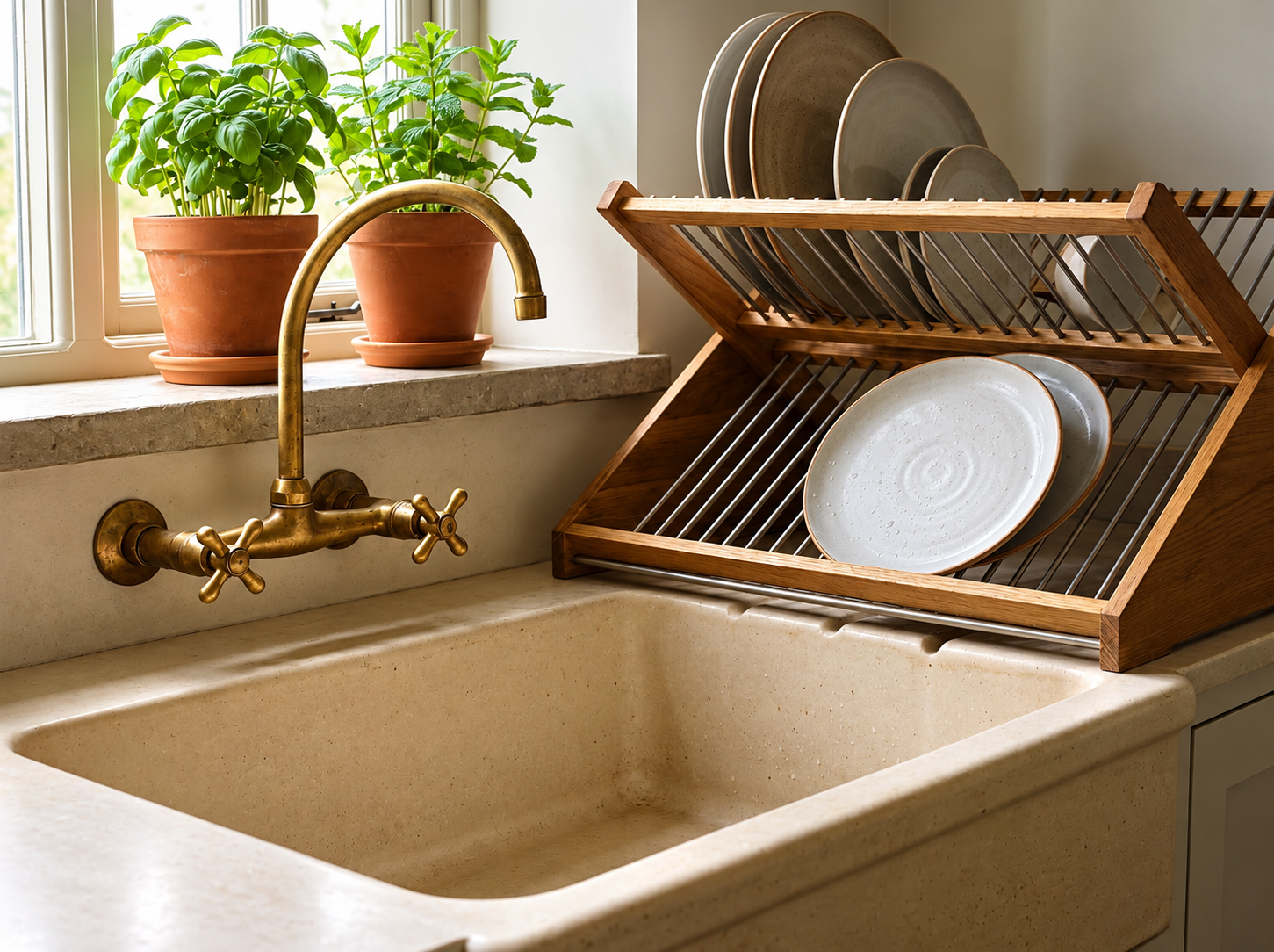
A kitchen built entirely from one material — all white cabinetry, all stainless steel, all one surface — can feel clean but rarely feels warm. Introducing a second or third material in a considered way is what gives a kitchen genuine character. Natural kitchen materials create a room that feels composed rather than assembled.
Timber introduces warmth. Stone introduces weight and permanence. Linen, rattan, and hand-thrown glass introduce softness. Each material brings something the others cannot.
The restraint is in knowing when to stop. Two or three materials working together will always feel more considered than six competing for attention.
Make Everyday Tasks Feel a Little More Beautiful
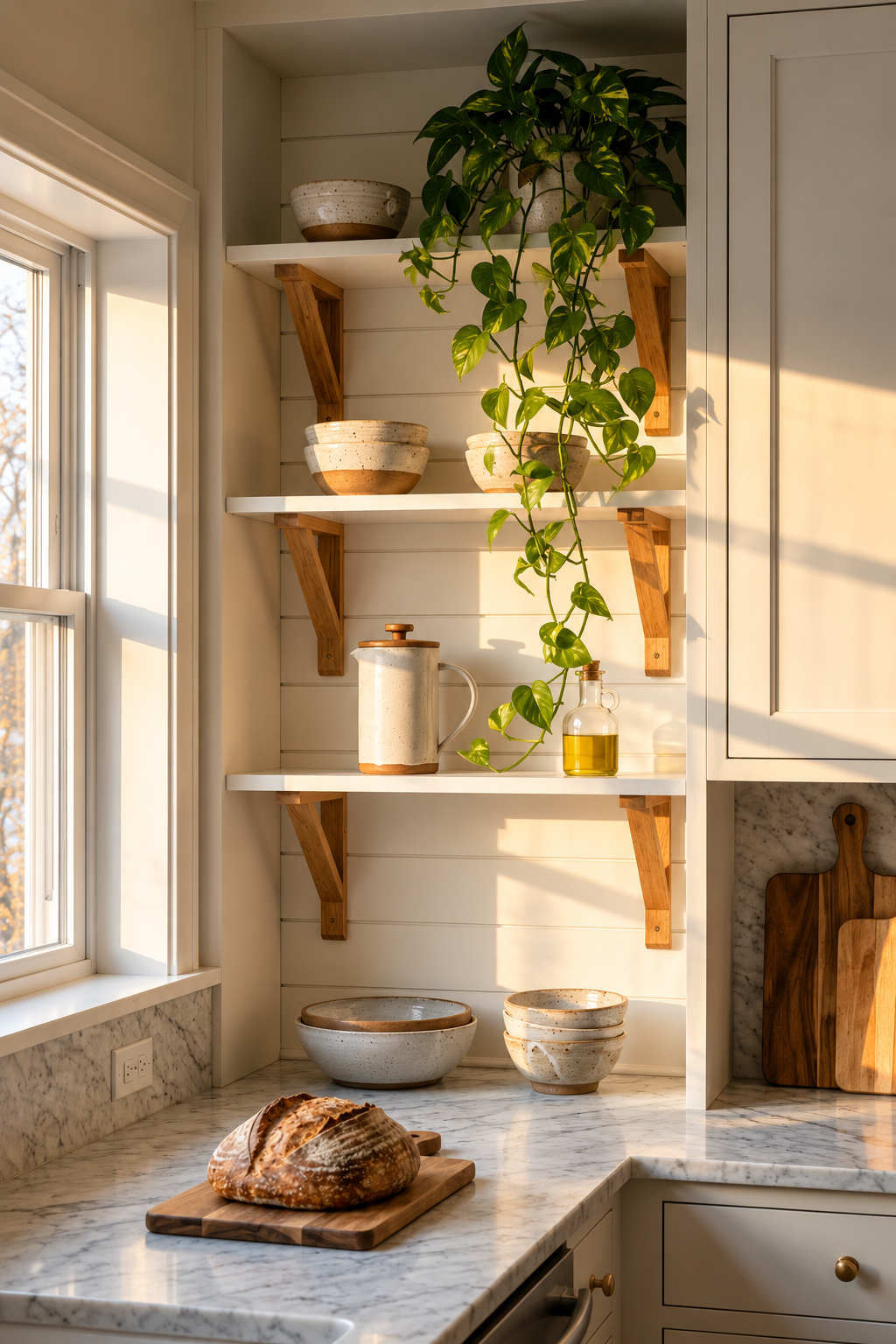
The small rituals of a kitchen — making coffee in the morning, washing vegetables at the sink, laying out ingredients before cooking — deserve the same attention as the larger design decisions. A beautiful view from the sink, a cutting board that feels right in the hand, a tap that works without effort. Designing a kitchen for everyday enjoyment means thinking about the experience as much as the appearance.
The objects on your counter that you reach for daily are worth choosing well. A stone soap dish, a proper linen cloth, a well-made kettle — these small things accumulate into a daily experience.
When a kitchen is designed around the actual texture of daily life, it stops being a room you pass through and becomes a room you genuinely want to spend time in.
Create a Kitchen People Naturally Want to Gather In
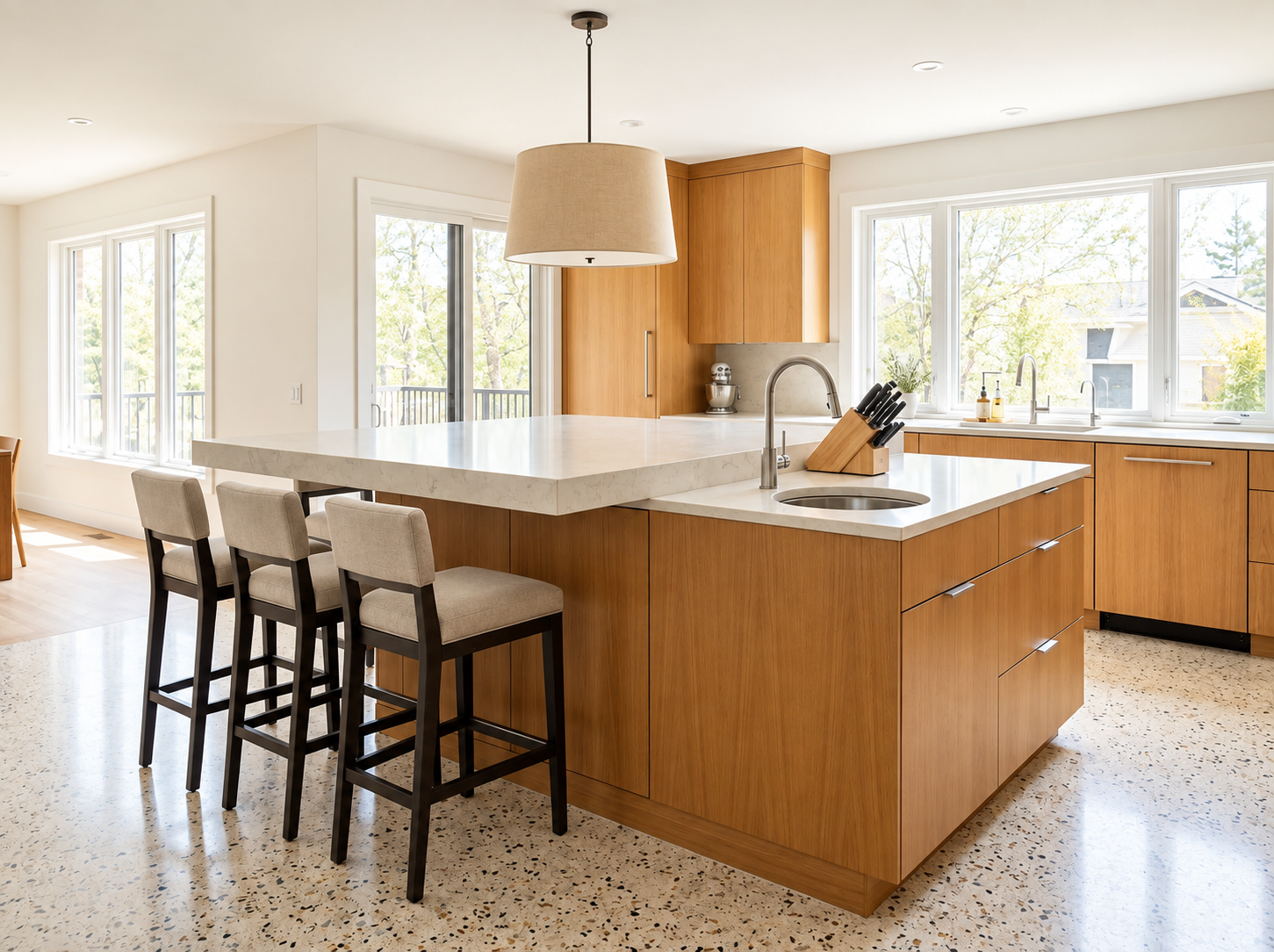
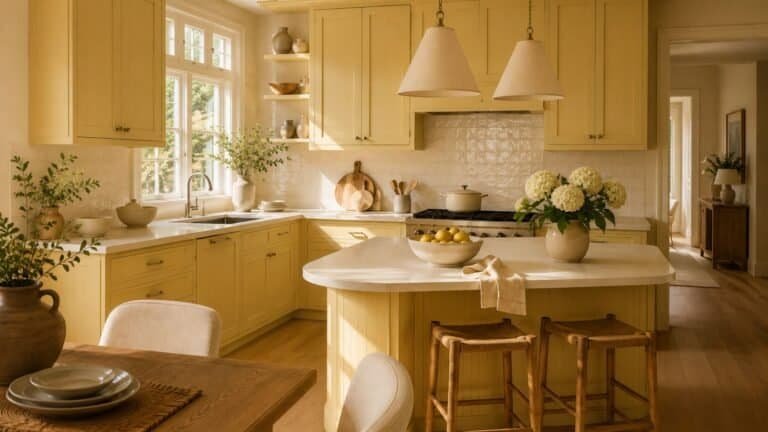
The kitchens people are drawn to linger in share a common quality — they feel generous. Not necessarily large, but unhurried. There is room to stand beside someone at the counter, a surface wide enough to set down a glass without feeling in the way, a quality of light that invites rather than instructs. A kitchen designed for gathering is one of the quietest forms of hospitality.
Seating at a kitchen island or a small table tucked into a corner changes how people experience the room. It signals that staying is welcome.
Warmth is rarely about the temperature of the space — it is about the quality of its light, its materials, and the feeling that someone has thought carefully about what it would feel like to be there.
Frequently Asked Questions
Edit what is on the counter first — a clear surface immediately makes any kitchen feel larger and more deliberate. Choose a single tonal palette for cabinetry and walls, keep open shelving restrained, and store items near where they are used so the room feels organised without appearing clinical.
Layout is almost always the answer. A kitchen with a considered workflow between the refrigerator, sink, and hob will feel easier and more enjoyable to use than a more beautifully finished kitchen that has not been thought through spatially. Get the layout right first — the rest can follow.
Yes — and often more so than their synthetic alternatives. Stone countertops, solid timber shelving, and handmade tile are designed to be used. They develop character with age rather than simply showing wear. The key is choosing the right material for the right surface and maintaining it as the supplier recommends.
Avoid colours that are strongly associated with a particular trend or moment. Quiet, slightly complex tones — warm whites, muted sages, soft greiges — tend to age well because they are grounded in nature rather than fashion. Test your chosen colour in the actual light of your kitchen before committing, as it will read differently throughout the day.