How to Make a Small Bathroom Feel Bigger Without Making It Look Empty
Let the Mirror Borrow Space
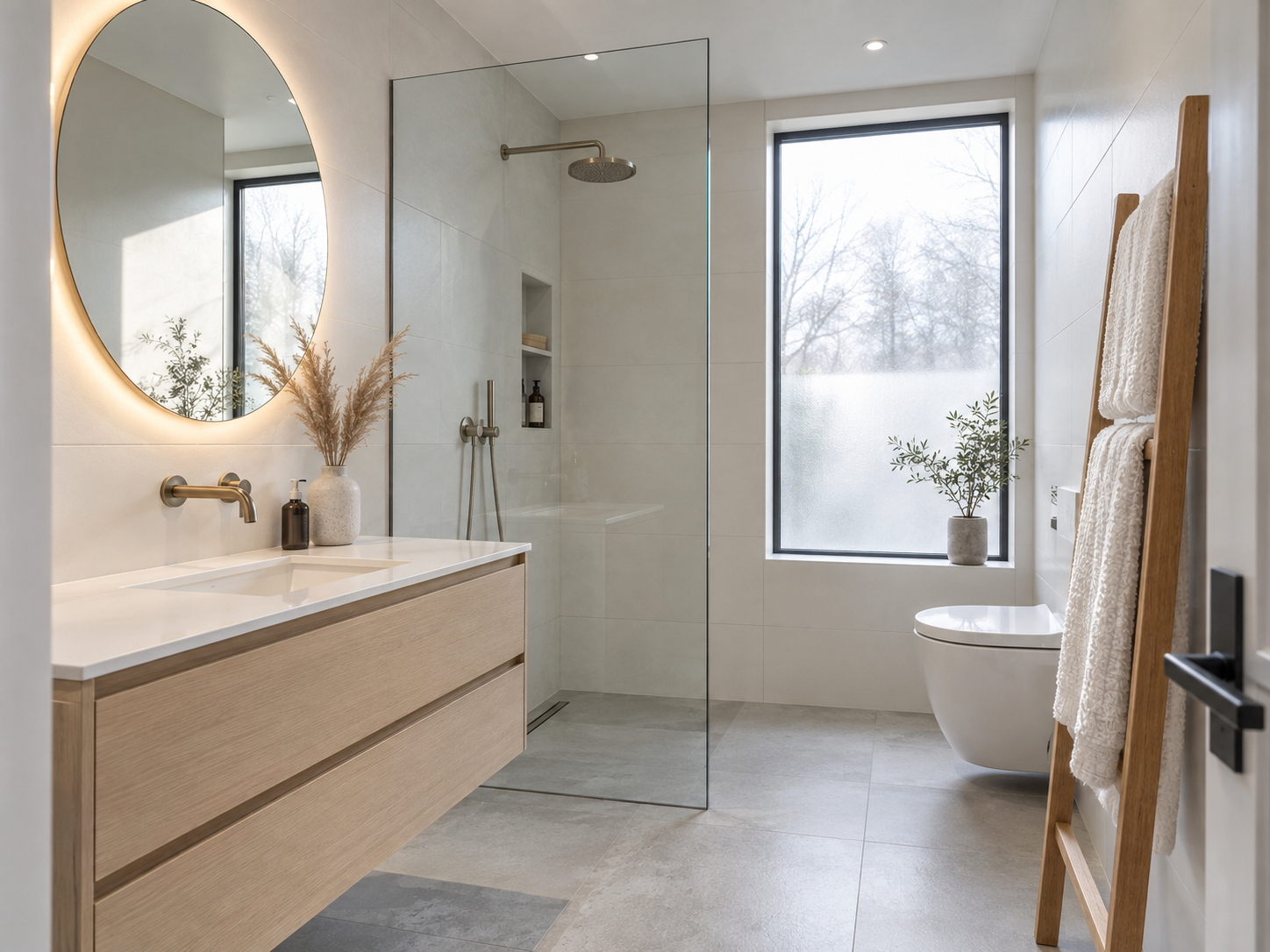
A small bathroom mirror borrows depth from the opposite wall. Placed with intention, it stops the room feeling like a box.
Full-width mirrors work best when they begin just above the vanity and reach toward the ceiling. The eye travels upward, and the room quietly expands.
- Reflect the most open part of the room — a window or light source — to multiply depth.
- A mirror spanning the full vanity width removes visual breaks and makes a narrow bathroom feel wider.
Where a window exists, the mirror should face it — not just for brightness, but for the way reflected daylight softens every surface it touches.
Use Contrast Without Closing In
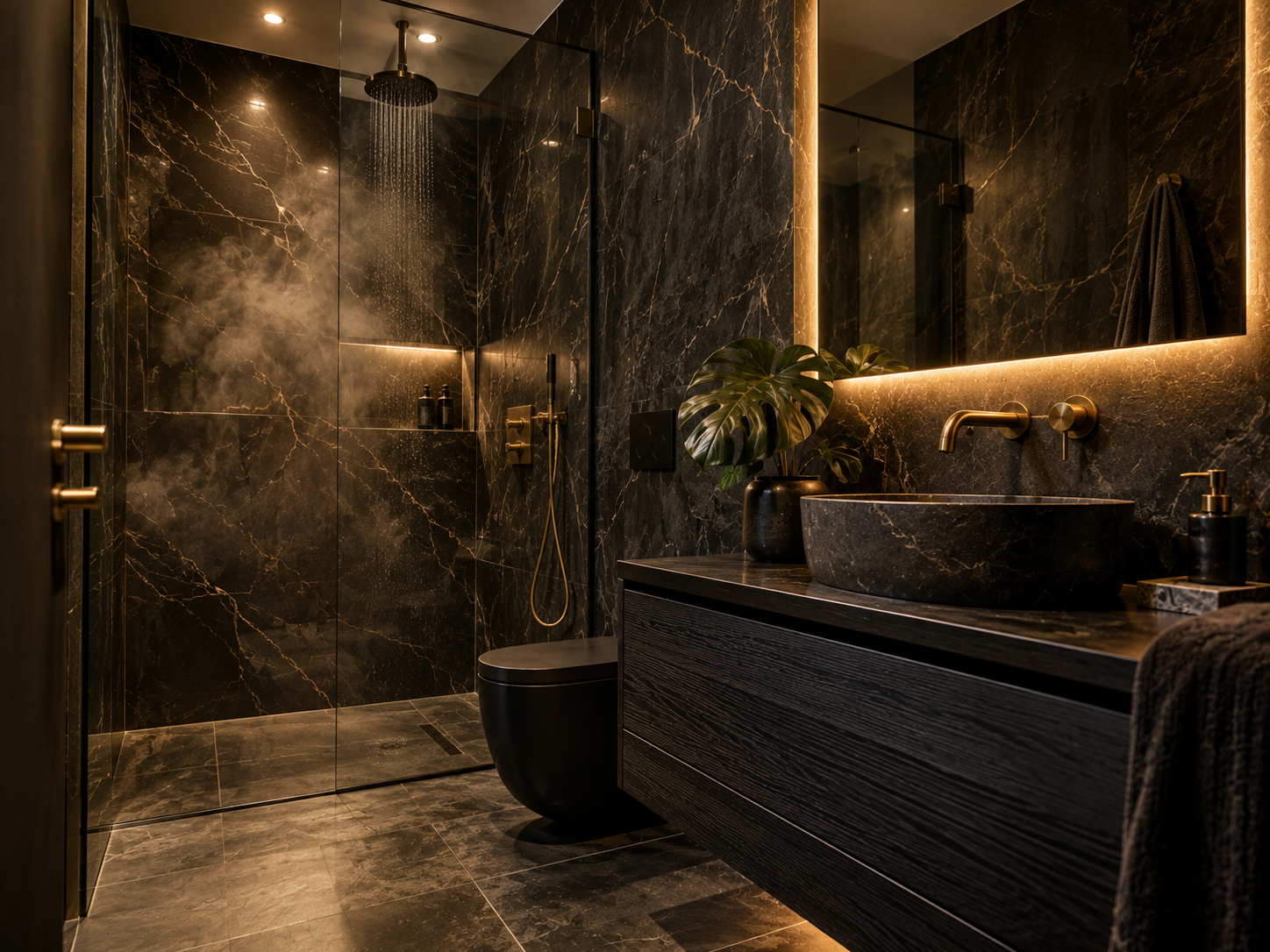
Contrast in a small bathroom is not about dramatic dark versus light. It is about choosing one grounded tone and letting the rest of the room breathe around it.
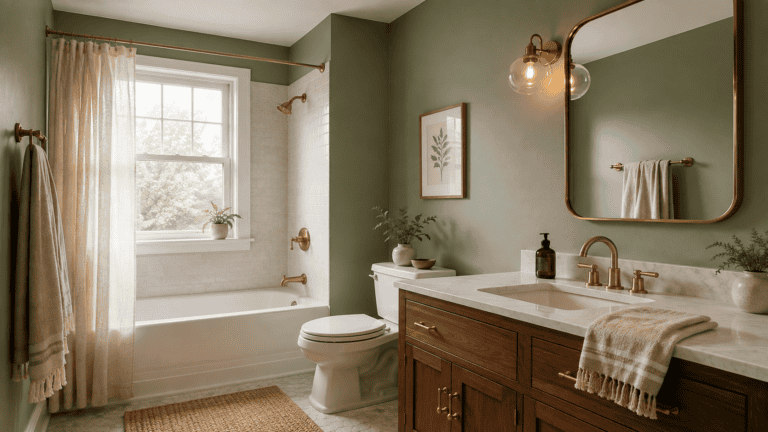
A dark vanity against pale walls anchors the space. The room gains weight without gaining clutter — and that grounded quality is what makes a small bathroom feel deliberate.
One moment of contrast, placed with confidence, is far more powerful than competing tones fighting for attention across every surface.
Matte finishes absorb light rather than bounce it. That quietness is something glossy surfaces simply cannot achieve in a confined space.
Give Small Bathrooms a Sense of Character
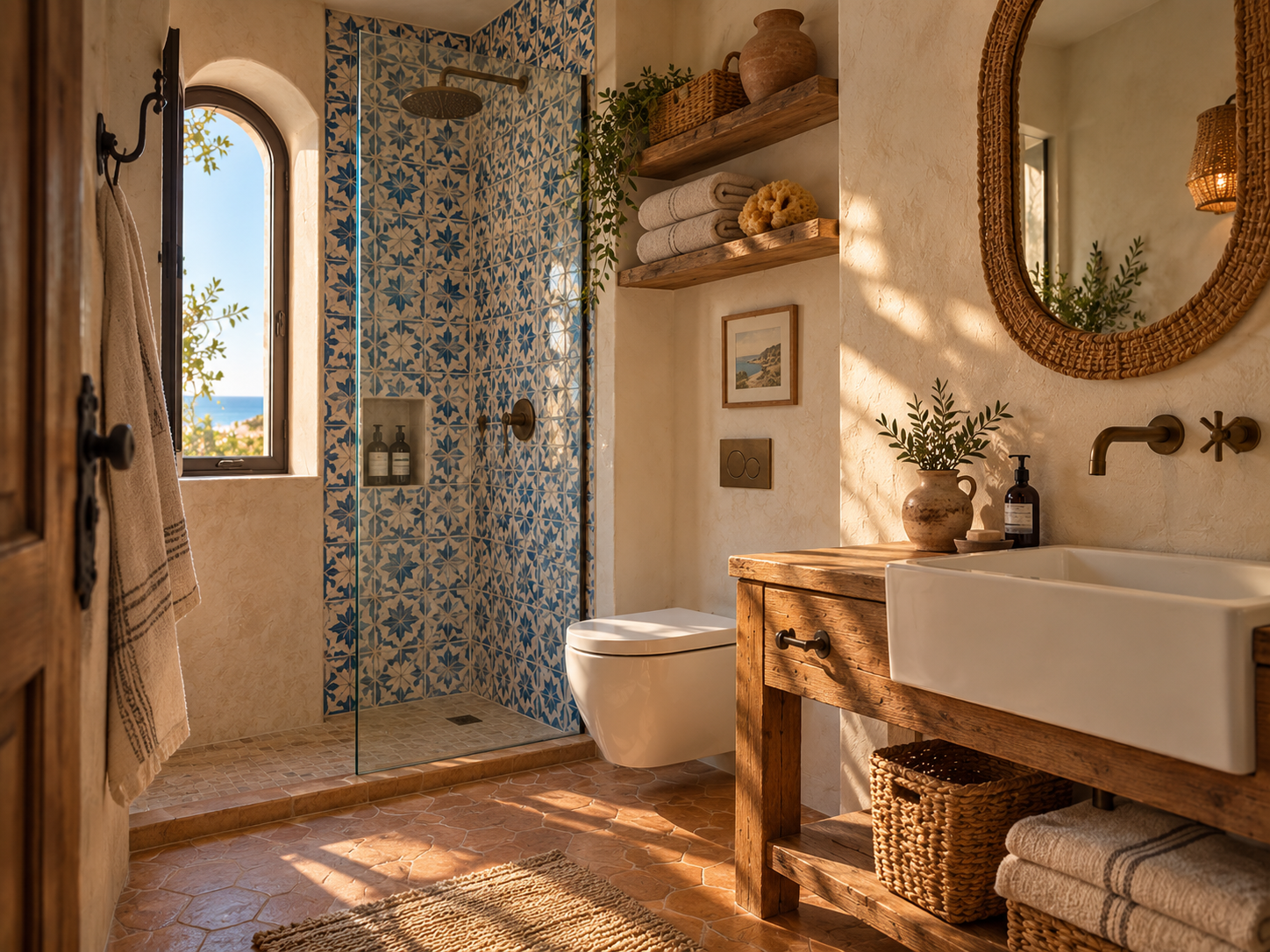
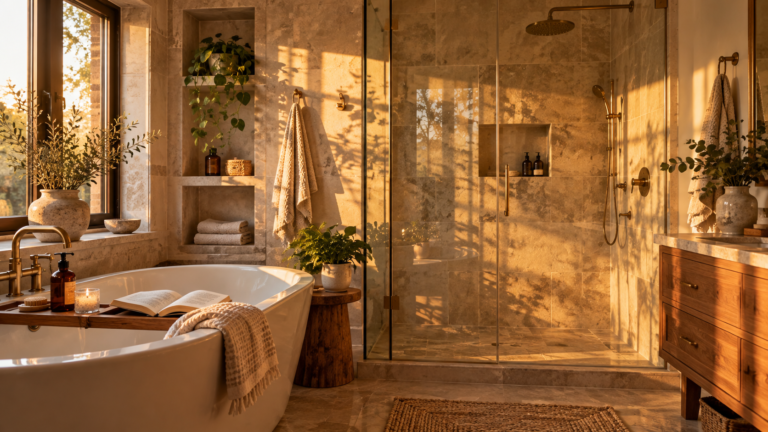
Character in a compact bathroom does not require more objects. It requires more intention. A single tile, a natural stone, or an aged brass fitting can make a room feel genuinely considered.
A handmade tile with natural variation tells a story. A smooth, featureless wall simply exists. Texture gives the eye a reason to linger.
Two or three materials, chosen well, create more richness than six chosen casually.
Keep the Floor Visually Open
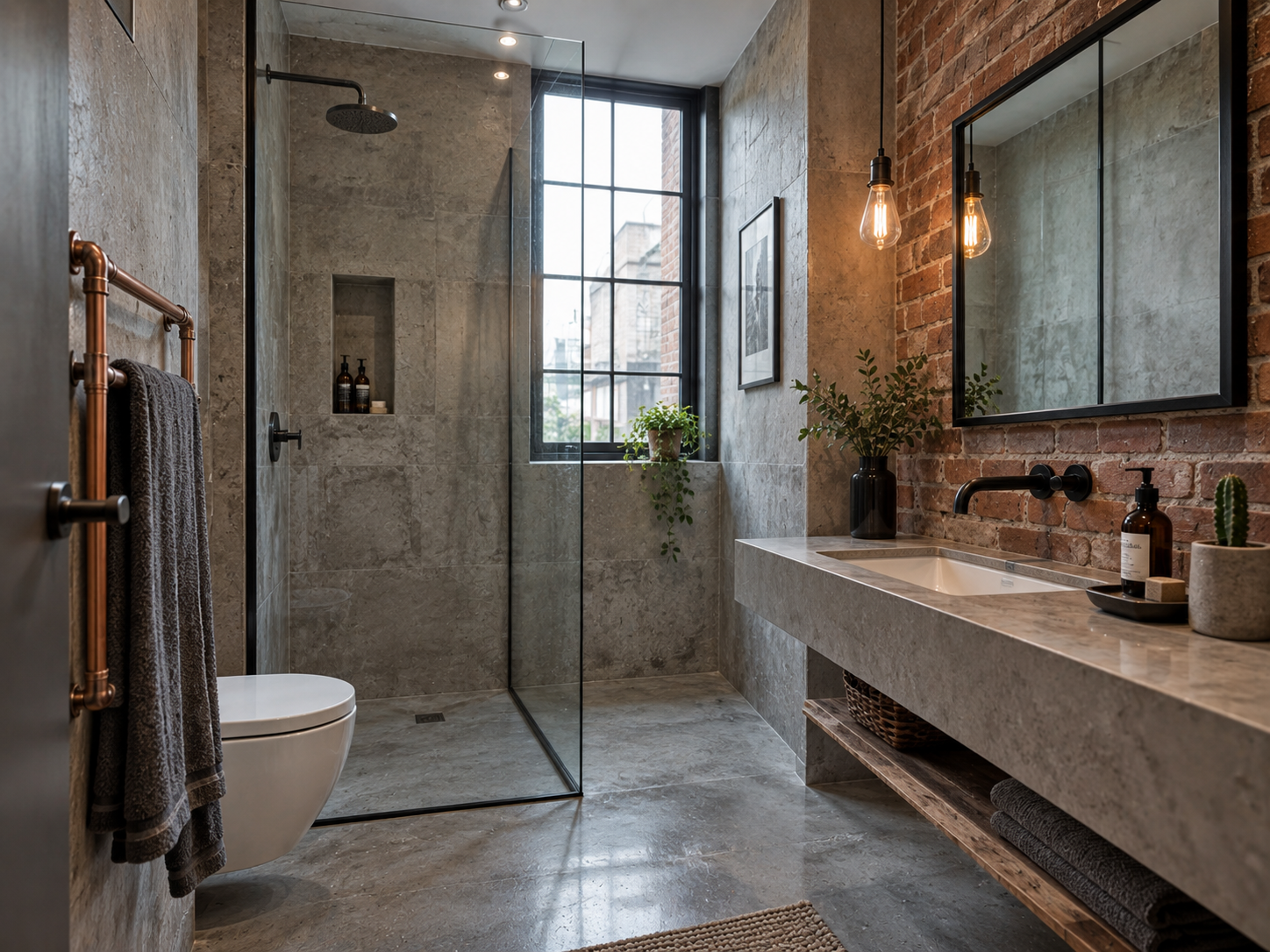
The floor is one of the most underestimated tools in a small bathroom. When more of it stays visible, the room breathes. When it disappears beneath furniture, the space contracts.
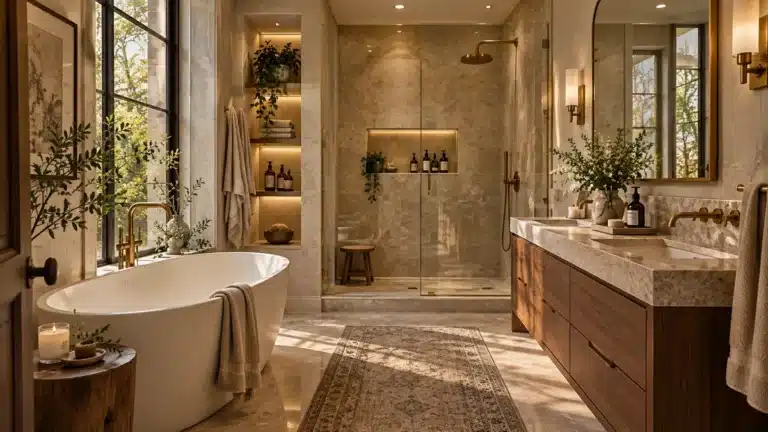
Wall-hung vanities float. The visible floor beneath pulls the eye across the room rather than stopping it — a single decision that can feel transformative in a narrow space.
A large-format tile in a pale, neutral tone reduces grout lines, removes visual interruption, and increases perceived space.
Stretch a Narrow Bathroom With Reflection
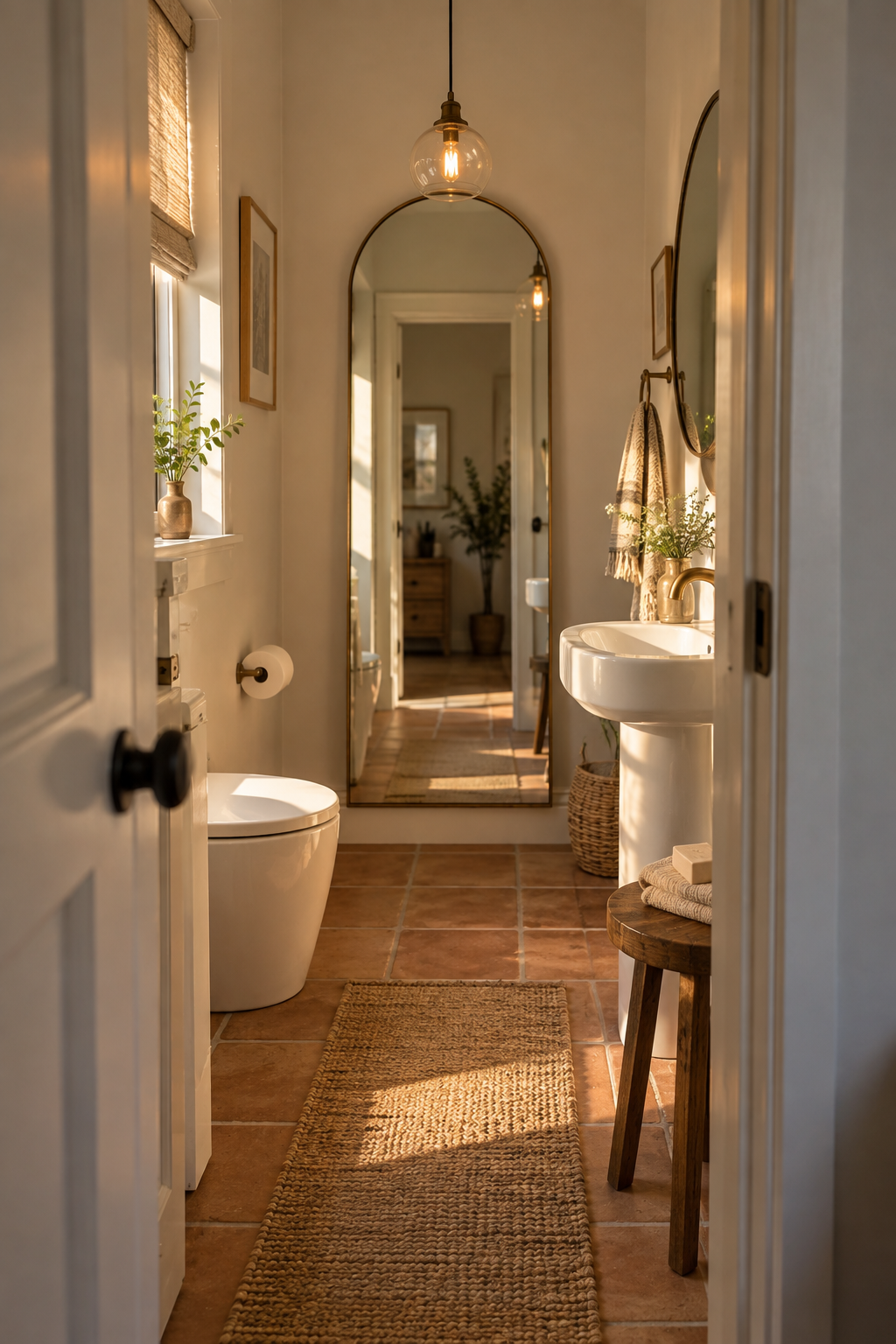
Narrow bathrooms work against the sense of calm. The solution is rarely to add more — it is almost always to reflect more.
A full-length mirrored wall doubles the perceived width immediately. Positioned opposite a window or light fixture, it multiplies warmth and removes the corridor feeling entirely.
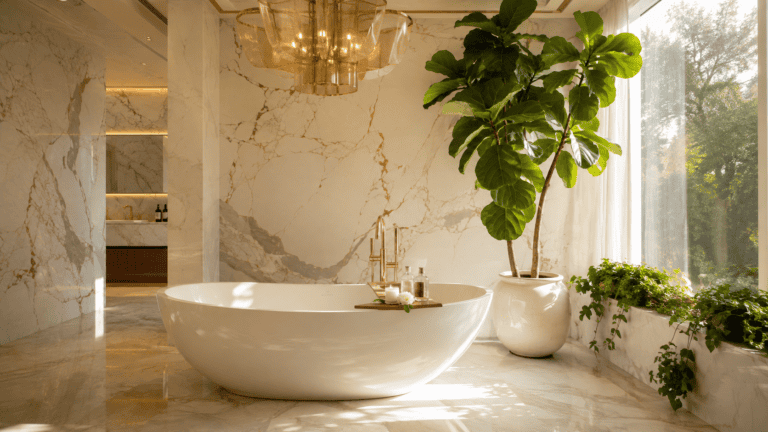
Polished or honed stone contributes the same way — quietly. The reflection gives the eye continuous depth rather than a hard stop.
Make the Layout Work From Above
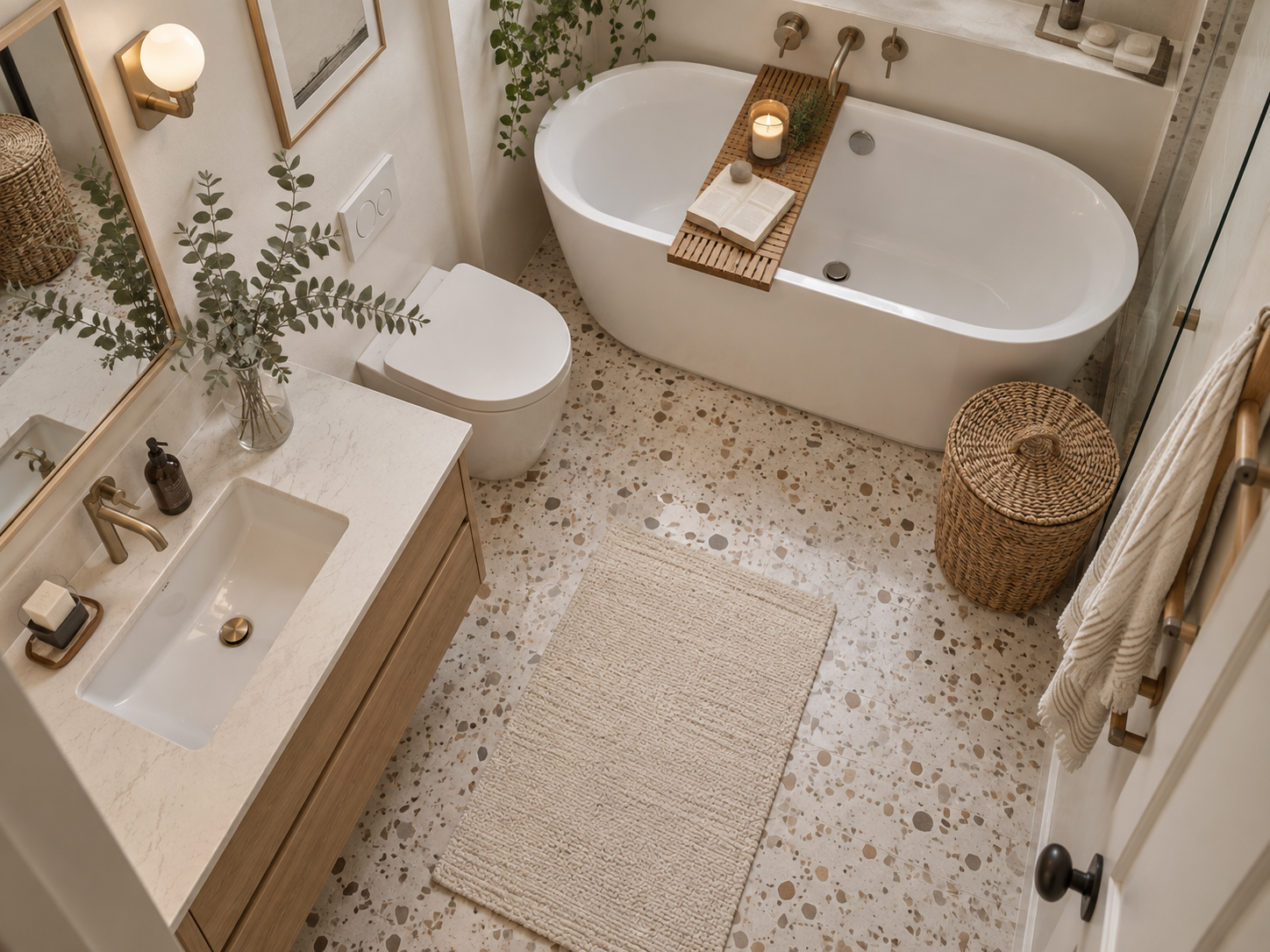
The floor plan of a small bathroom determines everything that follows. Before materials, before colour — the layout must allow movement without compression.
Placing the largest fixture against the longest wall preserves central floor space. The room stays open even when every centimetre serves a function.
Plumbing on a single wall simplifies both cost and the visual experience. Clean lines on one side, open space on the other — this is the quiet arithmetic of a well-planned bathroom.
Light fixtures along the ceiling’s longest axis draw the eye forward, creating movement that no tile or mirror can manufacture on its own.