Travertine in the Bath: How to Use Open-Pore Stone for a Mediterranean Spa Vibe
A travertine bathroom feels like a warm Mediterranean spa. Open-pore stone adds soft texture and a quiet glow.
Sunlit Stone: Framing Vanities with Louvered Light

Morning light does wonders for a travertine vanity. Wood shutters throw soft stripes across the stone, and the whole room warms up. I love how the pores catch tiny shadows. It feels like a small Italian villa, right at your sink.
Pair the stone with a brass faucet and a plain wood frame. Keep the walls warm and quiet. Skip busy patterns, because the stone already has plenty of character. Let the light do the decorating.
Honed travertine suits this look best. A polished finish feels too shiny for a Mediterranean spa bathroom. Natural stone costs more than basic tile, but it often comes in under many marble slabs. A good sealer keeps it looking lovely for years.
Evening Atmosphere: Low Light on Porous Stone

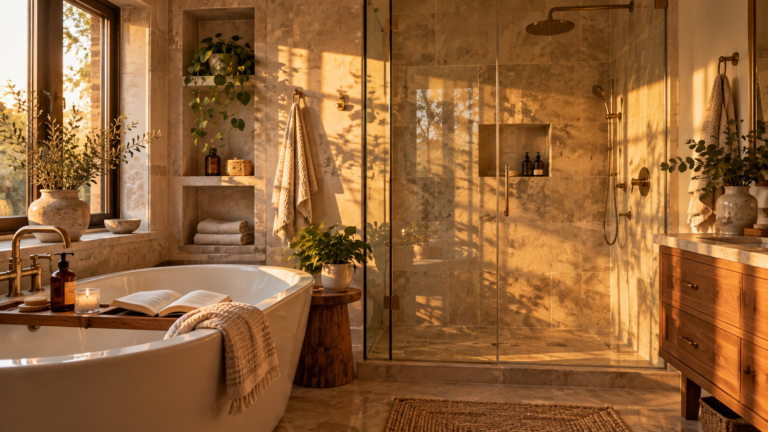
Evenings are when a travertine bathroom truly softens. Candlelight sinks into the open pores and makes the stone glow. I run a bath, light a few candles, and the day melts away. Nothing else in the house feels quite this calm.
A simple caddy across the tub keeps a book and a candle close. Choose warm bulbs for any fixed lights. Cool white bulbs flatten the stone and spoil the mood. A dimmer is worth every penny.
A quick word on safety. Keep candles away from towels and robes, and never leave a flame alone. A small lantern with a glass cover is a calmer, safer choice. Always blow the candles out before you leave the room.
The Monolithic Tub: Sculptural Stone Soakers

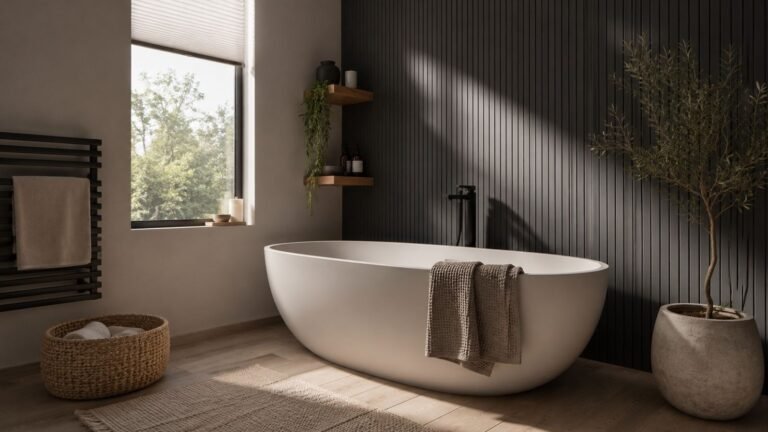
A carved travertine tub feels like a sculpture you can sit in. It looks ancient and weighty, even in a modern home. Stone steps beside it add to the old-world feel. The whole corner becomes a quiet focal point.
A carved stone tub can weigh around 1,000 pounds empty, and more once filled, so have a structural pro check your joists first. Carved stone tubs often cost several thousand dollars, so budget early.
Stone holds warmth well, so the water stays cozy longer. Wet stone can be slippery, and I never skip a textured mat. Steady footing makes the whole ritual more relaxing.
The Open-Pore Shower: Carved Stone Niches

An open-pore travertine shower brings the spa home. A carved wall niche hides your bottles and keeps the lines clean. Tiles in a matching soft tone make the space feel calm. Water slides across the stone, and the room feels like a quiet grotto.
Open pores are part of the charm, but they need care. A designer secret: keep the open-pore texture on vertical shower walls and carved niches where water drains away, but choose filled-and-honed travertine for the shower floor so soap doesn’t settle into the crevices. Wipe the walls after each shower to stop mineral buildup.
Use a gentle, pH-neutral cleaner. Vinegar and harsh sprays can etch the surface. A soft cloth and mild soap do the job. Test any new product on a hidden corner first.
Three Mistakes to Avoid
- Skipping the sealer: Stains sink into pores.
- Acidic cleaners: They etch and dull stone.
- Polished shower floors: Wet stone gets slippery.
Three Tips to Use
- Seal before first use: Early marks stay away.
- Squeegee after showers: Buildup never starts.
- Check the floor: Heavy tubs need support.
The Floating Vanity: Thick Slab Countertops

A wall-mounted vanity with a thick slab counter looks light and grand at once. Wall-mounted faucets keep the stone clear and easy to wipe. Unfilled travertine tile runs about $15 to $35 per square foot, and a thick 3-to-4-inch mitered edge gives a vanity a custom European look.
A floating vanity shows more floor, so a small bathroom feels bigger. The wall needs solid backing to carry the weight. Let a licensed plumber handle the fixtures. A good contractor will check the studs before anything goes up.
A double vanity suits a shared bathroom. Leave generous space between the basins for elbows. Keep soaps and brushes in a small tray so the slab stays clear.
Material Contrast: Raw Travertine Meets Copper

Raw travertine and a copper tub make a warm, earthy pair. The metal glows against the pale, pitted stone. I find the mix feels lived-in, never staged. It reminds me of old seaside hotels.
Copper darkens with time, and the stone softens with use. Both tell the story of years in your home. Let the patina grow instead of scrubbing it away. Wipe the tub dry now and then to keep the color even.
Keep everything else simple. A linen towel, a wooden stool and one plant are plenty. That is the Mediterranean spa spirit: quiet, warm and unfussed.
Frequently Asked Questions
Travertine Bathroom & Open-Pore Stone — Common Questions
Is travertine a good choice for a bathroom?
Yes, with proper sealing and care. Choose a honed finish for better grip underfoot and apply a breathable stone sealer after installation. It handles daily moisture well, resists heat, and develops a graceful patina over time.
Does open-pore travertine need sealing?
Yes, absolutely. An impregnating penetrating sealer protects the open cavities and pores from moisture, body oils and soap residue without changing the natural, matte textural finish of the stone.
How do I clean a travertine bathroom shower?
Use a gentle, pH-neutral stone cleaner and a soft microfiber cloth. Strictly avoid vinegar, bleach, lemon juice, or abrasive scouring pads, as acidic substances quickly etch and permanently dull natural travertine.
Can open-pore travertine be used inside a wet shower area?
Yes, but it requires thoughtful installation. Most designers recommend filled-and-honed travertine for the wet shower floor for easier cleaning, while keeping open-pore stone on vertical shower walls and carved niches where water drains away quickly.