15 Luxury Spa Bathroom Ideas That Feel Like a 5-Star Hotel
Let Natural Light Set the Spa Mood
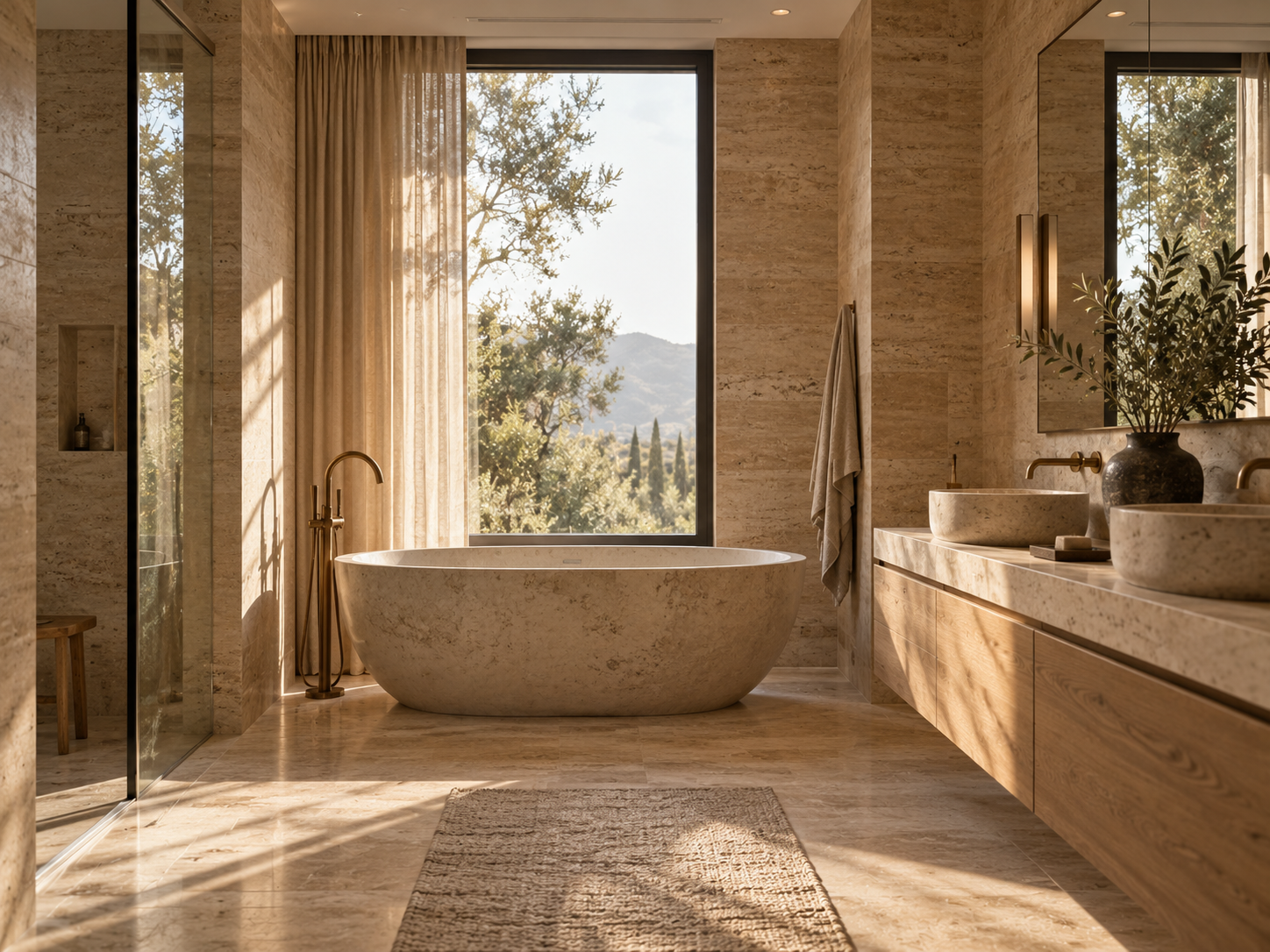
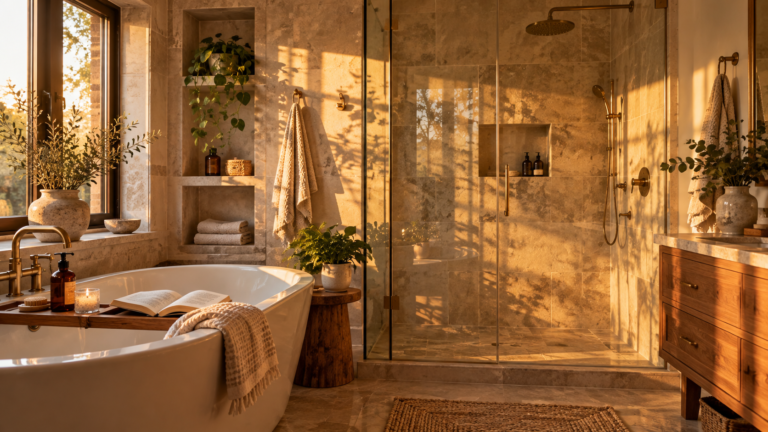
Light is the first material of any considered spa bathroom design. Before stone, before tile, before any fixture is chosen, the quality of light determines how the space will feel.
Natural light softens surfaces, warms stone, and creates an atmosphere no artificial source can replicate. A bathroom that receives morning light feels calmer, more generous, more alive.
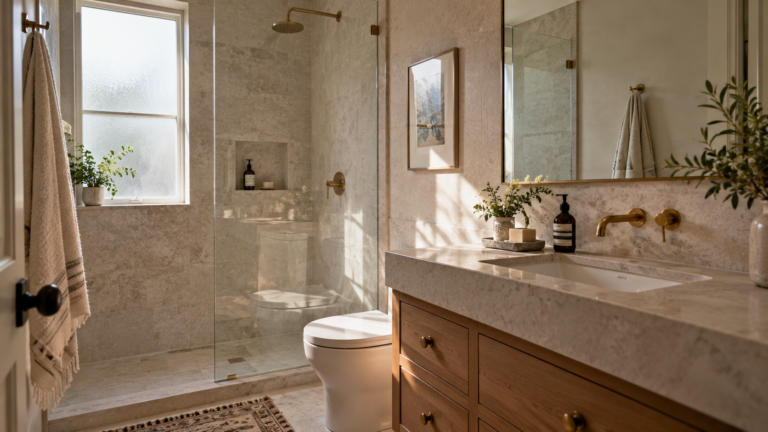
Where windows are limited, frosted glass panels or roof lights positioned to draw daylight deep into the room are worth serious consideration.
Make the Shower Feel Like a Private Retreat
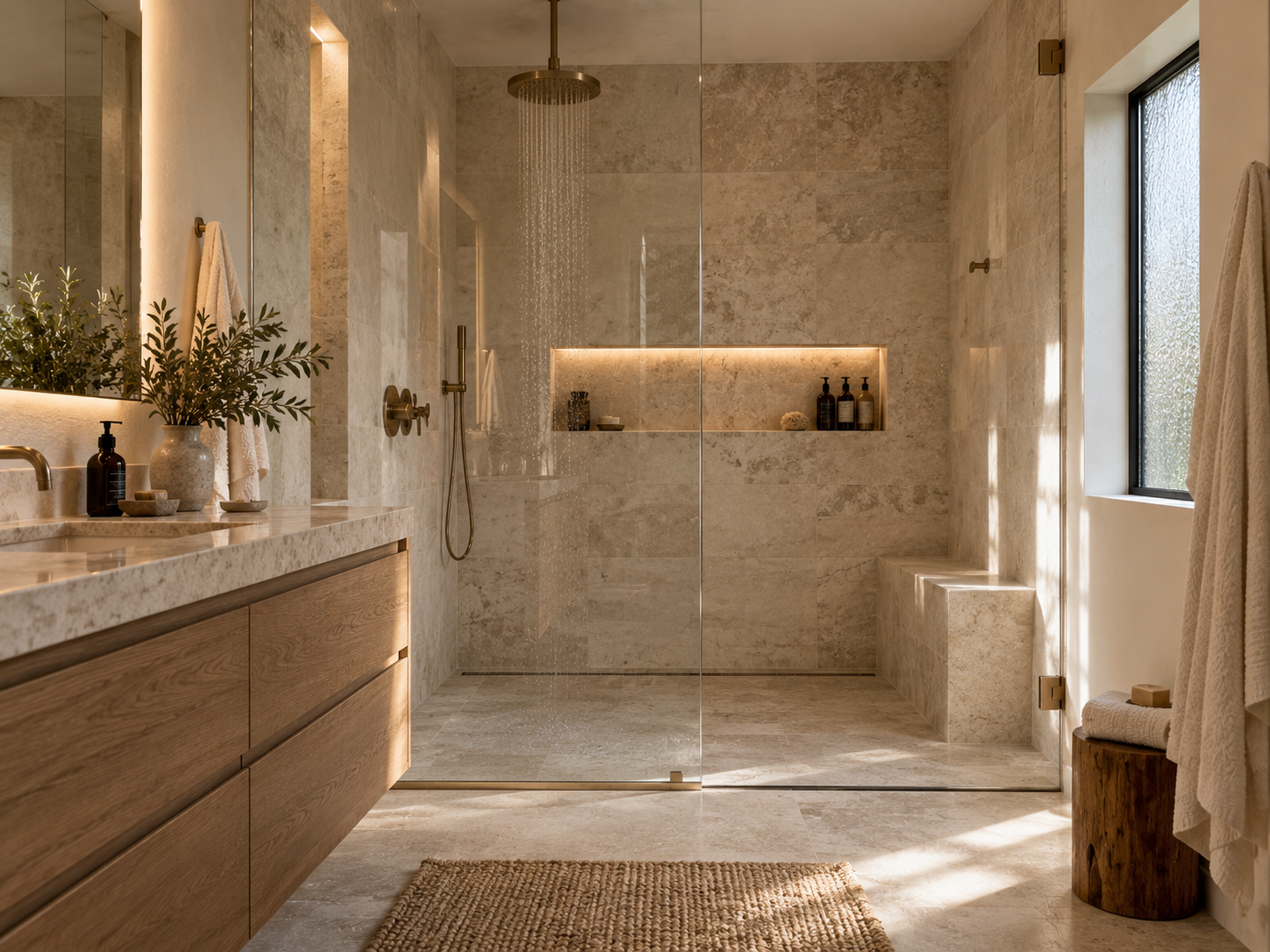
A luxury walk-in shower does not require an enormous footprint — it requires proportion, material honesty, and a sense of enclosure that feels deliberately chosen rather than simply functional.
A ceiling-mounted rainfall head changes the entire sensory register. Water falling from above feels slower, more enveloping, more restorative than any wall-mounted alternative.
Large-format natural stone on the shower walls reduces visual interruption — the fewer grout lines, the more the surface reads as a single resolved plane.
Let a Freestanding Tub Take Center Stage
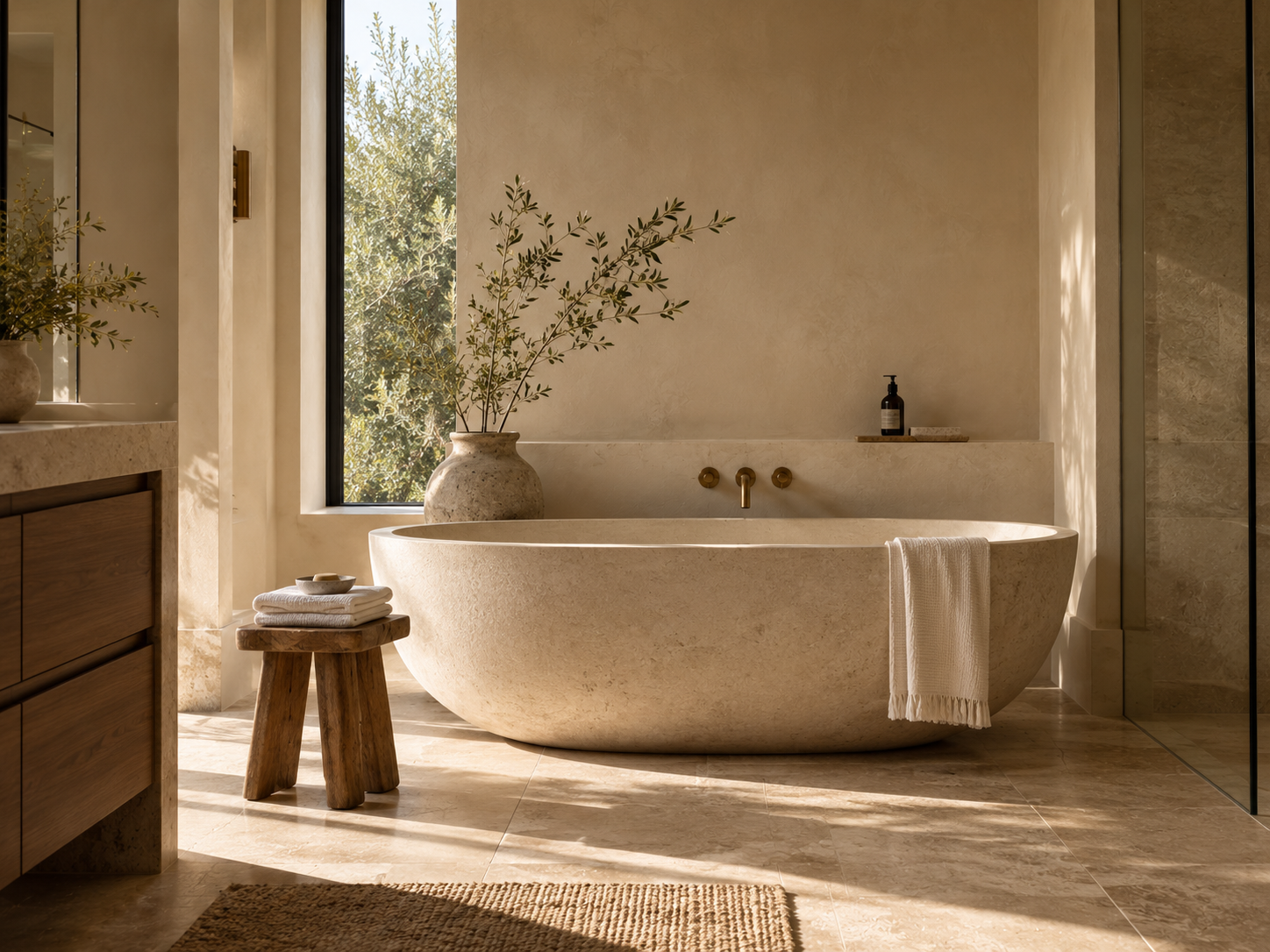
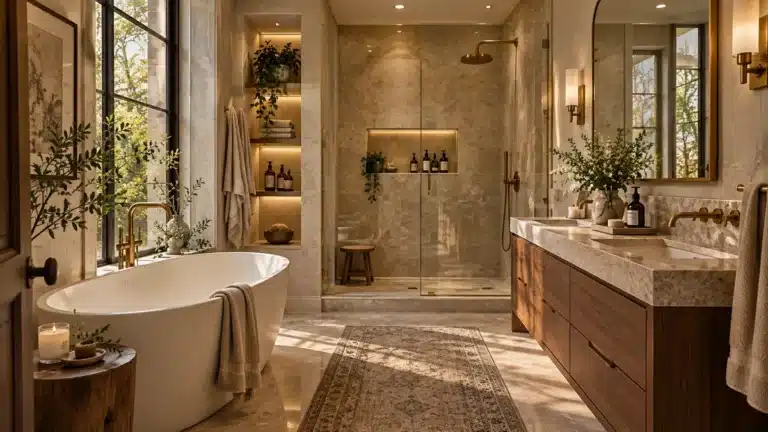
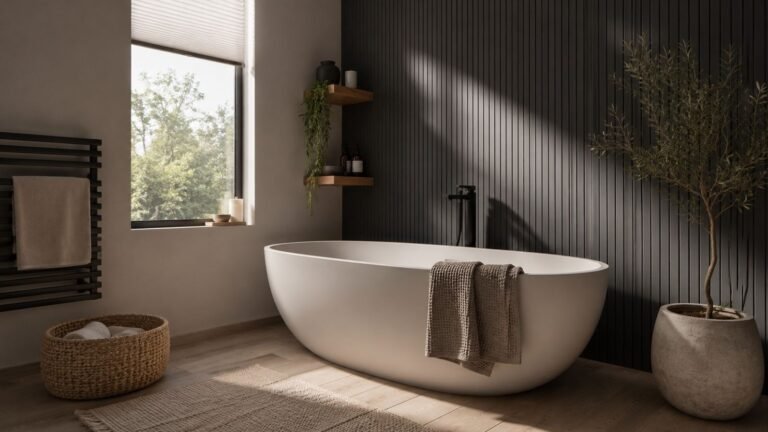
A freestanding bathtub functions equally as furniture, sculpture, and ritual object. Positioned beneath a window or centered against a stone wall, it transforms the act of bathing into something genuinely restorative.
A clean oval in cast iron or stone resin carries a timeless weight that acrylic shells rarely achieve. The material chosen for the tub should quietly echo the materials elsewhere in the room.
Leave generous space around it. A freestanding tub crowded against walls loses the very quality that makes it worth choosing.
Build a Calm, Earthy Color Palette
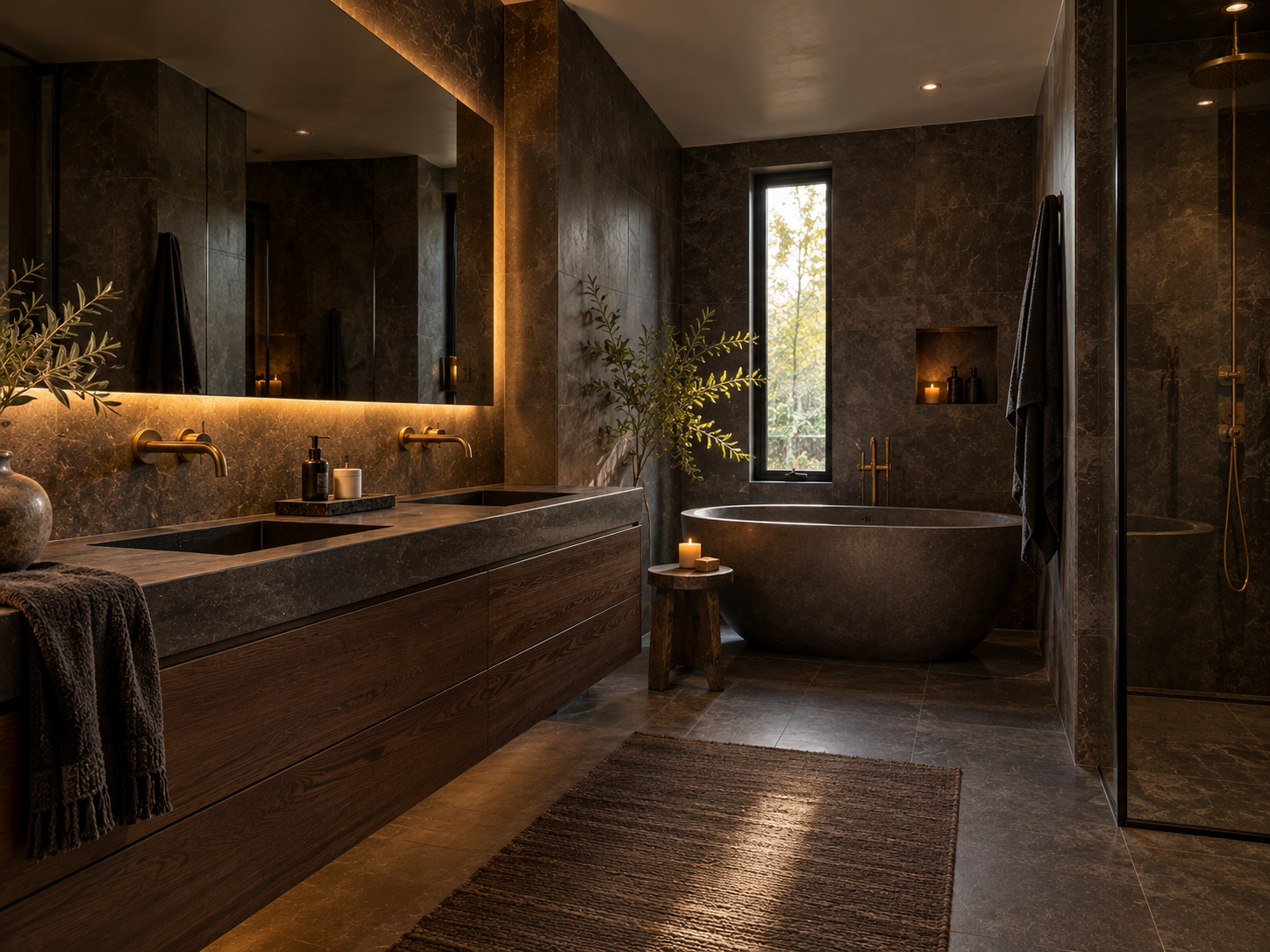
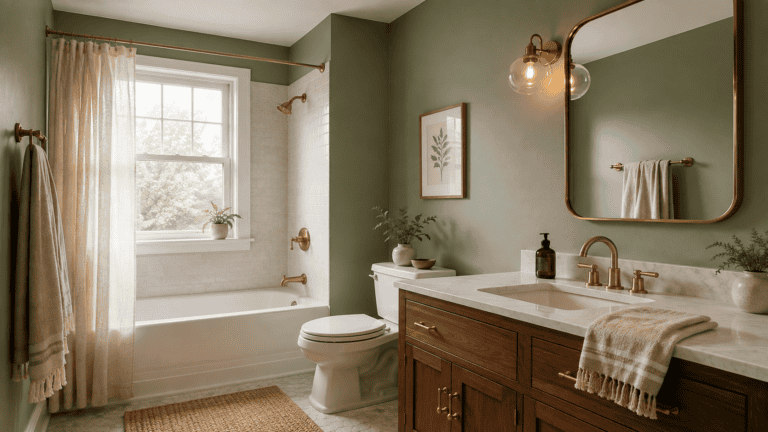
The most enduring bathroom color palettes are drawn from the natural world — warm stones, pale sands, aged linens, and quiet greens that recall moss rather than paint.
Color in a spa bathroom should feel discovered rather than applied. Tones that shift with the changing light of the day create an atmosphere no single flat color can achieve.
Limit the palette to two or three tones at most. The materials themselves will provide enough visual richness without requiring color to do additional work.
Let Natural Stone Define the Space
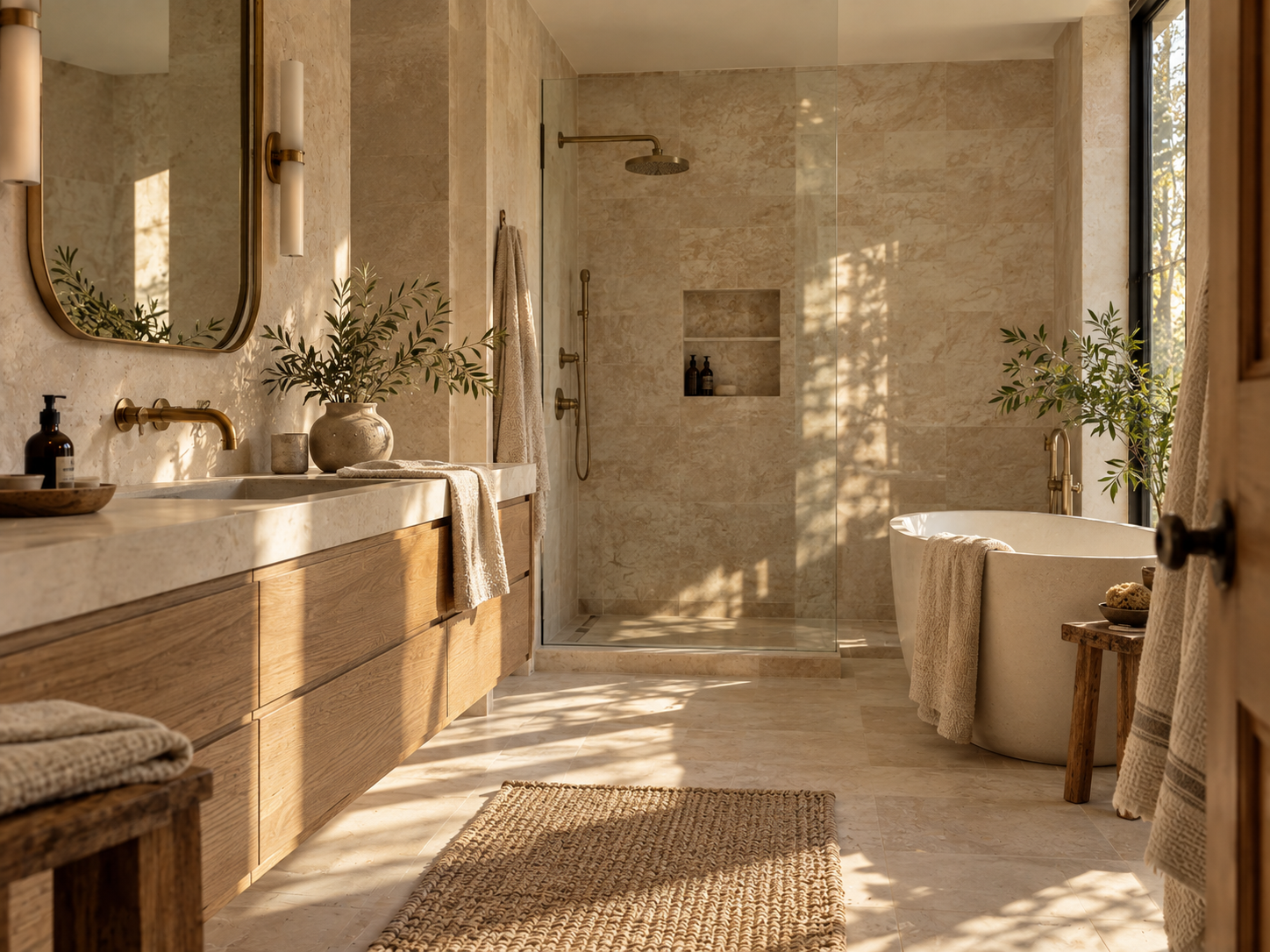
Natural stone bathrooms communicate a quality no manufactured material can replicate. The variation in tone, the texture underfoot, the way honed marble absorbs light — these qualities accumulate into a sensory experience that cannot be faked.
Limestone, travertine, and honed Carrara marble are among the most considered choices for a spa-inspired bathroom. Each develops a patina over time that improves rather than diminishes with use.
Used across both walls and floors, natural stone creates a visual continuity that makes the bathroom feel larger, calmer, and more architecturally resolved.
Warm Up the Bathroom With Rich Wood
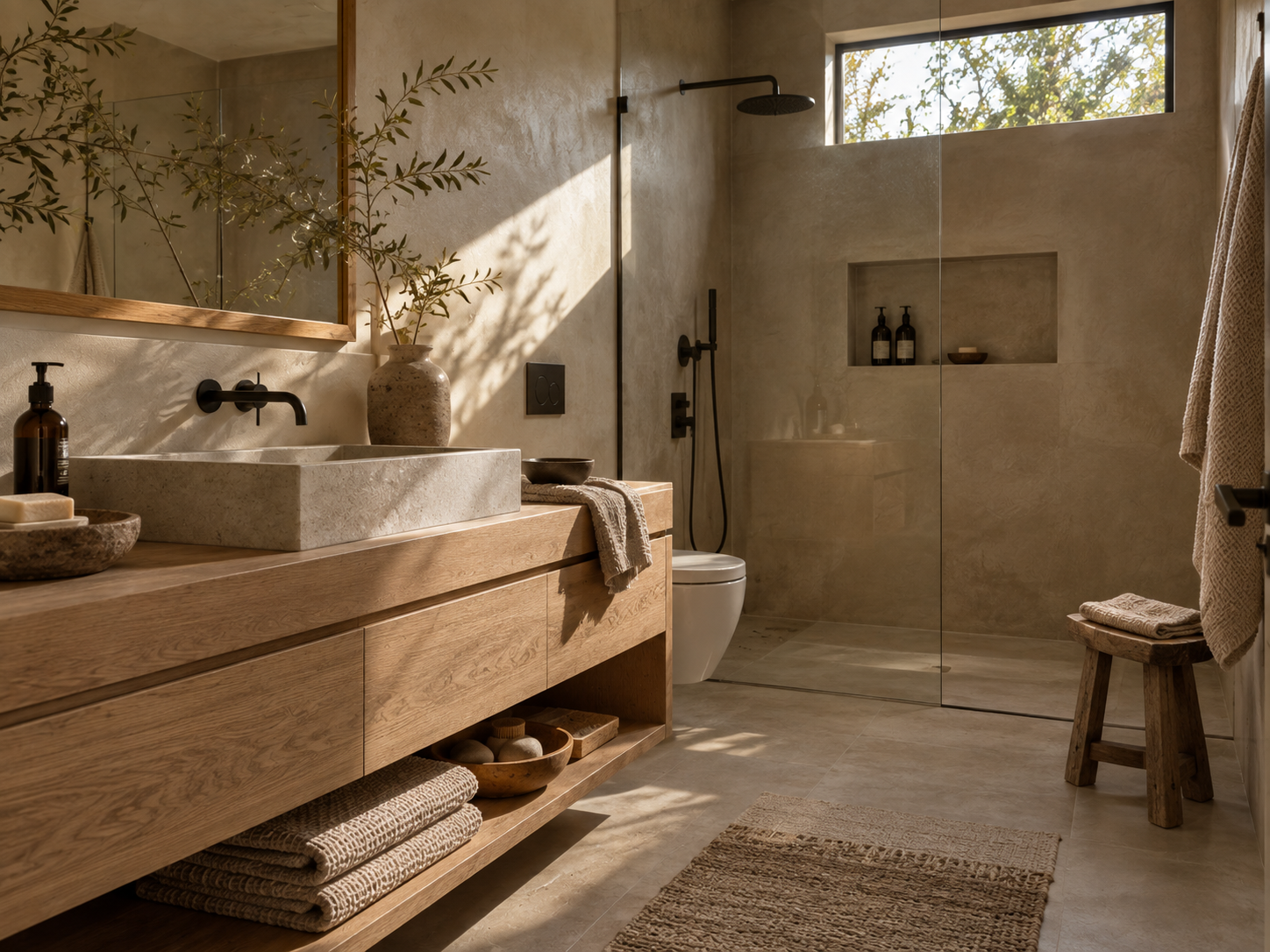
Wood in a bathroom requires consideration — but its presence rewards that care generously. A wooden bathroom vanity or timber wall panel introduces organic warmth that stone and tile alone rarely achieve.
Teak, white oak, and walnut are proven choices for bathroom environments when properly sealed. Their grain and tone provide natural variation that no manufactured surface can offer.
Even a single timber element — a recessed shelf or a stool beside the bath — is sufficient to shift the atmosphere from clinical to genuinely considered.
Layer Lighting for a Softer Atmosphere
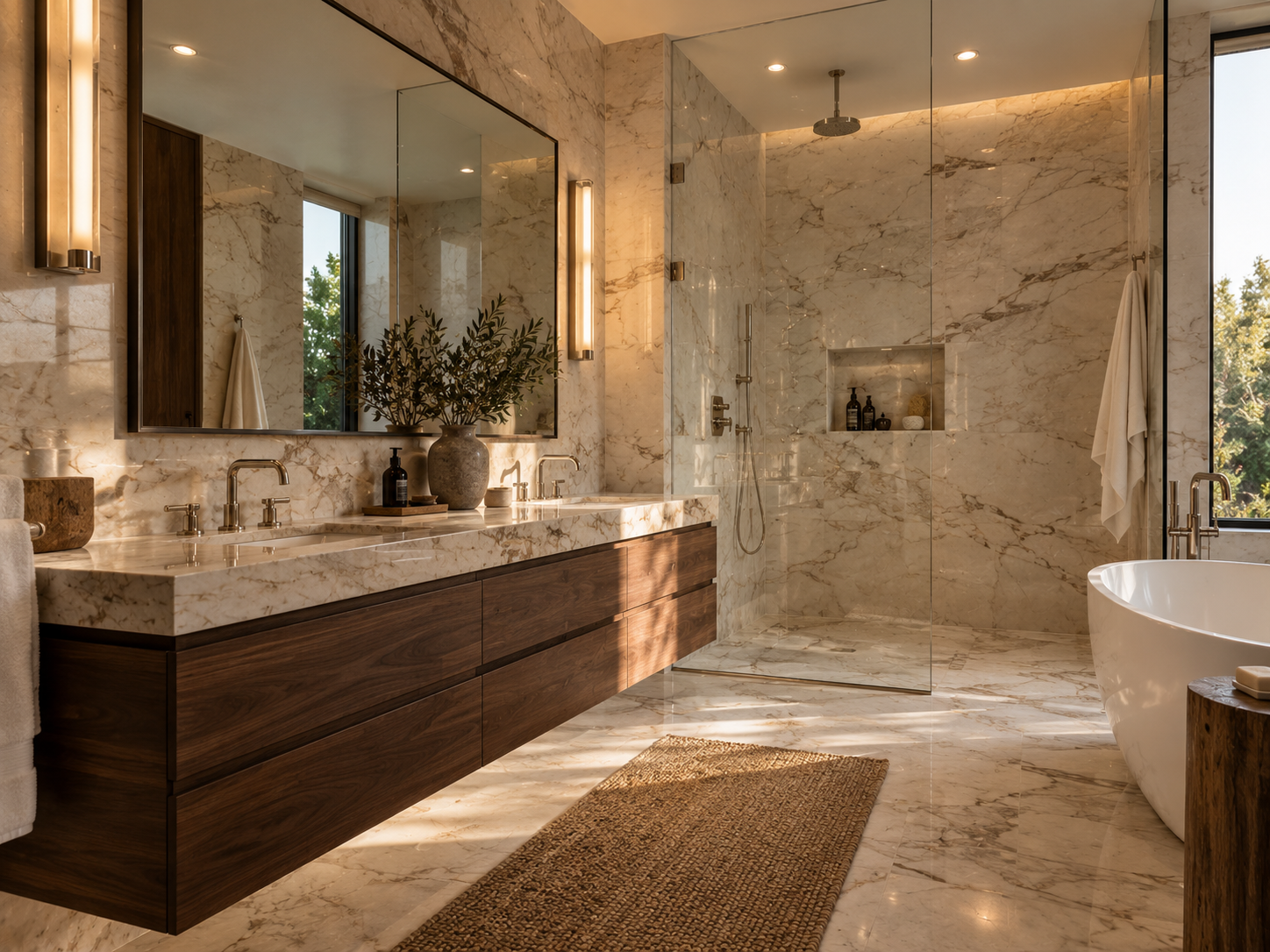
Bathroom lighting design should always be layered — ambient, task, and accent working together so the room can shift from functional to restorative at the change of a dimmer.
Recessed downlights on a dimmer provide the ambient base. Flanking the mirror with vertical sources eliminates the unflattering shadows that overhead-only lighting creates.
Colour temperature matters. Warm white — between 2700K and 3000K — reads as more comfortable and more flattering in any bathroom environment.
Keep the Design Luxurious but Uncluttered
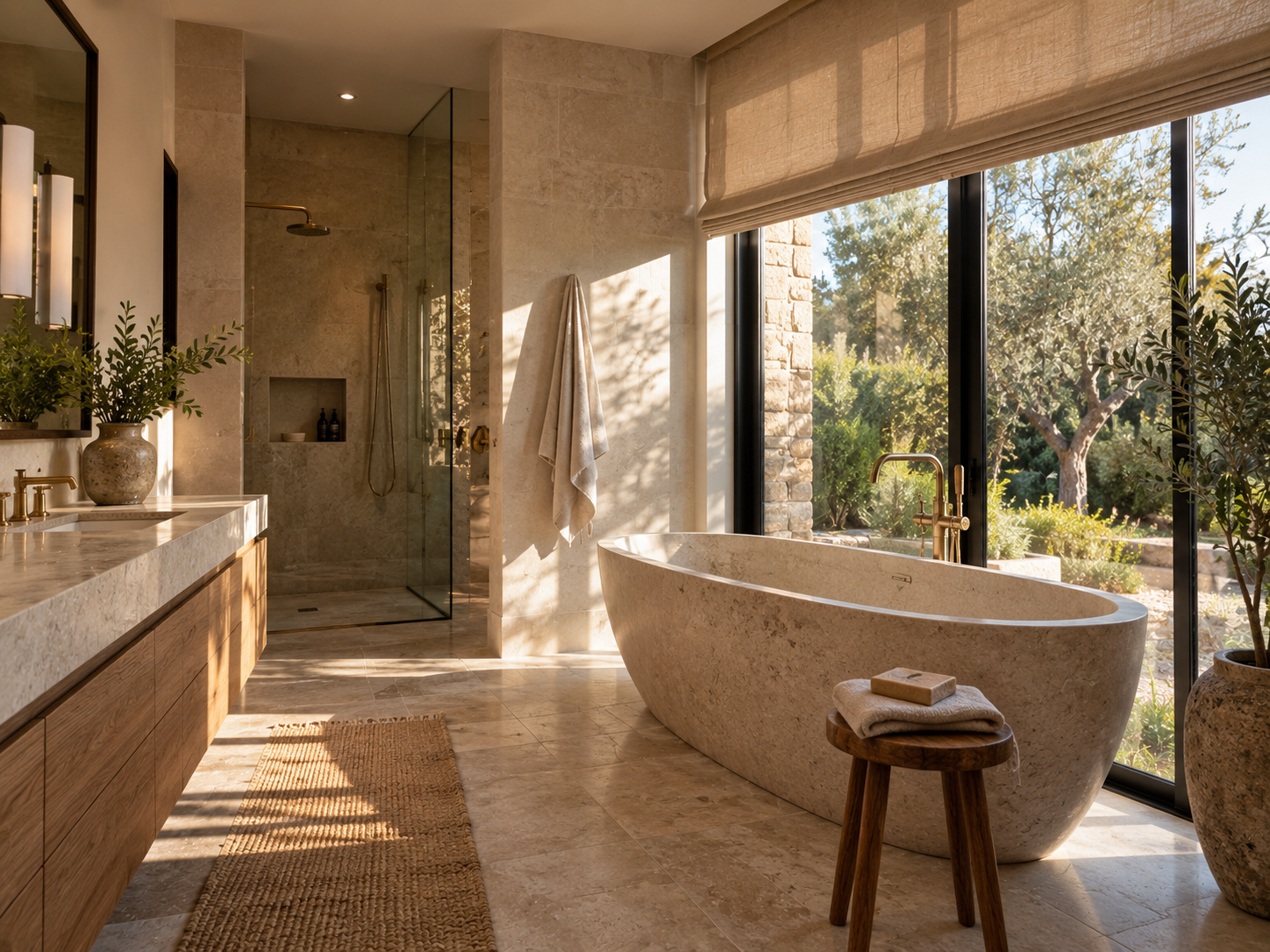
In a luxury bathroom interior, restraint is not an absence of thought — it is the fullest expression of it. Every object that remains on a surface should have earned its place.
Generous storage concealed behind flush cabinetry allows surfaces to remain clear. Clear surfaces allow the materials — stone, timber, the considered fixture — to become the visual content of the room.
A bathroom that is calm to look at is a bathroom that is calm to inhabit. The two are inseparable.
Bring in Greenery for a Natural Touch
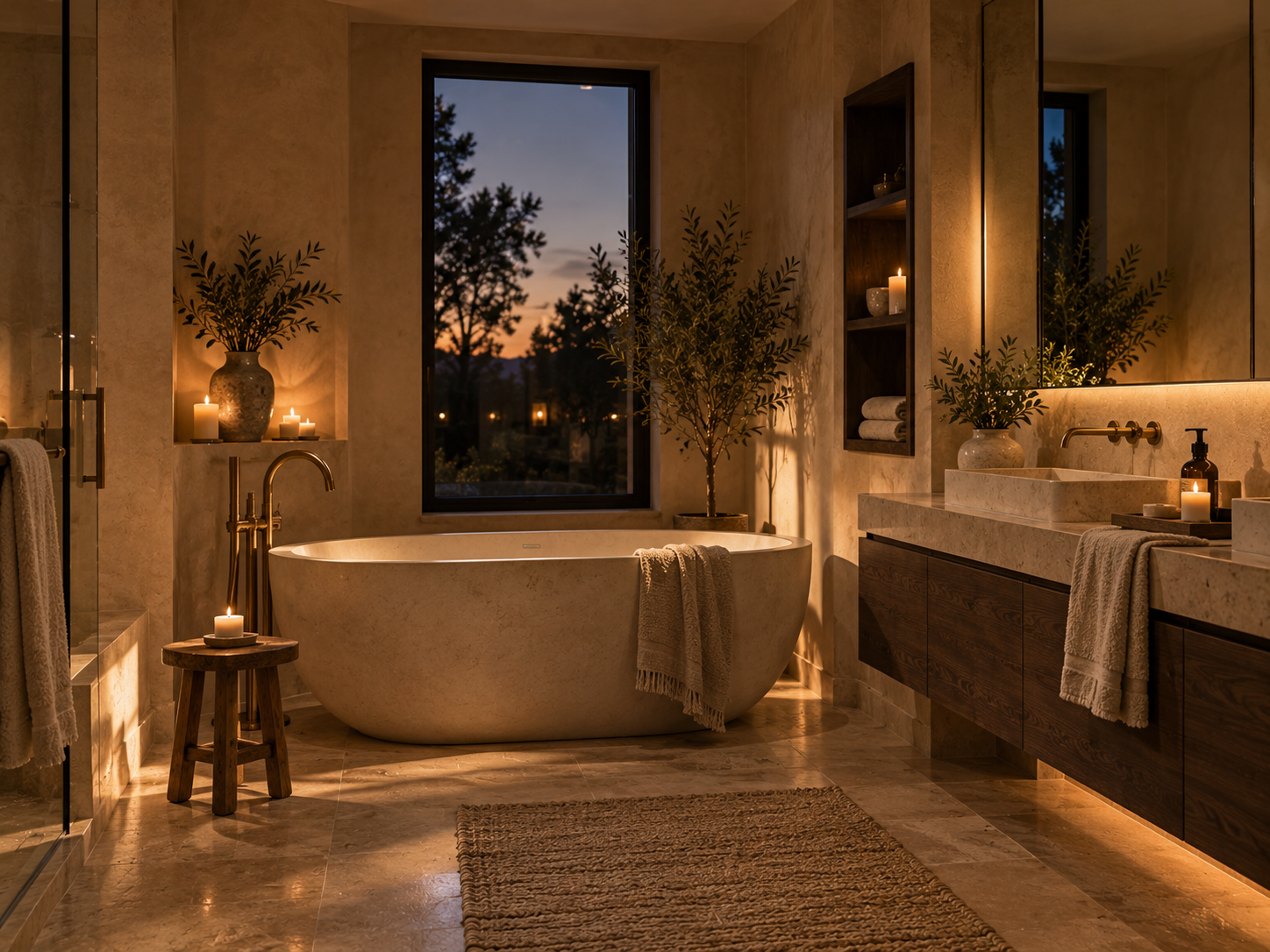
A single well-chosen plant does more for the atmosphere of a spa-inspired bathroom than almost any decorative object. Greenery introduces life, movement, and the quiet presence of the natural world.
A trailing pothos on a high shelf, a sculptural fiddle leaf in a corner, or a simple fern near natural light — each requires consideration of form and condition. Not all plants survive in humid, low-light environments.
One or two plants, chosen with the same discipline applied to every other element, will always feel more considered than a collection without restraint.
Design a Double Vanity That Feels Effortless
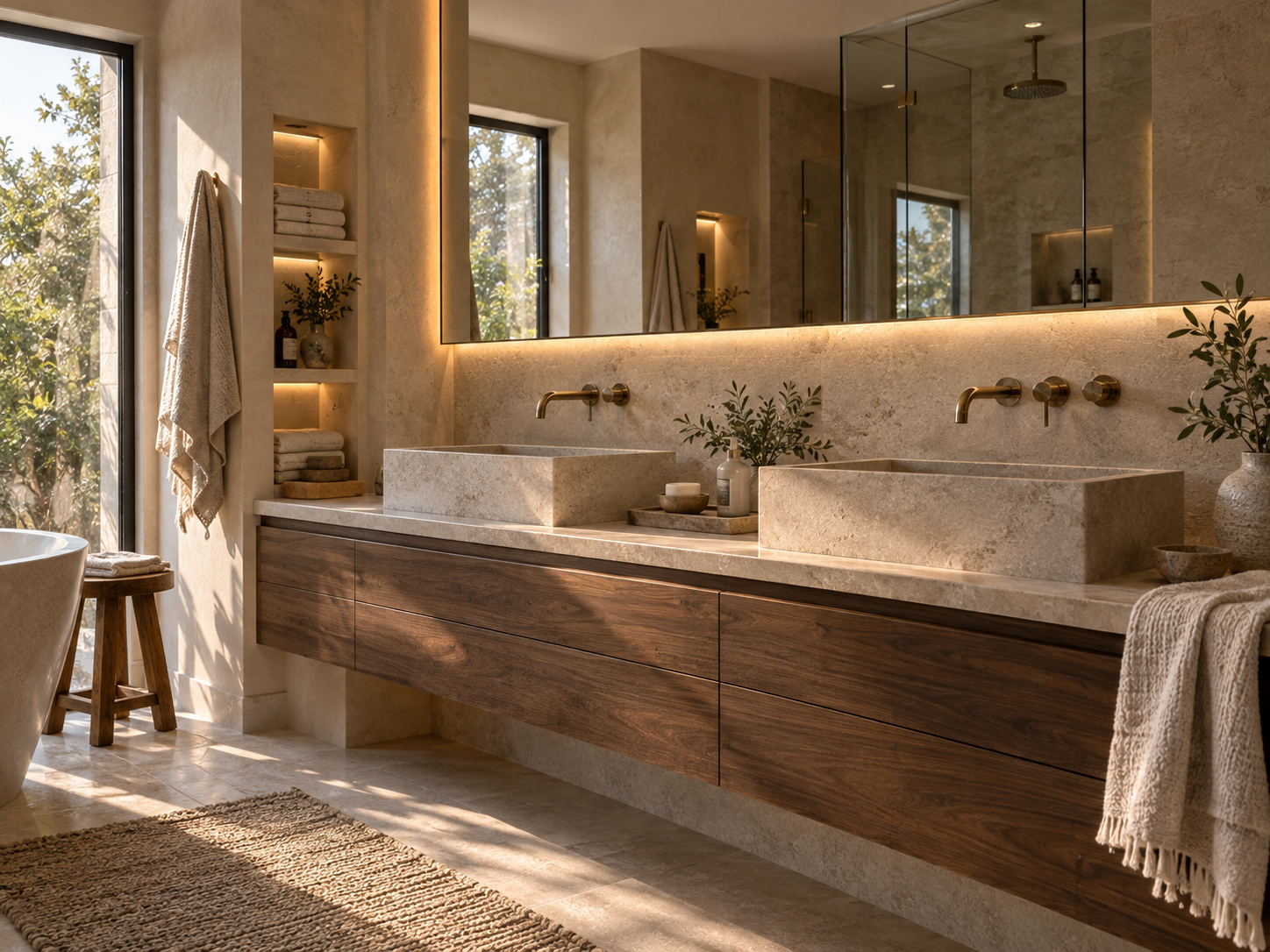
A double vanity bathroom should feel like a single resolved composition, not two separate fixtures placed side by side. Continuity of material, consistent mirror placement, and shared lighting create the visual unity that separates a considered design from an assembled one.
Stone basins or under-mount vessels in a continuous natural stone worktop create the cleanest possible surface. The line should feel uninterrupted.
Ample separation between the two basins — at least 60cm — prevents the composition from feeling compressed. Generosity of proportion is always the correct choice.
Use Texture to Make the Space Feel Richer
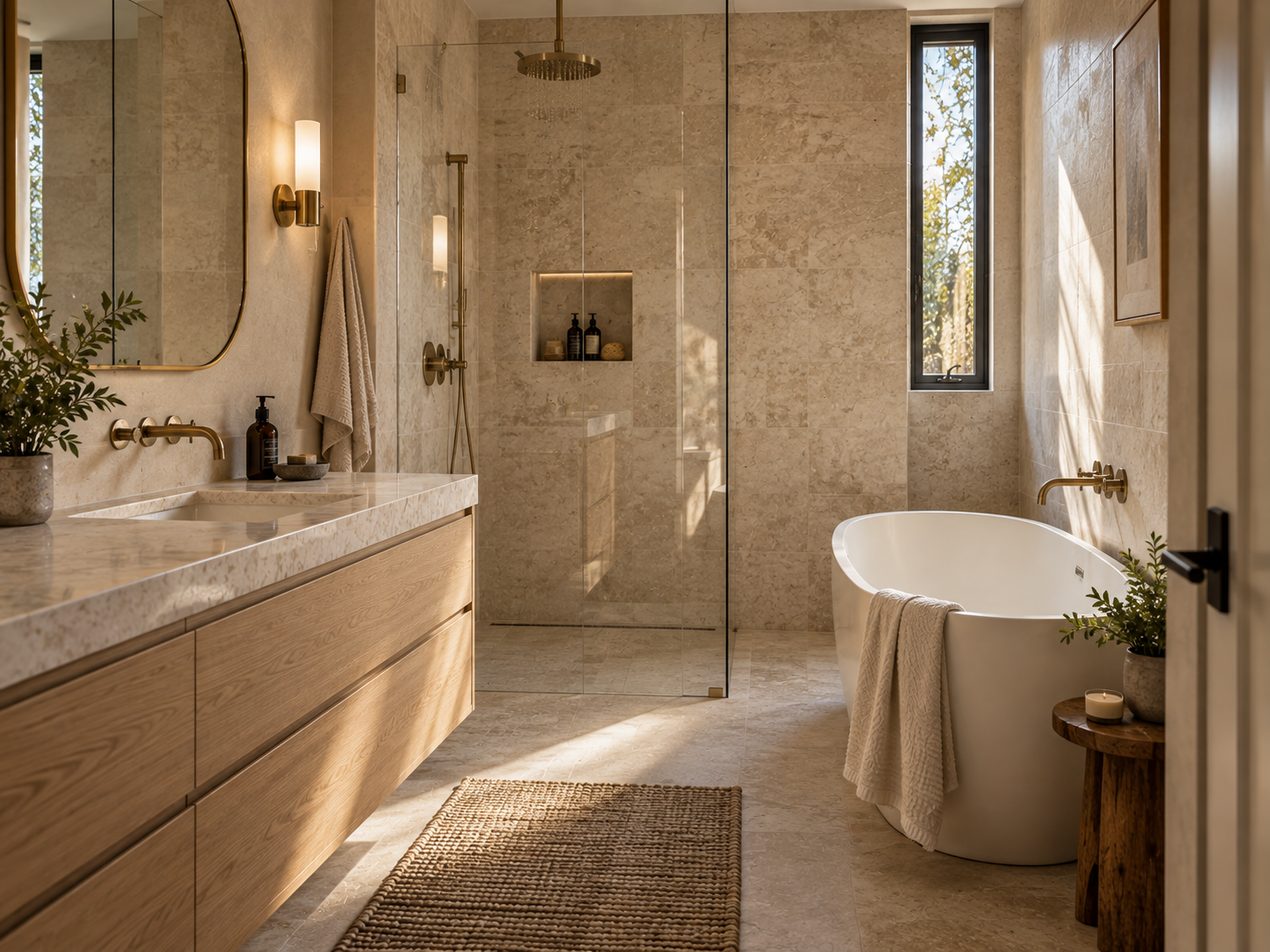
A bathroom that relies on color alone for visual interest will always feel one-dimensional. Bathroom texture ideas — the grain of stone, the weave of linen towels, the rough edge of a timber shelf — create depth that no painted surface can provide.
Texture works because it changes with the light. A surface that appears flat in the morning may reveal considerable character by afternoon.
Introduce texture through materials rather than decoration. Texture inherent to stone, wood, or glass reads very differently from texture applied as ornament.
Create a Shower That Feels Wellness-Inspired
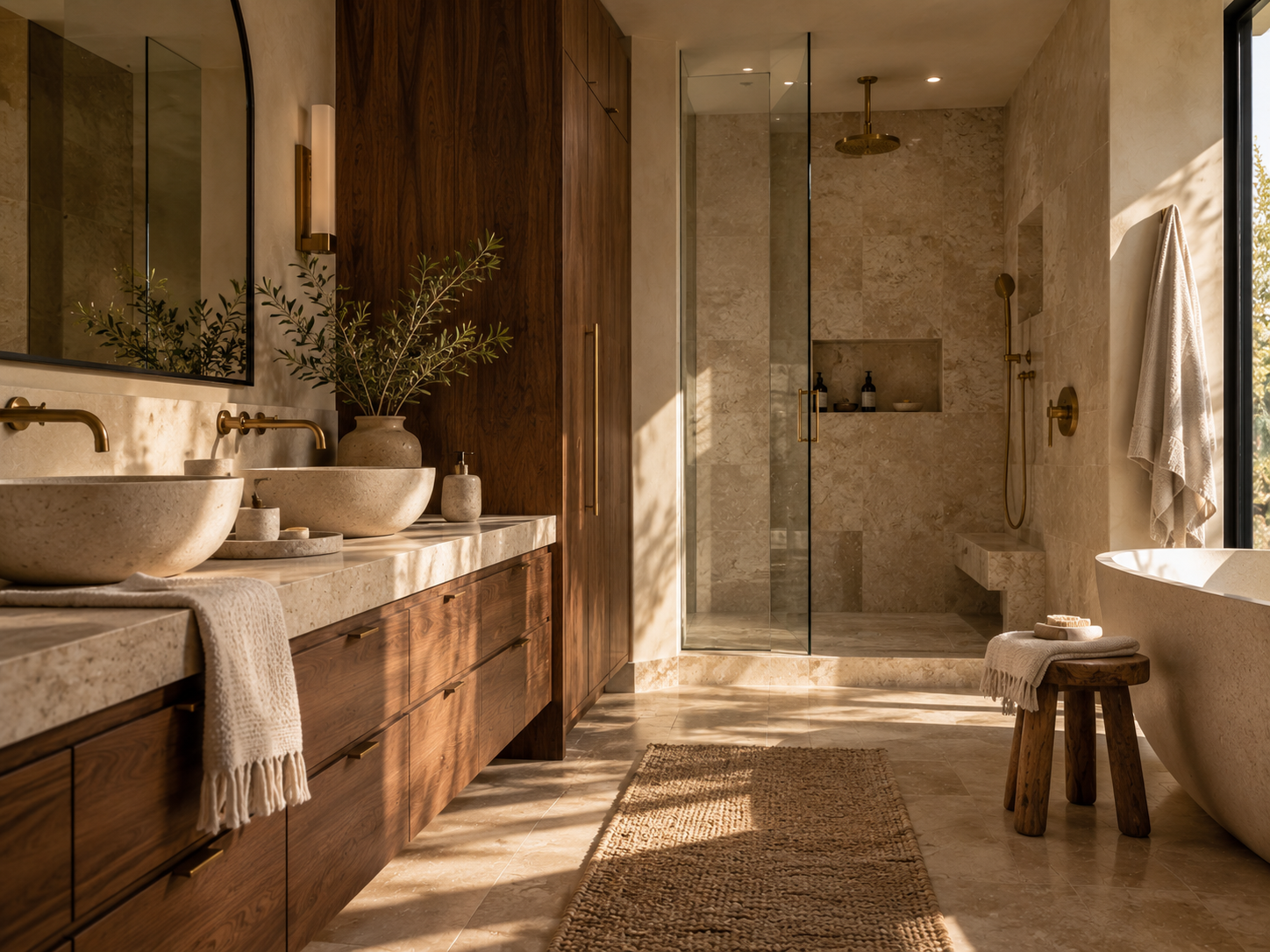
A wellness shower design considers the full sensory experience. Steam capability, body jets, heated stone benches, and integrated niches all contribute to an enclosure that functions as a genuinely restorative space.
A stone or timber seat within the shower invites a slower, more deliberate relationship with the ritual of bathing. It transforms the shower from a utility into an experience.
Natural stone underfoot and large-format stone or wood panelling on the walls complete the sensory environment. The materials should feel as considered as the fittings.
Style the Bathroom With Quiet Restraint
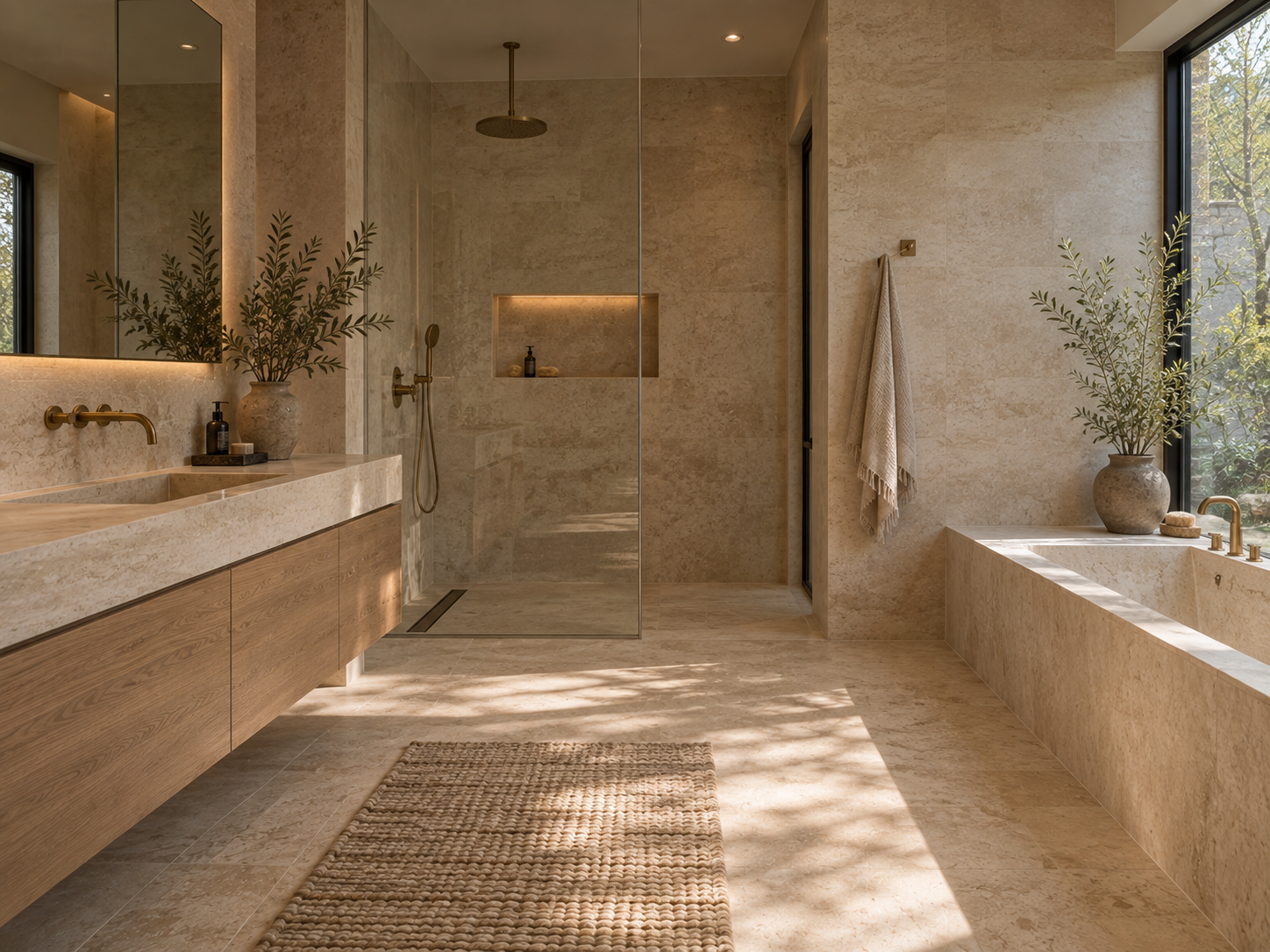
Bathroom styling ideas for a spa-inspired space always begin with removal rather than addition. Edit first, then consider what genuinely remains necessary.
A folded stack of linen towels. A small stone dish. A narrow tray holding only the objects in daily use. These compositions work because they are edited to the point of necessity.
Every visible object is a decision. Style the bathroom as though each one had to justify its presence before being allowed to remain.
Keep the Palette Timeless and Sophisticated
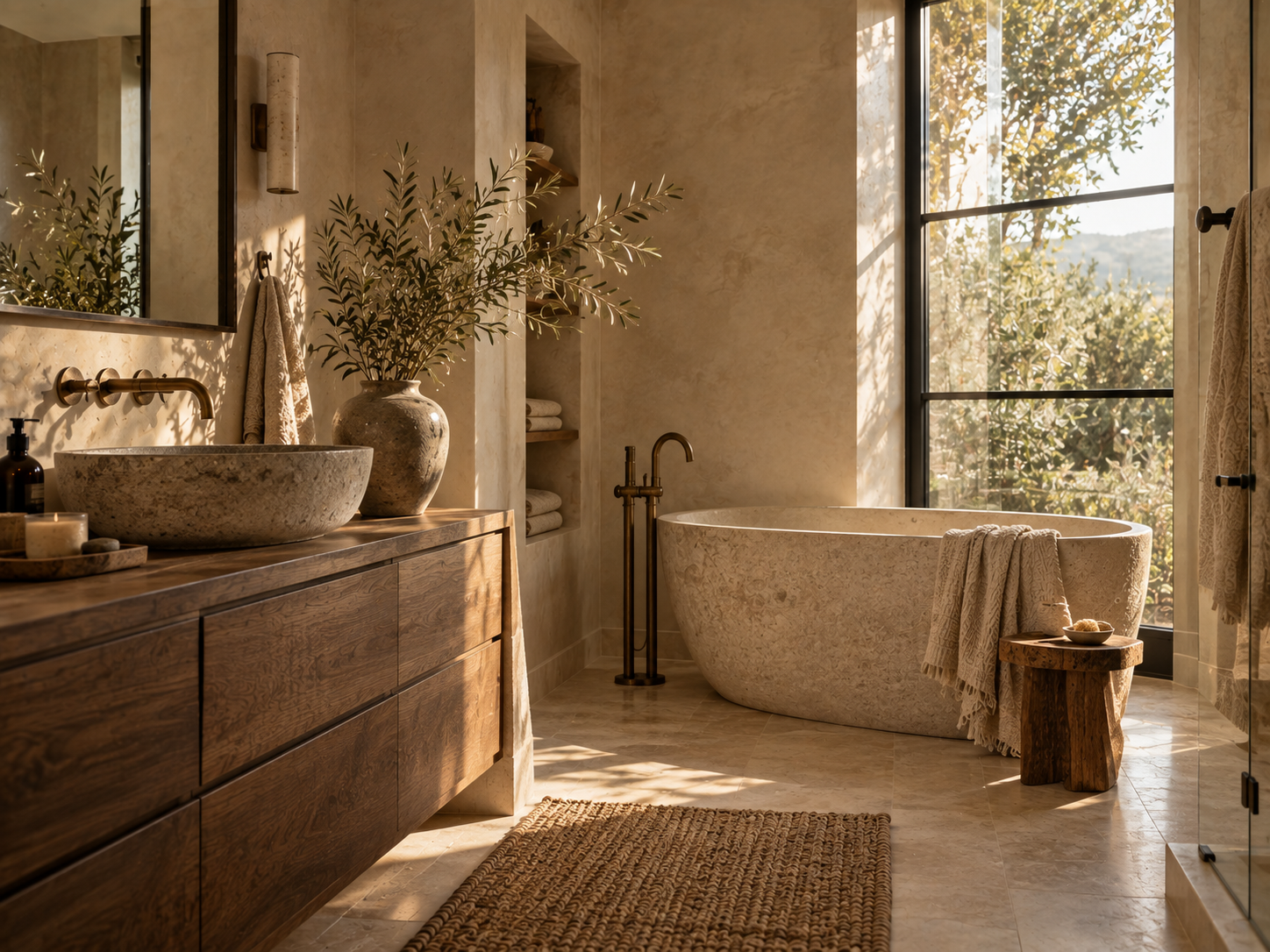
A timeless bathroom design is defined by its refusal to follow trend. Palettes built from warm neutrals — aged ivory, soft greige, warm taupe, and the natural tones of stone — remain relevant across decades.
The sophistication of a palette is measured not by its complexity but by its coherence. Every tone should feel as though it naturally belongs alongside every other.
If a new finish disrupts the existing harmony, the correct response is almost always to reconsider the new choice rather than to adjust what has already been established.
Design the Bathroom as a Personal Retreat
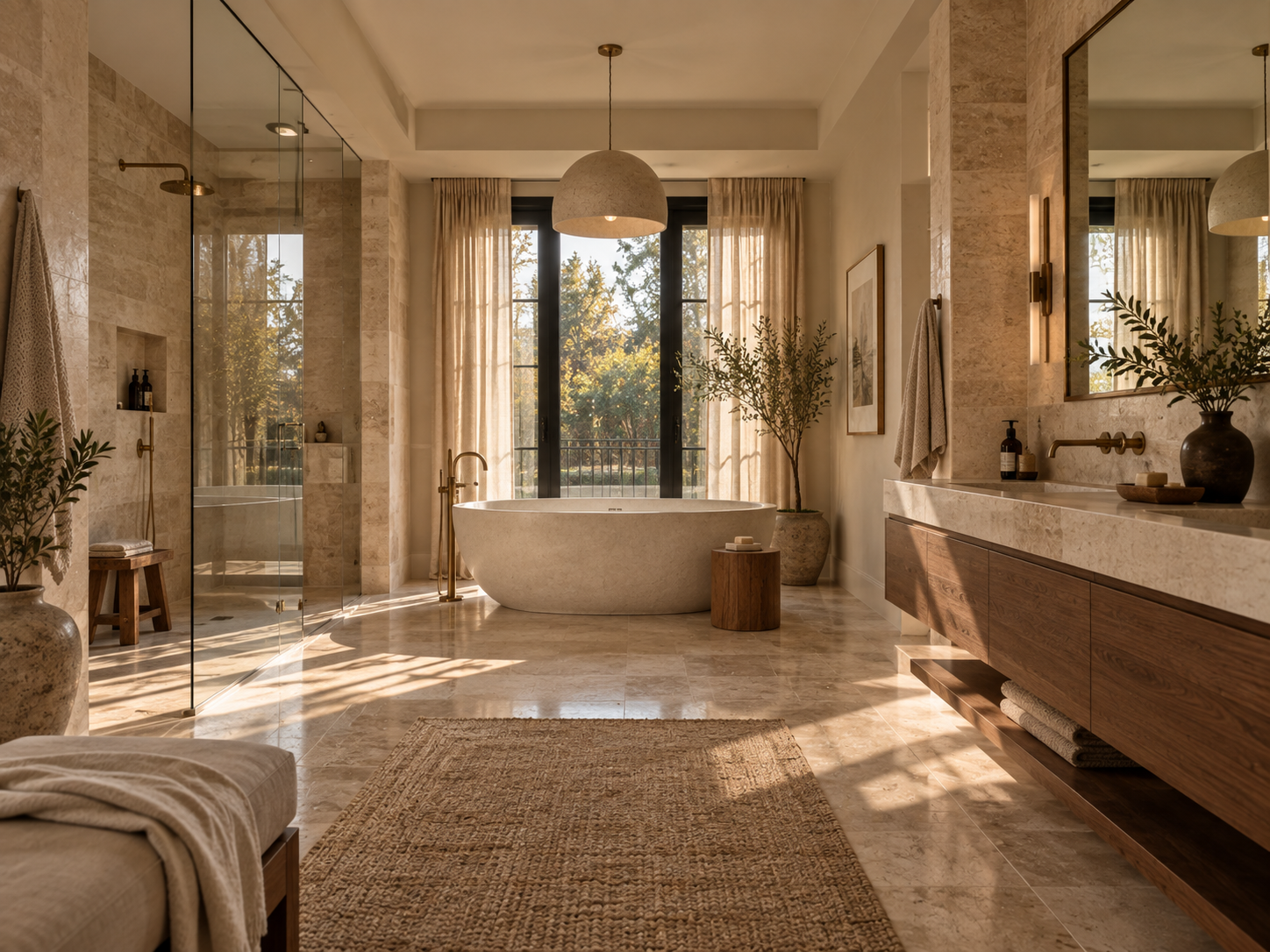
The most resolved spa bathroom ideas feel as though they were designed for a specific person living a specific life — not to satisfy a general brief.
Understanding how the space will actually be used — morning or evening, alone or shared, quickly or at length — should shape every decision from layout to material to lighting.
A bathroom designed as a genuine personal retreat simply needs to deliver calm and quiet luxury each time the door is closed behind you. That is the only measure that genuinely matters.
Spa Bathroom Design — Common Questions
The quality of light comes first. A spa bathroom interior can be built from the finest materials and still feel wrong if the lighting is harsh or poorly considered. Natural light during the day, layered warm artificial light in the evening, and a dimmer on every circuit — these decisions shape the entire experience before any material is selected.
Honed limestone and honed travertine are among the most considered choices for natural stone bathroom floors. Both offer warmth underfoot, age gracefully, and absorb light in a way that polished stone cannot. Always specify a honed finish for safety in wet areas and for the quieter visual quality it provides.
A smaller bathroom becomes spa-like through the same principles applied at any scale — restraint, material quality, and calm. Limit surfaces to one or two natural materials, keep visible objects to an absolute minimum, and invest in warm layered lighting. A small spa bathroom that applies these principles will consistently outperform a large bathroom that does not.
Unlacquered brass and brushed nickel are the most enduring choices for bathroom hardware finishes in a spa-inspired interior. Unlacquered brass develops a natural patina over time that becomes increasingly beautiful with use. Brushed nickel remains consistent and pairs cleanly with cooler stone palettes. Both age far more gracefully than chrome in a considered bathroom environment.