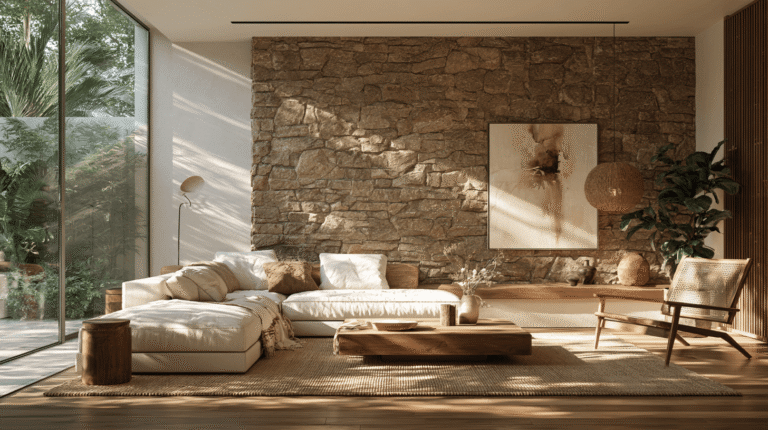
How to Layer Limewash and Plaster Walls in a Contemporary Living Room
I love a wall that looks like it has a past. Layering limewash and plaster walls in a contemporary living room gives you soft, chalky texture without a single flat coat of paint. Here is how to build that quiet, weathered depth with timber, textiles, and a few well-placed details.
Contrast Weathered Lime with Raw Timber
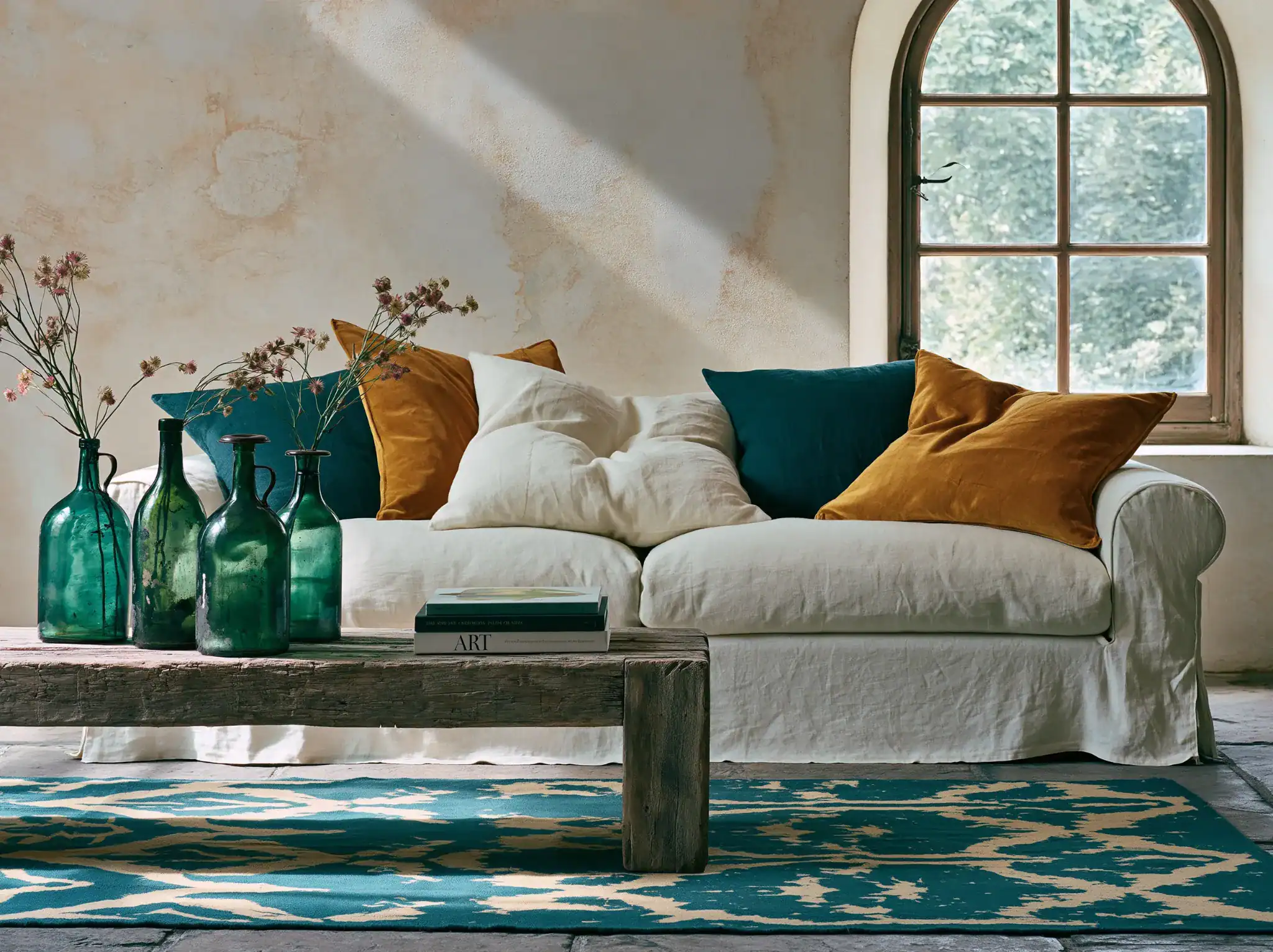
Limewash needs something solid to lean on. I like pairing it with a walnut coffee table, a reclaimed beam, or a rough-sawn console. Without that contrast, the finish can pass for tinted paint.
Pick timber with visible grain and a matte or oiled finish. Glossy lacquer fights the chalky surface, while raw oak and ash feel at home against it. Keep the wood in one warm family and the room stays calm. Even a small piece, like a stool or a picture ledge, does the job if the grain is honest.
Application matters as much as styling. Brush limewash on in thin, crisscrossed coats, and let each one dry for a full day. It’s alkaline, so wear gloves and eye protection, and read the National Lime Association safety guidance first.
- Set soft lime against raw timber
- Brush thin coats and let each dry fully
- Layer textiles in two or three warm tones
- Test every sample in daylight
Layer Warm Textiles Over Pale Plaster
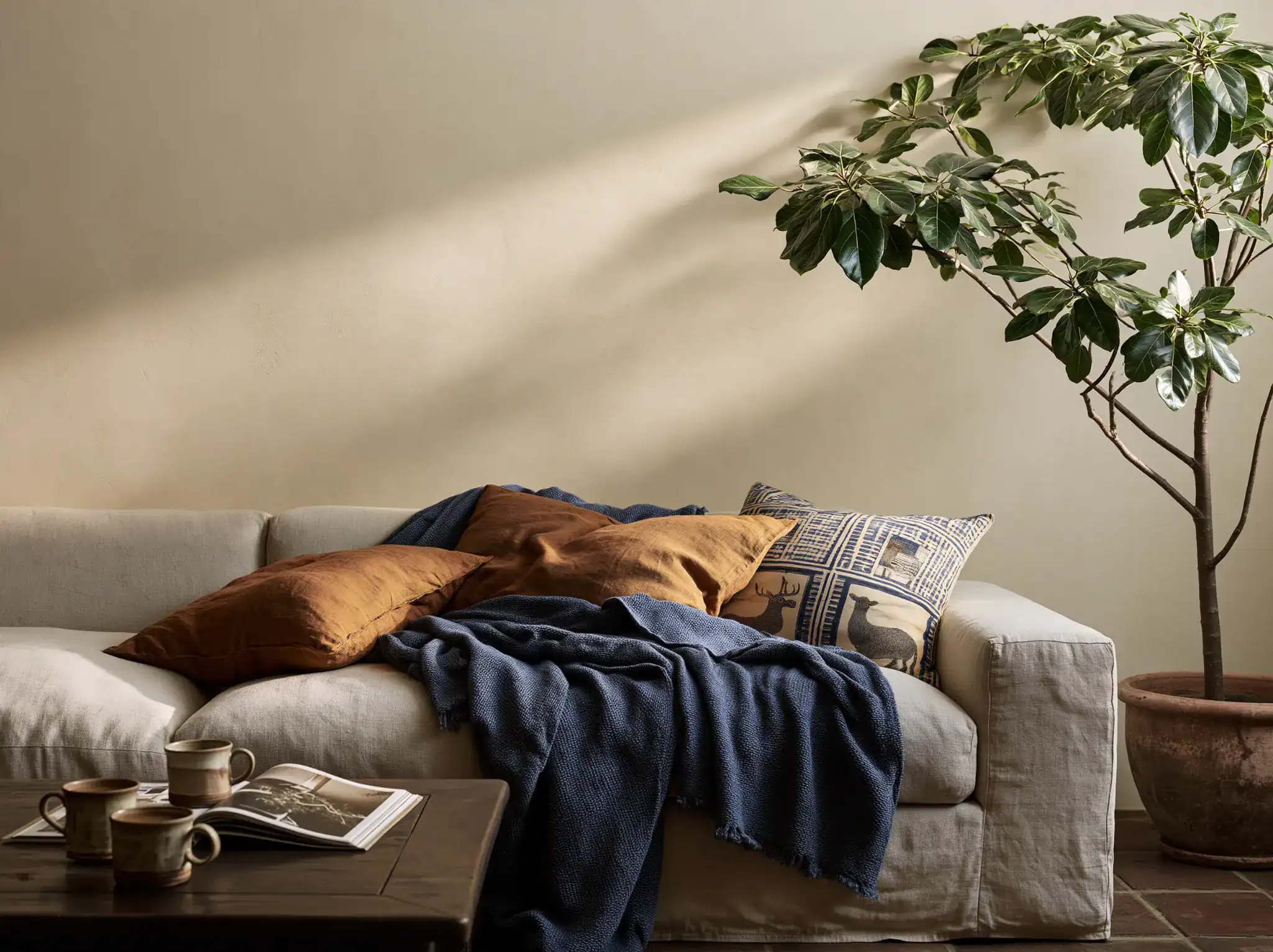
Pale plaster is a quiet backdrop, so textiles do the warming. A chunky wool throw, linen pillows, and a bouclé chair add the softness a wall can’t. I’d let the fabric talk and keep the wall silent.
Pull colors from the earth, not a paint deck. Rust, clay, and oatmeal sit beautifully against lime, and one muted blue throw stops the palette from going too sweet. Stick to two or three tones.
Vary texture more than color. Smooth linen beside a heavy knit and a little velvet gives a sofa depth without any pattern. Try three pillows or five, and drape one throw loosely over the arm.
Don’t forget the floor. A flat-woven wool rug in a similar tone ties the sofa to the wall without competing with either.
Anchor the Room with a Plaster Hearth
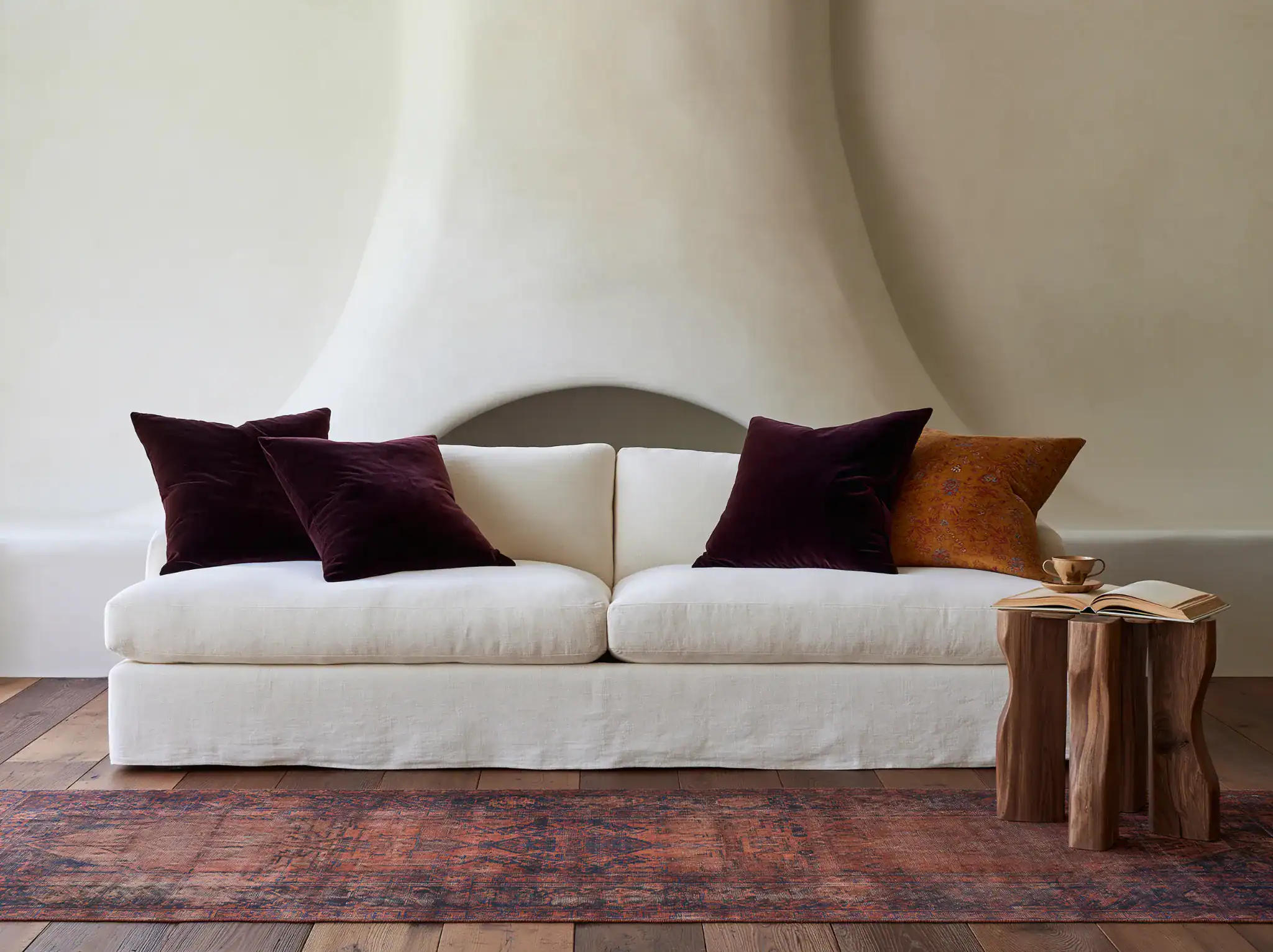
A plastered fireplace gives a contemporary living room a calm focal point. Lime plaster or Roman clay wraps the hearth in one seamless piece, with no trim to interrupt the line. It feels more like sculpture than a fireplace.
Keep the surround simple and let the finish carry the mood. A plum velvet pillow against a white sofa adds a quiet hit of richness. Leave the ledge almost bare, maybe one vase or a short stack of books. Warm lamplight in the evening makes the trowel marks glow, which is half the reason to choose plaster here.
Do a safety check before plastering near a firebox. Use a heat-rated lime or mineral plaster, not an acrylic one, and follow your fireplace maker’s clearances. A mason or licensed installer can tell you what suits wood versus gas.
Carve Out Recessed Architectural Niches
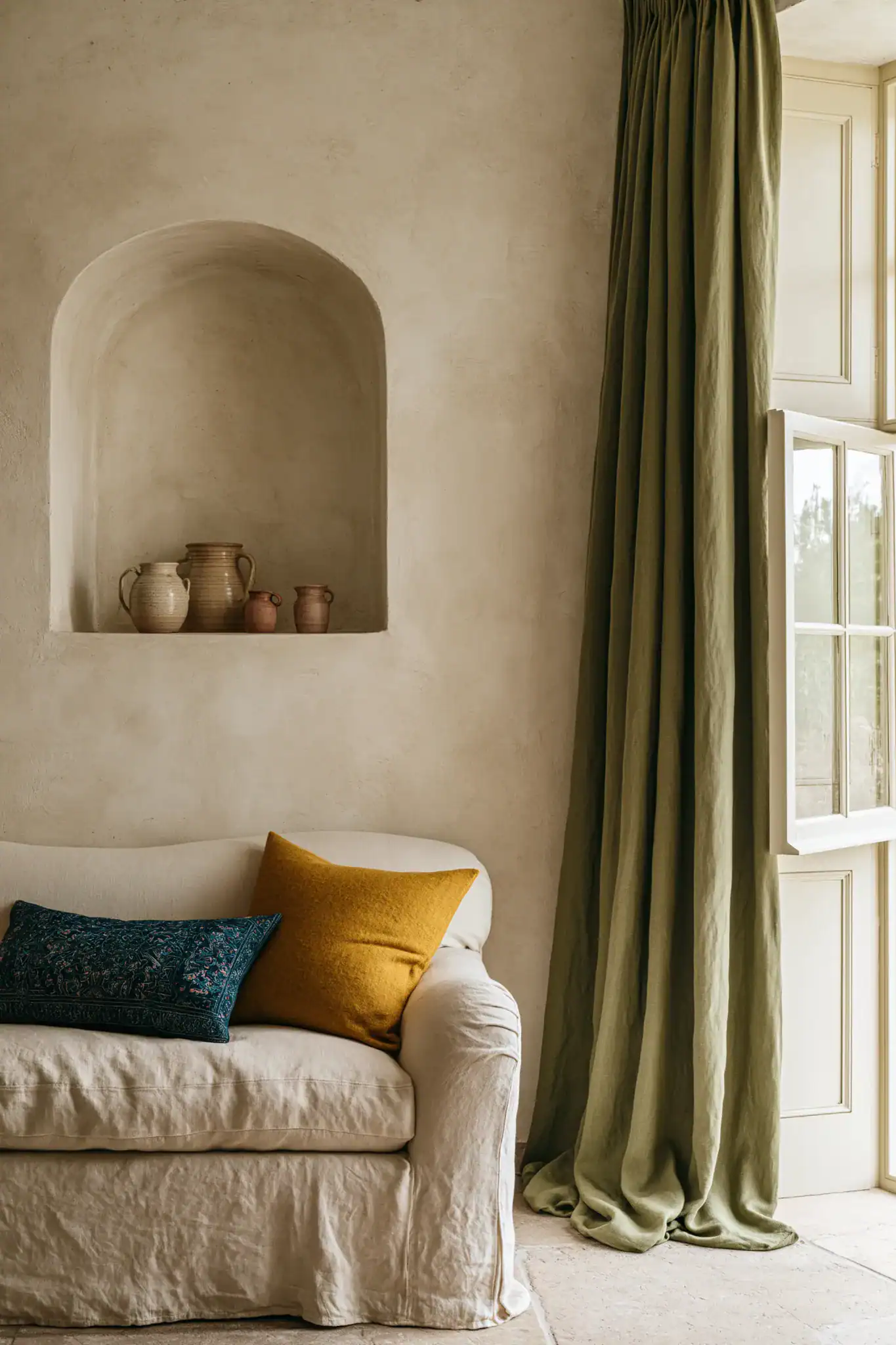
A recessed niche gives plaster walls depth that paint can’t fake. Even a shallow arch catches light along its curve and throws a soft shadow inside. Suddenly the wall feels built, not painted.
Depth is the practical question. A standard stud wall gives you about 3.5 inches, enough for one vase or a small sculpture. Before cutting, have a pro check for wiring and plumbing, and ask about framing it out if you want more.
Style it with one object, not a shelf’s worth. A clay vase, a stone bowl, or a single dried branch is plenty. Plaster the inside a shade darker or lighter than the wall so the opening has its own tone. A slim LED strip tucked inside the top edge can wash the curve with soft light at night.
- Work wet edge to wet edge to avoid hard lap lines.
- Save a small jar of leftover limewash for touch-ups.
- Skipping primer over glossy or sealed paint.
- Rolling limewash on like regular paint, which flattens the movement.
Break the Beige with Mineral Sage
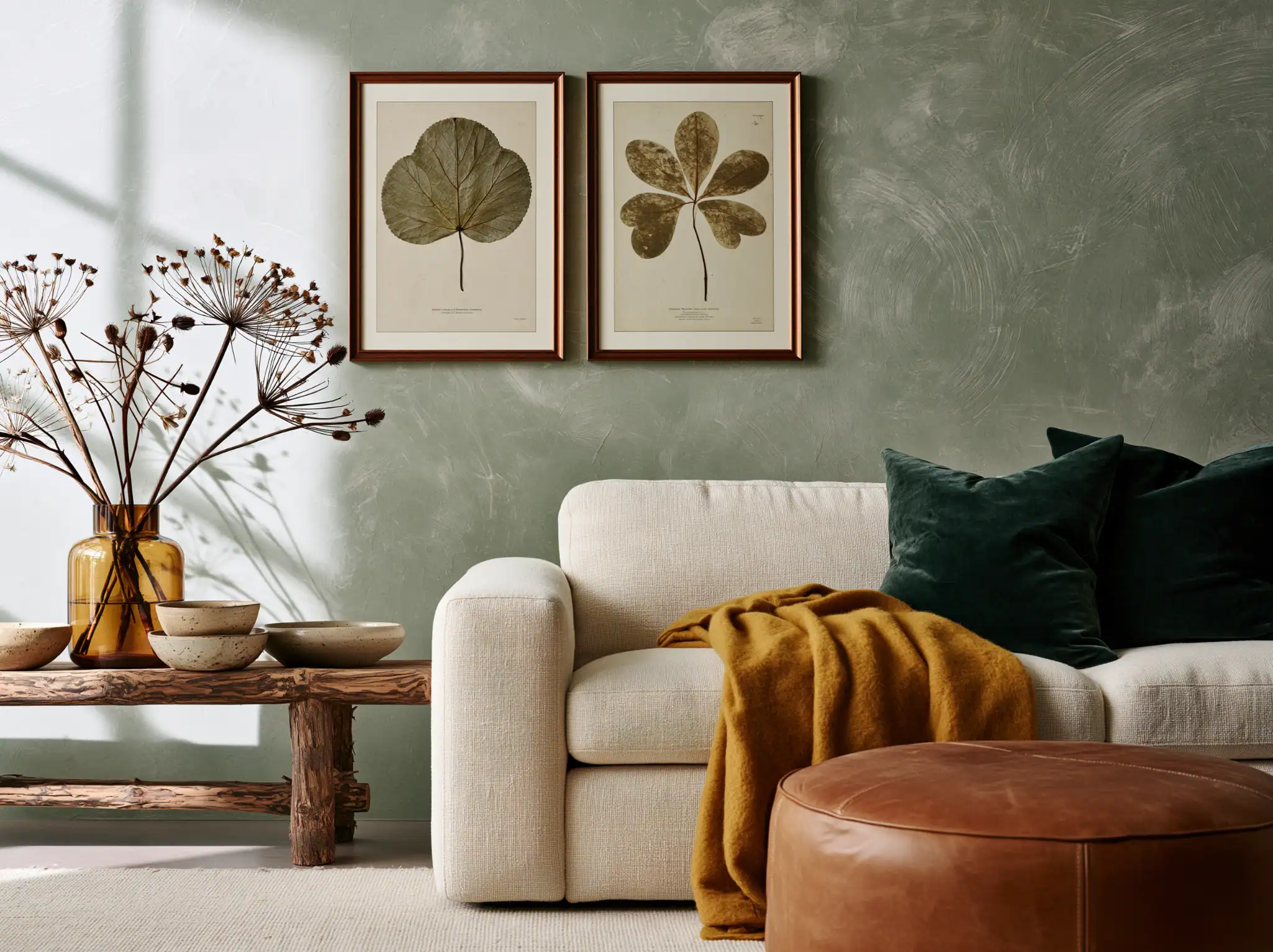
Too much beige can leave a room flat. One sage limewash wall brings in color and keeps the calm, because mineral pigments stay soft and slightly chalky. I’d choose the wall behind the sofa or the one you face coming in.
Check undertones before you commit. A gray-leaning sage works with cool plaster and black metal, while a yellow-leaning one suits warm oak and cream. Paint a sample about 2 feet square and watch it for a few days. Sage also shifts through the day, looking grayer at dusk and fresher in morning light.
Keep everything else neutral. Cream upholstery, natural wood, and a jute rug let the green lead. One sage wall is enough, and a second turns it into a theme.
Limewash and Plaster Walls — Common Questions
Yes, and it bonds best to raw lime or cement plaster, which are both porous. Over painted or sealed surfaces, apply a mineral-based primer made for limewash first. Test a small patch and let it dry fully before committing to the whole wall.
Limewash is made to breathe, so most walls are left unsealed. Plaster in high-touch spots, like a hearth or the wall behind a sofa, can take a breathable mineral sealer or wax. Follow the manufacturer’s directions, because the wrong sealer can leave a shiny patch.
Start with soft white, warm greige, or muted sage, which show the cloudy movement of the finish without crowding the furniture. Deeper clay and charcoal also work on a single wall in a bright room. Always sample in your own light, since limewash lightens as it dries.