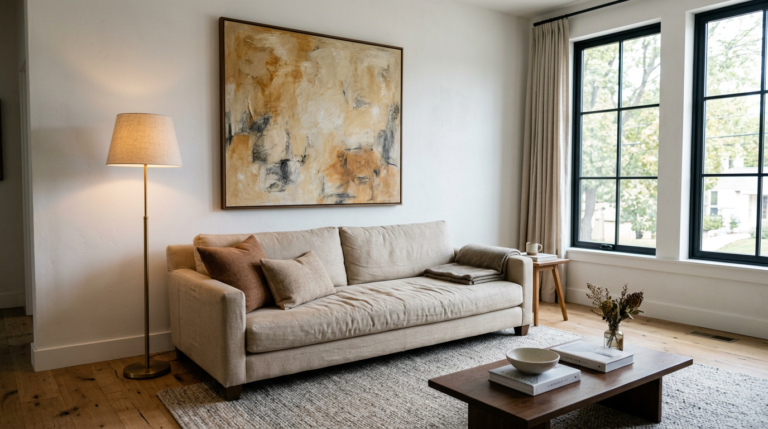
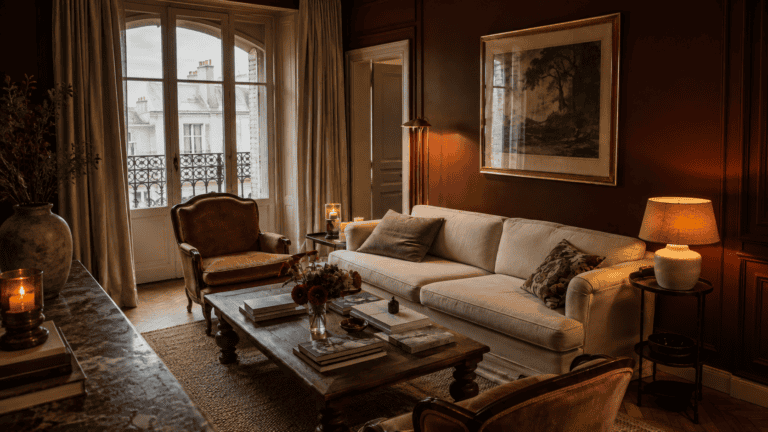
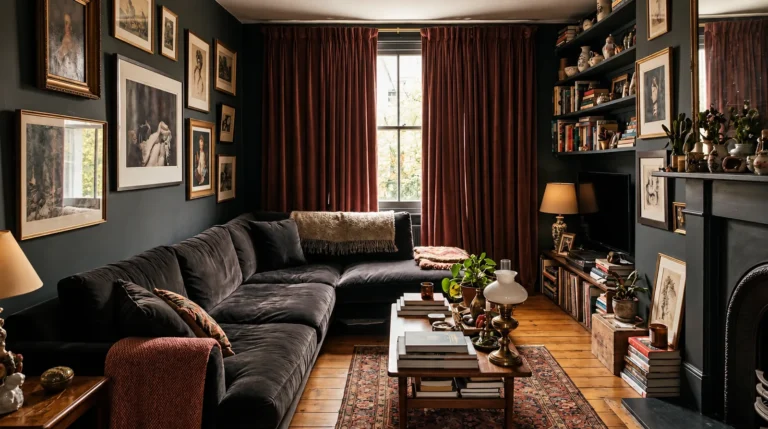
15 Quiet Luxury Living Room Ideas That Look Expensive on Any Budget
Layer Wood and Stone
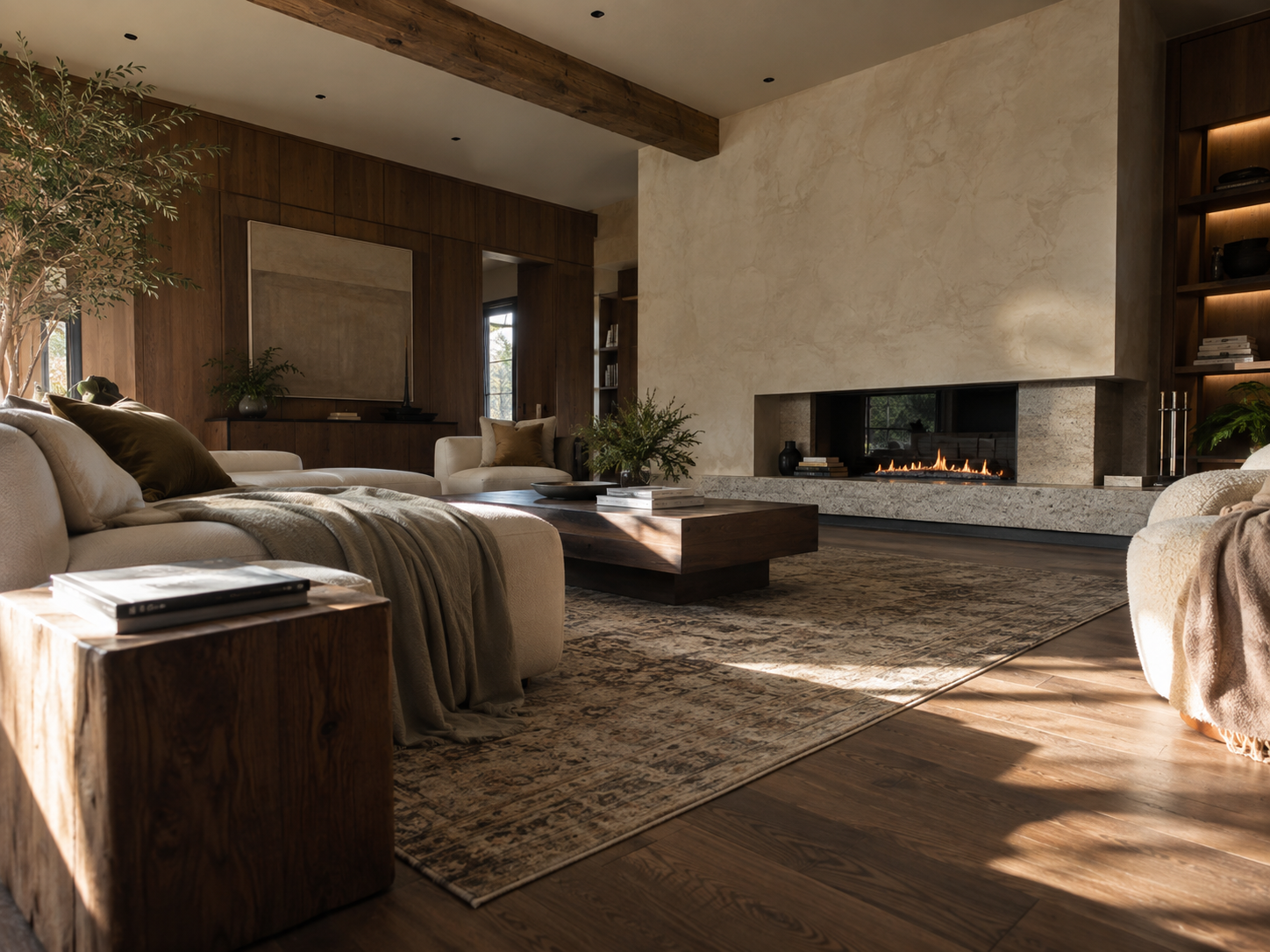
Stone and timber have furnished interiors across every era and climate. Together, they create sensory warmth no synthetic material has replicated — a quality that reads immediately and remains long after other details fade from memory.
Wide-plank oak beneath limestone walls, or exposed beams beside a stone fireplace — the materials need not match, only belong to the same honest conversation. Their differences are precisely what makes them work together.
The finest luxury living rooms rarely introduce more than two or three primary materials. Restraint allows each element to be properly seen and genuinely felt rather than simply present.
Key Points
Mix Old and New
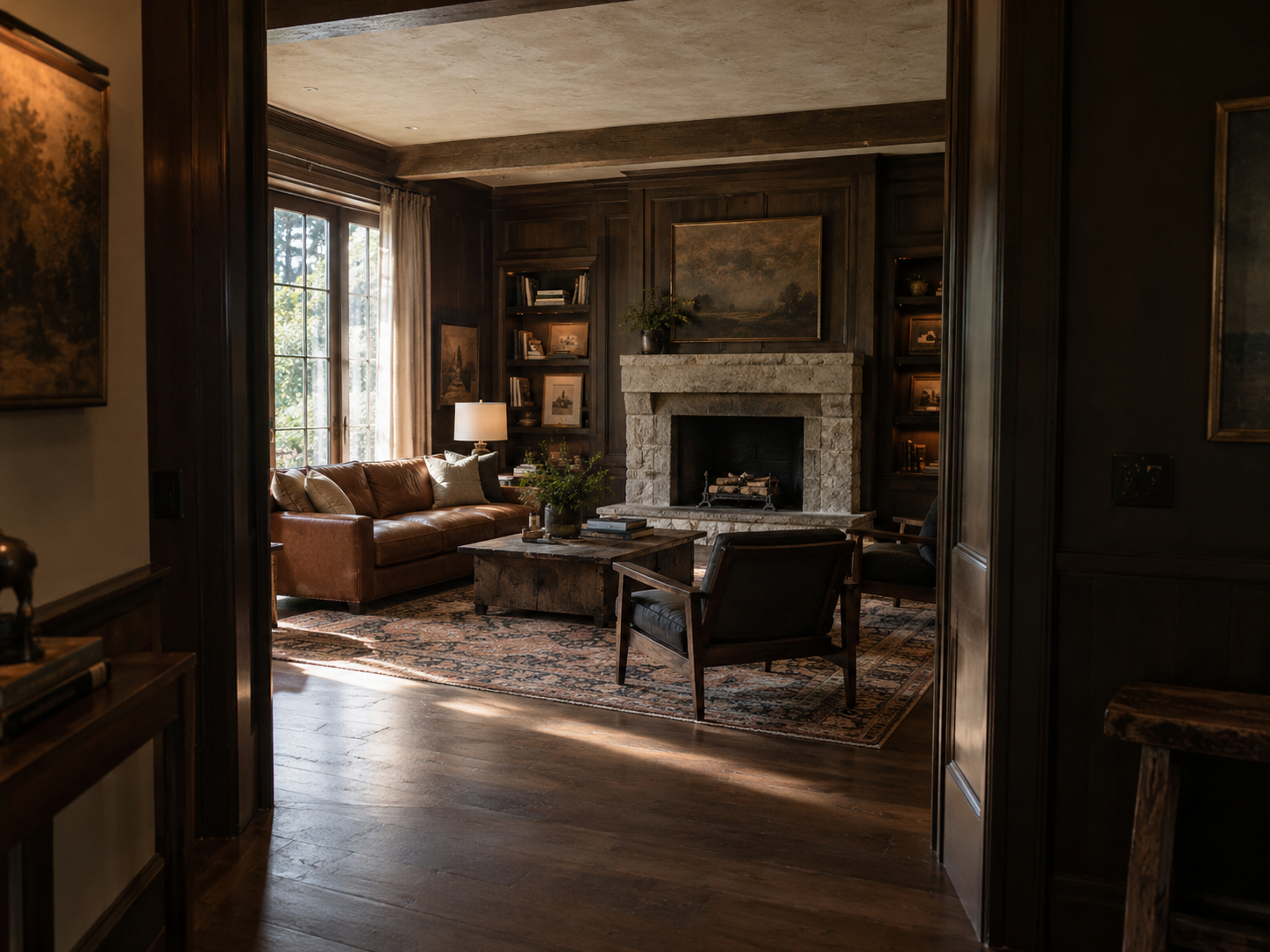
Rooms containing only new objects feel assembled. Rooms containing only antiques feel preserved. The most interesting interiors exist between these two states.
Mixing old and new furniture creates the impression of a life thoughtfully lived rather than a showroom carefully staged.
Collect slowly. The most personal rooms were never completed in a single afternoon — and they are better for it.
Build Around Conversation
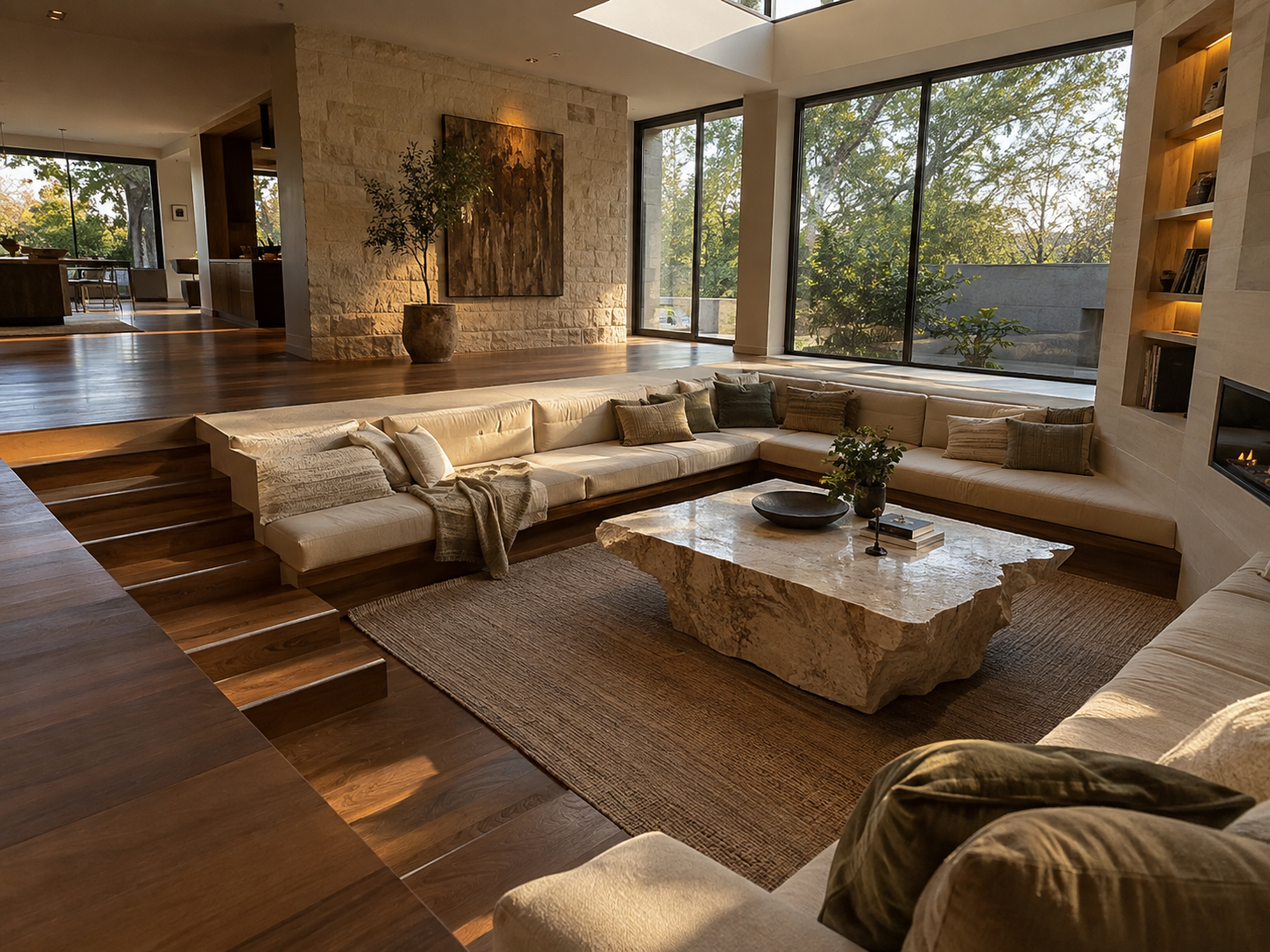
A living room should make people feel comfortable enough to stay. Chairs and sofas turned toward each other — rather than toward a screen — create an instinct for conversation.
Good living room seating arrangements consider natural sightlines, available light, and the relationship between pieces at rest.
If someone enters and immediately understands where to sit, the arrangement is working. If they hesitate, something needs to move.
Make Windows a Feature
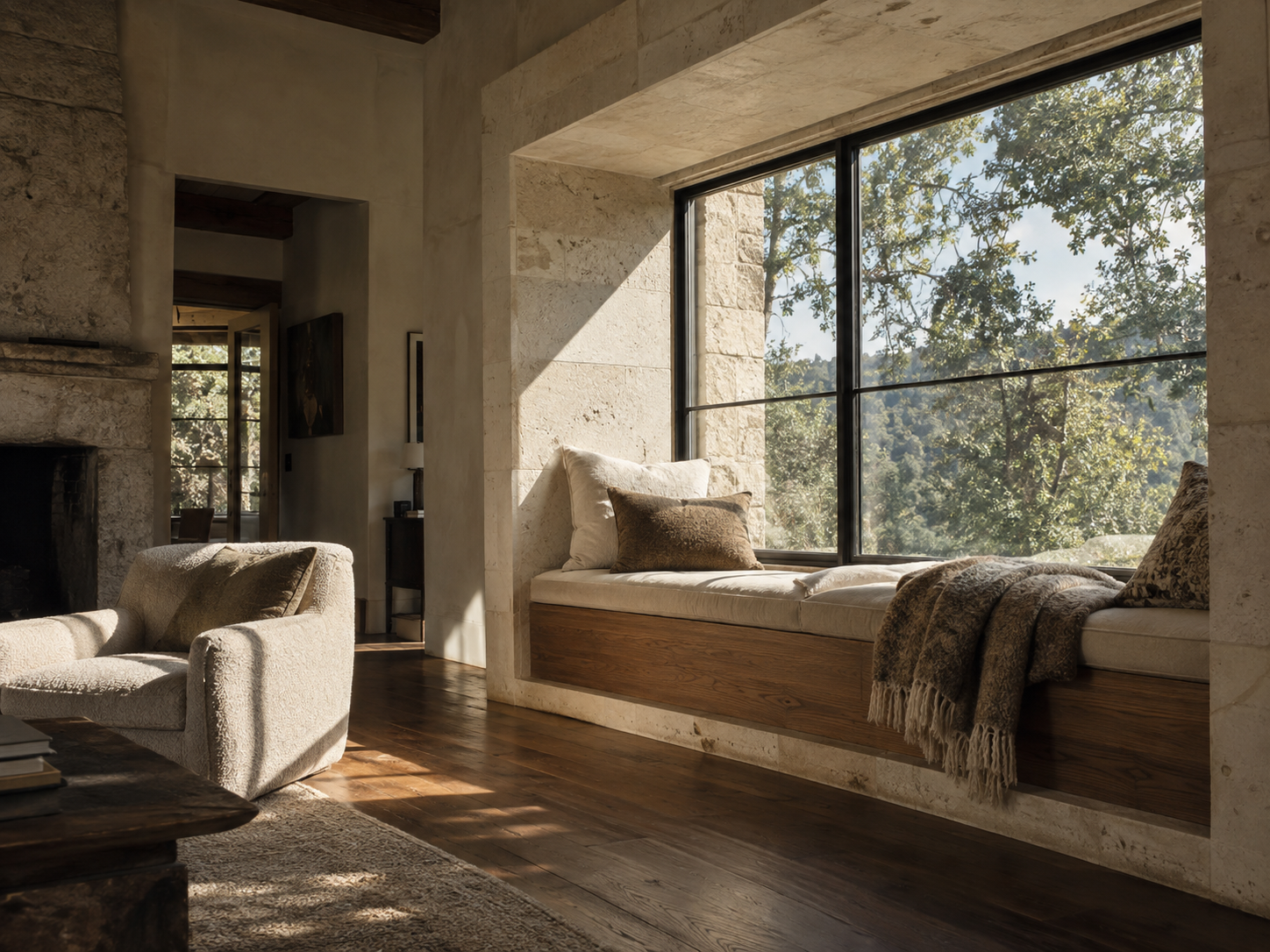
Natural light is the most valuable material in any interior, yet frequently the most neglected. Maximising natural light in living rooms changes how a space feels across every season.
Curtains hung deliberately wide and high, deep sills dressed with a single object — these choices transform light from an accidental benefit into a deliberate design element.
The outside world, framed properly, becomes a living part of the interior.
Add Custom Millwork
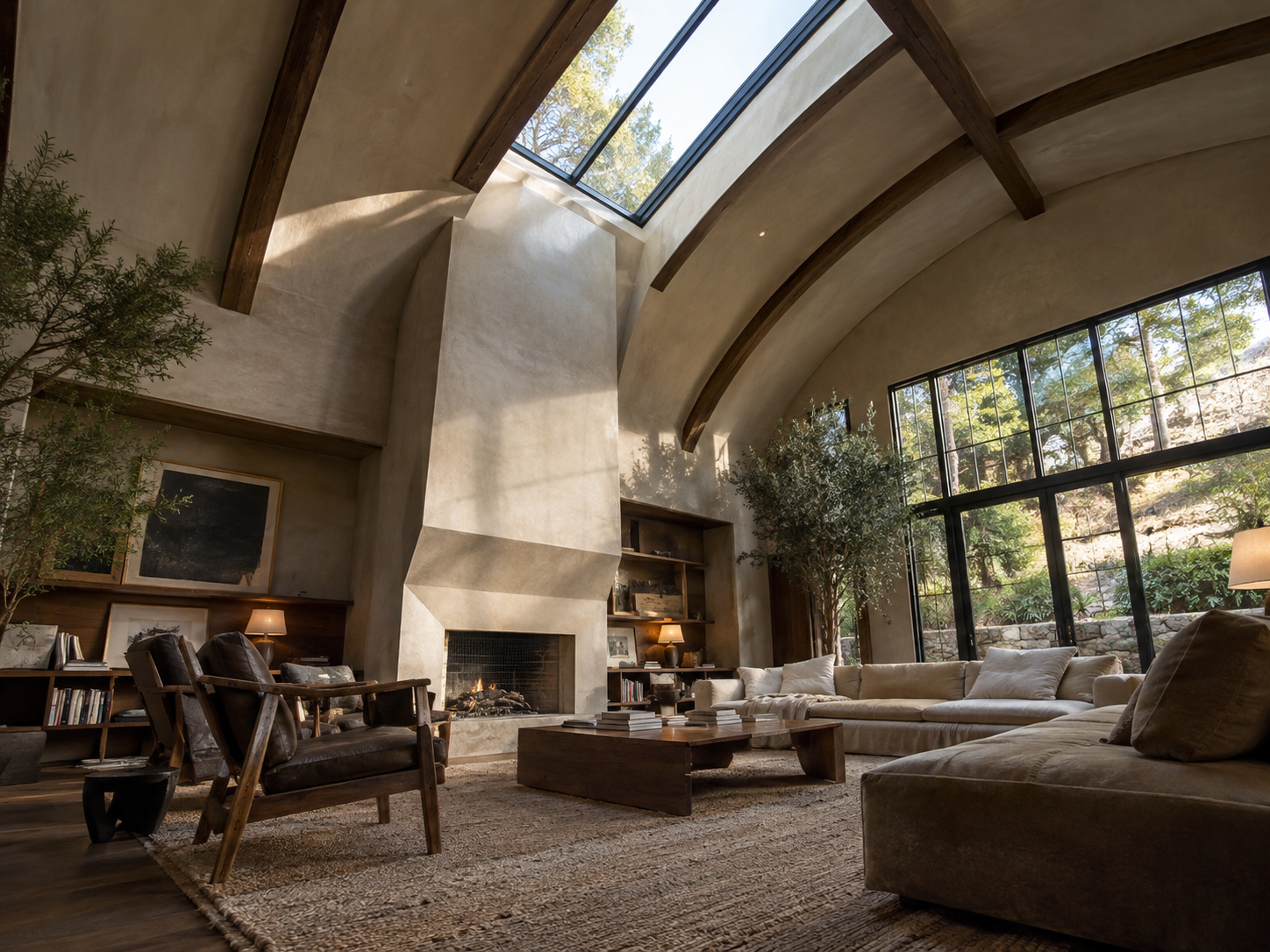
Custom millwork and built-in shelving communicate clear intention — this room was designed for this house and this specific life.
Well-executed joinery resolves practical problems quietly: where to store books, how to display objects without clutter, how to incorporate media without it dominating the space.
Even modest millwork, finished well and designed simply, elevates a living space above what freestanding furniture alone could achieve.
Connect Inside and Out
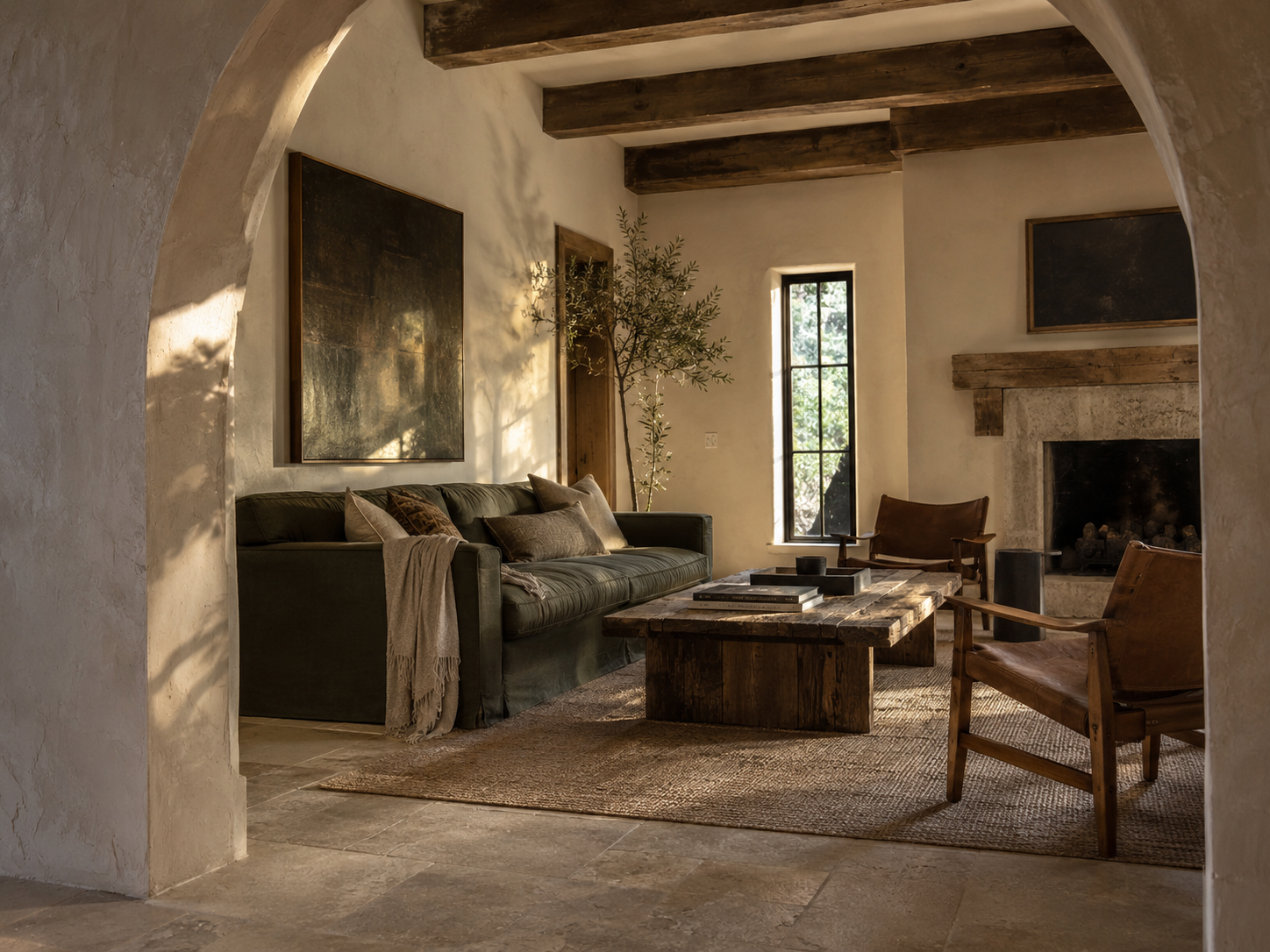
The most generous living rooms do not end at the wall. Indoor-outdoor living design gives a room a meaningful relationship with something larger than itself.
Sliding glass doors, floor-level windows, or a pair of French doors can create this continuity without major structural work.
Where direct outdoor connection is not possible, carefully positioned mirrors and thoughtful natural light can suggest the same expansiveness.
Make the Fireplace the Focal Point
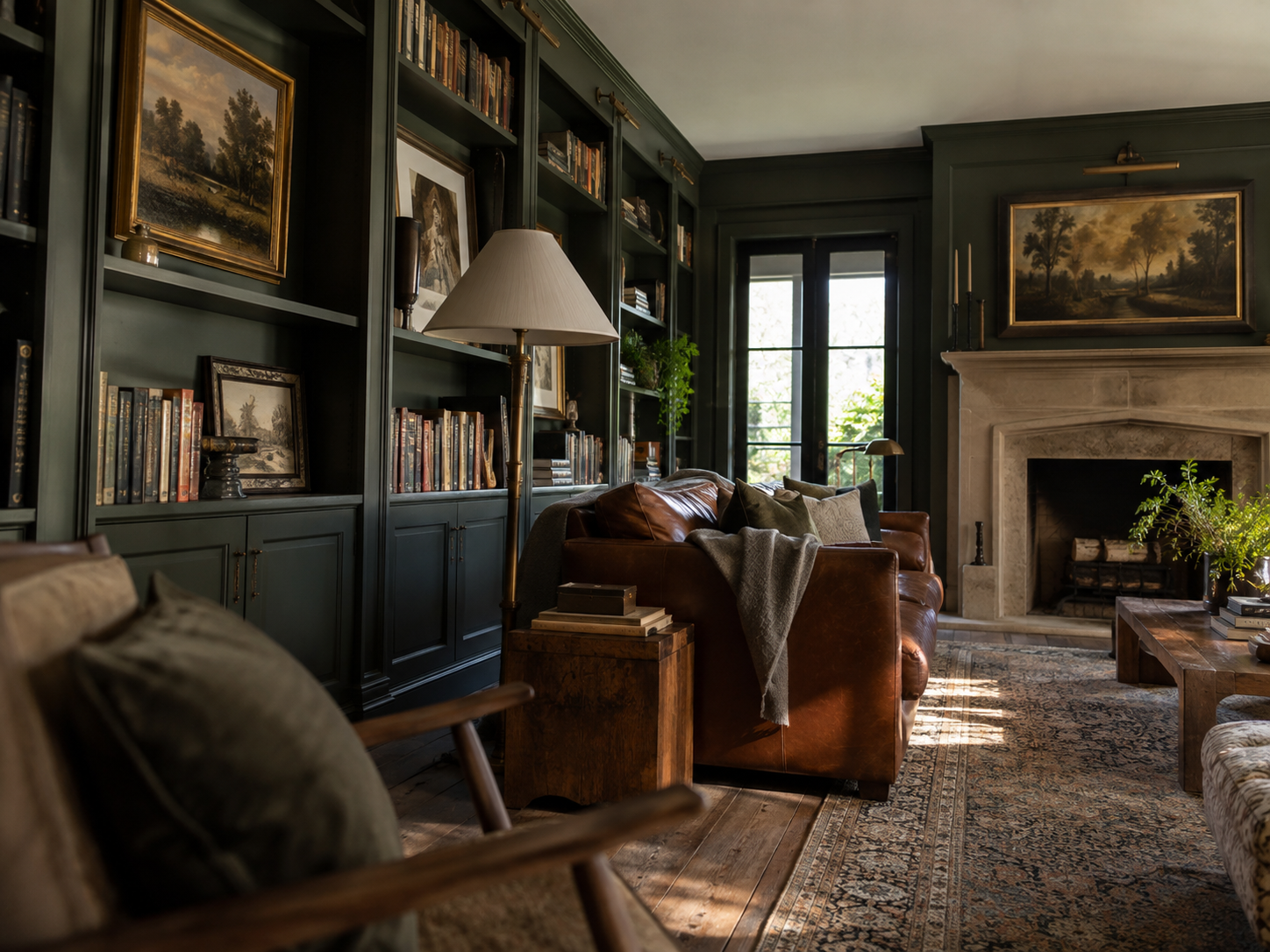
A fireplace provides a room with its axis — the point around which everything else organises itself naturally. A well-designed fireplace surround for living rooms needs only honest proportion and an honest choice of material.
Stone, plaster, burnished concrete, or timber — each communicates something distinct about the nature of the home.
Ensure the mantle is never over-styled. A single object, considered placement, room to breathe.
Embrace Deep Colors
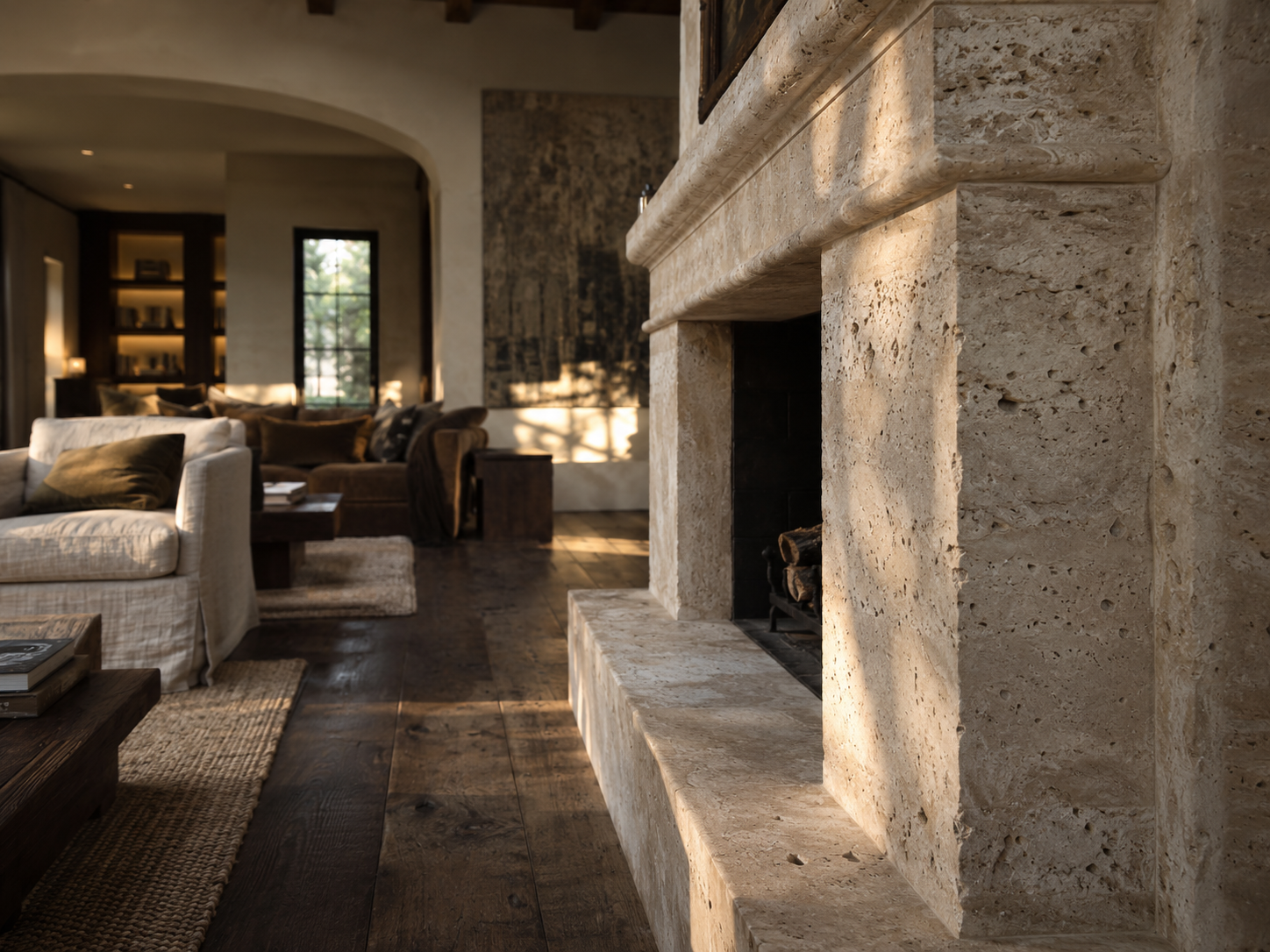
Deep colour in living rooms — forest green, midnight blue, warm terracotta, slate — creates a sense of enclosure that feels genuinely intimate when handled with care.
A dark room works when every element belongs to the same tonal family — dark walls, warm wood, textiles in richer hues. In the evening under warm lighting, it becomes extraordinary.
Begin with one wall if committing to all four feels too significant. That single change can shift a room’s entire character.
Let Materials Speak
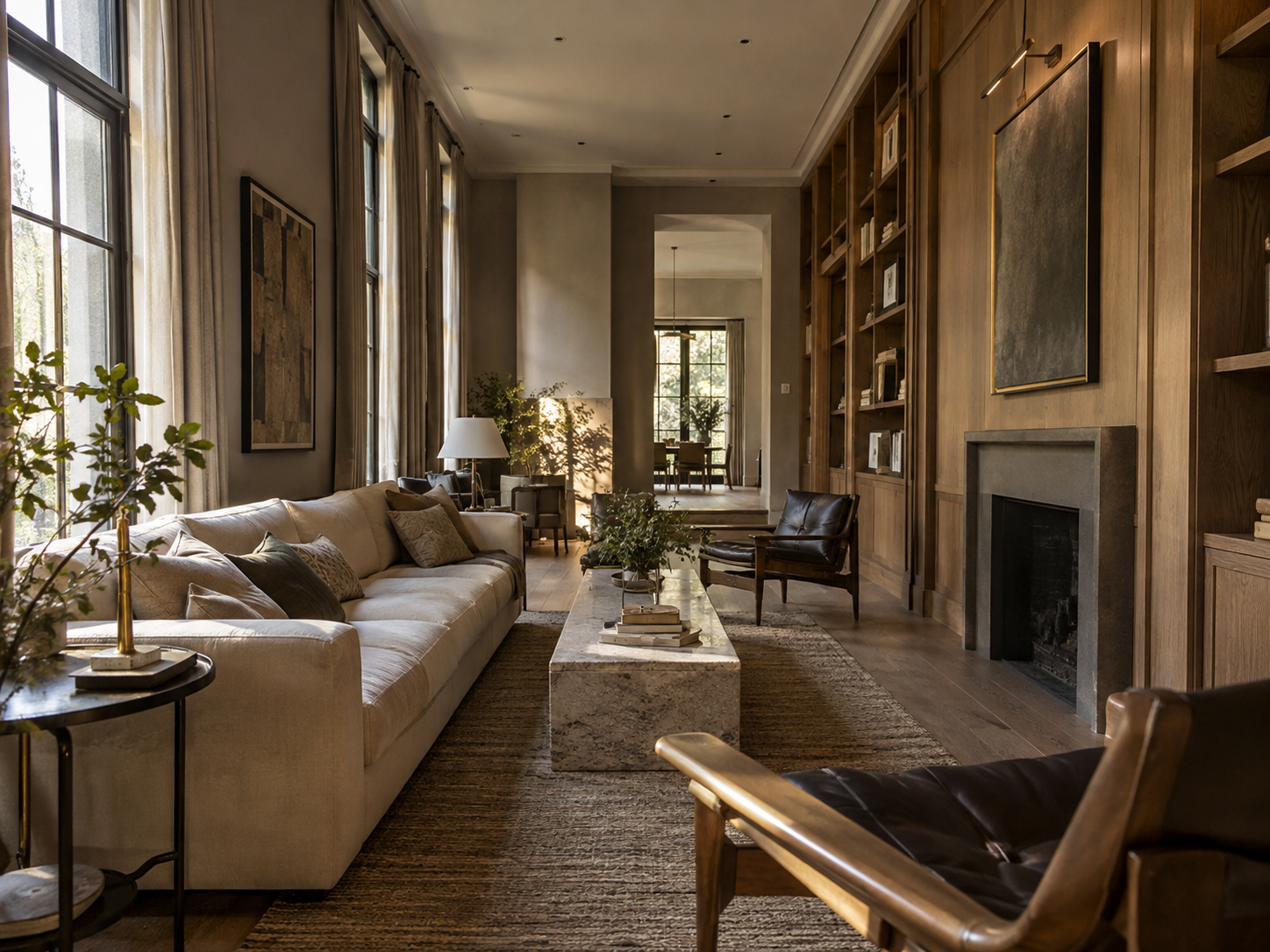
The most quietly beautiful rooms contain very little decoration. What they contain instead is texture in interior design — rough linen, unpolished wood grain, aged plaster, a hand-woven throw.
When rooms are rich in honest texture, the eye moves slowly and enjoyably. When rooms are smooth and reflective throughout, the eye has nowhere comfortable to settle.
Allow four or five distinct material textures to coexist, sharing the same tonal family while feeling clearly different from one another.
Balance a Long Room
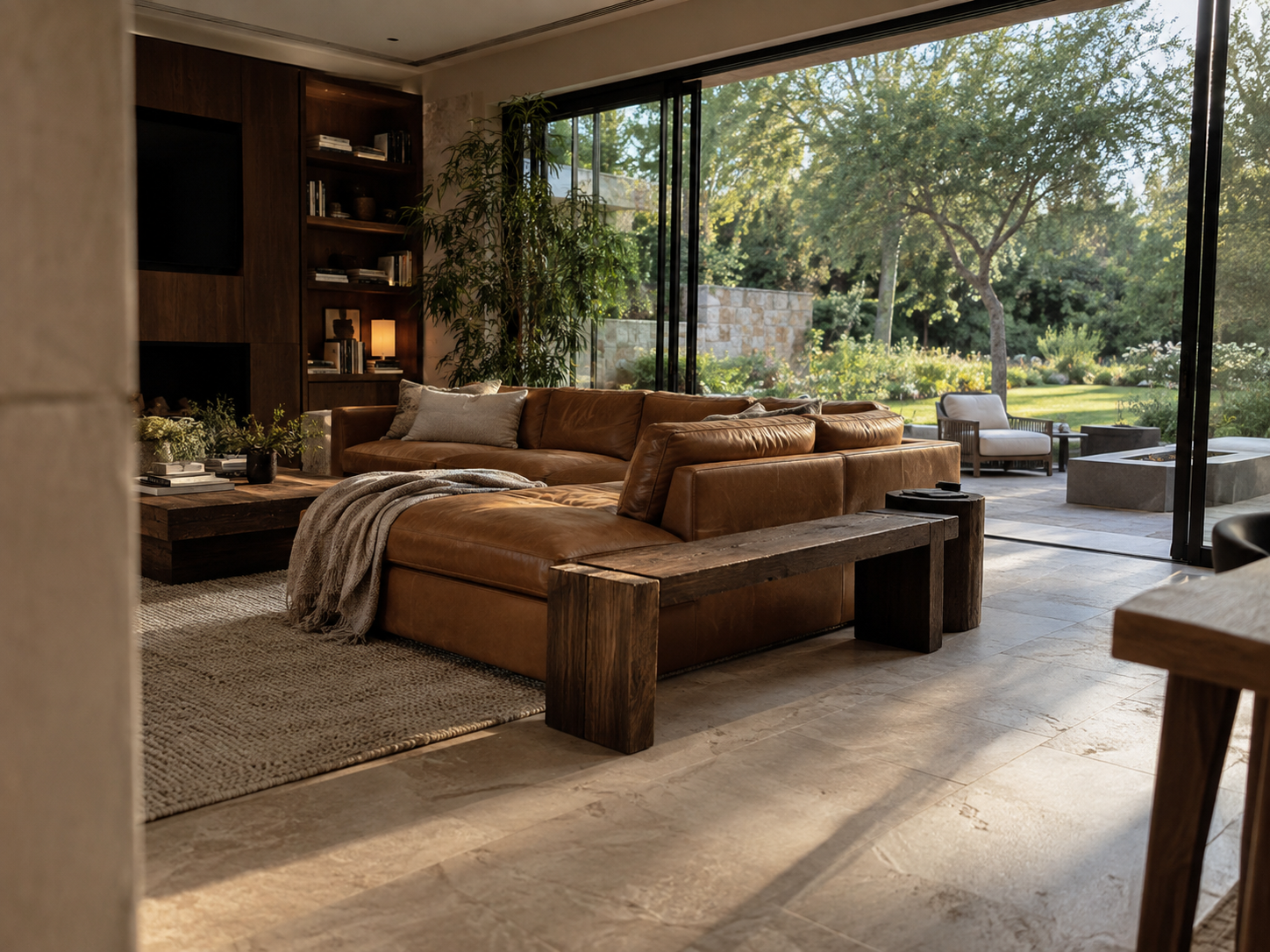
A long, narrow living room presents a persistent challenge. Left unaddressed, the proportions feel corridor-like. The solution is creating multiple zones so the eye reads a sequence of experiences.
Long living room layout ideas benefit from a rug defining the primary seating area, a secondary grouping further along, and a console at the far end providing visual punctuation.
Proportion, once designed for, becomes a distinct asset. Long rooms done well feel generous and quietly grand.
Highlight Architectural Details
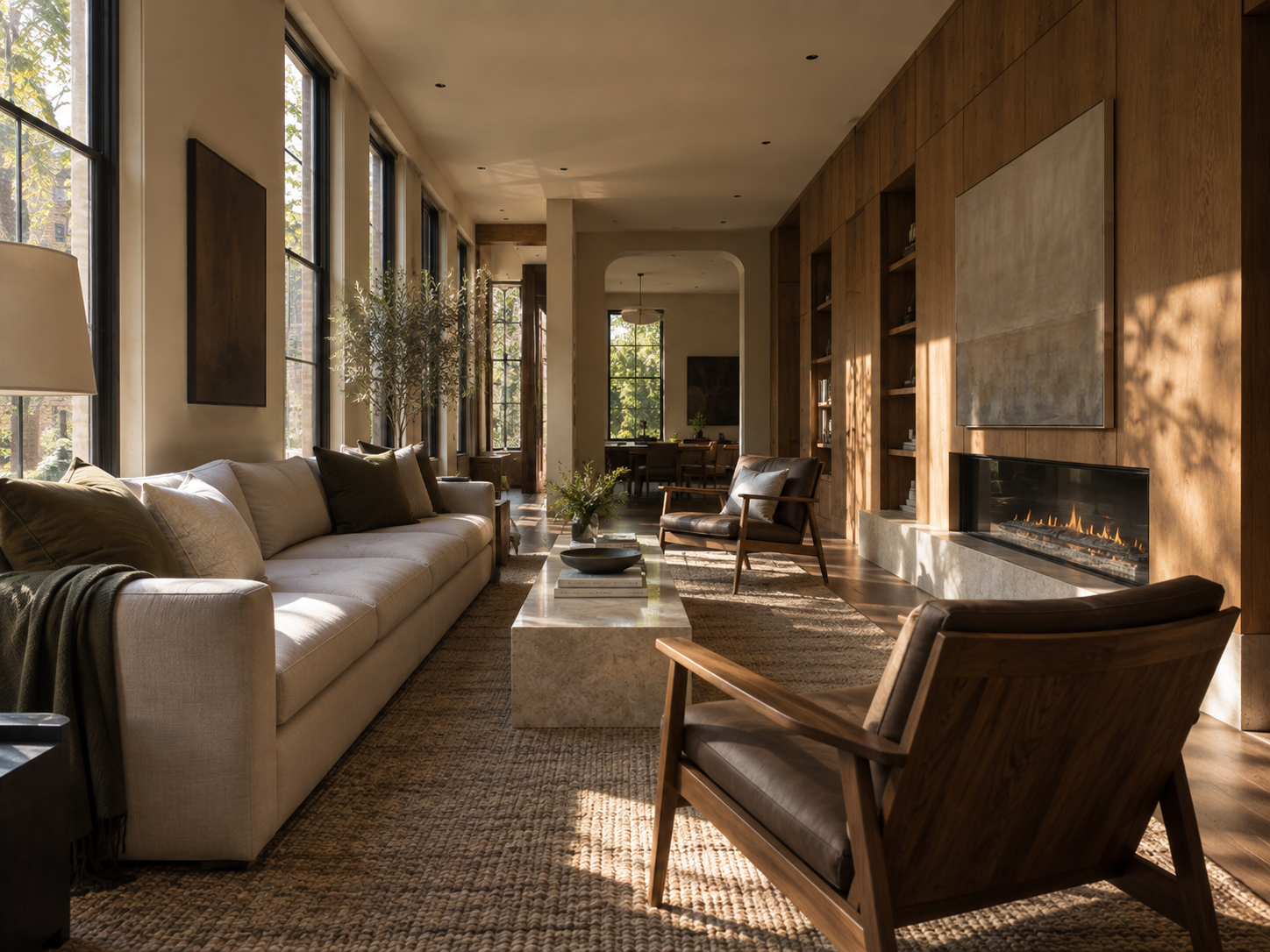
Many homes contain far more architectural character than their occupants realise — cornicing painted over, ceiling beams concealed, original floorboards buried beneath carpet.
Revealing what already exists is often more transformative than any new purchase or renovation. Introducing simple elements — a stepped ceiling, an exposed structural detail — can restore genuine character.
Details are what separate a well-designed room from a merely furnished one.
Choose Sculptural Furniture
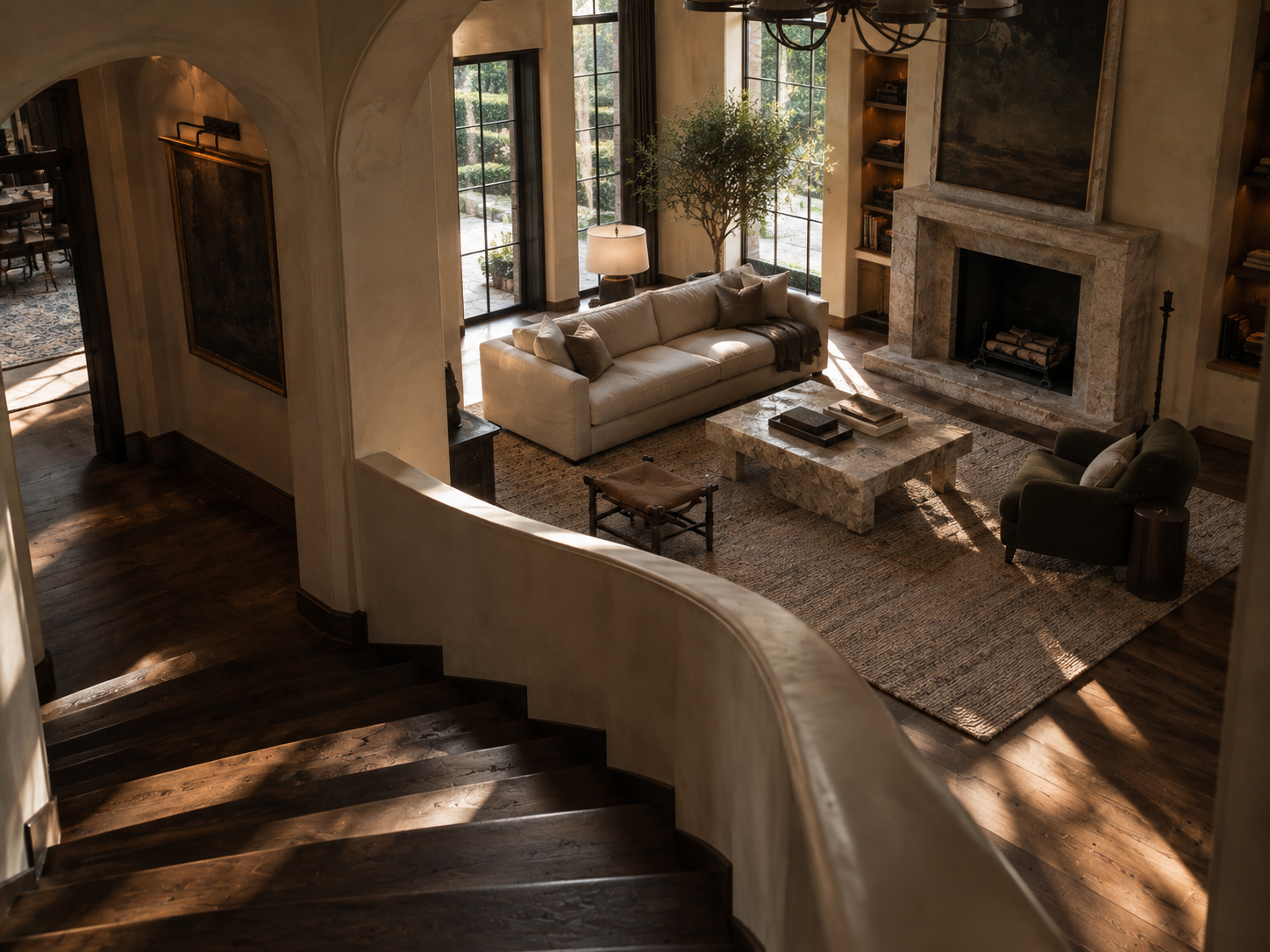
In a room designed with genuine restraint, a single piece of sculptural furniture can carry extraordinary visual weight — the curved back of an armchair, the arc of a handmade coffee table.
Allow one or two forms of genuine distinction to exist within a quieter whole. The contrast makes both more visible.
Buy fewer pieces. Buy better pieces. Allow each one sufficient room to be fully seen.
Keep the Palette Warm
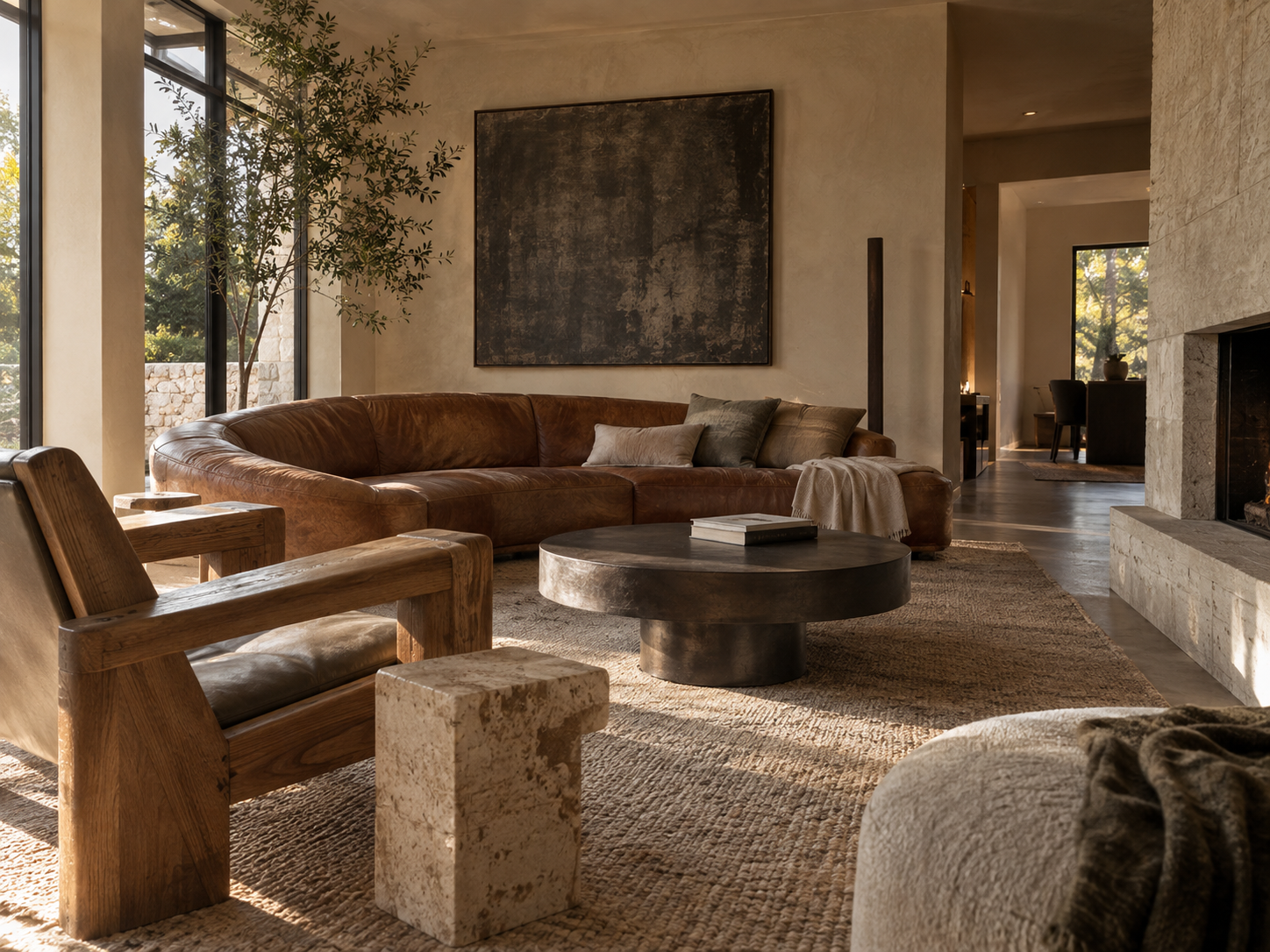
A warm neutral colour palette for living rooms — ivory, sand, warm linen, aged oak, natural stone — has near-universal appeal because it never feels forced.
Sophistication lies in tonal variation. A room where everything reads as the exact same beige feels flat. Express the same tonal family across different materials and it reads as genuinely complex and beautiful.
Introduce colour sparingly through objects: a deep green plant, a woven basket, a painting with a single unexpected note of warmth.
Blend Vintage Character
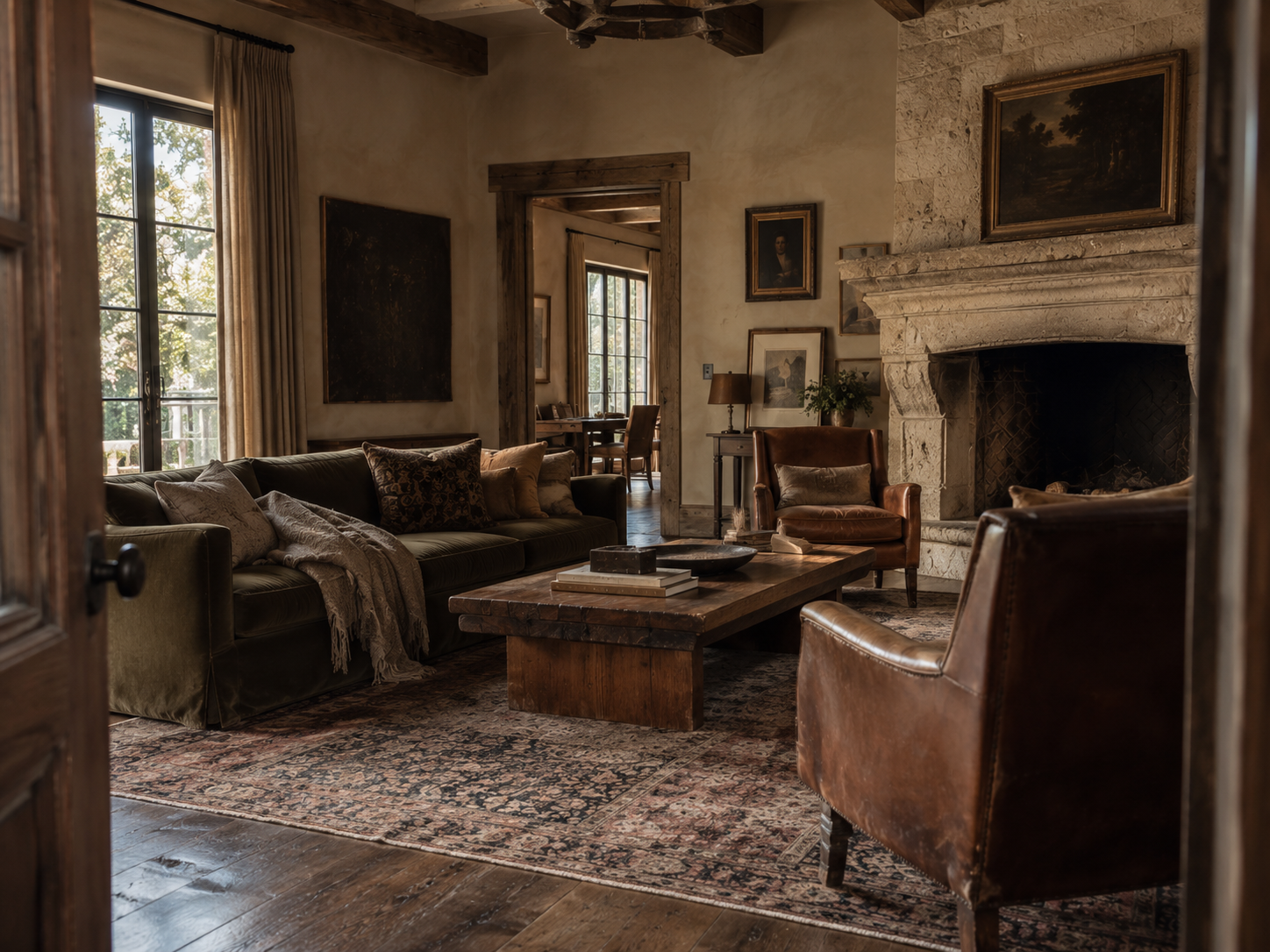
There is a warmth that only genuine age produces — in a patinated bronze handle, a worn kilim rug, a side table carrying the quiet evidence of decades of careful use.
Vintage interior design elements communicate an appreciation of craft and history over novelty, a preference for permanence over trend.
Antique markets and estate sales remain among the most rewarding sources for these pieces, each carrying its own quiet regional character.
Let Architecture Lead
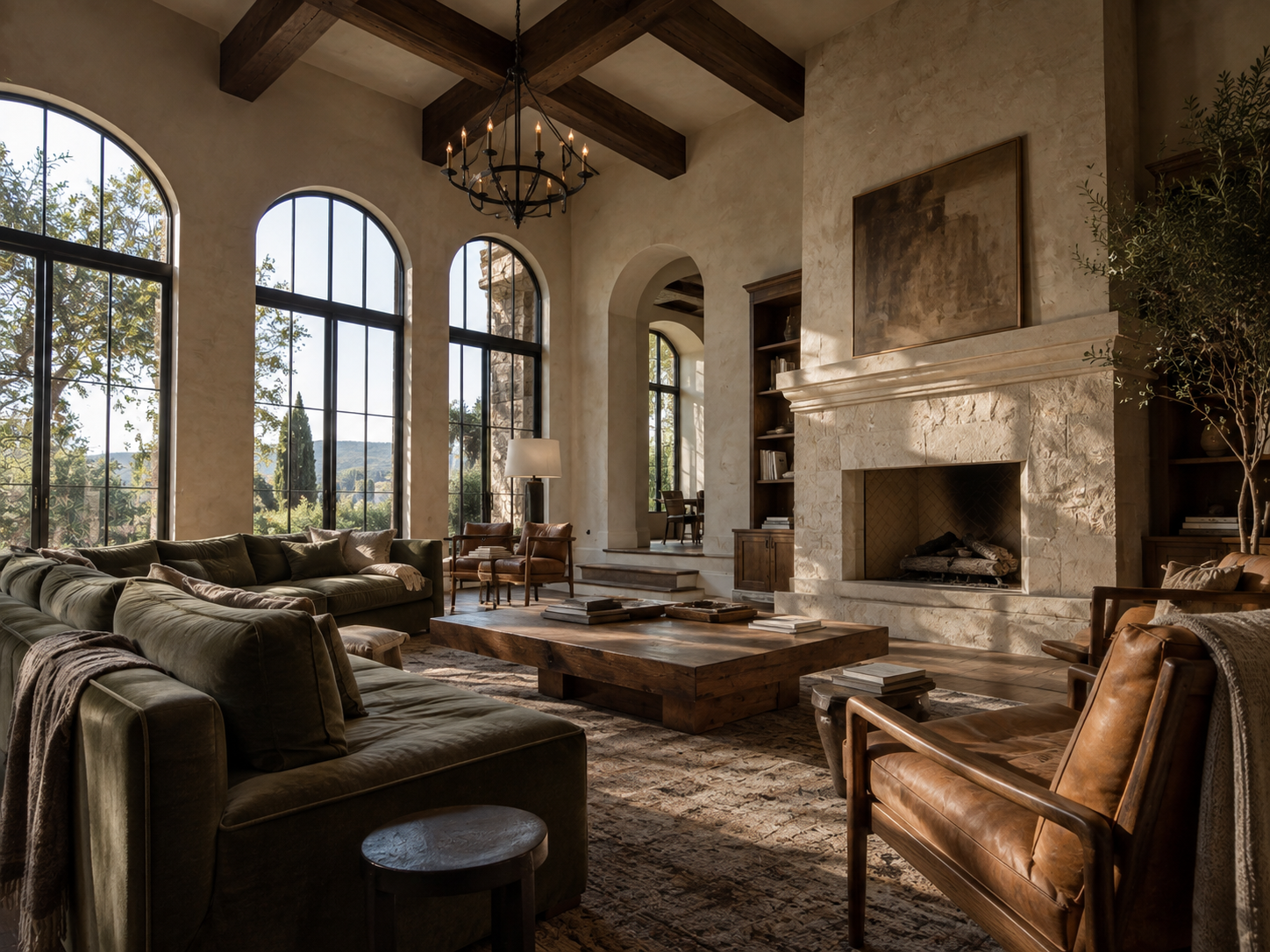
The architecture of a space, when genuinely good, does not require assistance. Architectural living room design places ceiling height, window proportions, and natural light at the centre of every decision.
A room with a beautiful ceiling does not need an elaborate rug. A room with perfect proportions does not need to be filled to be felt.
The most important design work consists of knowing precisely what to remove rather than what to add.
Common Questions
Luxury living room design is rarely about expensive objects — it is about proportion, natural light, quality materials, and considered furniture arrangement. Restraint is always more effective than abundance.
Focus on maximising natural light, using a warm neutral palette, and choosing furniture scaled appropriately to the room. Small living room design ideas that work include hanging curtains high and wide, using mirrors to extend light, and keeping the floor as visible as possible.
Warm neutrals built from ivory, linen, stone, aged oak, and natural sand create the most enduring foundation. Timeless living room colour palettes gain their sophistication from tonal variation within the same family, not from competing hues.
The most reliable approach is tonal coherence rather than stylistic matching. Mixing vintage and modern furniture works when pieces share the same colour temperature and visual weight. Introduce vintage pieces one at a time, allowing each to settle before adding the next.