Textile Wardrobes: Insetting Natural Burlap, Caning, and Raw Linen into Closet Doors
A textile wardrobe softens a bedroom in a way painted doors never can. This guide shows how to inset natural burlap, caning and raw linen into closet doors for warm, breathable texture.
Layering Mixed Weaves on Oak Doors
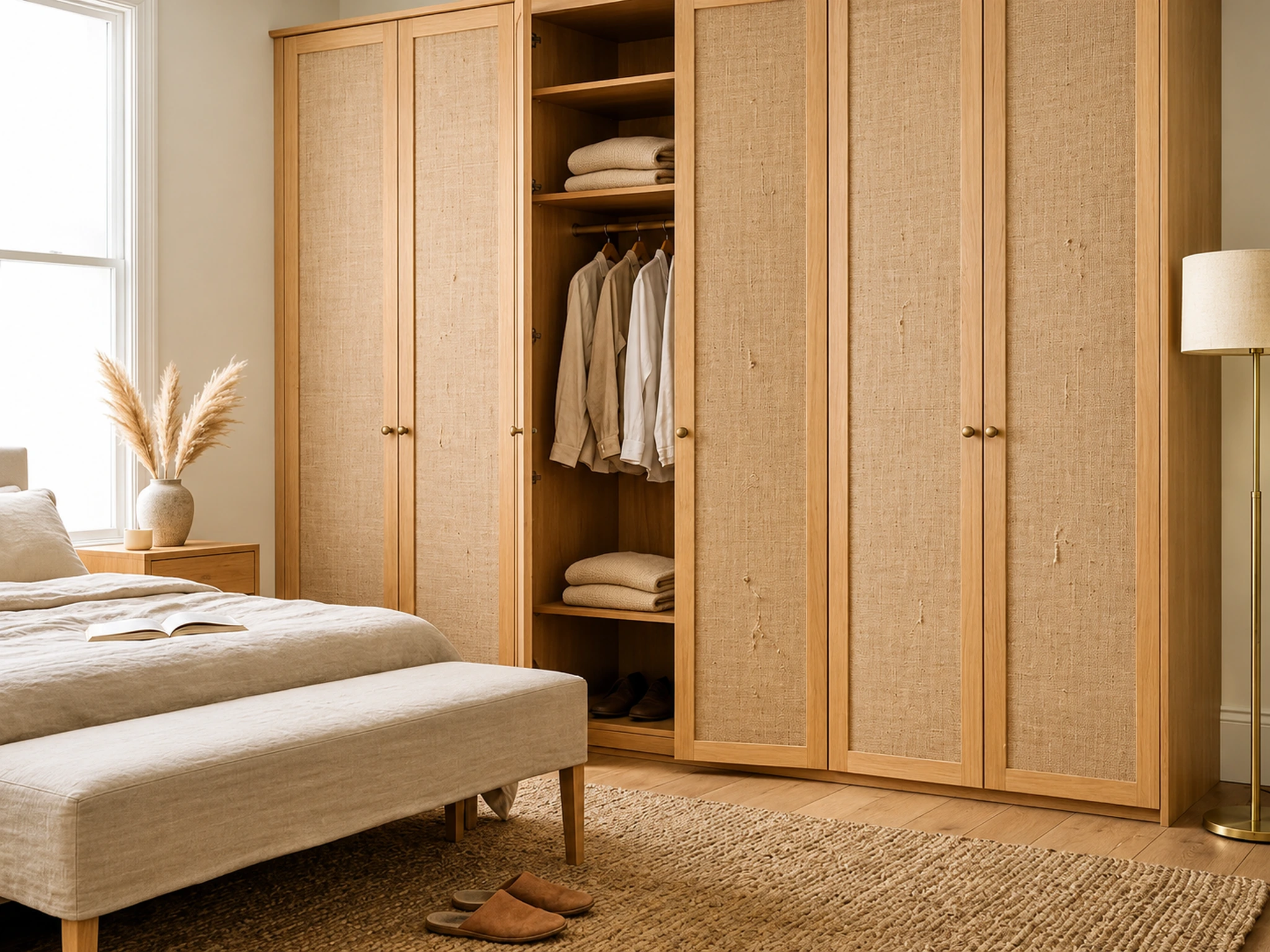
Start with the frame. Solid oak gives each panel a calm, grounded border, so the fabric can do the talking. I like to mix burlap, open cane and raw linen across one run of doors. In daylight they look different, yet they share the same oatmeal warmth. Think of it as one fabric story told three ways. Oak also hides hinge wear, which helps on doors you open every day.
Keep the palette tight. Two or three neutrals are plenty. Give every panel the same slim border, and the combination looks planned, not patchy. A narrow reveal between panel and frame adds a thin shadow line. Repeat it on every door, and the whole wall feels deliberate.
Key Points
- Keep oak frames slim and solid.
- Mix only a few weaves.
- Stay within warm neutrals.
- Back every panel for body.
Breathable Craft: Cane Webbing and Brass
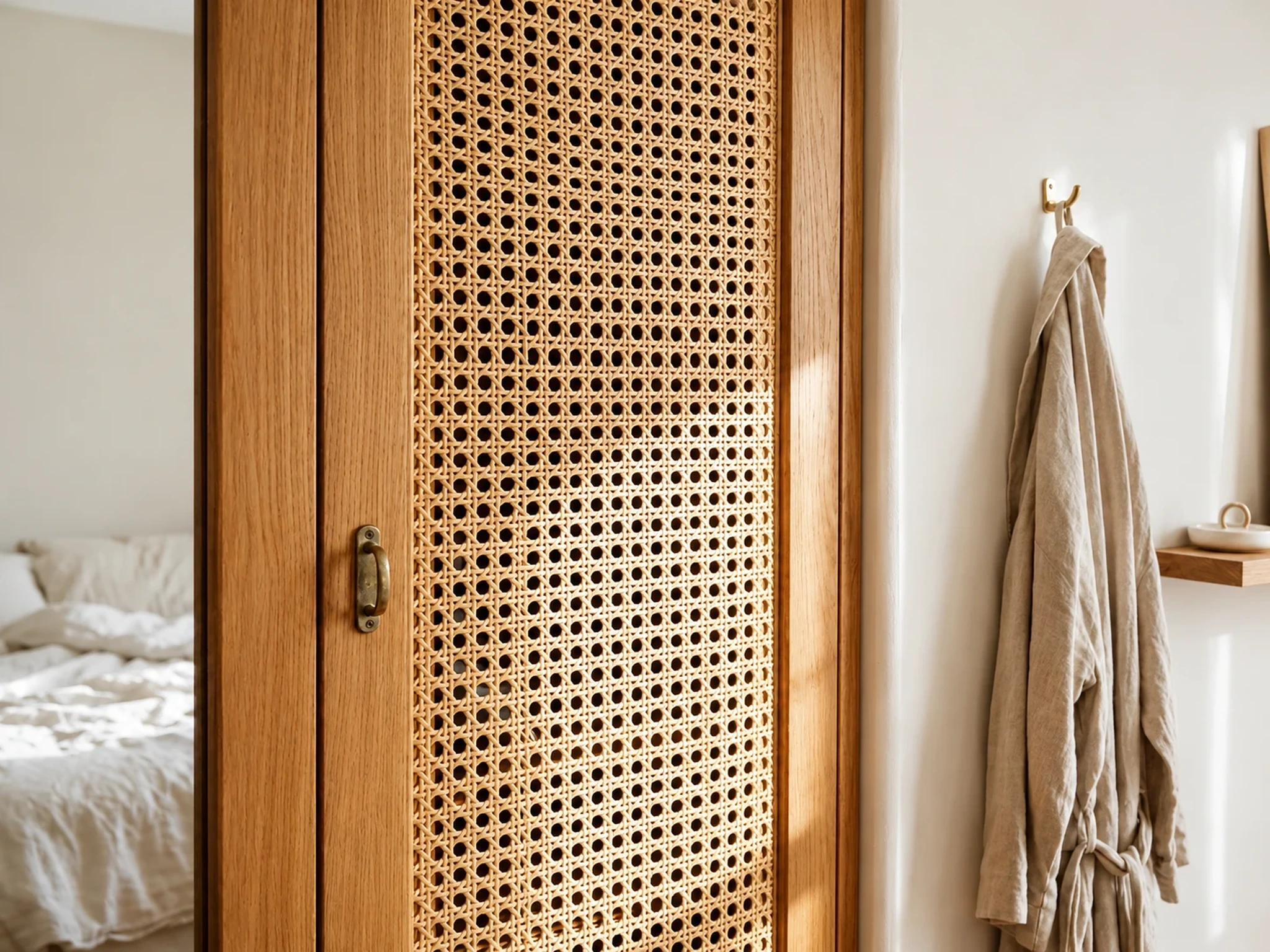
Cane does the quiet work of airflow. Its open weave lets a closet breathe, so wool sweaters and cotton sheets stay fresh. Soak the webbing in warm water before you install it. It tightens as it dries, which leaves the panel taut and flat. If you’d rather not show what’s inside, choose a tighter weave.
Brass finishes the look. Choose a small, unlacquered pull and let it darken with daily use. A slim bar or round knob suits cane far better than anything ornate. Mount it on the oak frame, never on the woven panel. Match the metal to your bedside lamps, and the room feels pulled together.
Raw Linen Panels in Quiet Bedrooms
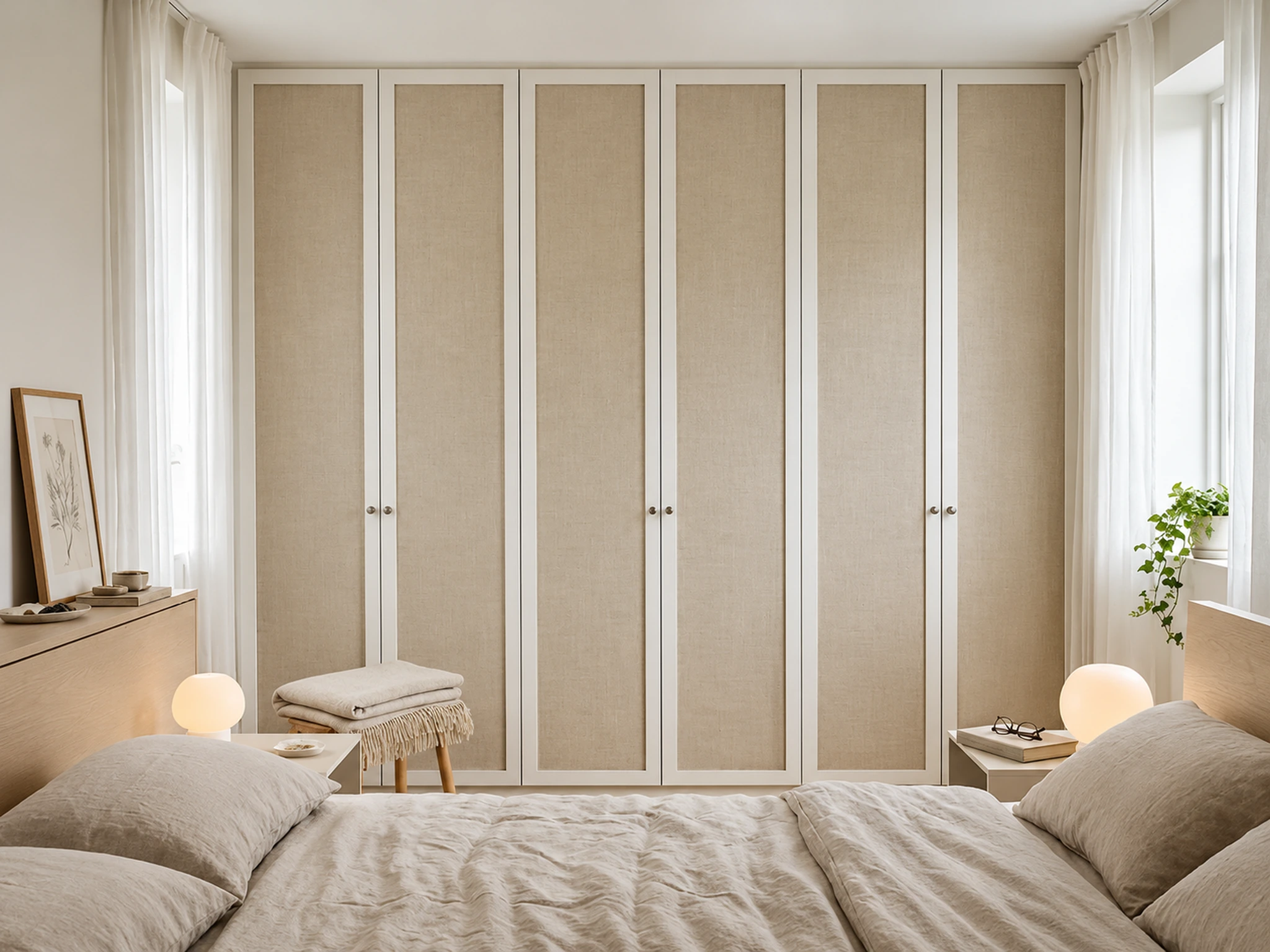
Raw linen feels relaxed, which is exactly what a bedroom needs. The slubs and soft creases catch morning light and ease the corners of the room. Light also shifts the color through the day, from pale oatmeal to warm sand. Stretch it over thin plywood or a light frame, then staple the edges at the back. Oatmeal and flax tones also hide dust better than pure white.
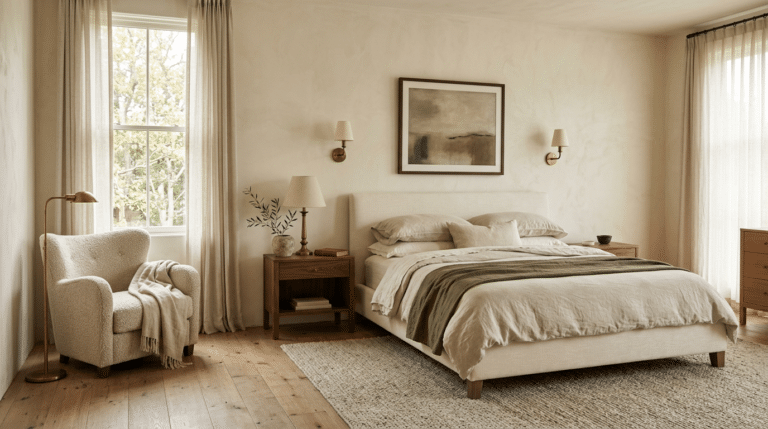
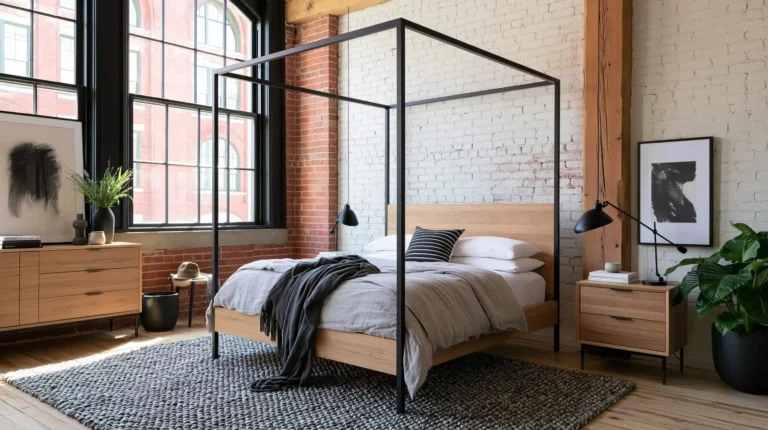
Linen shifts with humidity, so test a sample first. Hang it in the room and watch how it behaves. I’d skip anything with a sheen. It fights the matte calm. Pair these doors with a plaster headboard wall or a slim canopy bed, and the whole room settles into one soft palette.
Earthy Texture: Natural Burlap and Oak
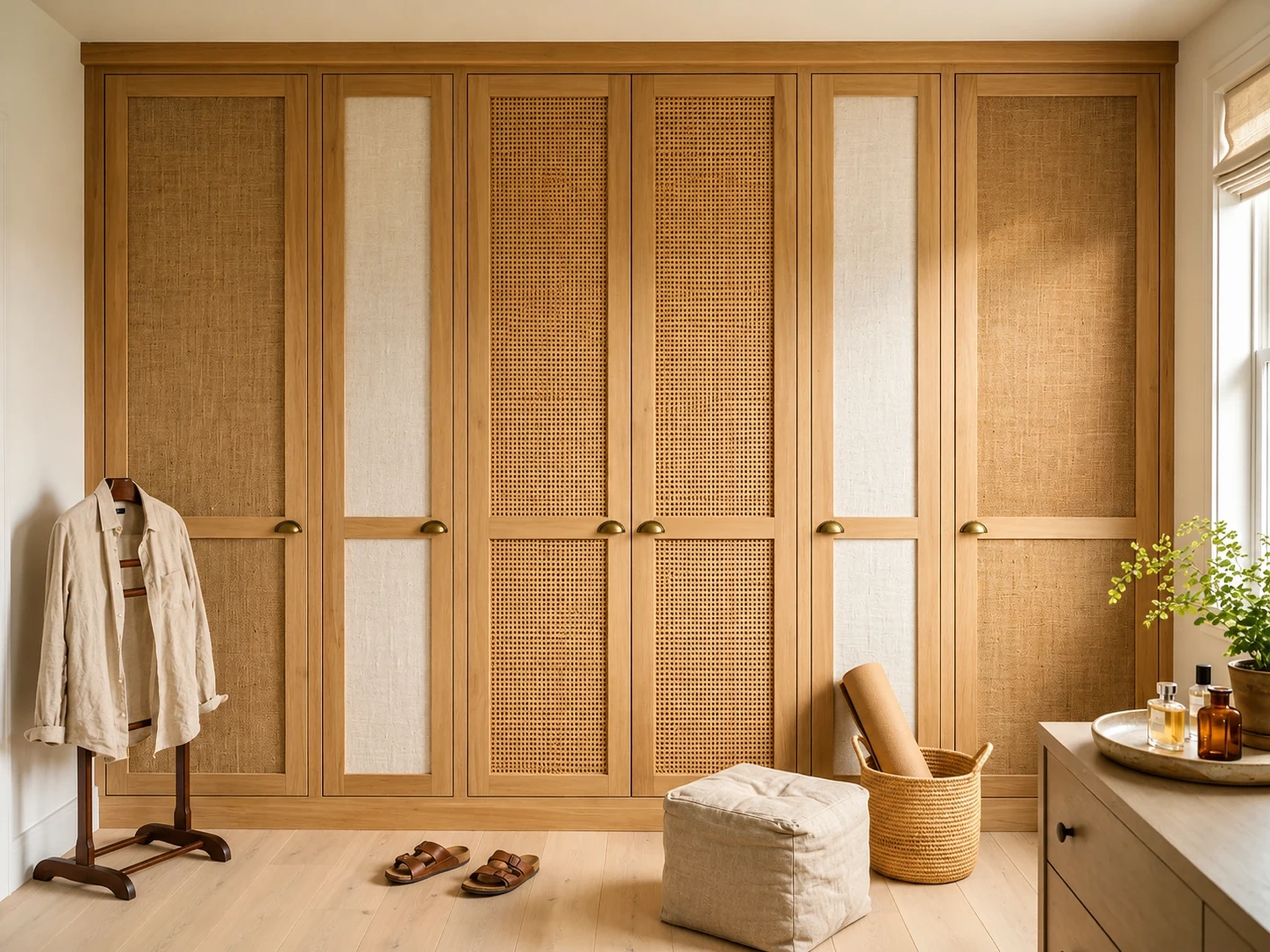
Burlap brings the earthiest mood to a textile wardrobe. Against oak it feels rustic but tailored, like a barn door in a good suit. It also adds a handmade note that smooth paint can’t match. I’d choose a fine, tight weave, since coarse jute sheds fibers and snags knitwear.
Back it with thin plywood so it stays flat. Seal the raw edges with a light fabric stiffener to stop fraying. A pale, sun-bleached tone keeps the oak from feeling heavy. Then hang the doors and step back. Natural fibers look best when you leave them alone.
Three Mistakes to Avoid
- Skipping the backing: Loose fabric sags within months.
- Using coarse jute: It sheds and snags knits.
- Ignoring humidity: Damp rooms stain linen and warp frames.
Soft Updates for Freestanding Pine Armoires
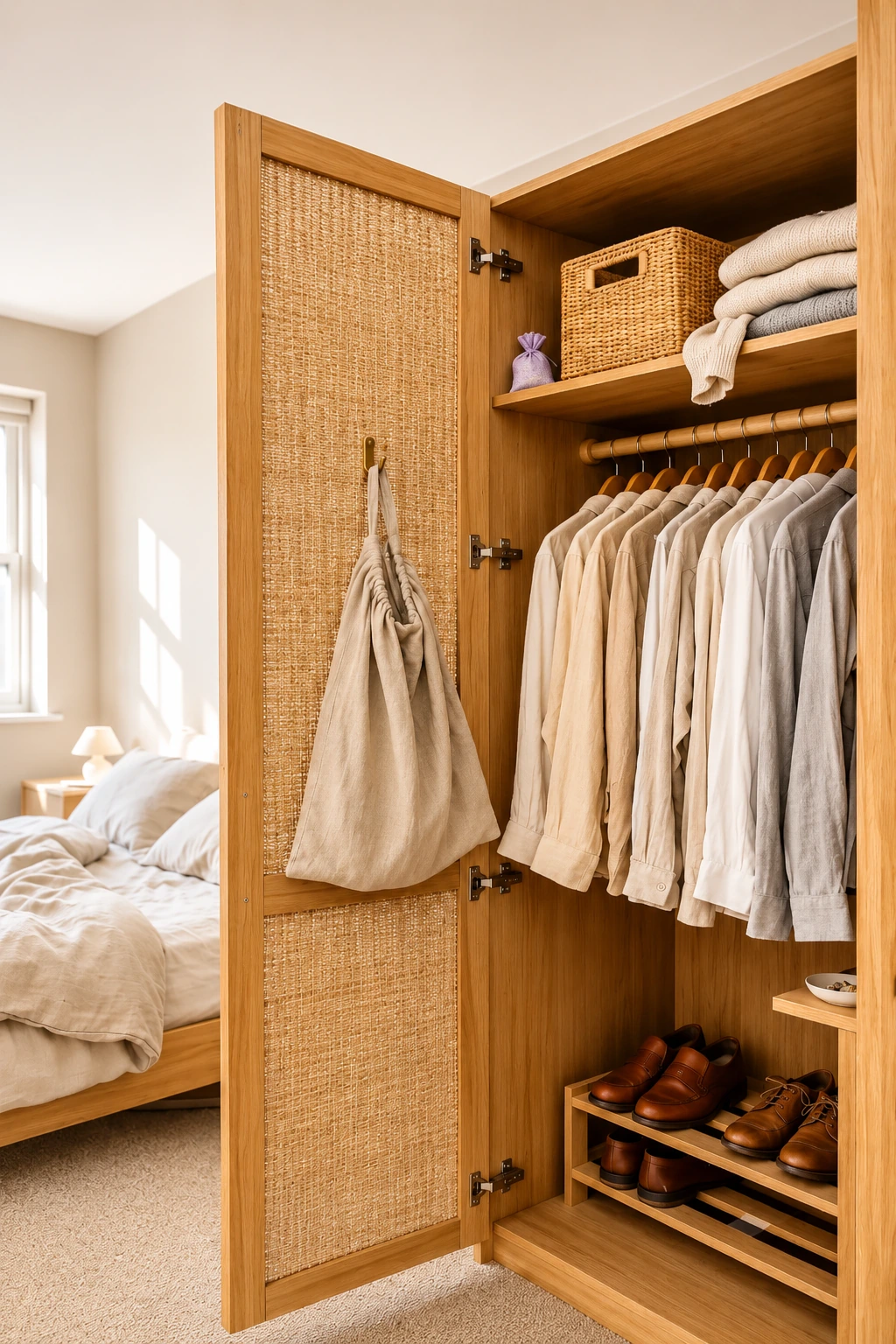
You don’t need built-ins for a textile wardrobe. An old pine armoire takes inset panels beautifully, and the update costs far less than new cabinetry. Even a secondhand find works well. Swap the worn wood or mirrored door panels for fabric-covered boards cut to the same size.
Sand the pine lightly and wax it rather than painting it. The warm grain pairs well with oatmeal linen and a slightly darker burlap. I’d keep the original hinges if they’re sound. Plan on a weekend and a modest budget. Measure twice, since vintage doors are rarely square.
Two Designer Tips to Use
- Wax the pine: A soft finish keeps the grain warm.
- Cut test panels: Fit them before you staple.
Hidden Joinery: Backing and Hinge Fit
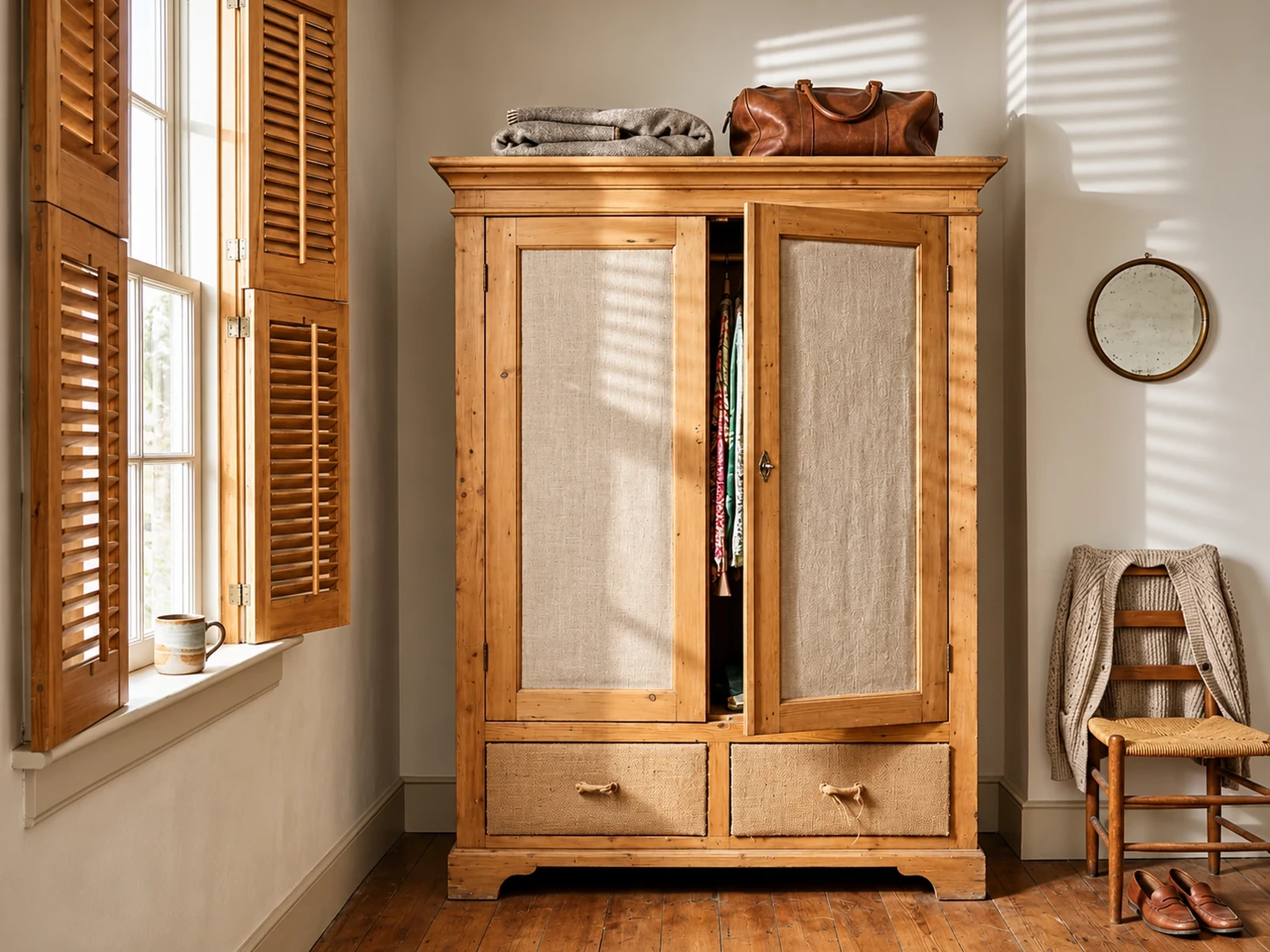
What you don’t see matters most in a textile wardrobe. A thin plywood backing keeps fabric flat, and a small gap lets the door swing without rubbing. Fabric adds a little bulk. Ask for a test fit on one door before you build the rest.
Ask your carpenter about concealed European hinges, which tuck neatly into the frame. They let the textile panel stay the star. Add a felt bumper at each corner to stop knocking. Inside, a breathable linen bag keeps off-season knits dust-free without trapping moisture. It’s a small habit that keeps the whole closet calm.
Frequently Asked Questions
Textile Wardrobe — Common Questions
Can you use fabric on wardrobe doors?
Yes, a textile wardrobe is easy to build with inset burlap, cane or linen panels. Mount the fabric on thin plywood so it stays flat. Use a tight weave for the cleanest finish. Then set it inside a solid oak or pine frame. A good carpenter can guide the measurements and hinge fit.
Is cane webbing good for closet doors?
Yes. Its open weave lets air move through the closet, which helps clothes stay fresh. Soak the webbing before installing so it tightens as it dries. Cane suits bedrooms better than damp bathrooms or steamy laundry rooms.
How do you clean fabric wardrobe panels?
Vacuum gently with a brush attachment every few weeks. Blot spills right away instead of rubbing. If the room gets strong sun or humidity, apply a light fabric protector after testing a hidden corner first. Cane panels need only a dry cloth.
How much do custom textile wardrobe doors cost?
Expect to spend roughly $150 to $400 in materials for a DIY plywood-and-fabric panel refresh on existing doors, or $1,200 to $3,500+ for custom solid white oak doors built by a local cabinetmaker.