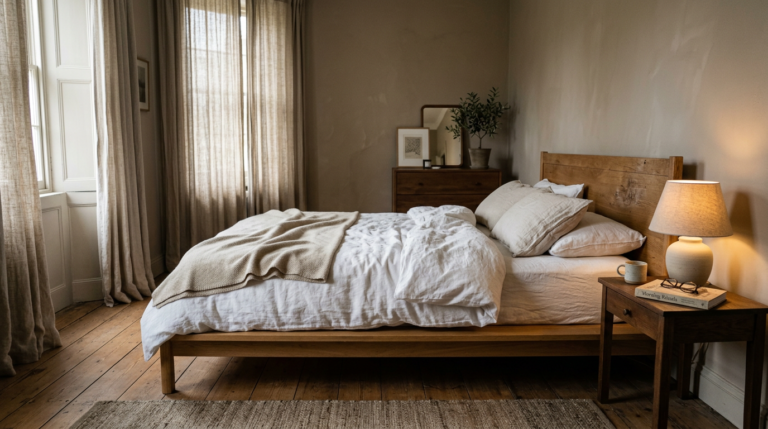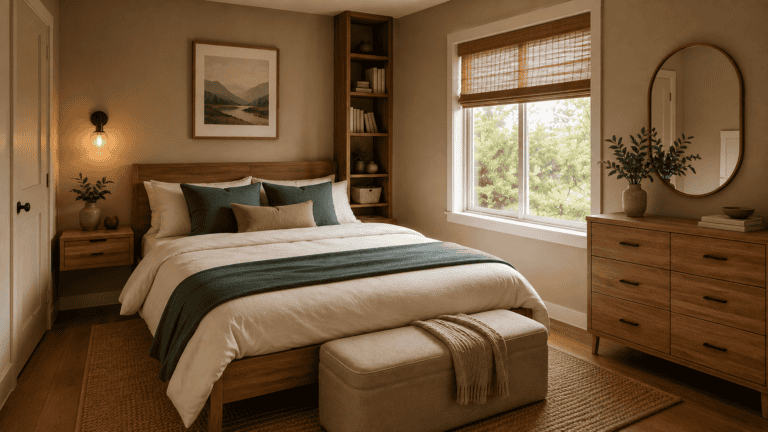
The Plaster Headboard Feature Wall: Creating Structural Focus Behind the Bed
A plaster headboard feature wall gives your bedroom a calm, structural focal point without any bulky furniture. These six ideas show how texture and color anchor the bed with quiet luxury.
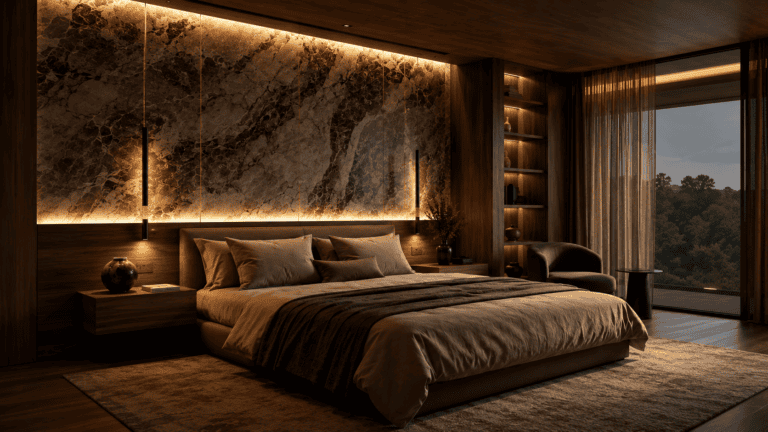
Modern Microcement Plaster Headboard Walls

Microcement is the quiet minimalist of the plaster world. Its smooth, softly cloudy gray finish turns the wall behind your bed into a serene backdrop. It hides small drywall flaws and wipes clean near pillows. I love it for busy households, because it stays calm when life isn’t.
Ask for a dead-matte penetrating sealer instead of a glossy coat. Matte keeps the look of real concrete. Extend the panel 12 to 18 inches past each side of the bed so it feels built in. Plan on roughly $12 to $25 per square foot installed.
- Creates an architectural focal point without bulky furniture.
- Organic textures reflect soft daylight and evening lighting.
- Extending 12–18 inches past the bed anchors nightstands.
Minimalist Ivory Textured Plaster Headboards
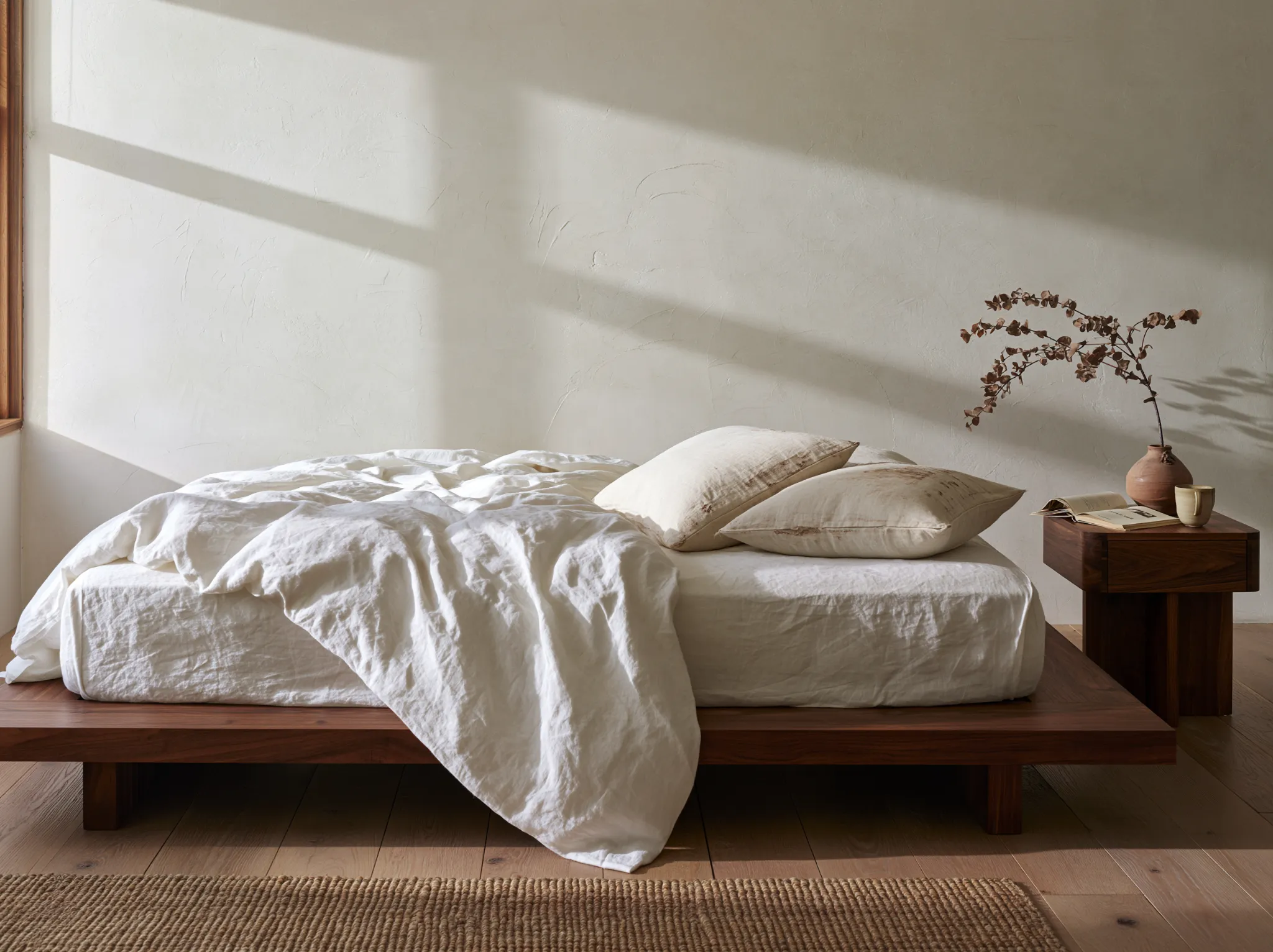
If you crave stillness, an ivory textured plaster wall adds subtle warmth without visual noise. Flat white drywall often feels cold in neutral, Scandinavian or Japandi bedrooms. A gentle lime or clay wash adds soft movement as daylight shifts. I’d pick it for a small or north-facing room.
Pair it with a low walnut or white oak platform bed and rumpled linen bedding. The contrast between rough plaster and soft textiles creates depth without bright accents. Skip the wall art, because the texture is the artwork. Soft 2700K bulbs keep the ivory warm after sunset.
Rough-Troweled Lime Plaster Texture Details
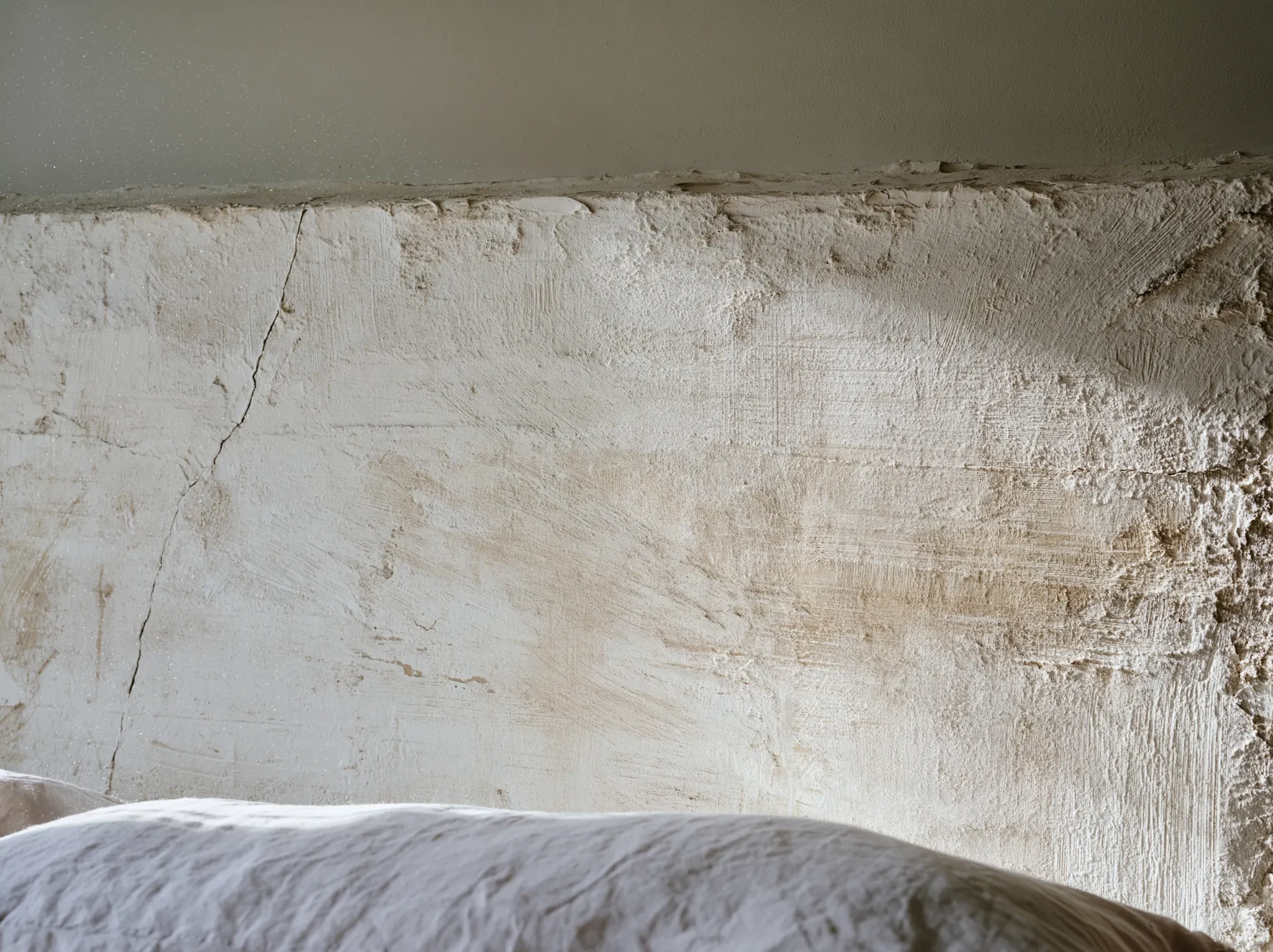
Rough troweling celebrates the touch of hand craftsmanship. Each stroke leaves fine ridges and soft valleys that catch directional light. No two sections look identical, and that variation is the charm. I always ask to see a plasterer’s real before-and-after photos first.
To show off the depth, place warm sconces about 18 inches from the wall so the light grazes the high points. Lime plaster is also breathable, which helps manage moisture in the room. Warm bulbs keep those shadows soft, never harsh. Expect a skilled plasterer to need a day or two.
Recessed Plaster Arch Headboard Niches
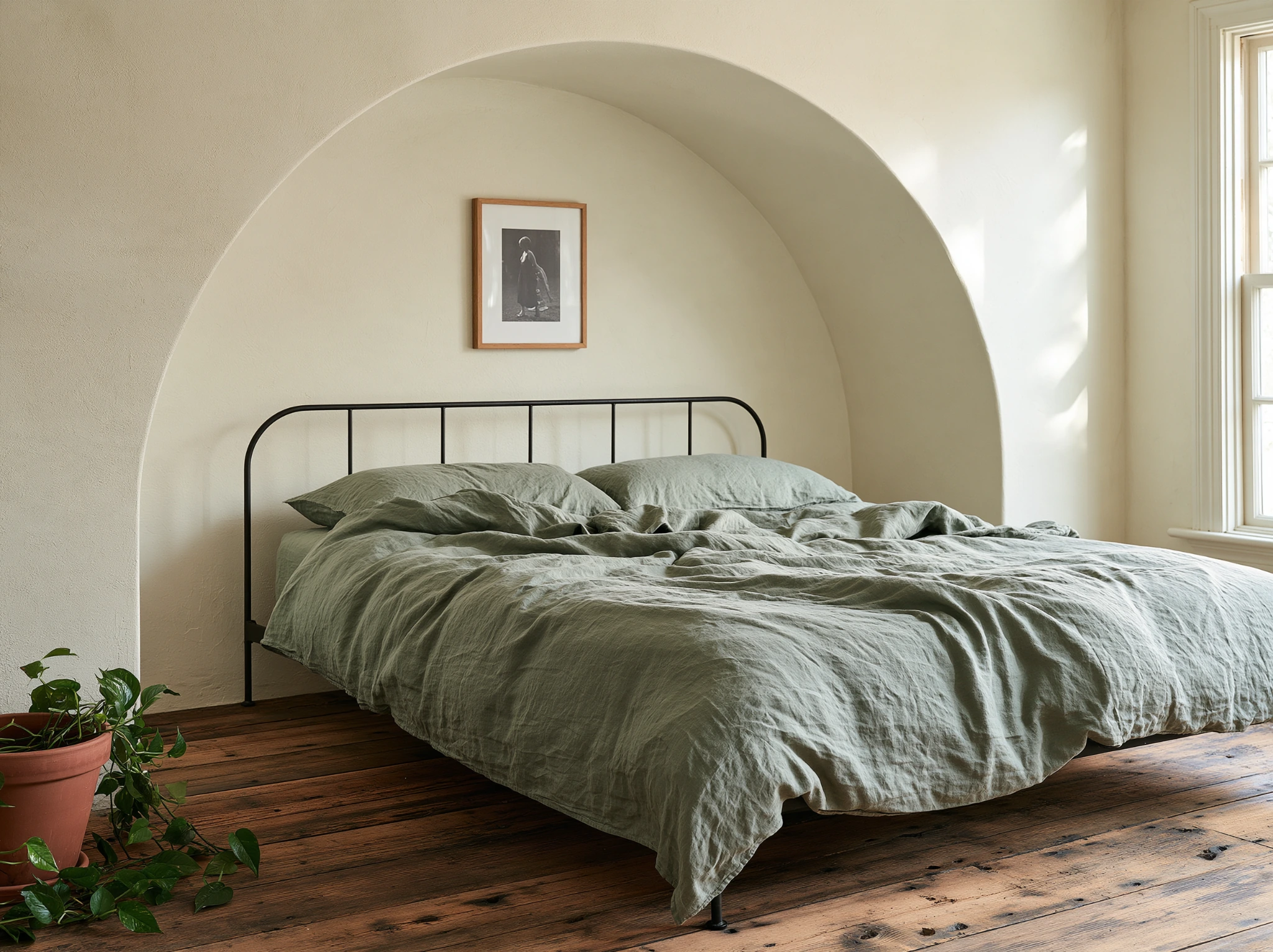
A recessed plaster arch turns the wall behind the mattress into structural architecture. The curved frame cradles the bed in an alcove that feels protective and sculptural. It softens boxy rooms and sharp corners, so the space feels custom. I like it best with low ceilings.
Frame the niche 3 to 5 inches deep so it adds relief without eating into floor space. Keep the plaster finish the same inside the alcove and on the surrounding wall. Then dress the bed with a slender iron frame and sage green linen. Plan any hidden LED wiring before plastering.
Classic Tufted Headboards vs. Plaster
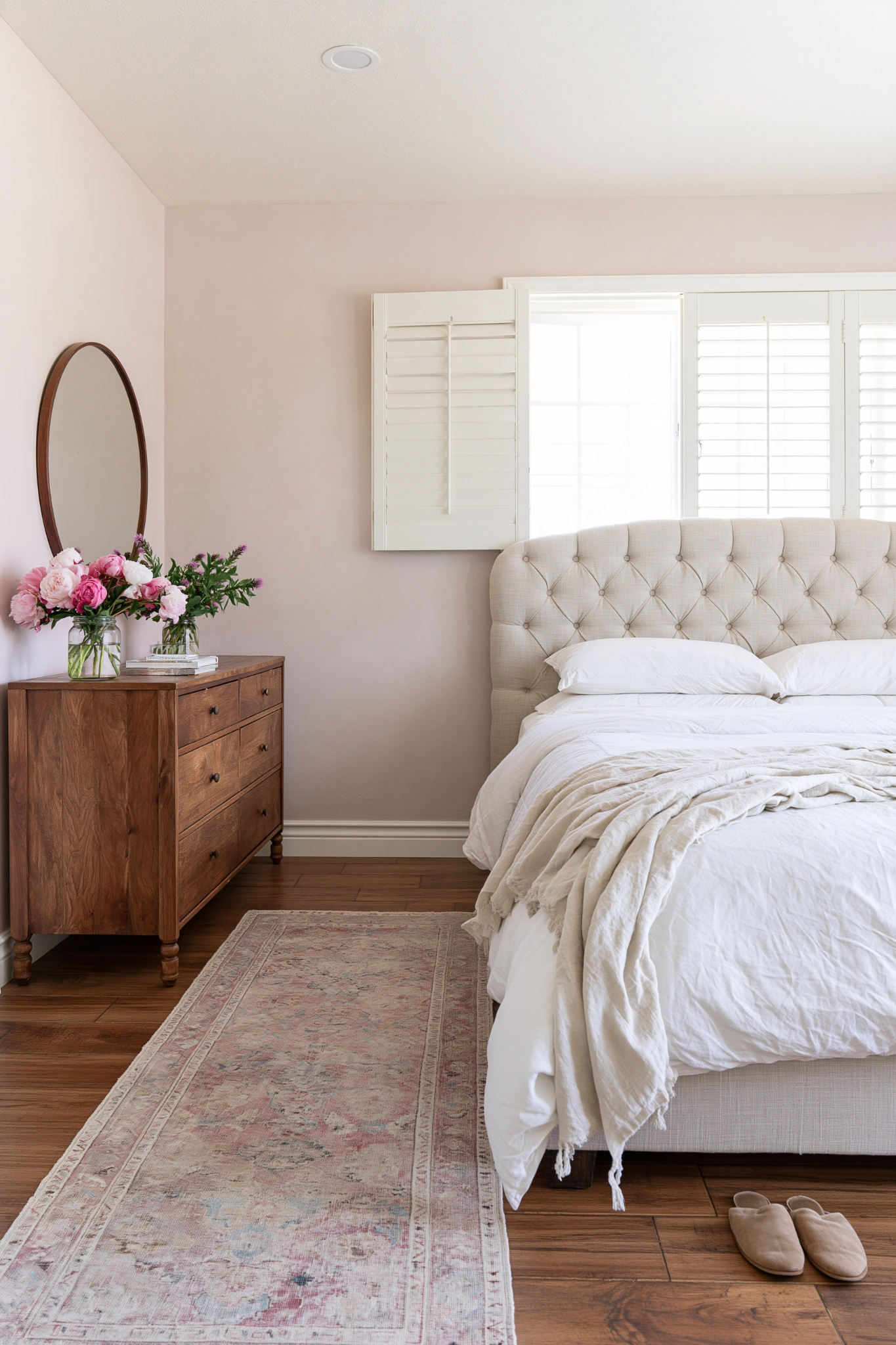
Upholstered tufted headboards offer comfortable back support, but they remain standalone furniture. Fabric gathers dust and shows wear over time, and it breaks the architectural rhythm of the room. A plaster wall becomes a permanent part of the home. Neither choice is wrong, though.
If you love upholstery for late-night reading, you don’t have to choose. Set a low-profile linen headboard against a wide plaster backdrop. Tufting brings softness, and plaster brings stillness. Keep the headboard a foot narrower than the panel so the wall still frames it.
2 Common Mistakes to Avoid
- Skipping samples. Plaster shifts color as it dries.
- Cool bulbs. Above 3000K, warm plaster looks flat.
2 Quick Designer Tips
- Keep bedding quiet. Cream or flax lets the wall lead.
- Layer textures. Linen and wood warm up cool plaster.
Terracotta Limewash Bedroom Feature Walls
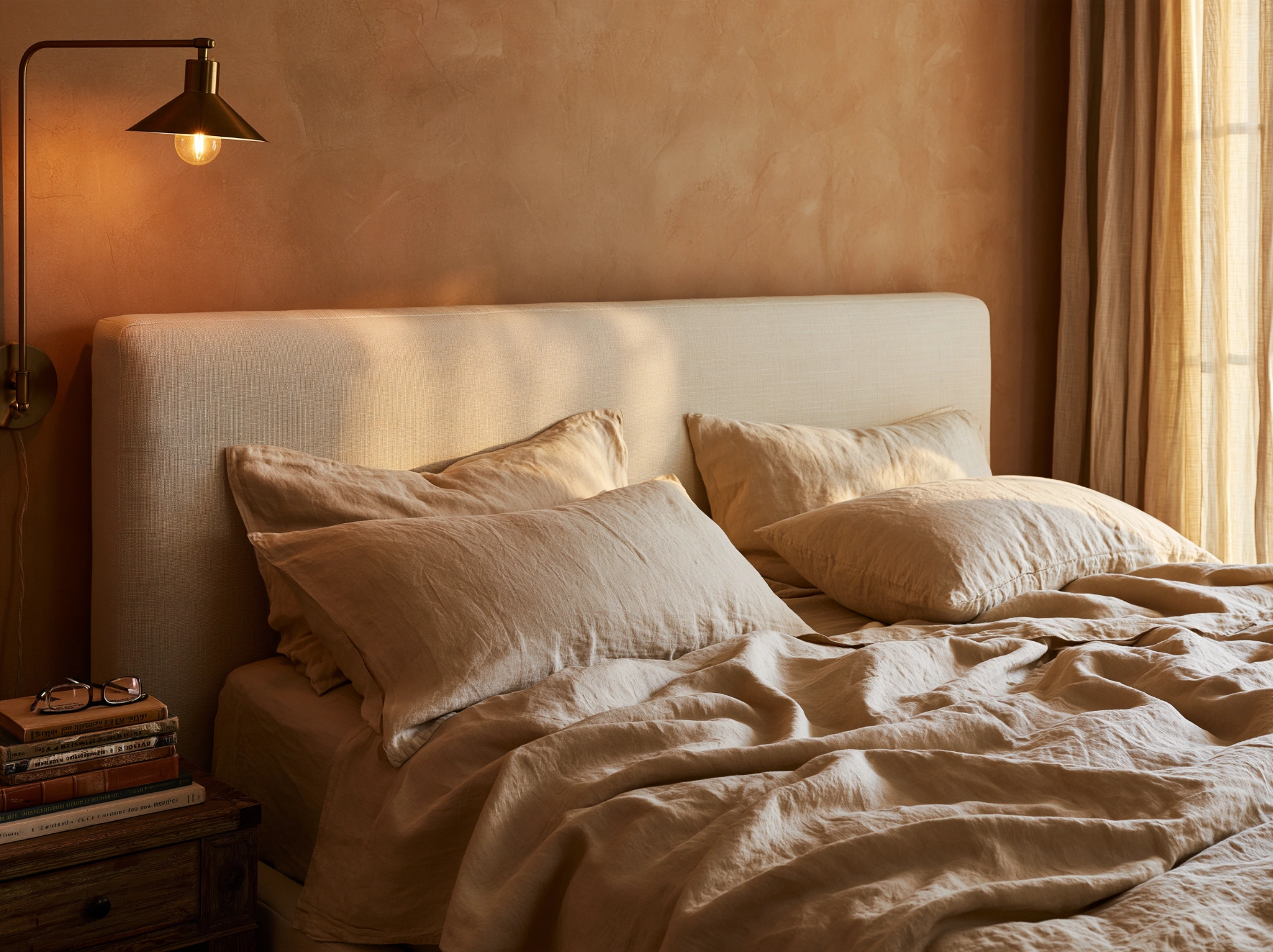
An earthy terracotta limewash wall grounds the bedroom the moment you walk in. By morning it shows a soft, sun-baked clay tone, and by evening it glows like warm embers. I always test a sample board first, because the color deepens as it dries. Let it be the only bold thing in the room.
Pair it with antique brass sconces and 2700K bulbs. The golden light highlights the brushwork and enriches the red-clay undertones. Keep the bedding in flax linen. If the color feels bold, start with a panel about 8 feet wide.
Plaster Headboard Wall — Common Questions
How much does a plaster headboard feature wall cost?
Most projects cost roughly $8 to $25 per square foot, depending on the finish and local artisan rates. Microcement and polished Venetian finishes sit at the higher end, while limewash paint is more budget-friendly. Because a headboard accent wall is typically a one- or two-day project, overall costs remain approachable. Get two quotes before you commit.
Can I create a plaster headboard wall myself?
Yes, DIYers can achieve beautiful results with Roman clay or limewash paint using cross-hatch brush strokes. However, multi-coat microcement or sharp architectural curved arches require professional troweling skills to avoid cracking and ensure a clean, long-lasting bond. Practice on a sample board first.
How wide should a plaster headboard wall be?
Aim to extend the plastered area 12 to 18 inches past each side of the mattress. For a standard 60-inch queen bed, a panel roughly 84 to 96 inches wide frames the bed and floating nightstands, so the installation feels built into the architecture. You can also plaster the full wall for a bolder effect.
Is plaster durable enough behind pillows and hair?
Yes. When finished with a high-grade, breathable matte sealer or wax, plaster is highly resistant to oils, scuffs and daily friction. It can be easily wiped clean with a soft, damp microfiber cloth, preserving its organic texture for decades. Reapply the sealer every few years.