Small Bedroom Ideas That Make Your Space Feel Bigger and More Beautiful
Start With a Room That Feels Settled
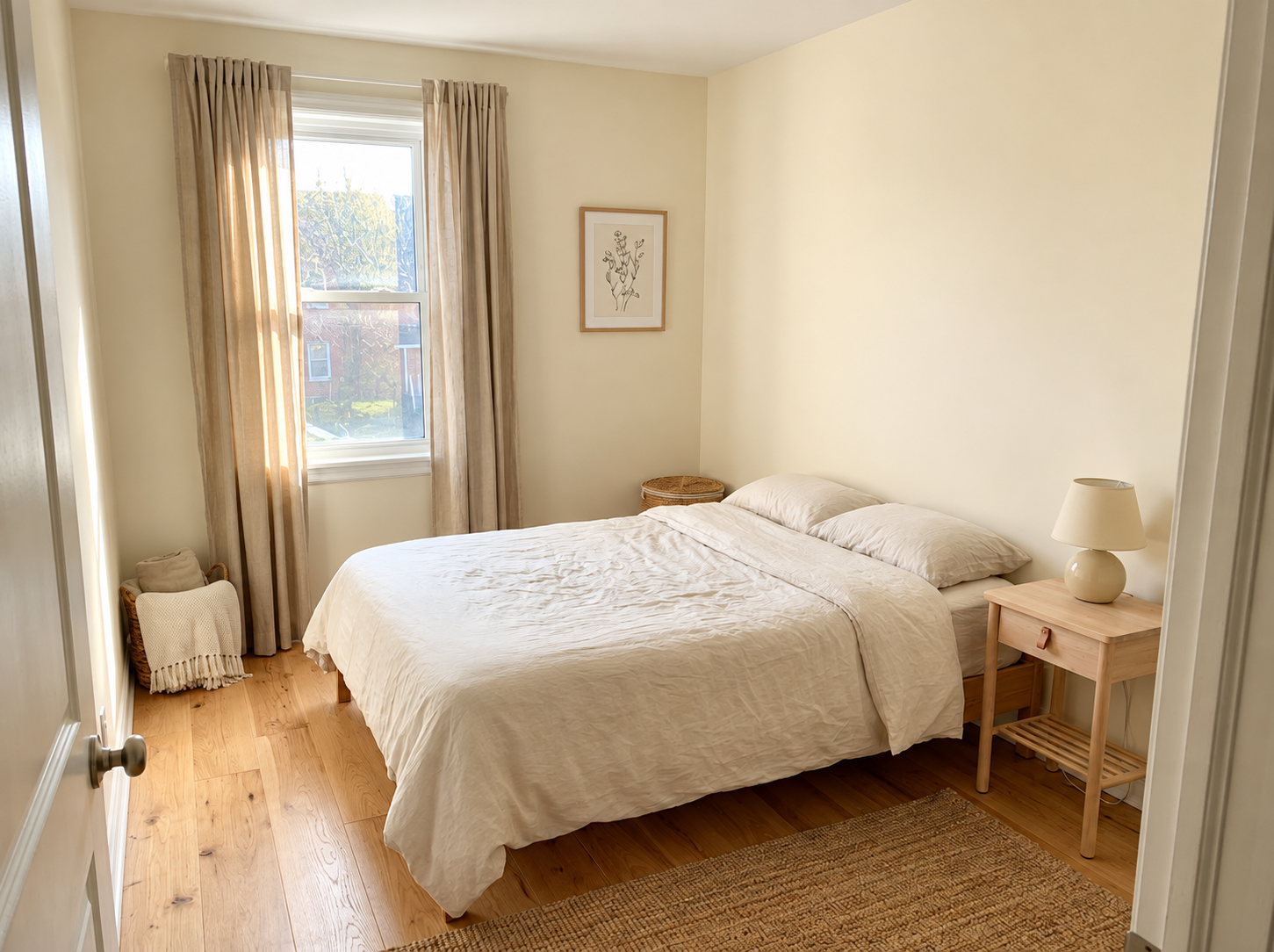
A bedroom that feels truly restful isn’t usually the result of expensive furniture or elaborate decoration. It comes from a sense of things being in the right place — a room that has been thought about rather than simply filled.
The feeling of being settled begins with the bones of the room. Where the bed sits in relation to the door, how much floor is visible, whether the furniture scale feels proportionate to the walls — these are the foundations. A quiet luxury bedroom is always one where those foundations have been addressed before anything decorative begins.
Most bedrooms that feel unsettled have too much competing for attention. The edit comes first. Once the room has room to breathe, everything placed within it carries more weight.
Key Points
Build Around What Deserves to Stay Visible
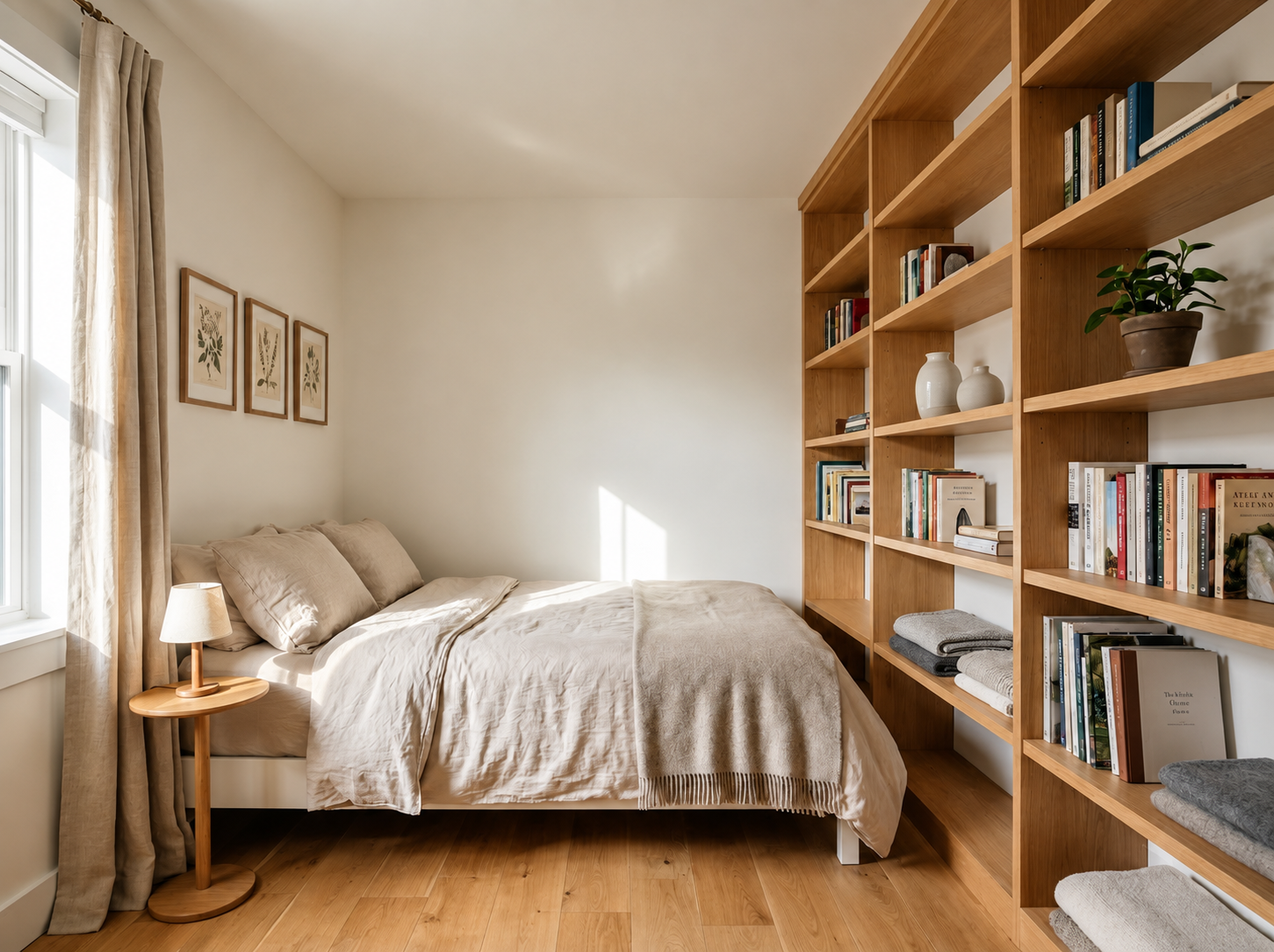
Not everything in a bedroom deserves to be seen. The most beautiful rooms are built around a handful of pieces that genuinely earn their visibility — and everything else is either stored away or removed entirely.
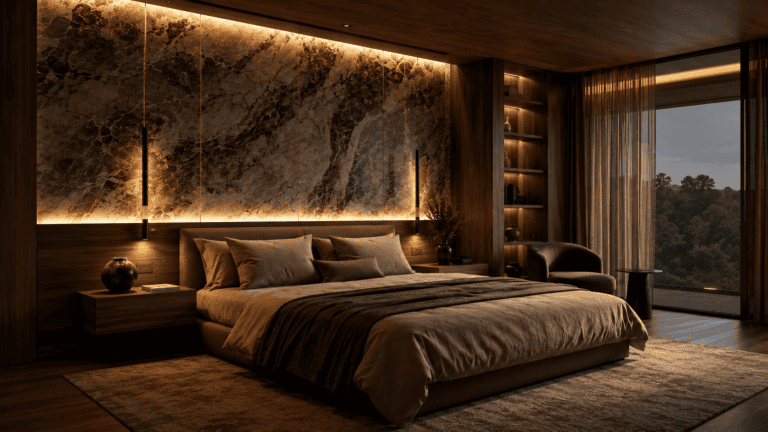
Decide which two or three elements you want the room to be about. The bed itself, a particular lamp, a piece of art above the dresser. Bedroom interiors that feel like a five-star hotel are almost always built on this principle — a small number of things, each chosen carefully, with nothing unnecessary sharing their space.
When you know what deserves to stay visible, everything else becomes much easier to decide. Objects that don’t support the room’s main pieces simply don’t need to be there. That clarity is what gives the room its character.
Let Practical Storage Disappear Into the Design
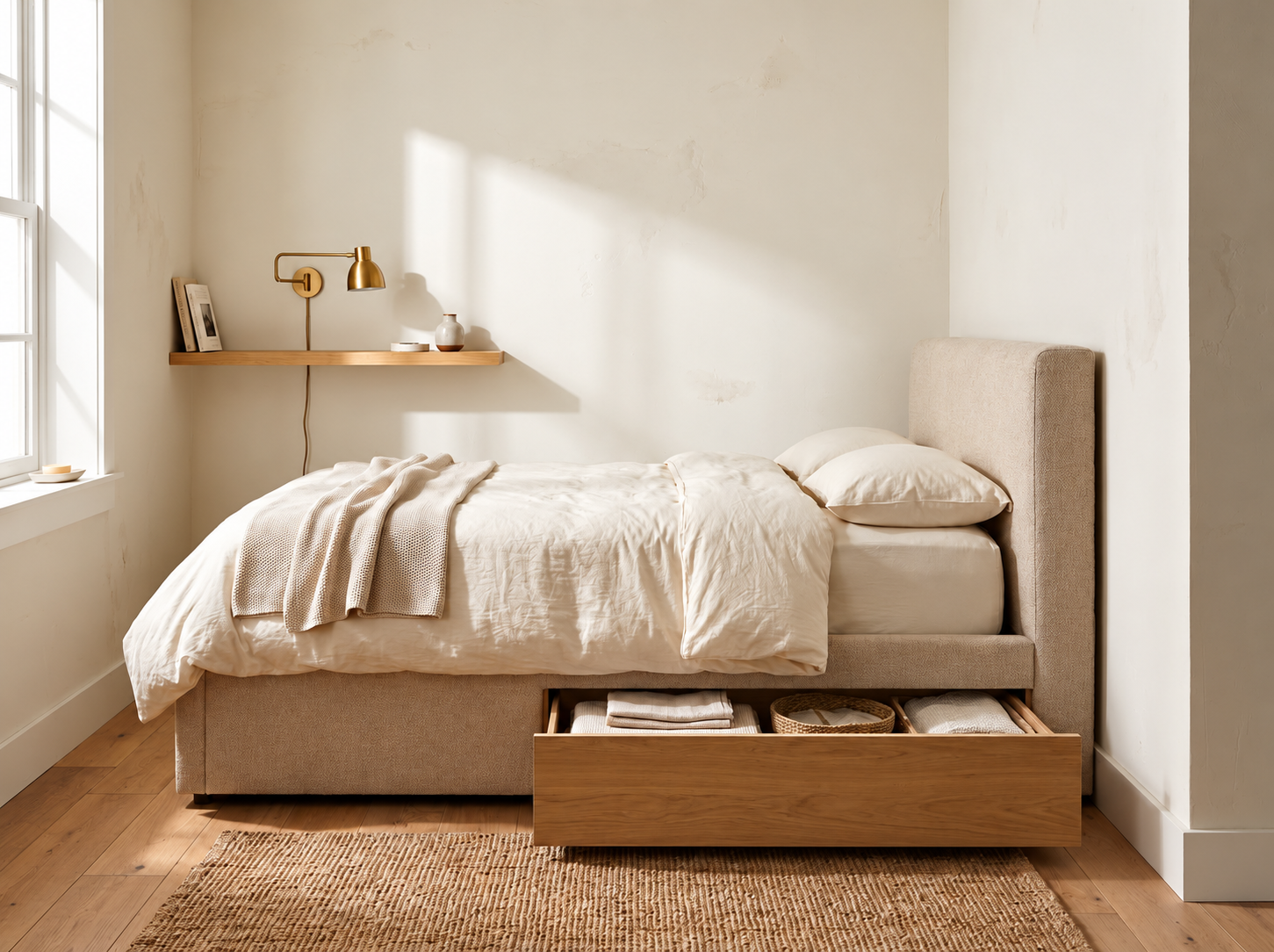
Storage that announces itself always disrupts the calm of a bedroom. Wardrobes that stand out rather than blend in, open shelving crowded with visible clutter, surfaces covered with objects that have nowhere else to go — all of these pull attention away from the room’s intended atmosphere.
The goal is storage that disappears. Wardrobes finished in the same tone as the walls, bedside tables with a single closed drawer, a low chest that reads as furniture first and storage second. Quiet luxury bedroom design treats practical necessity as something to be resolved elegantly rather than tolerated visibly.
When storage is handled well, the room feels uncluttered without actually being empty. That balance — functional but visually clean — is what allows a bedroom to feel genuinely restful rather than just tidy.
Give the Bed a Softer, More Finished Presence
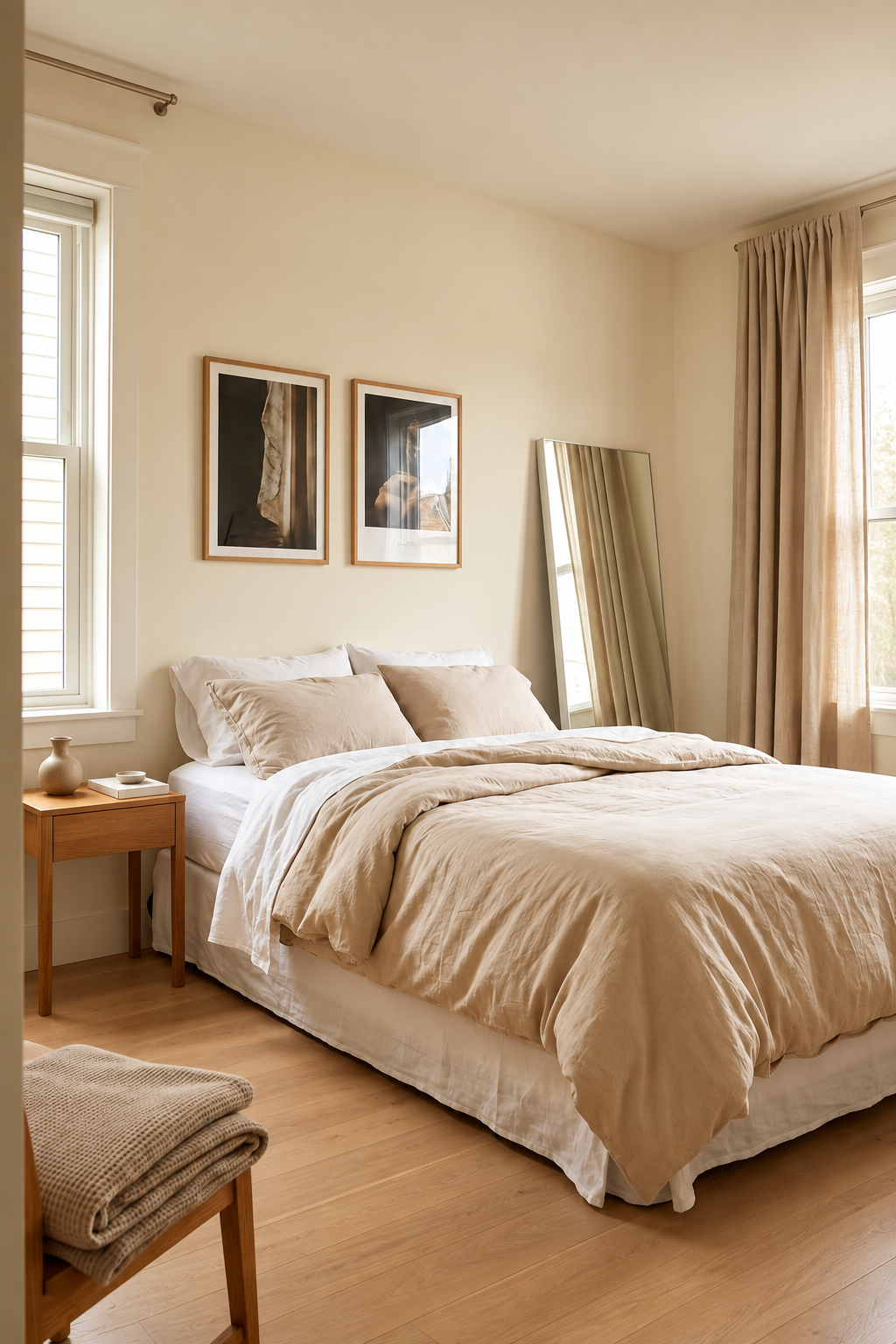
The bed is the room. Everything else in a bedroom either supports it or competes with it. When the bed is dressed well, the entire room lifts — even if nothing else has changed.
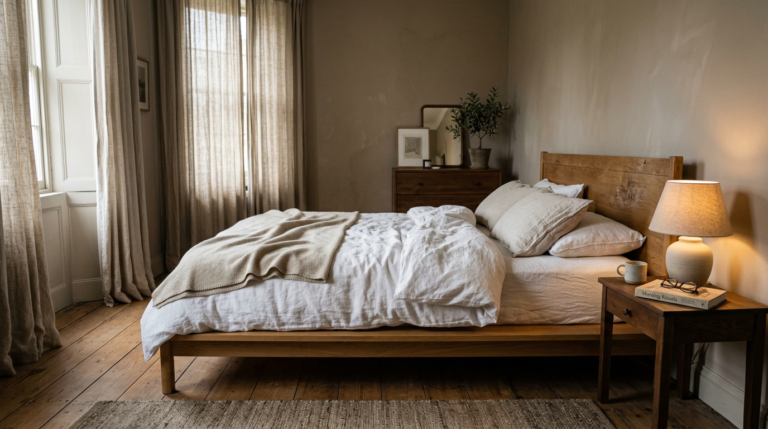
Softness comes from layering. A fitted base, a linen duvet, a folded throw across the foot, two or three pillows arranged with a little ease rather than rigid symmetry. Hotel-quality bedroom styling is rarely about perfect arrangement — it’s about the quality of materials and the sense that someone has cared about how it looks.
Neutral tones work best because they don’t compete. Ivory, warm white, soft taupe — colours that read as calm regardless of the light conditions in the room. The bed becomes the room’s anchor rather than its statement.
Use Reflection to Add Light and Dimension
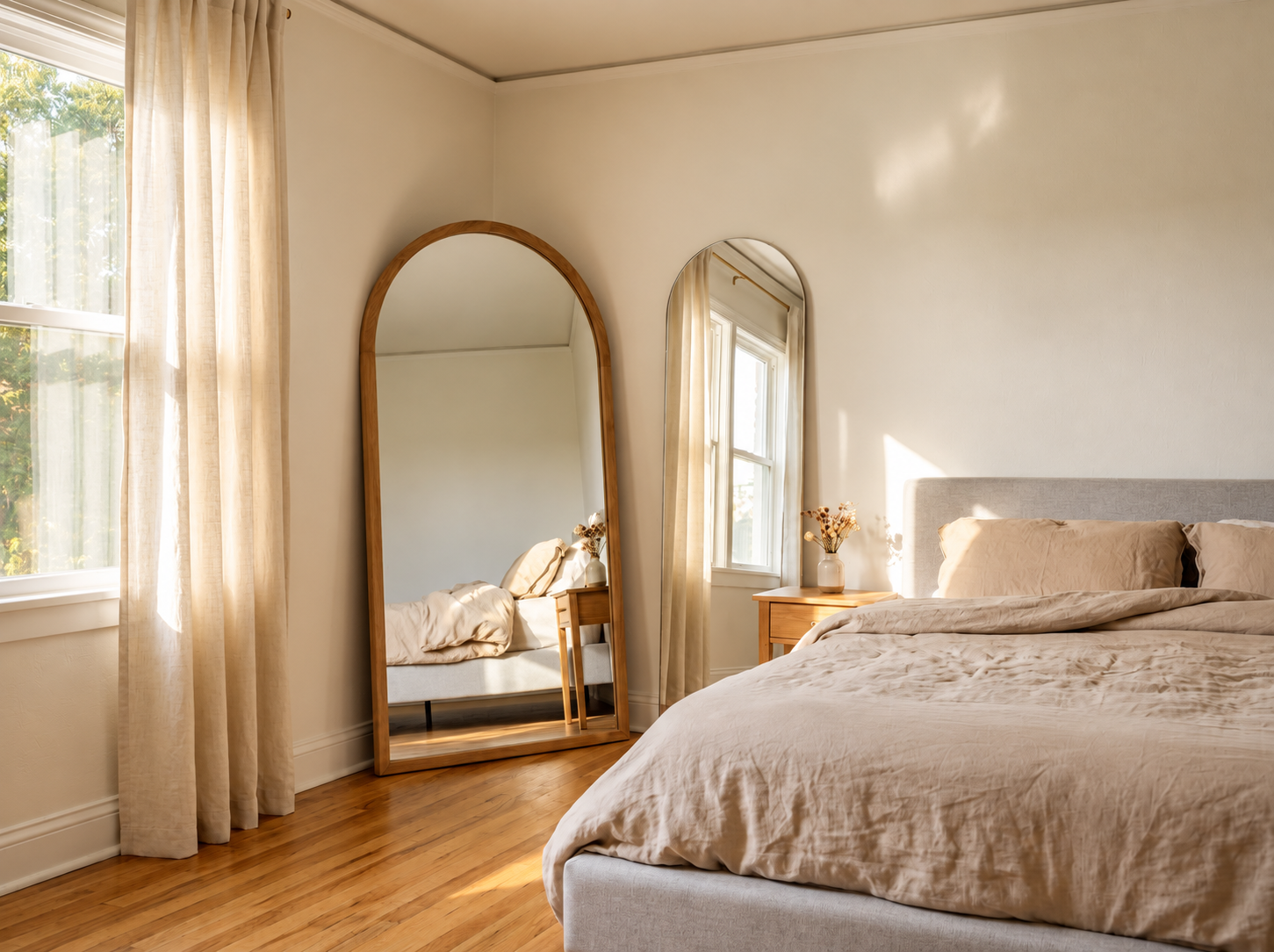
Light is the material most often overlooked in bedroom design. A room that feels dim and enclosed rarely improves with more objects — it improves with more light, or with better use of the light that’s already there.
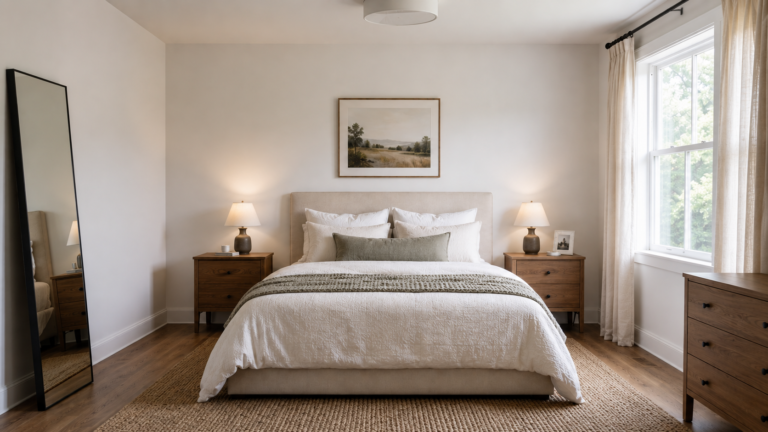
Mirrors placed opposite or adjacent to windows return natural light across the room and make the space read as larger without any structural change. A single large mirror leaning against a wall has more impact than several small decorative ones competing for space. Bedroom interiors that feel spacious and considered almost always use reflection deliberately rather than decoratively.
Reflective surfaces in small doses — a lacquered tray, a brass lamp base, a glass-fronted cabinet — continue that effect without making the room feel cold. The goal is warmth and depth, not shine.
Leave the Right Things Out
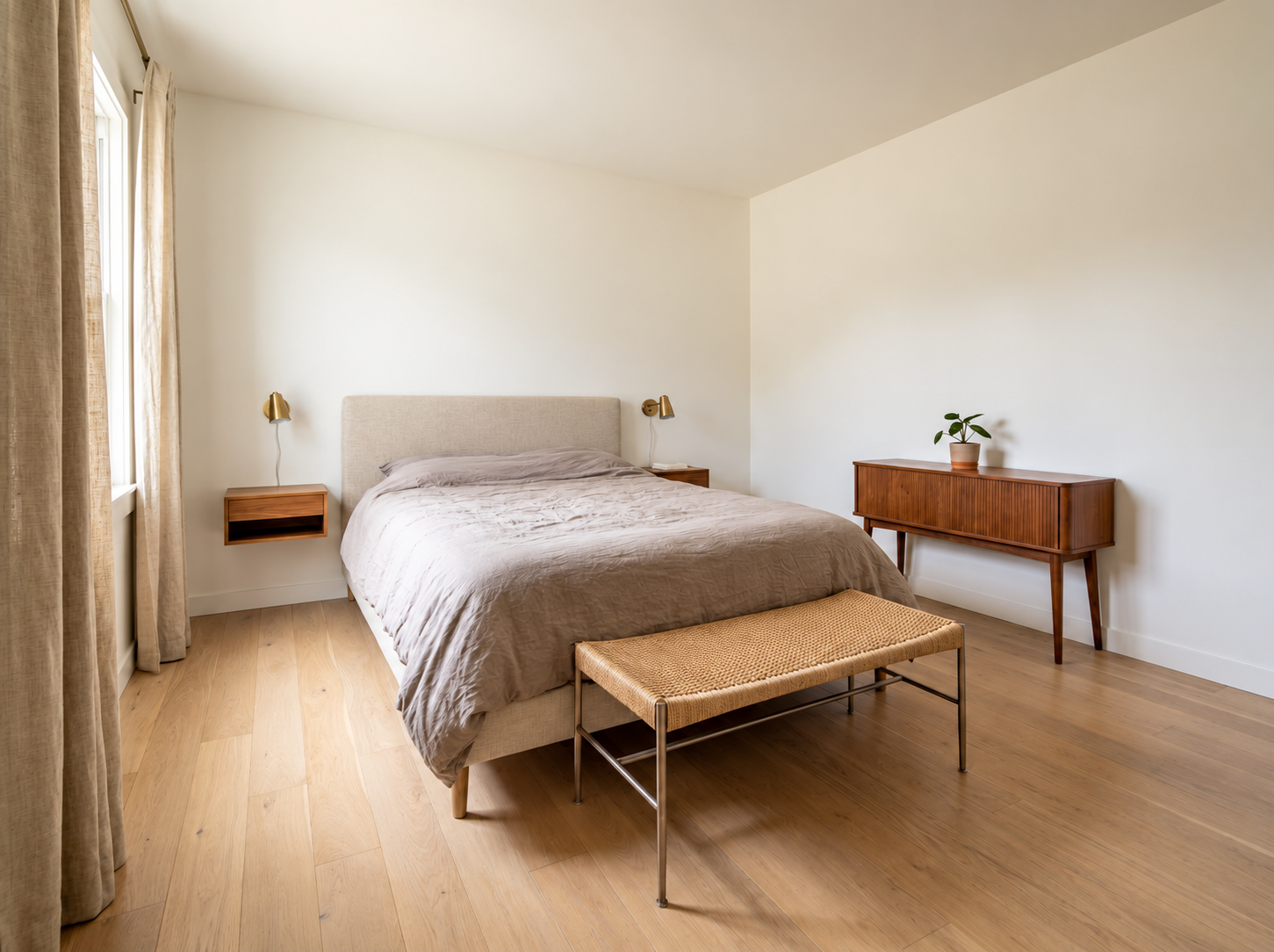
The final and most difficult step in creating a bedroom that feels truly calm is deciding what not to include. Most rooms accumulate rather than evolve — objects arrive and rarely leave, and the room gradually loses the clarity it once had.
Removing things from a bedroom is not the same as making it feel cold or unfinished. When the right things are left out, what remains has more presence. A bedside table with one lamp and one book reads as more considered than one covered with five objects, even if all five were carefully chosen. Quiet luxury in bedroom design is defined as much by restraint as by what is placed.
Walk through the room and identify anything that doesn’t actively contribute to its calm. Chargers left on surfaces, items that belong in another room, decorative pieces that were placed without much thought — removing these costs nothing and changes the room immediately.
A bedroom edited down to its most essential and most beautiful elements will always feel more expensive, more restful, and more considered than one that simply holds everything it has accumulated. That discipline is the real design choice.
Frequently Asked Questions
Start by removing rather than adding. Clear surfaces down to one or two intentional objects each. Pull furniture slightly away from walls where possible, and ensure the floor remains as visible as the layout allows. A room edited down to its essentials almost always feels calmer immediately — before a single new purchase is made.
The bed itself, dressed with quality textiles and layered with care. Everything else in the room supports or distracts from it. A well-made bed in neutral tones — linen, ivory, soft taupe — with a folded throw and a few pillows arranged naturally will elevate the room more than any other single change.
Use a large mirror placed opposite or beside the window to return natural light across the room. Keep the floor as clear as possible — visible floor space is one of the strongest signals of spaciousness. Choose furniture with visible legs where the style allows, and keep wall surfaces above eye level clear and uncluttered.
The goal is storage that reads as furniture first. Wardrobes finished in a tone close to the wall colour recede rather than stand out. Bedside tables with a closed drawer keep practical objects out of sight. A low chest or bench at the foot of the bed adds storage without interrupting the room’s visual line. When storage disappears into the design, the room retains its sense of calm regardless of how much it actually holds.