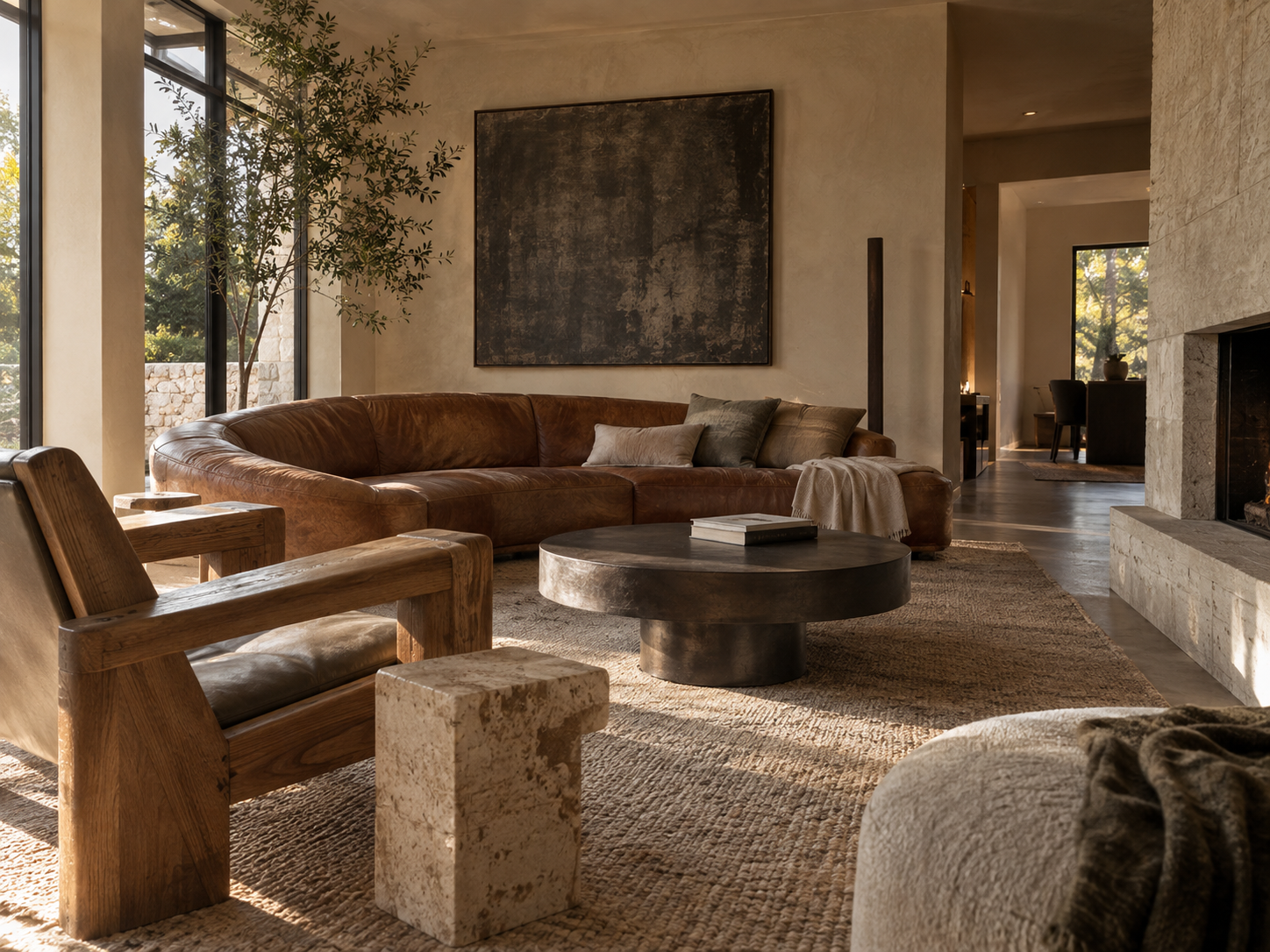
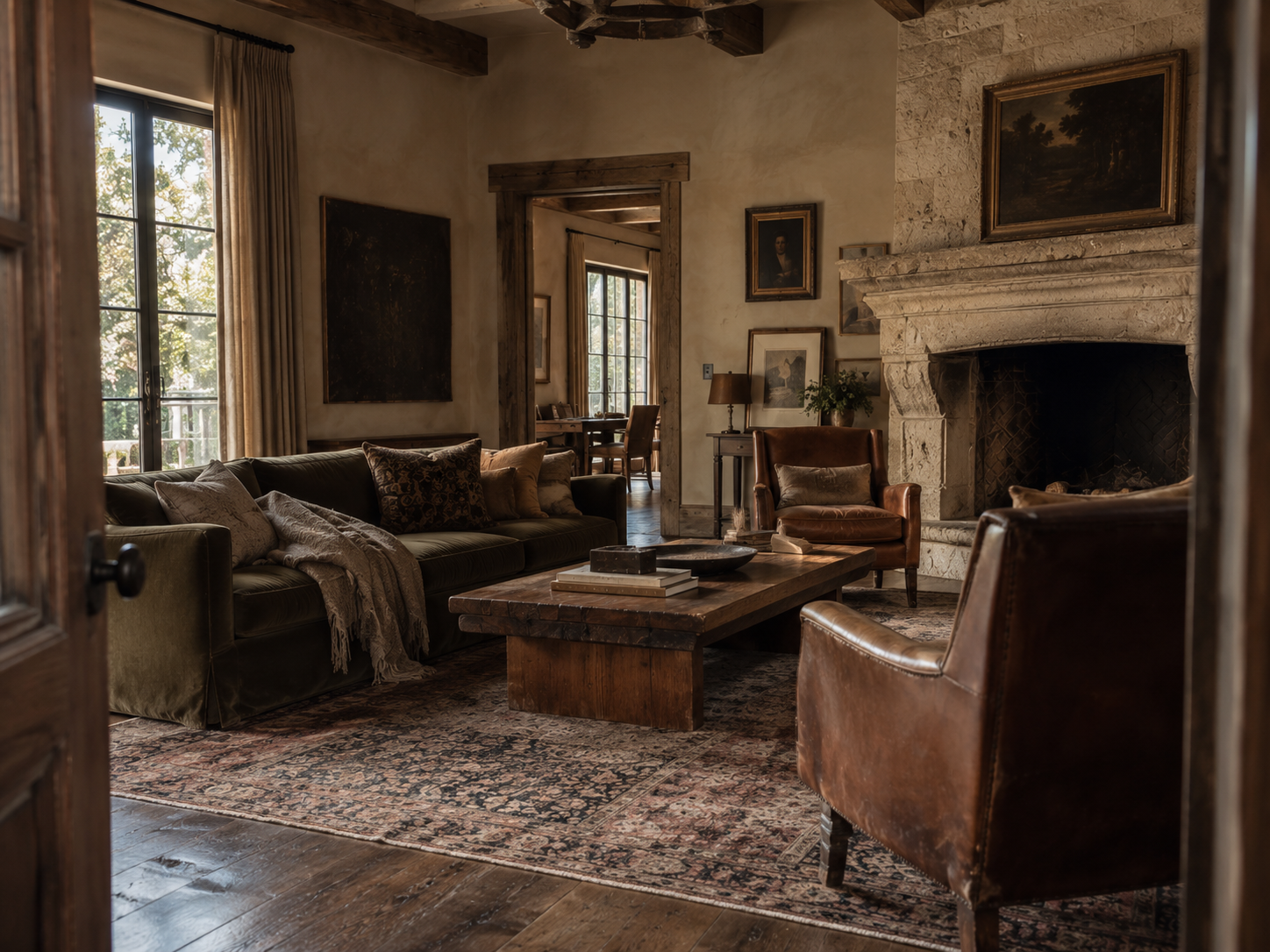
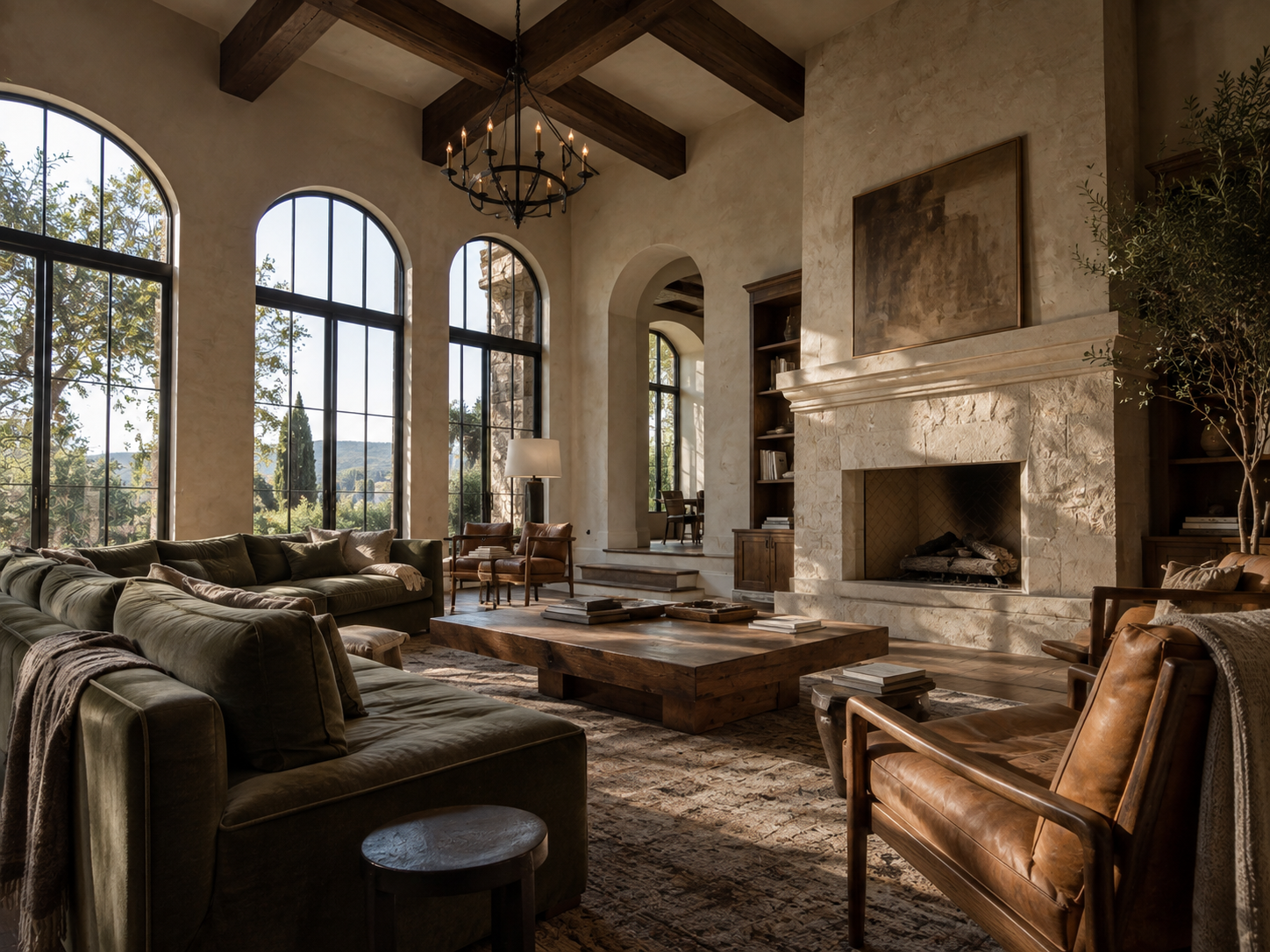
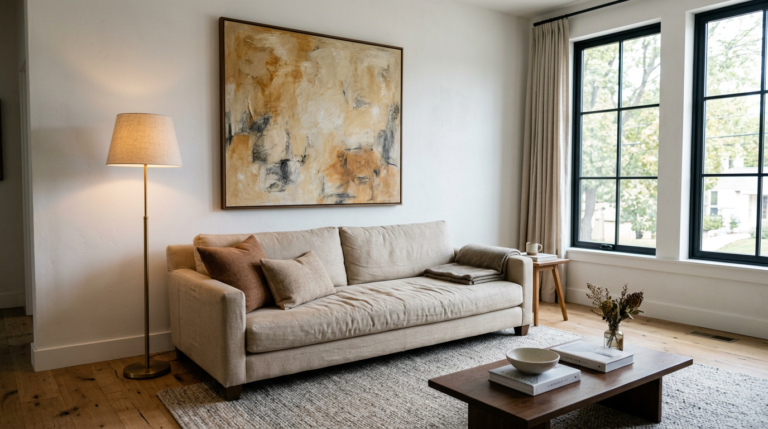
25 Quiet Luxury Living Room Ideas That Look Expensive (On Any Budget)
Timeless design principles, curated materials, and effortless styling that transforms any space into something truly remarkable.
Shop This Look β Quiet Luxury Essentials
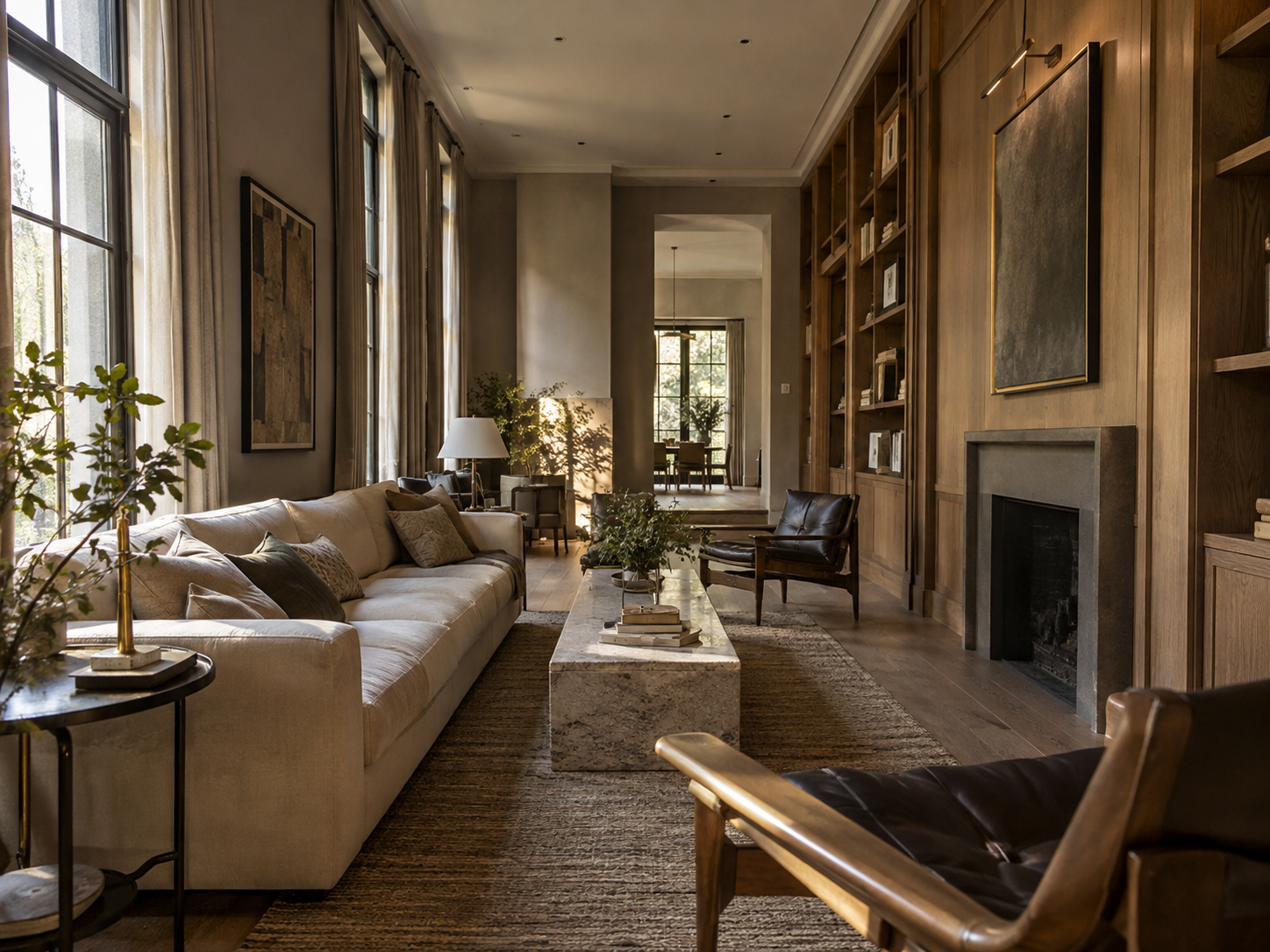
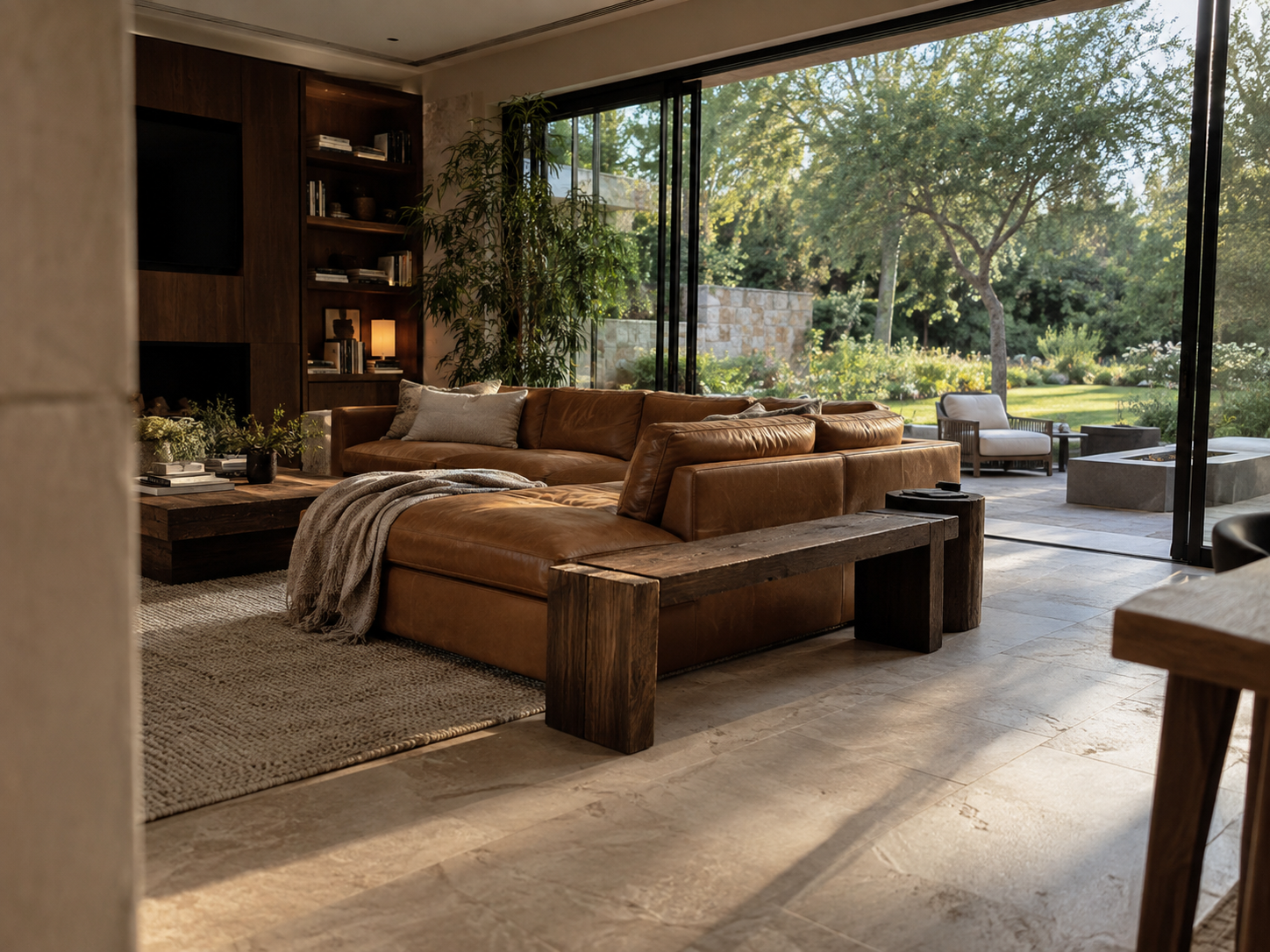
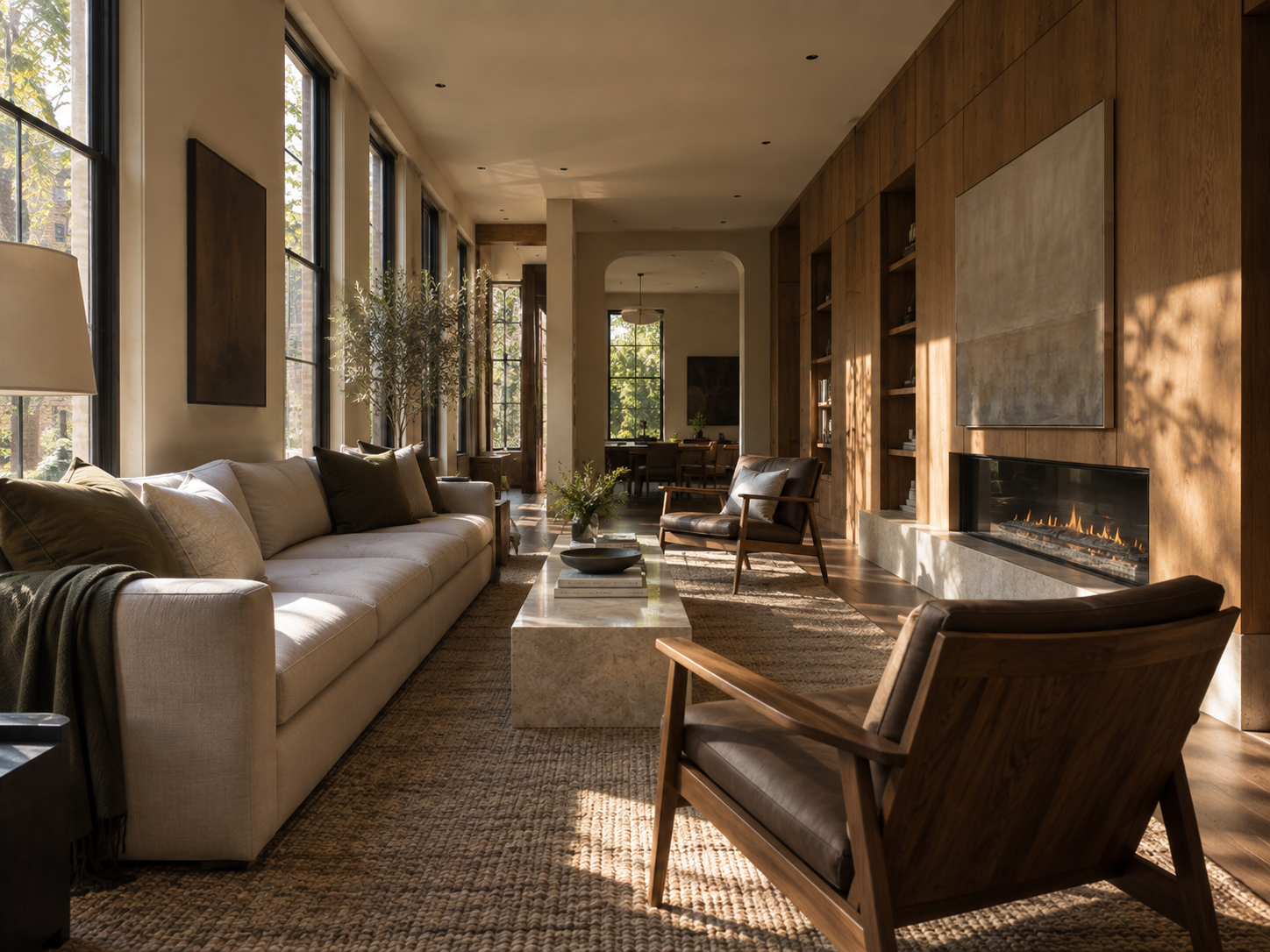
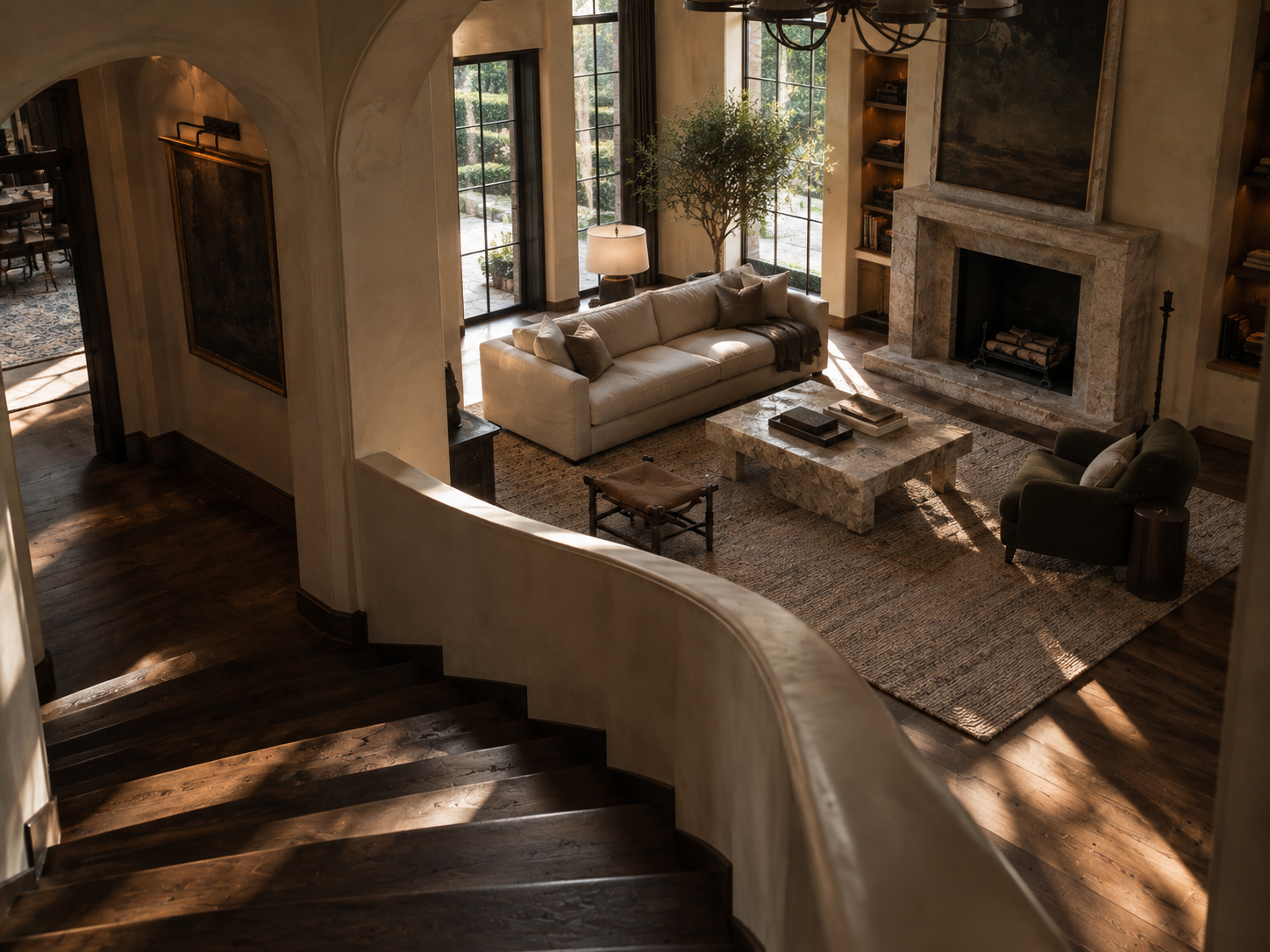
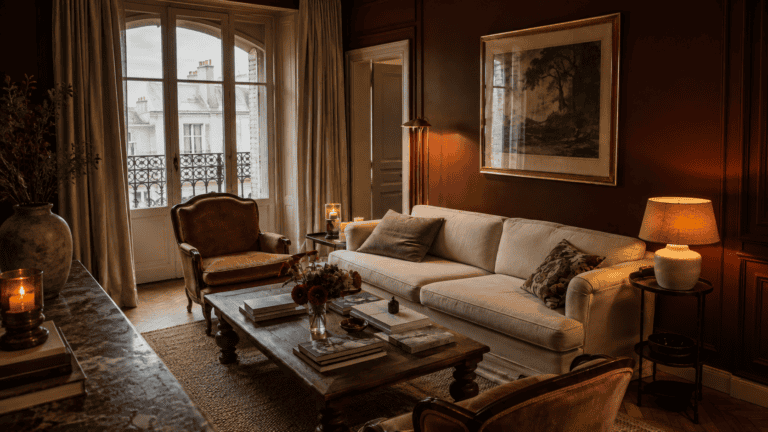
There’s a particular kind of living room that stops you mid-scroll. It doesn’t scream for attention. It doesn’t lean on trendy color-of-the-year palettes or a parade of fast-furniture pieces. Instead, it whispers β in warm neutrals, natural textures, and the kind of deliberate calm that only comes from truly thoughtful design. That’s quiet luxury.
The quiet luxury aesthetic has moved far beyond a Pinterest trend. It’s a design philosophy rooted in restraint, quality over quantity, and an almost obsessive attention to detail. Think creamy bouclΓ© sofas beside sculptural stone coffee tables. Linen curtains pooling softly onto blonde hardwood floors. A single perfectly proportioned ceramic vase holding nothing but empty space β and looking all the more intentional for it.
The best part? You don’t need a designer’s budget or a West Coast renovation to get there. You need the right ideas, the right understanding of what actually creates that expensive look, and a willingness to be selective. Less, but better, has never been more relevant.
This guide gives you 25 actionable, beautiful, and entirely achievable quiet luxury living room ideas β each with a designer tip, a budget-friendly angle, and honest advice on what makes it work. Whether you’re starting from scratch or simply refreshing what you have, these ideas will change the way you see your space.
Table of Contents
- The Statement BouclΓ© Sofa
- Neutral Luxury Color Palette
- The Marble Coffee Table Moment
- Linen Curtains Floor to Ceiling
- The Luxury Area Rug
- Designer Lighting That Changes Everything
- Organic Modern Living Room
- Layered Textures
- Built-in Shelving Styled Right
- The Fireplace Feature Wall
- Oversized Artwork as Focal Point
- The Curated Coffee Table Tray
- Accent Chair That Earns Its Place
- Travertine Decor Accessories
- The Quiet Luxury Reading Corner
- Walnut Shelving & Warm Wood Tones
- The Sculptural Table Lamp
- Indoor Olive Tree or Sculptural Plant
- Decorative Books as DΓ©cor
- The Luxe Throw Blanket
- Large Window Scene
- Evening Luxury β Candles & Warm Light
- Warm Minimalist Gallery Wall
- Ceramic Vase as Sculpture
- The Designer Side Table
- Practical Styling Tips
- Common Mistakes to Avoid
- Designer Shopping Checklist
- FAQ
The Statement BouclΓ© Sofa
If there is one single piece that defines the quiet luxury living room right now, it’s the bouclΓ© sofa. The looping, textured fabric reads as effortlessly high-end β it catches light beautifully, invites touch, and anchors a room in a way that generic upholstered sofas simply cannot. In cream, ivory, or warm off-white, it works as both a statement and a neutral canvas.
The silhouette matters enormously here. Look for sofas with curved arms, low profiles, or interesting proportions. A sofa that sits close to the floor with a gentle curve immediately signals considered design β the kind of thing you’d find in a beautifully appointed apartment or a designer showroom. When paired with a marble or travertine coffee table, the contrast of soft and hard materials is exactly what elevates a room from comfortable to genuinely curated.
Don’t overlook the arrangement. BouclΓ© sofas look best with space to breathe around them β pushed slightly away from walls, given room to be seen. Layer with two or three designer throw pillows in complementary textures (think velvet, linen, or a subtle pattern) and a loosely draped throw blanket at one corner for that effortlessly lived-in luxury finish.
β¦ Why It Creates a Luxury Look
BouclΓ©’s textured weave naturally photographs like high-end furniture. The curved silhouette reads as architectural. Together, they signal investment-piece quality even before anyone touches the fabric.
π° Budget-Friendly Alternative
A textured cream slipcover on an existing sofa frame can replicate the look convincingly. Focus your investment on the throw pillows and rug β they do more visual work than the sofa itself.
β Designer Tip
Scale is everything. Choose a sofa that fills roughly two-thirds of your living room wall β undersized furniture is one of the most common reasons a room looks cheap.
Shop Statement Sofas
A Neutral Luxury Color Palette That Actually Works
Quiet luxury and neutral palettes are inseparable β but a neutral living room done poorly is just beige. Done well, it’s the most sophisticated room in the house. The difference is in the layering: cream against warm white, stone gray alongside warm sand, soft camel complementing aged linen. It’s a palette built on tonal variation, not uniformity.
The key is choosing neutrals with warmth. Cool-toned grays and stark whites tend to feel clinical rather than elevated. Instead, reach for tones that have undertones of sand, wheat, or the faintest blush. Paint your walls in a warm off-white or greige, then build everything else β textiles, furniture, accessories β in the same warm tonal family.
Contrast comes through texture and material rather than color. A creamy bouclΓ© sofa against warm linen curtains against a honey-toned walnut side table β all neutrals, but entirely visually rich. This is the elegant restraint that defines high-end interior design.
β¦ Why It Creates a Luxury Look
A curated neutral palette forces the quality of your materials to do the work. There’s nowhere for cheap furniture to hide, which is exactly why designers use it β it’s honest, and it reads as intentional.
π° Budget-Friendly Alternative
Paint is your highest-impact, lowest-cost move. A gallon of premium warm white or greige paint in a matte finish will transform a room more dramatically than almost any furniture purchase.
β Designer Tip
Test paint swatches in large patches (at least 12 x 12 inches) and observe them at different times of day before committing. Light changes everything in a neutral palette.
Complete the Neutral Look
The Marble Coffee Table Moment
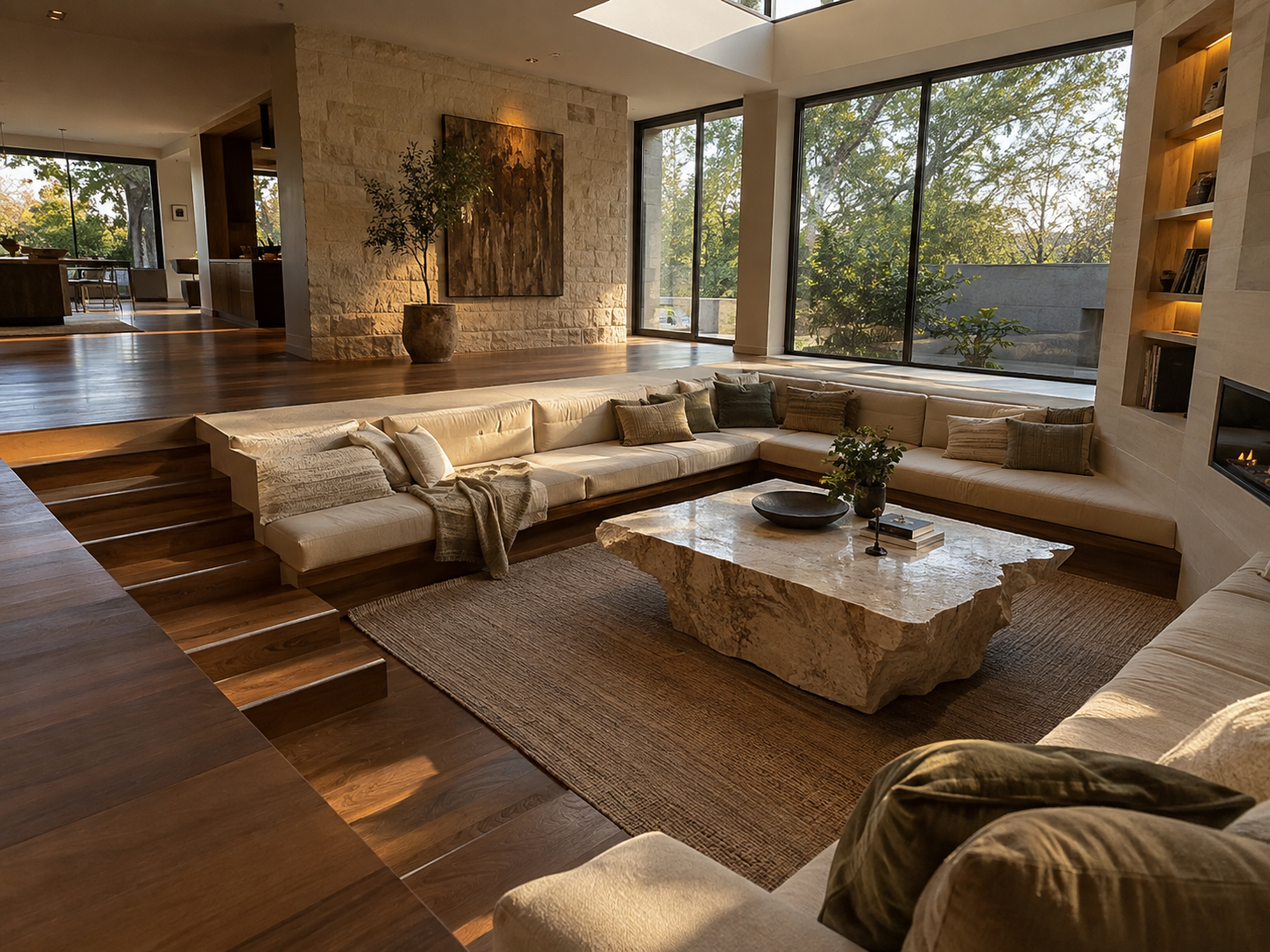
A marble coffee table is one of those pieces that genuinely changes a room’s register. There’s something about natural stone β its veining, its weight, its quiet permanence β that communicates quality in a way that wood or glass simply cannot replicate. Even a modestly sized marble-top table transforms the center of a living room into a focal point worth pausing over.
The most effective marble coffee tables for quiet luxury spaces are either rectangular and low-profile, or round with clean geometric lines. Avoid overly ornate bases β a simple white marble top on a brushed brass or matte black metal base is endlessly sophisticated. The stone does the work; the base just needs to support it without competing.
Style the surface thoughtfully. A decorative tray in travertine or marble anchors the arrangement. Add a ceramic bowl, a couple of artfully stacked coffee table books, and a single sculptural object. Negative space is as important as what you place β resist the urge to fill every inch.
β¦ Why It Creates a Luxury Look
Natural stone is inherently expensive to produce and transport. Even a small marble table immediately elevates the perceived price point of everything around it.
π° Budget-Friendly Alternative
Marble-effect porcelain or sintered stone options offer a nearly identical look at a fraction of the cost. The key is choosing pieces where the veining pattern looks natural rather than repetitive.
β Designer Tip
Use a marble tray to corral small accessories β it keeps the table looking organized and intentional rather than cluttered, which is the line between styled and messy.
Shop Coffee Table Styling
Linen Curtains Hung Floor to Ceiling
The single most transformative window treatment for a quiet luxury living room isn’t blackout blinds or layered valances β it’s linen curtains hung from ceiling to floor. This one move makes ceilings feel taller, windows feel grander, and light feel softer. It is, without exaggeration, designer-level impact for a fraction of the cost of an architectural renovation.
The fabric matters enormously. Linen has a natural slub and drape that reads as organic and expensive. It moves beautifully in a breeze, catches afternoon light in a way that cotton or polyester cannot, and softens naturally over time into even more beautiful folds. Choose tones within your neutral palette β cream, warm white, flax, oat β and let the fabric speak for itself.
Hang the curtain rod as close to the ceiling as possible, ideally within a few inches of the crown molding. Let the panels puddle slightly on the floor or break just at the baseboard. This intentional extra length is the designer detail that separates a thoughtfully styled room from a standard one.
β¦ Why It Creates a Luxury Look
Height and softness are two qualities most associated with high-end interiors. Floor-to-ceiling linen curtains deliver both simultaneously, framing a room like a scene rather than simply covering a window.
π° Budget-Friendly Alternative
Linen-blend curtains offer much of the texture and drape of pure linen at significantly lower cost. Alternatively, buy extra-long panels and hem them yourself to achieve the perfect puddle effect.
β Designer Tip
Extend the rod 8β12 inches on each side of the window frame. When curtains are open, they stack off the glass entirely, maximizing the window size and light β a subtle but significant detail.
The Luxury Area Rug That Anchors Everything
In a quiet luxury living room, the rug isn’t an afterthought β it’s infrastructure. A beautiful area rug defines the seating area, adds warmth underfoot, introduces texture, and visually grounds every piece of furniture in the room. Get it right and the room pulls together. Get it wrong β or skip it entirely β and even beautiful furniture floats disconnectedly in the space.
Size is the most critical factor. A rug that’s too small is one of the most common and most visible decorating mistakes. For a standard living room seating area, choose a rug that allows at least the front legs of your sofa and chairs to sit on it. Better yet, go large enough for all four legs of every piece β this is the true designer standard.
Texture and material choice matter almost as much as size. A high-pile wool rug in cream, warm ivory, or a subtle organic pattern creates an immediate sense of softness and luxury. For quiet luxury specifically, tone-on-tone patterns or abstract organic shapes in muted colorways are the sweet spot.
β¦ Why It Creates a Luxury Look
A quality rug signals investment in the room. It also photographs beautifully, adds dimension that flat floors cannot, and is one of the most effective ways to introduce warmth into a neutral palette.
π° Budget-Friendly Alternative
Look for machine-made wool-blend rugs or polypropylene pile rugs with natural tones β from a distance, they read as luxurious. The key is choosing the right size and a neutral, non-trendy pattern.
β Designer Tip
Always use a quality rug pad. It extends the life of the rug, prevents slipping, and adds enough height that the rug’s pile looks more substantial β essentially making a medium-quality rug perform like a better one.
Designer Lighting That Changes Everything
Lighting is the element that most separates a designed room from a decorated one. A luxury living room is never reliant on a single overhead light source β it layers illumination at multiple levels: ambient, task, and accent. The result is a room that feels warm and intentional at every hour of the day.
In a quiet luxury space, table lamps and floor lamps do the heavy lifting. A sculptural table lamp on an end table β think organic forms, ribbed ceramic bases, or alabaster shades β instantly reads as curated rather than generic. A tall floor lamp in brushed brass or an arc lamp beside an accent chair creates both functional reading light and a vertical design element that the eye travels up naturally.
Switch your overhead lighting to dimmable warm-toned bulbs (2700K or lower) and install dimmer switches wherever possible. The ability to lower light levels in the evening transforms any living room into something that feels both luxurious and deeply relaxing β the signature atmosphere of high-end spaces worldwide.
β¦ Why It Creates a Luxury Look
Layered warm lighting is the single biggest visual difference between a hotel lobby and a luxury suite. It creates depth, warmth, and an atmosphere that harsh overhead light simply destroys.
π° Budget-Friendly Alternative
Smart plugs and warm-toned vintage Edison bulbs in affordable lamp bases can replicate the layered lighting effect at minimal cost. Focus on the bulb temperature first β it’s free to change.
β Designer Tip
Aim for eye-level light sources. Table lamp shades should sit roughly at seated eye height β this puts the warm glow exactly where the eye naturally rests in a relaxed position.
Shop Designer Lighting
Organic Modern Living Room Design
Organic modern is the design language that quiet luxury speaks most fluently. It takes the clean lines of contemporary design and softens them with natural materials, rounded forms, and textural honesty. No sharp corners for their own sake. No cold industrial elements without warmth to balance them. Everything is intentional, and everything feels good to be around.
In practice, this means choosing furniture with gentle curves over rigid right angles. It means natural materials β wood, stone, linen, wool, ceramic β instead of laminate, plastic, or synthetic upholstery. It means bringing the outdoors in with sculptural plants, woven baskets, and objects that have the quality of things found rather than manufactured.
The color palette stays grounded β earthy, warm, slightly sun-bleached. Terracotta, bone, warm sand, sage, and rust can all appear but are handled with restraint. One or two earth tones against a predominantly neutral base gives the room depth without veering into territory that feels trendy rather than timeless.
β¦ Why It Creates a Luxury Look
Natural materials age beautifully and have inherent material value. An organic modern room looks more expensive as it develops patina β the exact opposite of trend-driven design.
π° Budget-Friendly Alternative
Introduce organic modern through accessories first β a ceramic vase, a woven throw basket, a single sculptural branch in an earth-toned pot. These small additions shift the room’s entire vocabulary.
β Designer Tip
Odd numbers work better than even in organic modern styling. Three objects of varying height on a surface always reads as more artful than two or four.
Shop Organic Modern Pieces
Layered Textures for Visual Depth
A room that lives entirely in one texture β regardless of how beautiful that texture is β will always read as flat and unfinished. The secret to a genuinely expensive-looking living room is the interplay of different tactile surfaces: smooth against rough, soft against hard, matte against the faintest sheen.
On your sofa alone, you can layer three distinct textures: the bouclΓ© upholstery, velvet throw pillows, and a loosely knitted or linen throw blanket. These three materials each catch light differently, feel entirely different to the touch, and create a sensory richness that is immediately apparent when you walk into the room.
Extend the textural layering throughout the room. Smooth marble against warm wood grain. A jute rug layered beneath a high-pile wool rug. The rough surface of a ceramic vase against a polished brass lamp base. Every pairing should offer a conversation between two different materials β this is what designers mean when they talk about a room that “works.”
β¦ Why It Creates a Luxury Look
Textural complexity is one of the hallmarks of expensive interiors. It signals that attention was paid to every detail β that the room was designed, not just furnished.
π° Budget-Friendly Alternative
Throw pillows and blankets are the most affordable way to layer texture. A $30 velvet pillow and a $45 waffle-knit throw can dramatically change the textural register of a sofa.
β Designer Tip
Keep your color palette consistent even as you vary textures. Four or five materials in the same tonal family create richness without chaos β which is the definition of quiet luxury.
Shop Textures & Textiles
Built-in Shelving Styled Right
Built-in shelving is one of the most architecturally significant features a living room can have. It immediately communicates permanence, intentionality, and value β qualities that are central to the quiet luxury aesthetic. But shelving styled incorrectly (crowded, overly symmetrical, or filled with mismatched objects) can work against you just as powerfully.
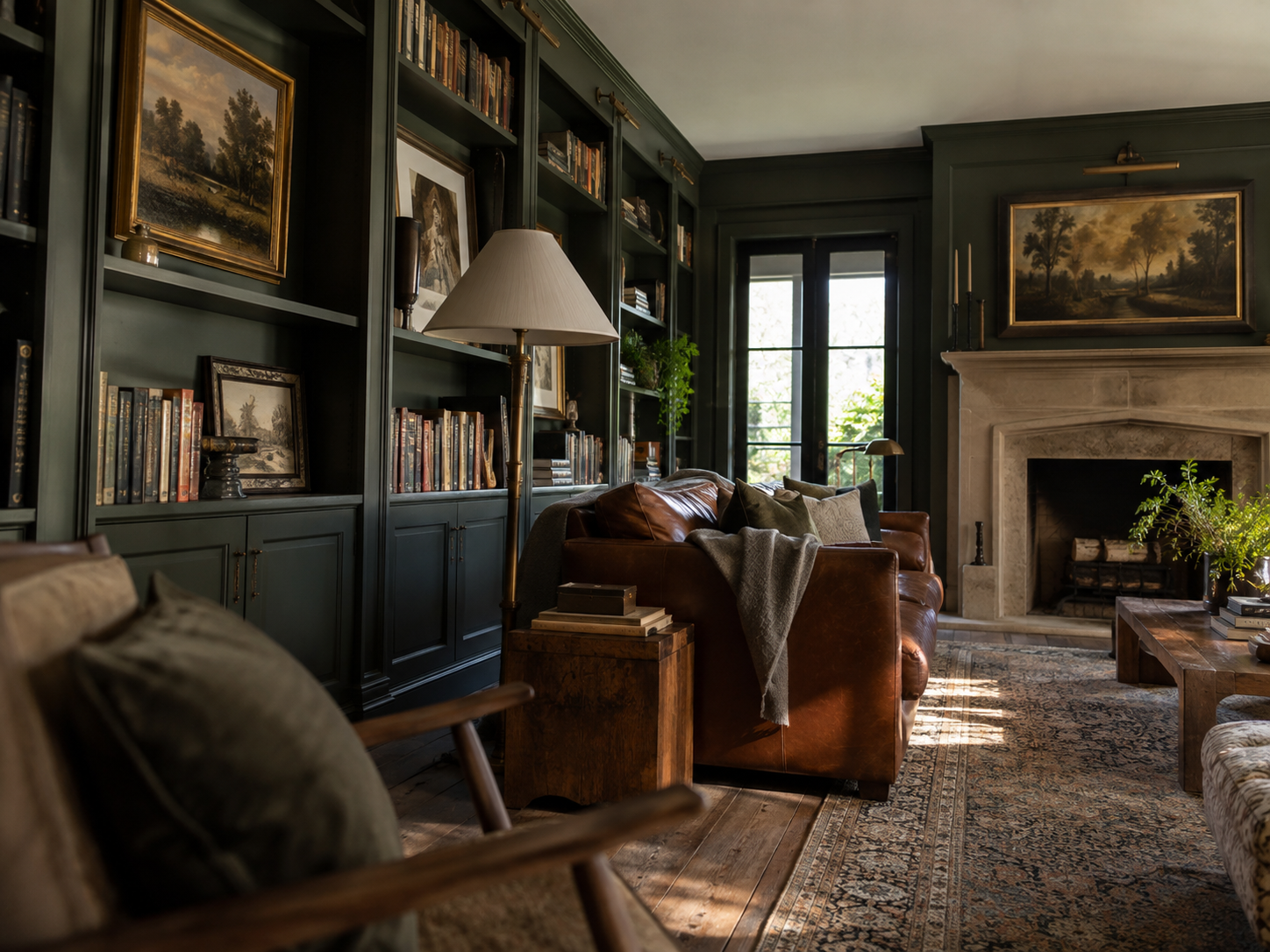
The rule for quiet luxury shelving is restraint. Leave at least a third of each shelf empty. Group objects in clusters of two or three, varying height deliberately. A stack of coffee table books, a single sculptural ceramic vase, and a trailing plant on one shelf is infinitely more effective than a dense collection of disparate objects.
If you don’t have built-ins, freestanding walnut shelving units offer a beautiful alternative. The warm, rich tone of walnut reads as premium against neutral walls, and open-backed units allow the wall color to work as a backdrop, giving you an enormous amount of compositional flexibility.
β¦ Why It Creates a Luxury Look
Built-in or premium freestanding shelving suggests that the room was designed by someone who thought beyond the furniture catalog. It anchors the room architecturally.
π° Budget-Friendly Alternative
A single freestanding wood shelf unit painted the same color as your wall creates the illusion of built-in architecture at a fraction of the renovation cost.
β Designer Tip
Style at eye level first. The objects at standing eye height receive the most attention β place your most beautiful pieces there and use lower and higher shelves for practical items or empty breathing room.
Shop Shelving DΓ©cor
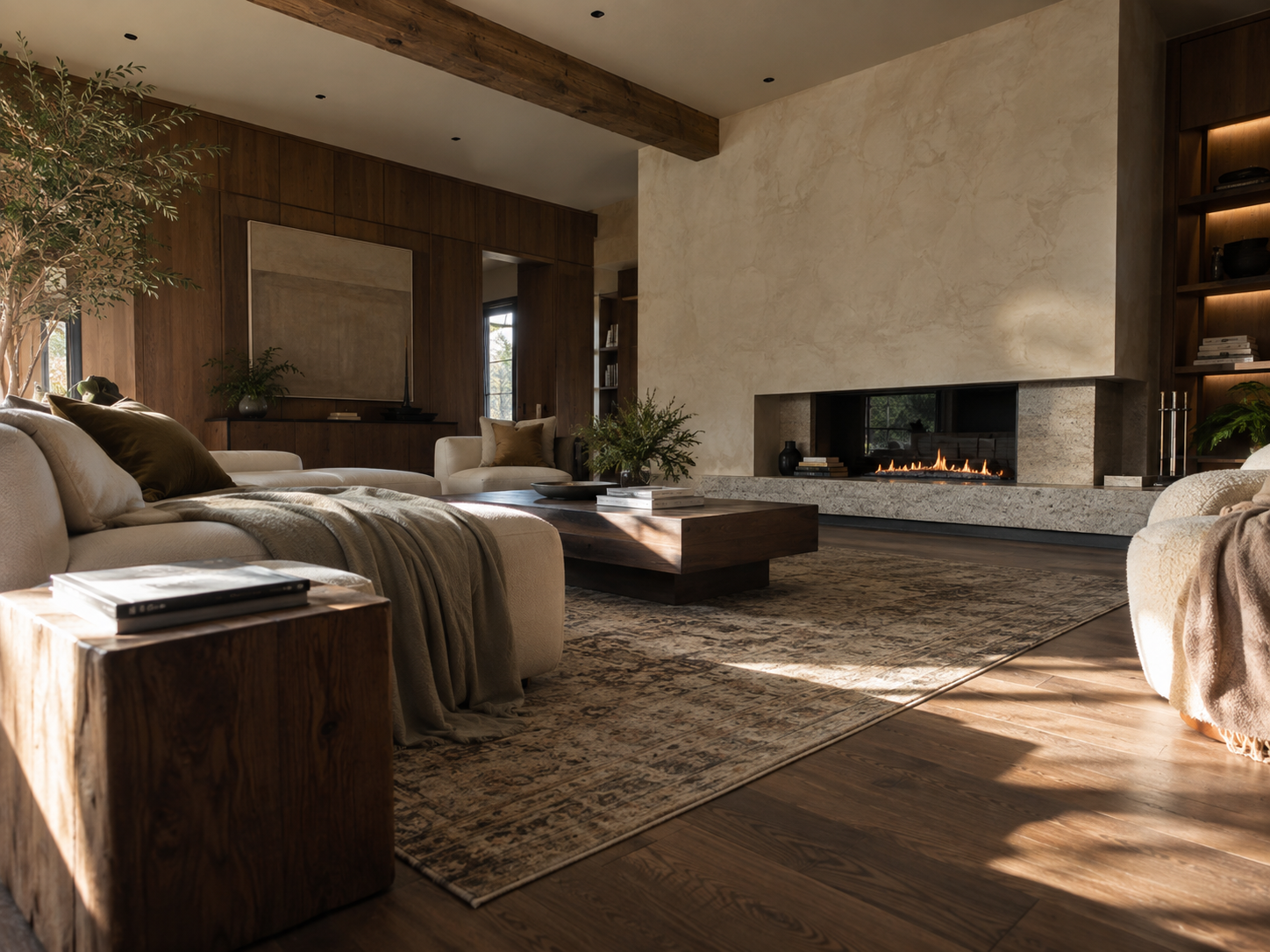
The Fireplace Feature Wall
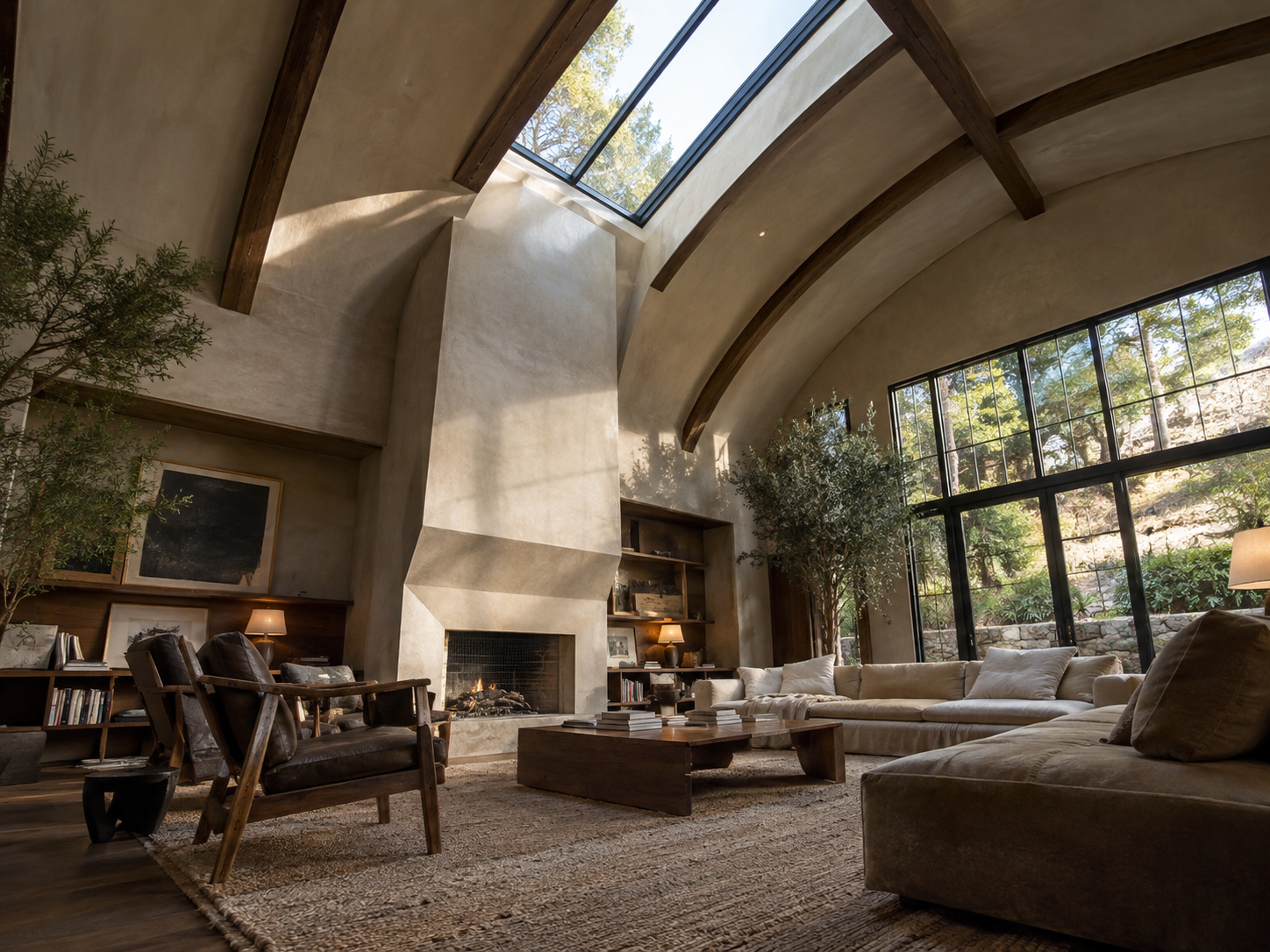
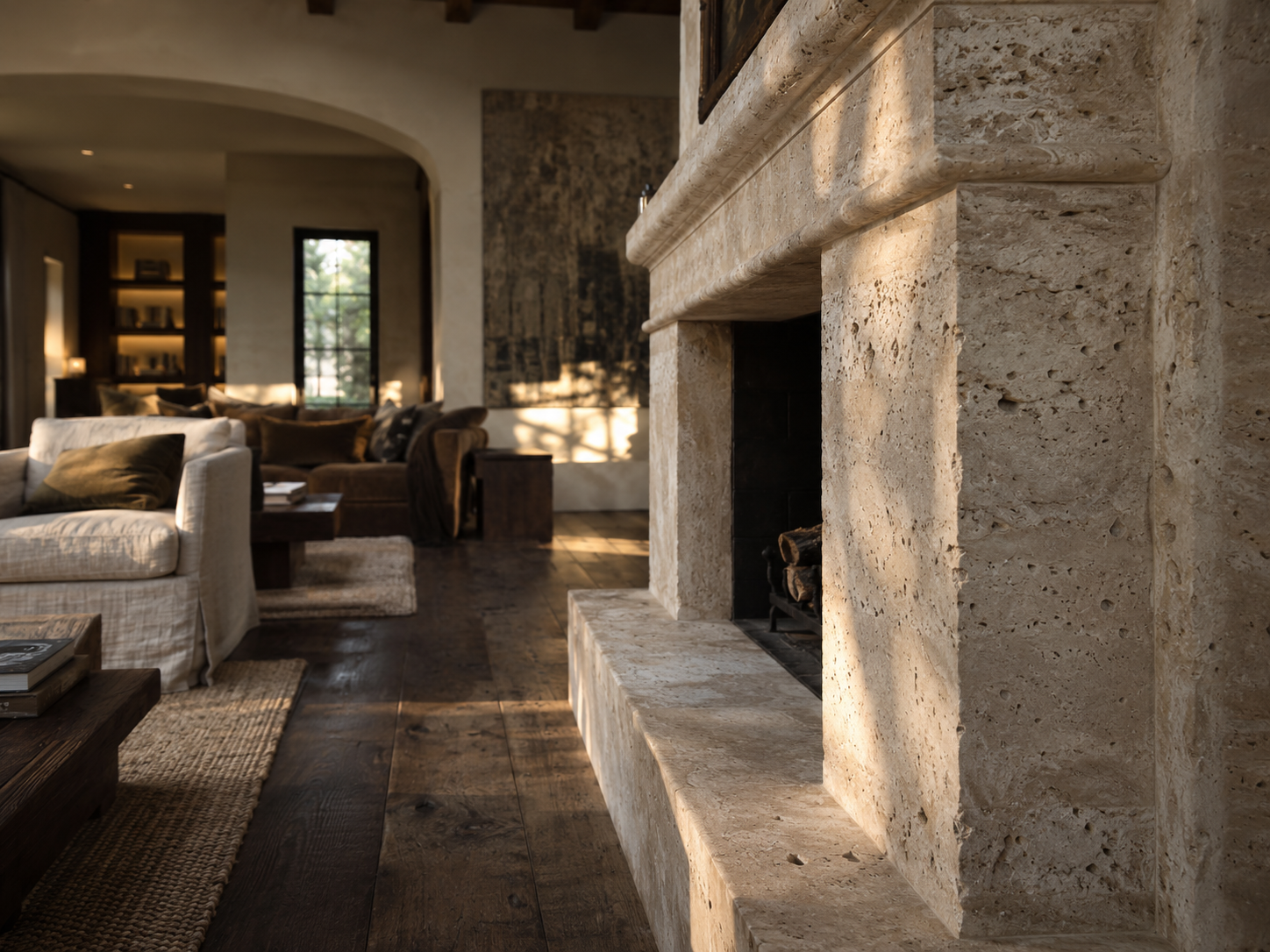
A fireplace β whether wood-burning, gas, or electric β is the natural focal point of a luxury living room, and the wall treatment around it amplifies or undermines that impact entirely. In quiet luxury design, the fireplace surround is typically rendered in natural stone, plaster, or concrete β materials with genuine tactile presence that look more beautiful the closer you get to them.
Limestone, travertine, and fluted plaster are particularly popular right now for fireplace surrounds in high-end interiors. They have a quiet, restrained quality that works beautifully in the context of this aesthetic β present and impressive without being theatrical.
Style the mantel with equal restraint. A single large candle or a cluster of varied-height pillar candles, a carefully chosen sculptural object, and perhaps a leaning artwork create a composition that feels considered without being overthought.
β¦ Why It Creates a Luxury Look
A fireplace with a quality surround is an architectural investment that permanently elevates a room’s perceived value. It gives the living room a reason to exist β a gathering place, a focal point, a destination.
π° Budget-Friendly Alternative
A convincing electric fireplace insert set into a simple drywall alcove, finished with a limewash plaster treatment and a simple wood mantel, achieves much of the same effect at renovation-level prices but not renovation-level effort.
β Designer Tip
If you have an existing fireplace, focus investment on the mantel styling. A few beautiful candles and a single piece of leaning artwork can transform a dated brick surround into something that reads as intentional.
Shop Fireplace Wall Styling
Oversized Artwork as the Room’s Focal Point
There is almost no faster way to make a living room look expensive than hanging a single piece of oversized artwork. Not a collection of small frames arranged in a grid β one large, commanding piece that demands to be seen. This is how galleries work, how hotels work, and how the best residential interiors work. Scale creates authority.
For quiet luxury, the artwork itself should exist within the neutral palette. Abstract works in warm neutrals, soft earth tones, or gestural monochromes complement rather than compete with the calm atmosphere. Think large-scale paintings that suggest movement or texture β brushstrokes visible, organic, imperfect in the most beautiful way.
Hang artwork at eye level β the center of the piece should sit approximately 57β60 inches from the floor. Lean large pieces against the wall rather than hanging them for an approach that feels relaxed, editorial, and entirely current.
β¦ Why It Creates a Luxury Look
Large-scale art signals confidence and deliberate investment. It says the room was designed around a vision rather than assembled from available furniture.
π° Budget-Friendly Alternative
A large canvas primed in a warm neutral or a gesso-washed texture reads beautifully as intentional contemporary art. Oversized art prints on quality paper in simple frames are remarkably convincing.
β Designer Tip
The artwork should be roughly two-thirds the width of your sofa. This proportion looks effortlessly right in almost any living room configuration.
The Curated Coffee Table Tray
Coffee table styling is an art form in the quiet luxury world, and the tray is your most useful tool. A travertine, marble, or lacquered tray creates a contained composition β a room within a room β that looks considered and finished rather than random. Everything inside the tray belongs together; everything outside it has space to breathe.
Within the tray, think in threes: one tall object (a sculptural ceramic vase), one medium object (a decorative candle or small bowl), and one low object (a few stacked coffee table books). The varying heights create visual interest and the tray keeps it from looking cluttered.
Outside the tray, resist. One additional object at most β perhaps a single coaster or a sculptural paperweight. The power of a well-styled coffee table is almost entirely in what you choose not to put on it.
β¦ Why It Creates a Luxury Look
A tray transforms a collection of objects into a deliberate composition. It creates the visual order that distinguishes a styled room from a lived-in one β while still feeling warm and personal.
π° Budget-Friendly Alternative
Any neutral-toned rectangular tray works beautifully. A simple lacquered tray in cream or a natural wood round tray is entirely as effective as travertine when the objects inside it are chosen well.
β Designer Tip
A sculptural ceramic vase instantly makes a coffee table feel curated rather than cluttered β even if everything else on the surface is simple and understated.
An Accent Chair That Earns Its Place
The accent chair is where a quiet luxury living room gets its personality. While the sofa anchors the room in neutral reliability, the accent chair is where you can introduce a different material, a more interesting silhouette, or a slightly deeper tone β a bolder choice made credible by everything else in the room’s restraint.
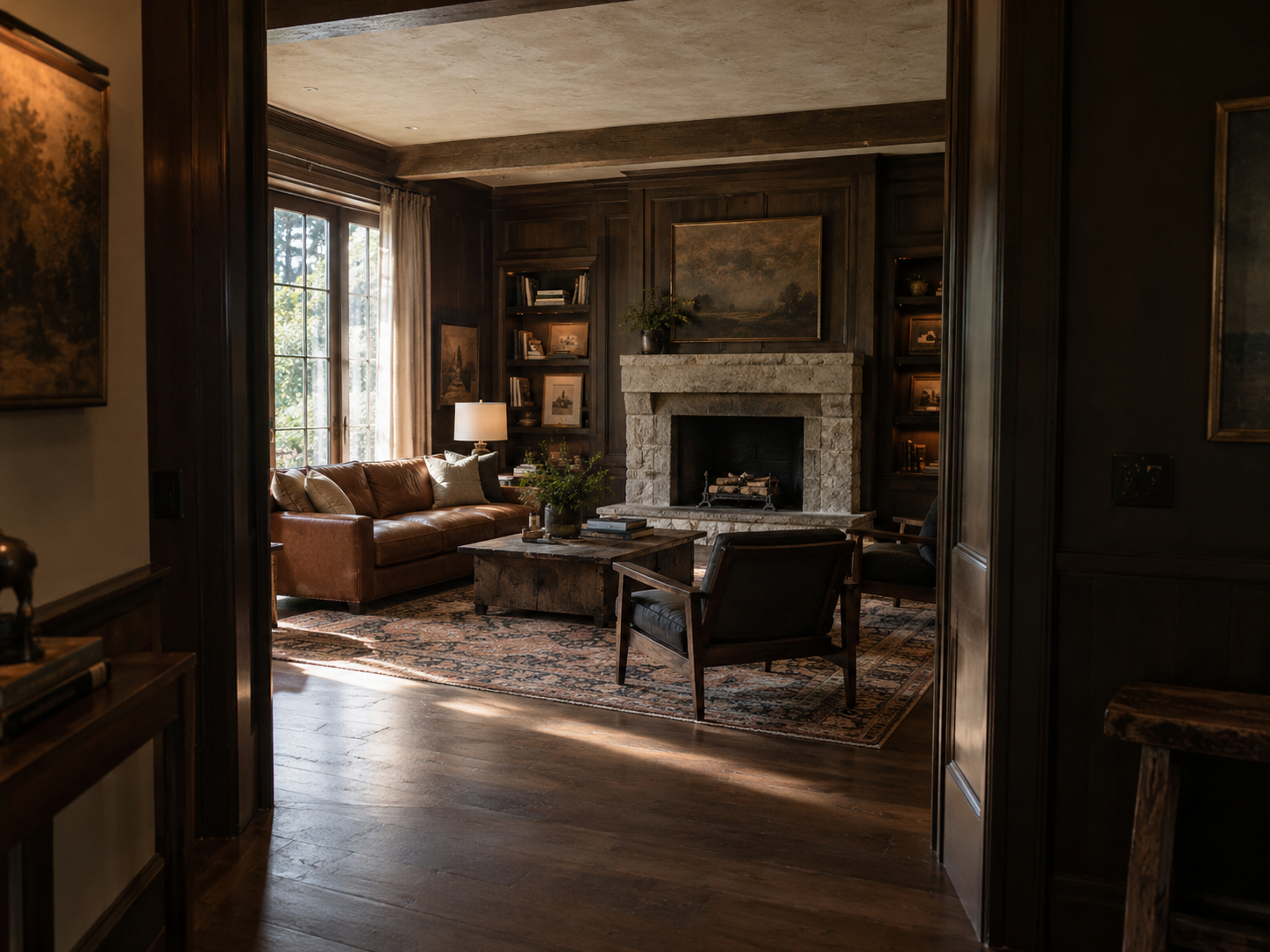
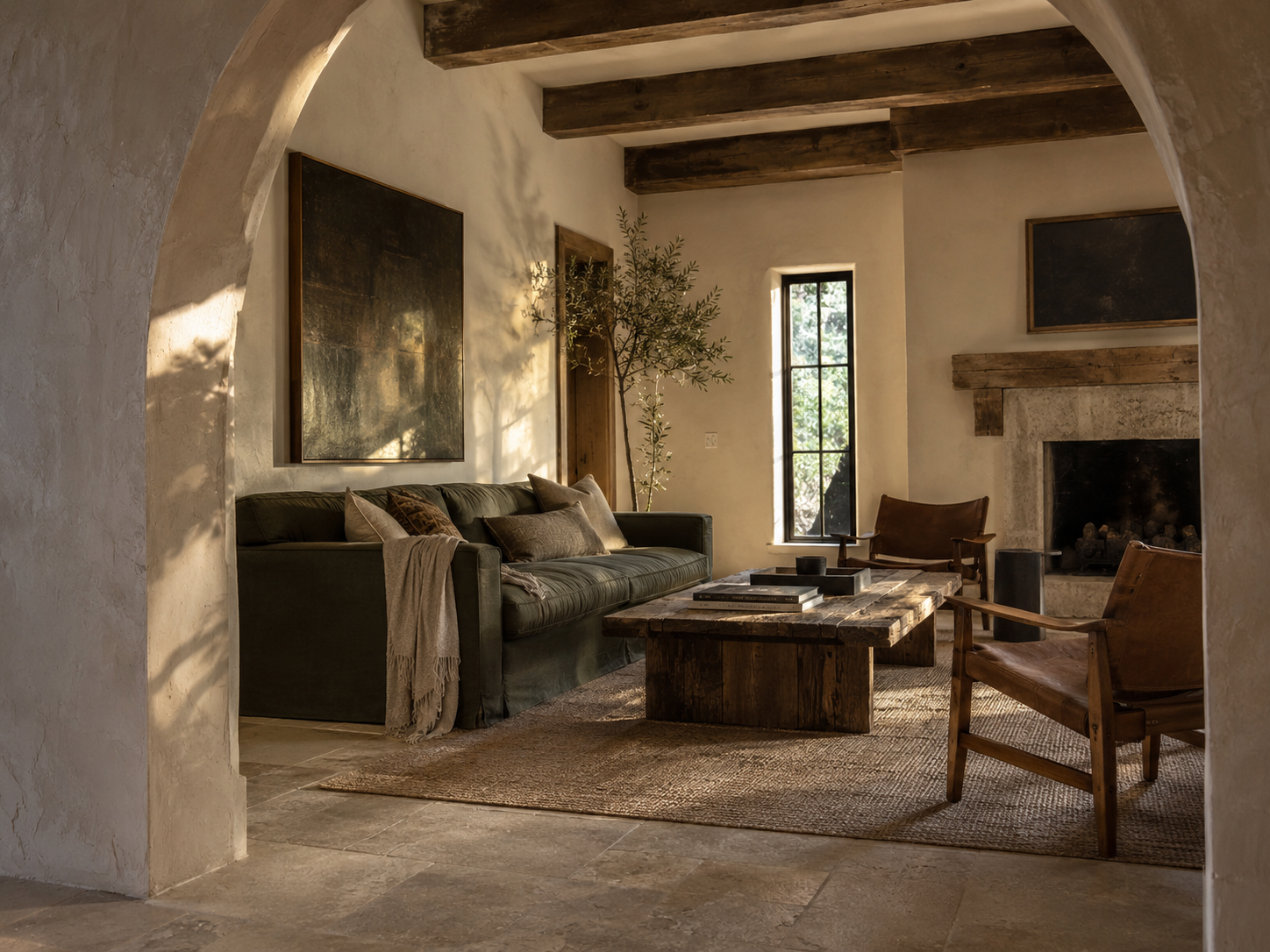
Look for chairs with genuine design DNA: tub chairs, slipper chairs, curved barrel chairs, or a classic wingback in a refreshed material. Upholstered in a velvet, leather, or textured linen in a tone slightly deeper than your sofa, the accent chair creates a subtle focal point that reads as sophisticated rather than matchy-matchy.
Place it at a slight angle rather than parallel to the sofa. This creates an implied conversation and makes the arrangement feel designed rather than showroom-standard. A small side table and a floor lamp positioned nearby completes the vignette.
β¦ Why It Creates a Luxury Look
An accent chair with a strong silhouette introduces design sophistication that a room full of matching pieces cannot achieve. It says the room’s designer had a vision beyond the sofa set.
π° Budget-Friendly Alternative
A vintage or secondhand chair in an interesting shape, recovered in a new fabric, often outperforms a new budget chair on design impact. The silhouette is the priority β material can be changed.
β Designer Tip
Your accent chair doesn’t need to match any other material in the room β but it should speak the same tonal language. A camel leather chair in a cream-and-warm-wood room feels cohesive even though it’s distinctly different.
Travertine DΓ©cor Accessories
Travertine is having an extended moment in luxury interior design β and for good reason. The warm, pitted surface of travertine has an ancient quality that reads as simultaneously timeless and thoroughly modern. Used in accessories rather than as a primary surface material, it introduces stone’s richness at a fraction of the cost of a travertine floor or wall treatment.
Look for travertine in trays, candle holders, bookends, coasters, and small decorative objects. A travertine tray on the coffee table, a pair of travertine bookends on the shelving, and a travertine candle holder on the side table create a cohesive material thread through the room that reads as deliberately designed.
Travertine works beautifully alongside marble, warm wood, and brass or brushed gold hardware. Keep it within your warm neutral palette and it will anchor every surface it touches with natural authority.
β¦ Why It Creates a Luxury Look
Natural stone accessories communicate material investment even when they’re small objects. Travertine’s distinctive surface is immediately recognizable as the real thing β there’s no convincing replica.
π° Budget-Friendly Alternative
Cement or plaster accessories in travertine-adjacent tones achieve a similar matte stone quality. From a conversational distance, the effect is virtually identical in a photograph.
β Designer Tip
Limit travertine to three or four points in the room. Its power is in its specificity β when it appears too frequently, it loses its distinctive material presence.
The Quiet Luxury Reading Corner
A dedicated reading corner is one of the most aspirational elements in a luxury living room β it communicates a lifestyle of intentional leisure that resonates deeply with the quiet luxury philosophy. It doesn’t need to be a separate room or even a significant square footage commitment. A corner of the living room, thoughtfully appointed, is entirely sufficient.
The formula is simple: one beautiful accent chair, one arc or floor lamp positioned over the right shoulder, a small side table for a cup of tea or a stack of books, and a throw blanket within easy reach. This small constellation of objects creates a vignette that feels both functional and genuinely inviting.
The styling details matter enormously. The lamp should give focused, warm light without casting harsh shadows. The throw blanket should be casually draped β not folded square, not artificially arranged, just the kind of loosely resting position it would naturally fall into after an afternoon’s reading.
β¦ Why It Creates a Luxury Look
A reading corner communicates that the room is designed for genuine quality of life β not just for appearances. That sense of real, intended comfort is one of the most appealing qualities in high-end interior design.
π° Budget-Friendly Alternative
A simple slipper chair and a $35 arc floor lamp can create a convincing reading corner. Add a small floating shelf for books and a woven basket for blankets to complete the effect.
β Designer Tip
Position the reading corner near a window if possible. Natural light during the day and the lamp’s warmth at night create two completely different, both beautiful, atmospheres in the same spot.
Shop the Reading Corner
Walnut Shelving and Warm Wood Tones
Warm wood is non-negotiable in a quiet luxury living room. It grounds the neutral palette in something organic and honest, prevents the room from feeling cold or clinical, and brings a material warmth that no paint color or fabric can fully replicate. Walnut, in particular, has become the wood of choice in luxury interior design β its deep, rich grain and warm mid-brown tone complement virtually every neutral palette beautifully.
You don’t need to replace your floors or undertake significant woodworking to introduce walnut warmth. A walnut media console, a pair of side tables, a floating shelf, or even a small wooden tray can shift a room’s entire material temperature.
Balance warm wood against your cool or neutral stone and textile elements. Walnut beside marble, warm wood beside cream linen, oak beside white plaster β these pairings are the backbone of quiet luxury interiors.
β¦ Why It Creates a Luxury Look
Quality hardwood has an unmistakable presence. Even a single walnut piece in a room signals material investment and elevates the perceived quality of everything around it.
π° Budget-Friendly Alternative
Walnut-veneered furniture offers much of the visual warmth at a significantly lower price. Look for pieces where the veneer is applied to solid wood cores rather than particleboard.
β Designer Tip
Avoid mixing too many different wood tones in one room. Walnut and oak can coexist when they’re similar in warmth, but walnut beside very light pine or very dark ebony creates a visual competition the room didn’t need.
The Sculptural Table Lamp
A sculptural table lamp does double duty in a quiet luxury living room. It functions as essential ambient lighting β but more importantly, it functions as a piece of decorative sculpture in its own right. The base is the artwork: a ceramic column in warm earth tones, a fluted plaster form, an alabaster block, or an abstract organic shape that draws the eye even when the lamp is off.
The shade matters too, and is often overlooked. A linen or cotton shade in a warm cream or ivory allows light to glow warmly through the material. Avoid white plastic or synthetic shades; they emit a harsh, flat light that undoes everything the warm palette around it has achieved.
Position table lamps at varying heights around the room β one on an end table beside the sofa, one on a credenza or console, one on a desk or side table in a corner. The overlapping pools of warm light they create together are the atmospheric foundation of a genuinely luxurious living room environment.
β¦ Why It Creates a Luxury Look
A lamp with genuine sculptural presence reads as an art object that happens to provide light β which is exactly the quality of accessories found in high-end interiors.
π° Budget-Friendly Alternative
A simple ceramic or plaster lamp base in a warm neutral, paired with a quality linen shade, achieves the sculptural lamp look for well under $100. The base shape is more important than the material.
β Designer Tip
Use lamps in pairs where symmetry makes sense, but break symmetry intentionally elsewhere β one lamp on a console table, positioned asymmetrically with other objects, reads as more artfully considered.
An Indoor Olive Tree or Sculptural Plant
There is something about a beautifully proportioned indoor tree that every quiet luxury living room benefits from. An olive tree, a fiddle-leaf fig, a citrus tree, or a sculptural branching plant introduces height, organic movement, and living warmth that no furniture piece or accessory can replicate. It makes the room feel cared for β alive rather than merely styled.
An olive tree specifically has become synonymous with the Mediterranean-inflected luxury aesthetic: silver-green leaves against warm plaster walls, the gentle rustle of branches, the ancient quality of the gnarled trunk. Position it in a generous terracotta or stone pot β the pot is part of the composition and should be chosen as carefully as the plant itself.
If natural light is limited in your space, sculptural dried botanicals in tall architectural vases achieve a similar vertical effect without the care requirements.
β¦ Why It Creates a Luxury Look
A large, healthy indoor tree communicates that the space is genuinely cared for. The organic scale and natural material introduce a dimension that manufactured objects cannot β and they photograph magnificently.
π° Budget-Friendly Alternative
A large, well-chosen faux olive tree in a quality planter is entirely convincing and eliminates maintenance concerns. Invest in the quality of the faux plant β cheap versions are immediately apparent.
β Designer Tip
Size up. A plant that feels one size too large for the pot usually looks exactly right in the room. Small plants in large rooms disappear β always choose a scale that commands attention.
Decorative Books as Living Room DΓ©cor
Coffee table books are one of the most underrated elements of luxury home decor. Chosen well, they communicate taste, curiosity, and a sense of cultivated living. They add height and weight to a coffee table arrangement, introduce color through their covers, and create genuine conversation starters.
For quiet luxury specifically, look for books with muted, neutral-toned covers in architecture, art, travel, and design. Stack two or three horizontally, with a small object β a sculptural paperweight, a single smooth stone, a tiny ceramic figure β resting on top.
Books on shelving and side tables follow the same logic: group them by spine color within your neutral palette, intersperse with objects that vary the height, and allow empty space between groupings.
β¦ Why It Creates a Luxury Look
Books signal a life lived with intellectual curiosity β a quality that is central to the quiet luxury identity. They also add natural color and dimension that styled objects alone cannot replicate.
π° Budget-Friendly Alternative
Library sales, thrift stores, and estate sales consistently yield beautiful art and architecture books at a fraction of retail prices. The content matters far less than the cover design and spine color.
β Designer Tip
Remove the dust jackets from coffee table books for a more refined look β the cloth covers beneath are often more beautiful and fit the neutral palette more naturally.
The Luxe Throw Blanket
A beautifully chosen throw blanket is one of the smallest purchases that makes one of the largest visual differences in a quiet luxury living room. Casually draped over one arm of a sofa or loosely folded on an accent chair, the right throw adds warmth, texture, and the quality of genuine comfort that distinguishes a lived-in room from a showroom.
Material is the critical factor here. Cashmere, merino wool, waffle-weave cotton, and heavy linen all photograph and read as genuinely luxurious. Choose tones within your warm neutral palette β cream, oat, camel, warm gray, or the softest blush.
The arrangement matters as much as the blanket itself. Pull one corner gently off the sofa so it pools slightly. Avoid folding it perfectly square β that reads as staged rather than genuinely relaxed.
β¦ Why It Creates a Luxury Look
A quality throw in a natural fiber communicates genuine comfort and material care. It’s one of the most tactile elements in a living room β people notice it, reach for it, and it always reads as an investment.
π° Budget-Friendly Alternative
A waffle-weave cotton throw in a warm neutral reads as genuinely beautiful and costs a fraction of cashmere. The quality is entirely in the weave density and the color.
β Designer Tip
A throw blanket stored in a beautiful woven basket beside the sofa creates a second moment of texture and warmth, while solving the practical question of where to put it when the weather turns.
The Large Window Scene
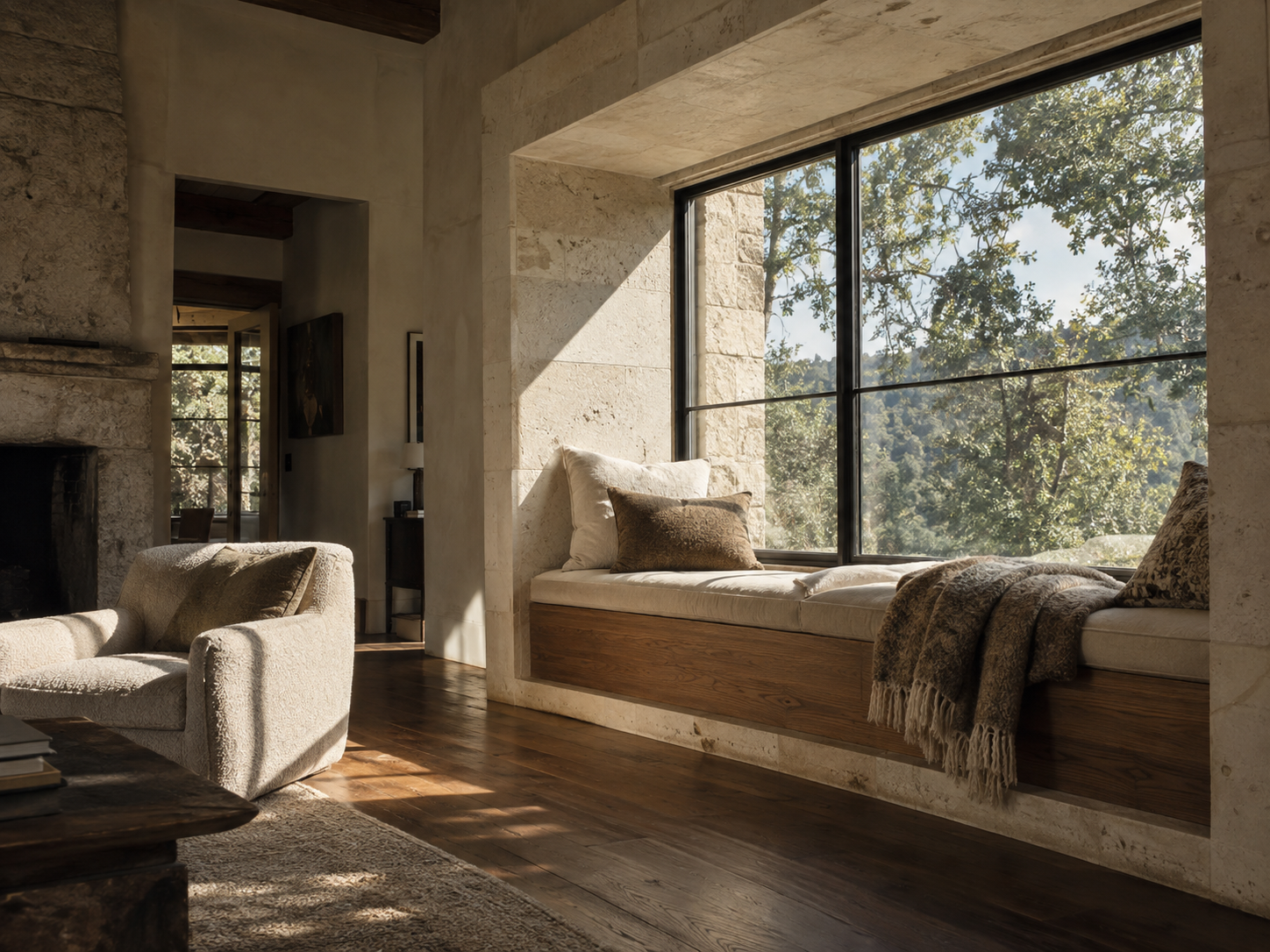
A large window, handled correctly, is one of the most powerful design features a living room can possess. Natural light is free, beautiful, and fundamentally irreplaceable β and the way you frame and filter it determines whether it works for or against your quiet luxury aesthetic.
The goal is filtered, soft, directional light β and linen curtains are your primary tool for achieving it. When sunlight passes through natural linen, it becomes something genuinely beautiful: warm-toned, diffuse, and flattering to every surface and material in the room.
Frame the window with intention. Floor-to-ceiling linen curtains hung well beyond the window frame maximize the sense of architectural grandeur. An indoor tree positioned slightly beside a large window creates a beautiful silhouette against the light β one of the most effortlessly elegant compositions in residential design.
β¦ Why It Creates a Luxury Look
Natural light is the most flattering and beautiful illumination available. Framing and filtering it correctly is the difference between a room that glows and one that merely sits there.
π° Budget-Friendly Alternative
Linen-effect sheer curtains at affordable price points filter light beautifully. The key is choosing warm ivory or cream rather than bright white.
β Designer Tip
If your view isn’t aspirational, use layers β a sheer inner curtain and a linen outer curtain. The sheer filters the view while maintaining light; the linen adds weight and warmth.
Shop Window Scene Essentials
Evening Luxury β Candles and Warm Light
A quiet luxury living room should be equally beautiful at 2 in the afternoon and 9 in the evening. The evening version of the room is where candles earn their place β not as emergency lighting or nostalgic decoration, but as a deliberate atmospheric tool. A cluster of pillar candles in varying heights on the coffee table, a single taper on the mantel, a scented candle burning beside the accent chair β collectively they create an atmosphere that no electric light can fully replicate.
The scent dimension is worth serious consideration. A quality candle in a warm, complex scent β sandalwood, amber, cedar, or a subtle floral β engages the sense of smell in a way that genuinely elevates the living room experience.
Combine candlelight with your dimmable table and floor lamps for the most effective evening atmosphere. The warm flicker of candles against the steady warm glow of lamps creates a layered luminosity that feels both ancient and entirely luxurious.
β¦ Why It Creates a Luxury Look
Candles introduce warmth, movement, and scent β three sensory dimensions that transform a room from a visually beautiful space into a genuinely immersive one.
π° Budget-Friendly Alternative
Even simple pillar candles from a grocery store, grouped in varying heights on a marble or travertine tray, achieve the candlelight atmosphere beautifully.
β Designer Tip
Use unscented candles in groupings where multiple candles are lit simultaneously. Reserve your signature scented candle for a single, prominent position.
Shop Evening Luxury Essentials
A Warm Minimalist Gallery Wall
The gallery wall in a quiet luxury living room is not the maximalist collection of colorful frames popular a decade ago. It is something considerably more restrained: three to five pieces in harmonious frames, arranged with significant breathing room between each piece. It’s a gallery wall with discipline.
Choose artwork in your warm neutral palette β abstract works, architectural photography in warm tones, botanical drawings in cream and sage, or original works from emerging artists that align with the room’s aesthetic.
Frame choice is critical. Simple thin frames in warm brass, matte black, or natural wood read as sophisticated. Consider mounting some pieces without frames at all β a mounted canvas or a stretched linen print has an immediacy that framing can actually diminish.
β¦ Why It Creates a Luxury Look
A restrained, well-spaced gallery wall reads as curated by someone with genuine aesthetic taste β it demonstrates an ability to edit and compose.
π° Budget-Friendly Alternative
Original art from local artists, art school graduates, or print-on-demand services with quality printing can achieve an entirely genuine gallery wall aesthetic for a relatively modest investment.
β Designer Tip
Lay out the arrangement on the floor before committing to the wall. This allows you to adjust spacing and composition without filling the wall with unnecessary holes.
A Ceramic Vase as Living Room Sculpture
A single, beautifully chosen ceramic vase β placed on a coffee table, a shelving unit, or a console table β can do more for a room’s sense of curated luxury than a collection of ten lesser objects. Ceramics have an inherent quality of handmade honesty. The slight irregularities in a hand-thrown piece, the unique glaze that runs slightly differently on every individual vessel β these are the marks of genuine craft.
For quiet luxury, look for forms that are organic and architecturally interesting: elongated necks, generous rounded bodies, asymmetric rims, or tall columnar shapes. The glaze should be within your neutral palette β matte sand, warm cream, smoky taupe, or the palest sage.
When using the vase with florals or botanicals, choose with the same restraint you apply to everything else. The vase should always be able to stand on its own as an object β what it holds is a bonus.
β¦ Why It Creates a Luxury Look
Handmade ceramics communicate craft, material quality, and an eye for beauty that instantly distinguishes a room from one filled with mass-produced accessories.
π° Budget-Friendly Alternative
Many genuinely beautiful ceramic pieces are available at entirely accessible price points β small potteries, local artists, and artisan markets consistently produce work that rivals much more expensive gallery pieces.
β Designer Tip
Group vases in odd numbers and vary the heights dramatically β a very tall narrow vase beside a short rounded one creates far more visual interest than two pieces of similar scale.
The Designer Side Table
The side table is the supporting actor of a quiet luxury living room β rarely the first thing you notice, but unmistakably present in the rooms you admire most. It completes the accent chair vignette, provides a surface for a lamp and a drink beside the sofa, and contributes a material or form that adds another layer to the room’s composition.
For quiet luxury, side tables with genuine design character work best. A round pedestal table in marble or travertine. A half-circle console in walnut. A stacked travertine block table. A simple brass-and-glass two-tier piece. The form should be interesting without being theatrical.
Don’t match your side tables perfectly. Two similar but non-identical side tables flanking a sofa reads as more thoughtfully assembled than a matched pair β this intentional near-symmetry is a hallmark of rooms that have been designed rather than simply furnished.
β¦ Why It Creates a Luxury Look
A side table with a distinctive form or material signals that no detail in the room was an afterthought. In quiet luxury, the small pieces are where the most telling design decisions are made.
π° Budget-Friendly Alternative
A simple stool in a warm-toned material β a wicker side table, a solid wood cylinder, or even a decorative concrete object β works beautifully as a side table alternative at a fraction of the cost.
β Designer Tip
The side table surface should hold exactly one lamp, one coaster, and one small object β nothing more. Resist the urge to use it as a catch-all surface. Its function is both practical and compositional.
Practical Styling Tips for a Quiet Luxury Living Room
Knowing what to buy is only half the equation. Here’s how to put it all together in a way that feels genuinely designed rather than assembled.
| Principle | What It Means in Practice |
|---|---|
| Edit ruthlessly | Remove one object from every surface after you’ve styled it. The room almost always looks better for it. |
| Vary the heights | Every styled surface should have objects at low, medium, and tall heights. Uniformity in scale reads as static and undesigned. |
| Ground with rugs | Every seating area needs a rug large enough to anchor all four legs of the furniture. Undersized rugs undermine the entire arrangement. |
| Layer lighting | Minimum three light sources per room. Table lamps, floor lamp, and dimmable overhead as a baseline. |
| Stay within palette | Every new object you introduce should pass the test: does this belong in the warm neutral family of this room? |
| Mix textures, not colors | In a quiet luxury room, contrast comes from material and texture rather than color. Keep the palette tight; vary the materials widely. |
| Introduce organic elements | At least one living or natural element β a plant, fresh botanicals, or a natural object β grounds the room in the organic world. |
| Let negative space work | Empty space is not wasted space. In luxury design, empty surfaces and walls are deliberate and powerful. |
Common Mistakes That Undermine the Quiet Luxury Look
Even the most beautiful individual pieces can’t save a room from these fundamental errors. Knowing what not to do is as important as knowing what to do.
- Undersized furniture: A sofa that’s too small for the room makes everything else look cheap by association. Scale to your space, not to your comfort zone.
- Too many statement pieces competing at once: Quiet luxury requires hierarchy. One hero piece per room β the sofa, the artwork, or the fireplace β with everything else in support.
- Matching sets that look like a catalog page: A coordinated living room set from a single manufacturer always reads as less designed than a thoughtfully assembled collection of individual pieces.
- Overhead lighting only: A single overhead light is the fastest way to make any space feel institutional rather than residential. Layer in lamps immediately.
- Cool, stark whites rather than warm neutrals: Cool whites and grays feel clinical in the context of this aesthetic. Warm, slightly sand-toned whites are the entire difference between cold and cozy.
- Rugs that are too small: The number one decorating mistake, full stop. When in doubt, go one size larger than feels necessary.
- Cluttered surfaces: A surface styled with six objects communicates confusion; the same surface with three communicates intention. The luxury is in the editing.
- Trendy pieces without timeless foundations: Quiet luxury resists trend cycles. Build with timeless foundational pieces and use restraint with anything that might feel dated in three years.
- Inconsistent hardware and metal finishes: Mixing brass, chrome, black, and nickel in the same room creates visual noise. Choose one or two metal finishes and use them consistently throughout.
- Curtains hung too low or too narrow: Curtain rods hung at window-frame level rather than at ceiling height immediately reduce the perceived grandeur of any room. Always hang high and wide.
Designer Shopping Checklist β Quiet Luxury Living Room
Essential Pieces to Consider
- Curved bouclΓ© sofa in cream or warm ivory
- Marble or travertine coffee table
- Large neutral area rug (size up from what feels comfortable)
- Linen curtains in floor-to-ceiling panels, warm cream or flax
- Sculptural accent chair in velvet, leather, or textured linen
- Walnut media console or credenza
- Sculptural table lamp with linen or cotton shade
- Arc or column floor lamp in brushed brass or warm metal
- Travertine or marble decorative tray
- Ceramic vase in organic form, muted glaze
- Oversized abstract artwork in warm neutrals
- Coffee table books in neutral-toned covers
- Indoor olive tree or sculptural plant in stone or terracotta pot
- Natural fiber throw blanket in cashmere, merino, or waffle-weave cotton
- Designer throw pillows in mixed textures β velvet, linen, boucle
- Quality pillar candles with a scented single-wick candle for atmosphere
- Side table with distinctive material or form β marble pedestal, walnut stump, travertine block
Frequently Asked Questions
Quiet luxury in interior design is an aesthetic philosophy centered on understated elegance, high-quality materials, and deliberate restraint. It prioritizes natural textures, warm neutral palettes, and carefully chosen objects over loud statement pieces or trend-driven decorating. The result is a space that feels calm, considered, and genuinely expensive β without announcing itself loudly.
Absolutely. Quiet luxury is fundamentally about design principles rather than price tags. A fresh coat of warm-white paint, floor-to-ceiling linen curtains, a well-sized area rug, and deliberately edited accessories can transform a budget living room into something that reads as genuinely high-end.
The quiet luxury color palette is built on warm neutrals: cream, ivory, warm white, greige, warm sand, oat, and camel. Earth tones like terracotta, sage, and warm rust can appear but are handled with significant restraint β used as accent tones rather than dominant colors.
Minimalism prioritizes absence β fewer objects, cleaner surfaces, more empty space, often with a cool or stark palette. Quiet luxury prioritizes quality and warmth β it uses a similarly restrained number of objects but fills the room with rich textures, natural materials, warm lighting, and organic elements. A minimalist room can feel cold; a quiet luxury room feels warm and genuinely inviting while still being highly edited.
For most living room seating areas, an 8×10 or 9×12 rug is the appropriate minimum size. The ideal is for all four legs of every piece of seating to sit on the rug. If you’re uncertain, choose one size larger than feels necessary β undersized rugs are one of the most common and most impactful decorating mistakes.
Use a tray to anchor the arrangement. Within the tray: one tall object (vase or candle), one medium object (small bowl or sculptural item), and one low object (books). Outside the tray: one additional object at most. The rule is to style the surface, then remove one object.
BouclΓ© is more practical than it looks. The looping texture is reasonably forgiving of everyday use and doesn’t show every crease the way smoother fabrics do. For households with pets or young children, consider a bouclΓ© with a tighter weave, which is less prone to snagging. Regular brushing with a soft upholstery brush maintains the texture beautifully over time.
Layered warm-toned lighting creates the most luxurious atmosphere in a living room. This means combining dimmable overhead lighting (2700K bulb temperature), table lamps with warm linen shades, a floor lamp for ambient fill, and candles for evening atmosphere. The key is multiple light sources at varying heights, all operating simultaneously at reduced intensity rather than a single bright overhead source.
Ready to Transform Your Living Room?
Explore more quiet luxury home decor inspiration, designer styling guides, and curated room reveals right here at The Ivory Maison. Because beautiful living shouldn’t require a designer budget β just a designer eye.
Explore More Inspiration βThe Quiet Luxury Living Room You’ve Always Wanted Is Closer Than You Think
The quiet luxury aesthetic is not a checklist to be completed in a single weekend shopping trip β it’s a practice of editing, observing, and choosing with intention over time. The rooms that truly embody this feeling were assembled gradually, with patience and a clear vision of how the space should feel rather than simply how it should look.
Start with the foundations: the palette, the lighting, the rug, the sofa. Then layer in texture through throws and pillows. Add life through a plant and botanicals. Introduce stone through a coffee table or a small travertine tray. Bring in warmth through walnut and ceramic. Hang one beautiful piece of art at exactly the right height. And then, crucially β stop.
The most beautiful quiet luxury living rooms always have one thing in common beyond the specific choices of materials and objects: they feel genuinely finished, genuinely intentional, and genuinely at ease. That quality comes not from spending more but from editing more β from trusting the discipline that less, always, is more.
Your living room is waiting. Now you know exactly what to do.