Amber & Tortoiseshell Glassware: How Smoked Hand-Blown Glass Warms Neutral Tablescapes
Amber glassware makes a neutral table feel lit from within. Smoked, hand-blown glass adds warmth without adding color, so it suits linen, stone and quiet palettes beautifully.
Candlelit Depth: The Evening Glow of Smoked Goblets
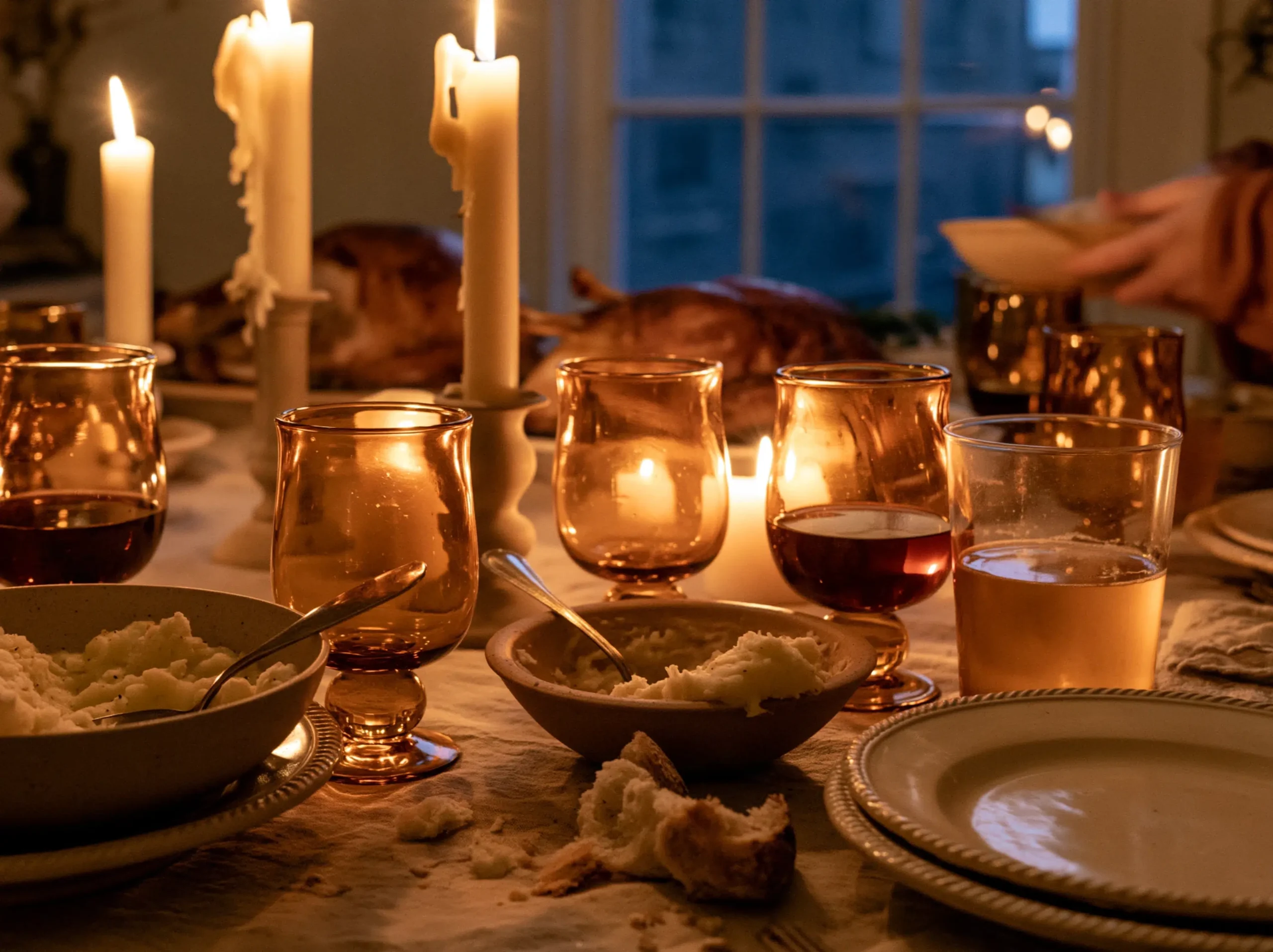
Light a few tapers at dusk and smoked amber goblets change completely. The glass holds the flame deep inside, so the table glows instead of glaring. I’ve seen a plain white plate look richer sitting beside them. It’s an old trick, and it still works.
Using vintage amber glassware for intimate dinner parties creates an atmosphere clear glass simply cannot replicate. The honey-toned glass softens harsh shadows and flatters your guests across the table. Set each goblet slightly off-center from the plate so reaching for water feels natural.
Keep candles below eye level, so nobody has to lean around a flame. Pick unscented beeswax or soy tapers, because scent fights with the food. Then turn the overhead light off, and dinner slows down on its own.
- Smoked glass holds candlelight.
- Keep candles below eye level.
- Skip scented candles at dinner.
Golden Shadows: Catching Daylight in Hand-Blown Stems
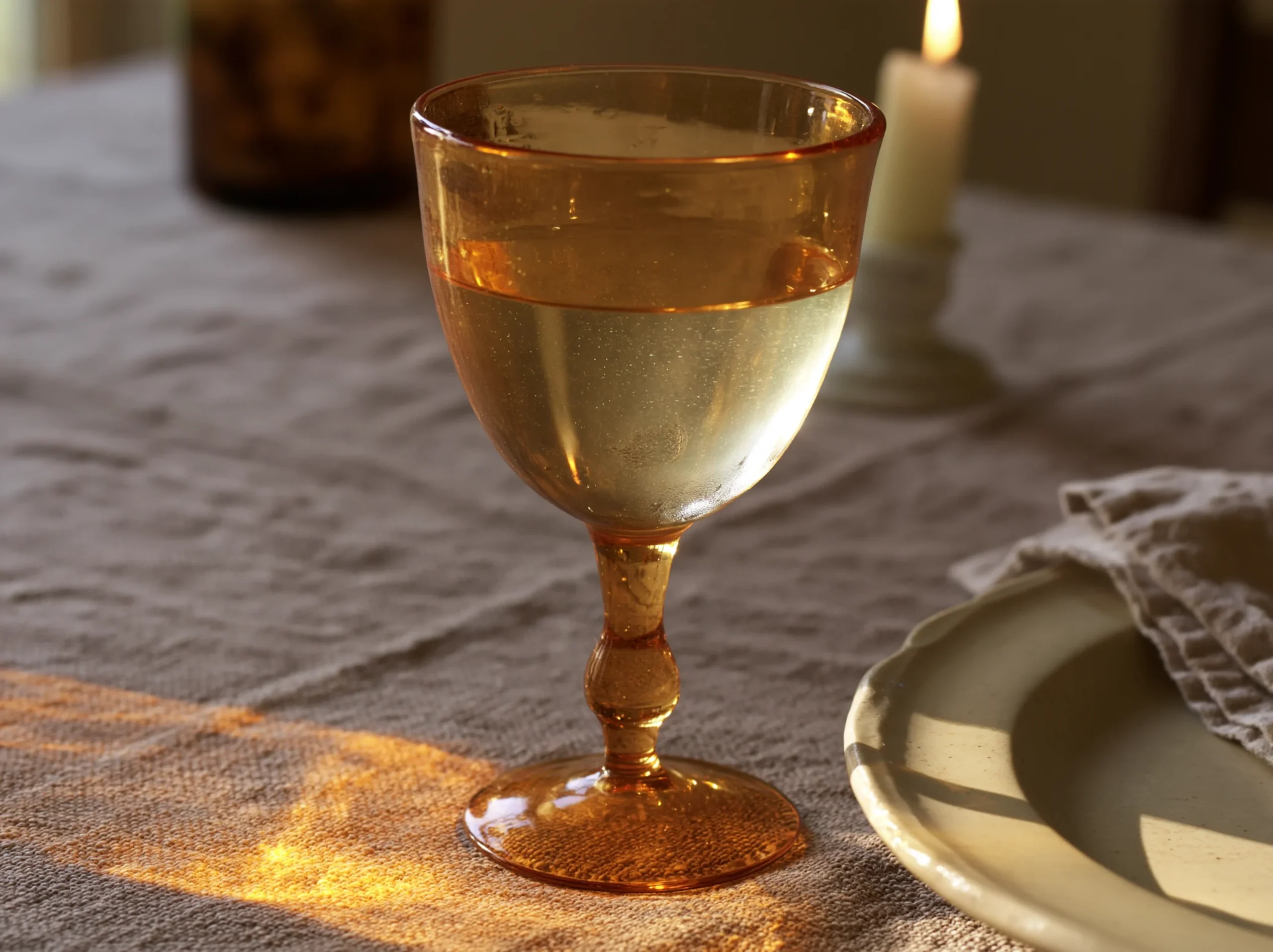
Daylight shows what candlelight hides. A hand-blown amber glass throws a honey-colored shadow across linen, and no two stems do it quite the same way. Tiny bubbles and ripples are the maker’s fingerprints. I love them. They’re what make smoked glass feel alive.
Put the table near a window so morning or late-afternoon light passes straight through. Look for a thin rim and a slightly uneven base. Genuine hand-blown stems often run about $20 to $60 each, so start with two. Wash them by hand in warm water, since a dishwasher can leave smoked glass cloudy. When nobody’s eating, a single stem on a windowsill catches the same glow.
That subtle refraction is why artisan glass feels distinct from machine-molded stemware. The glass interacts with changing sun angles throughout the afternoon, constantly shifting from pale cider to deep molasses.
Honeyed Contrast: Layering Amber on Washed Linen
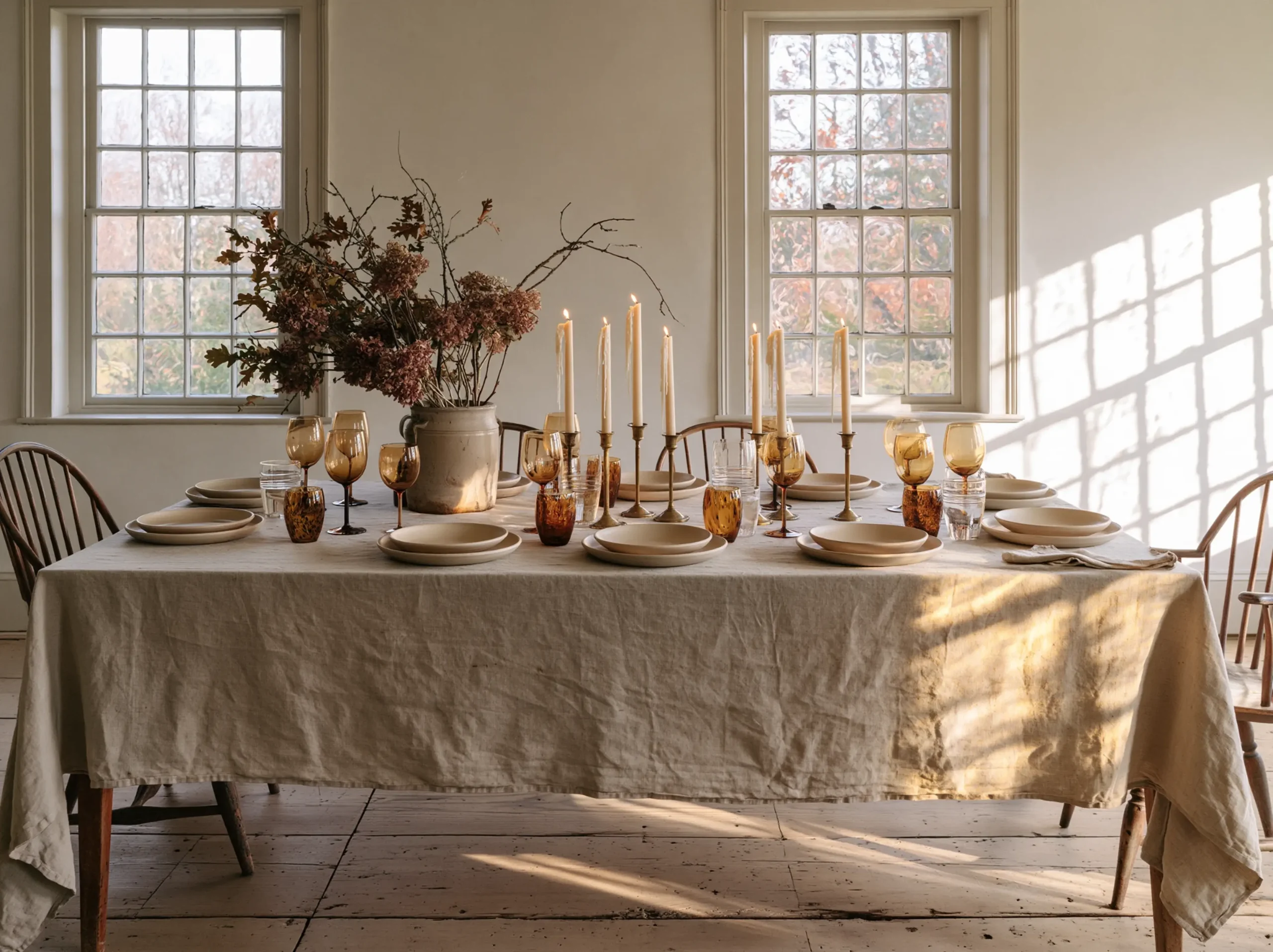
Washed linen is the quiet partner amber glass needs. Its soft creases and oatmeal tones give the warm glass something gentle to sit against. The table feels layered, not busy. Ivory, flax and stone are the safest base colors.
When styling amber glassware across an everyday dining table, stick to one warm glass tone per setting. You can mix amber, tortoiseshell and smoked gray, but keep each in small, repeated amounts. Add a plain stoneware plate and one linen napkin per setting, and let the glass bring all the warmth.
Leave about 24 inches of width for each place, so nothing feels crowded. When paired with unlacquered brass flatware and matte ceramic dishes, amber drinkware completes a calm, grounded look that never goes out of style.
The Quiet Vignette: Styling Smoked Glass on Dark Walnut
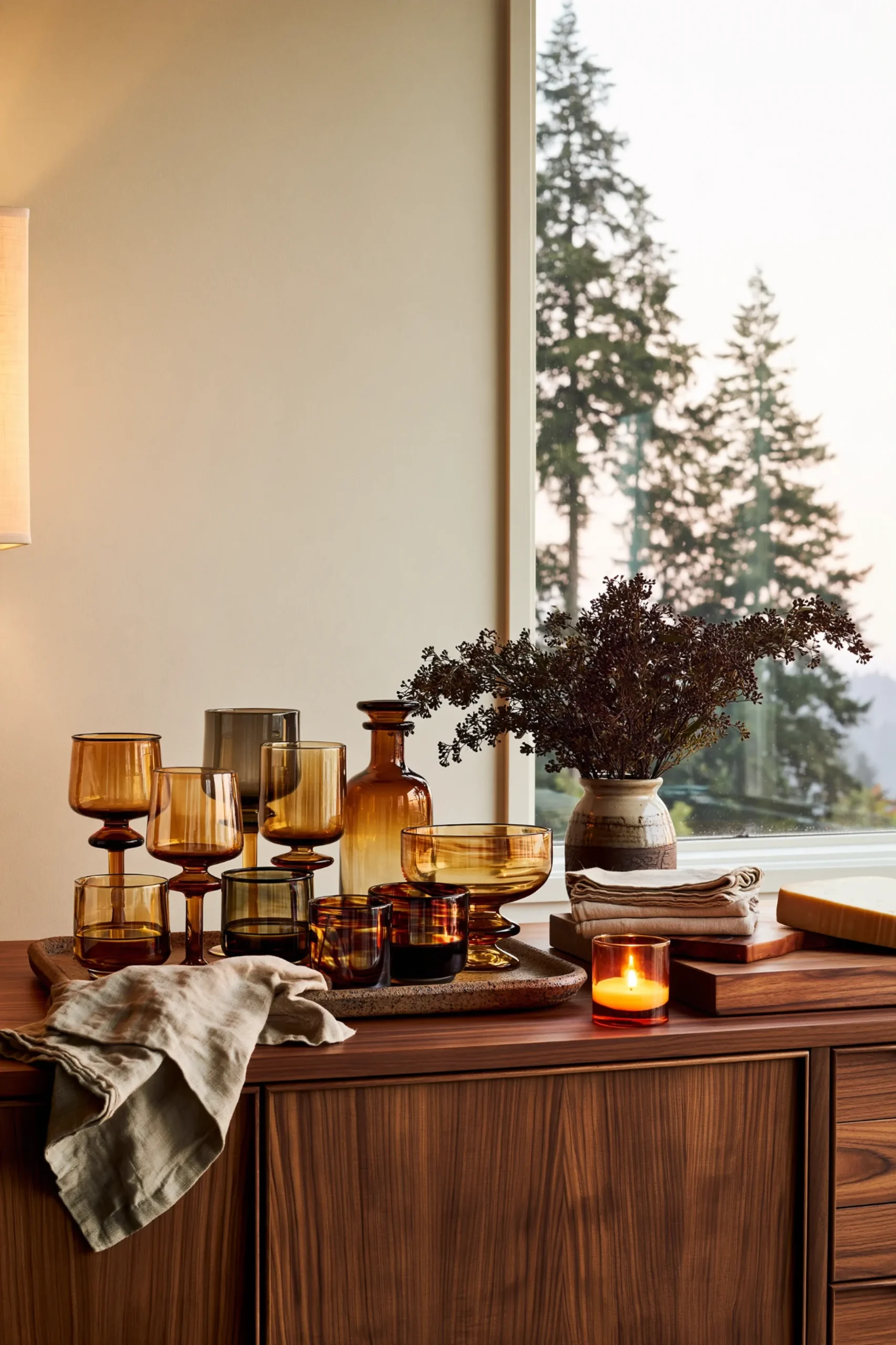
Dark walnut makes smoked glass glow from within. Group three or four pieces on a tray, say a decanter, two tumblers and a small bowl. Leave plenty of bare wood around them. It looks like a still life instead of a collection, and the sideboard feels finished.
Vary the heights, and keep one piece noticeably taller than the rest. A narrow tray in brass or pale oak frames the group nicely. Displaying your amber glassware on an open credenza also means you actually use it instead of hiding it behind cabinet doors.
Wipe the glass with a soft cloth before guests arrive, because fingerprints show on dark surfaces. If you splurge on one piece, make it the decanter, which often costs $40 to $120.
Two Mistakes to Avoid
- Crowded trays: Clutter kills the calm.
- Polished chrome: It fights smoked glass.
Sunlit Stone: Tortoiseshell Patterns Outdoors
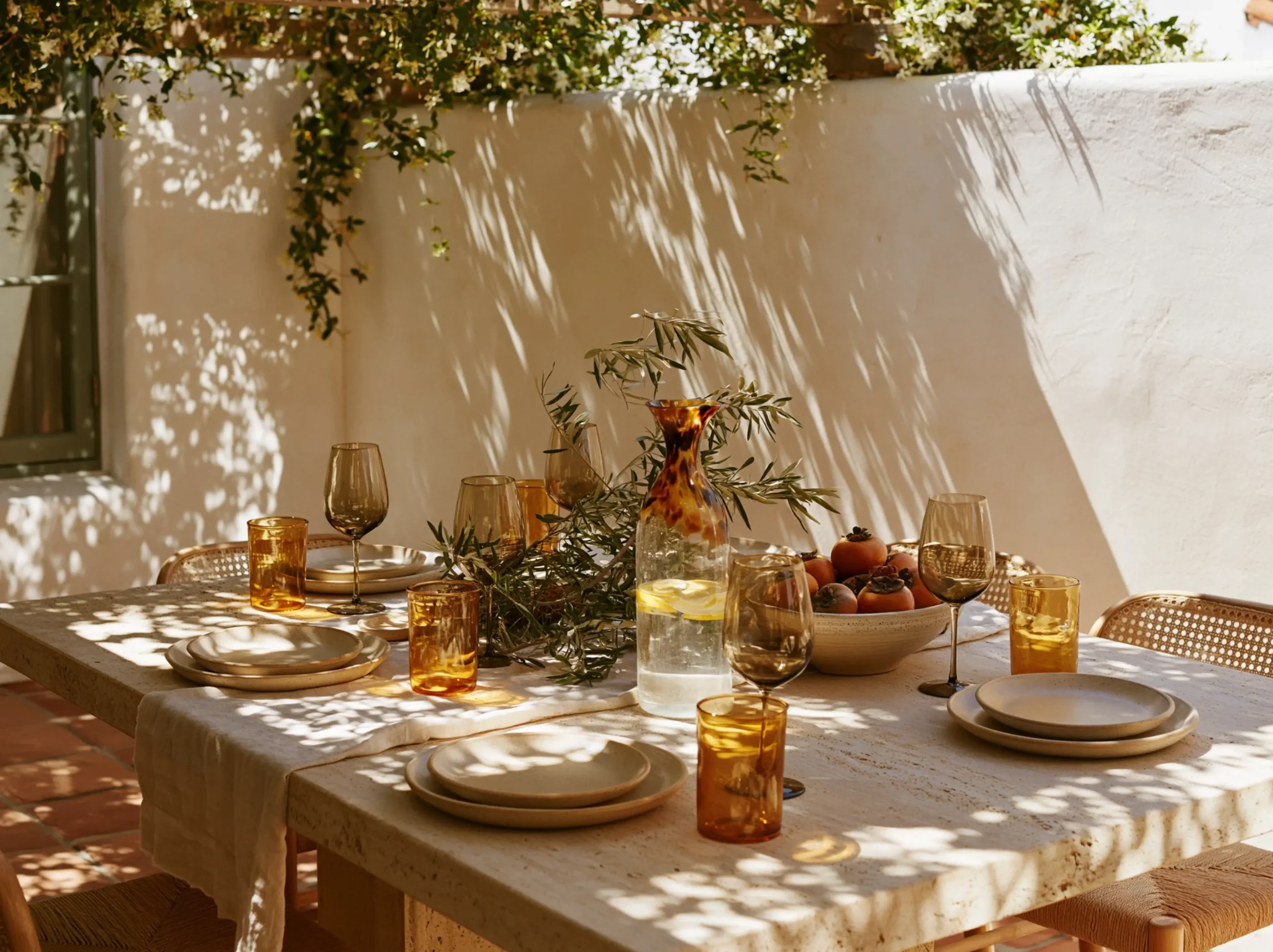
Tortoiseshell glass loves being outside. Against pale travertine, the mottled browns look like sunlit water, and one pitcher with four heavy-based tumblers is plenty so a breeze won’t tip anything over. Since stone stains easily, slide a linen runner or coasters under anything with citrus or wine.
At midday, pull an umbrella over the table. Harsh direct sun flattens the glass and tires out the whole setting, while filtered shade lets the tortoiseshell pattern cast organic shadows.
Two Tips to Use
- Small sets: One pitcher, four tumblers.
- Coasters: They protect stone from stains.
Casual Rituals: Tortoiseshell Patterns for Everyday Mornings
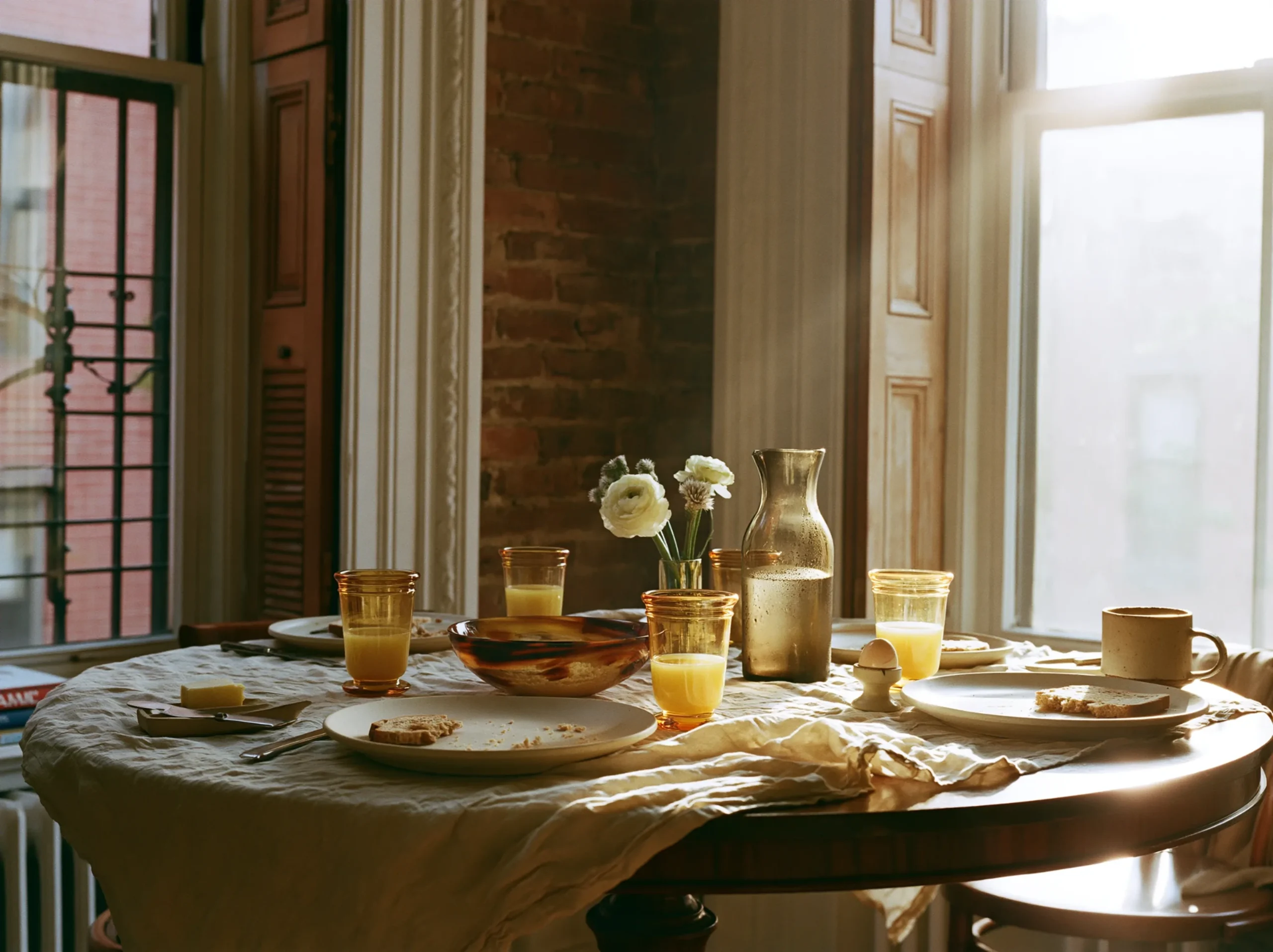
Luxury doesn’t need a dinner party. A tortoiseshell bowl and two amber tumblers make a Tuesday breakfast feel considered. Juice, yogurt and fresh fruit all look richer in warm glass than in clear.
Keep the table simple, with linen or bare wood and a small vase of seasonal stems. Use the glass every day instead of saving it for holidays. Daily use gives it a soft, lived-in character that feels effortless.
Four everyday tumblers often cost $60 to $150, so it’s an easy home upgrade. Setting them out takes two minutes and brightens your entire morning routine.
One Fact to Know
- Amber color: It comes from iron and sulfur in the glass.
Amber Glassware — Common Questions
Does amber glassware go with white dishes?
Yes. Amber warms up white, ivory and stone without adding a new color. Use it in small, repeated amounts, like goblets and one pitcher, so the table stays calm.
Can I put smoked glass in the dishwasher?
Hand-washing is safest. Some pieces survive a gentle top-rack cycle, but check the maker’s care notes first. Heat and harsh detergent can cloud thin glass over time.
How much does hand-blown amber glassware cost?
Mass-made amber tumblers can start around $5 to $10 each. Genuine hand-blown pieces usually run $20 to $60 per glass, and decanters cost more. Start with two or four pieces and add slowly.