Slab Backsplashes vs. Traditional Tile: The Rise of Seamless Kitchen Walls
A slab backsplash turns the kitchen wall into one quiet, continuous surface. Among kitchen backsplash ideas, seamless kitchen walls are drawing the most attention. Here is how stone slabs compare with traditional tile.
Anchor the Range with a Full-Height Slab
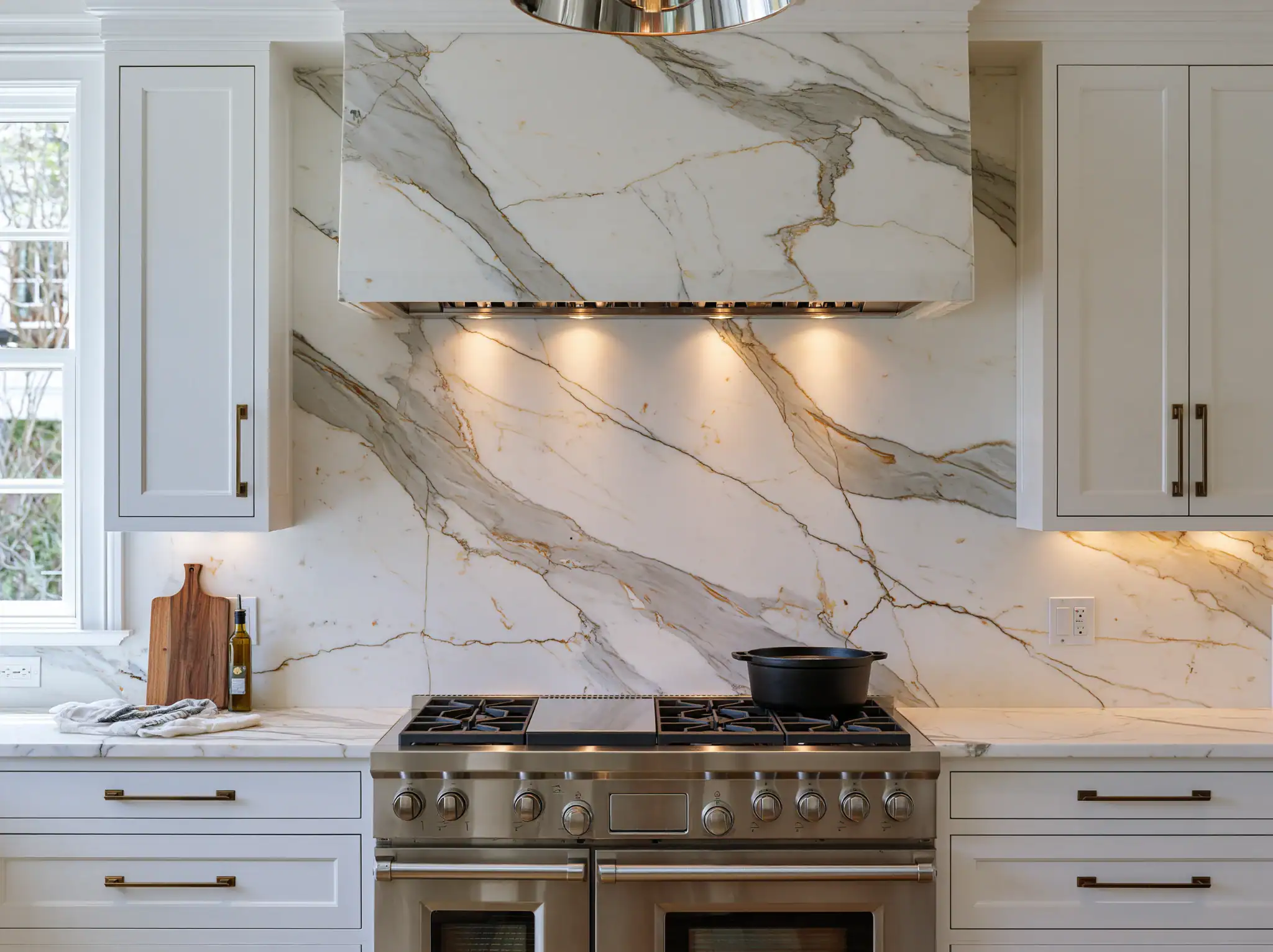
The range wall is where a kitchen earns its character. A single porcelain or quartz slab running from the countertop to the ceiling removes the busy rhythm of grid lines. The eye reads one confident surface instead of hundreds of small ones.
A traditional backsplash stops about 18 inches (46 cm) above the countertop, while a slab can rise to the crown molding. With so few seams, grease and steam have fewer places to settle. Measure twice, because stone cannot be adjusted once it meets the drywall.
- One slab means fewer seams to clean.
- Porcelain and quartz resist heat and stains.
- Full-height stone makes ceilings feel taller.
Illuminate the Veins with Concealed Lighting
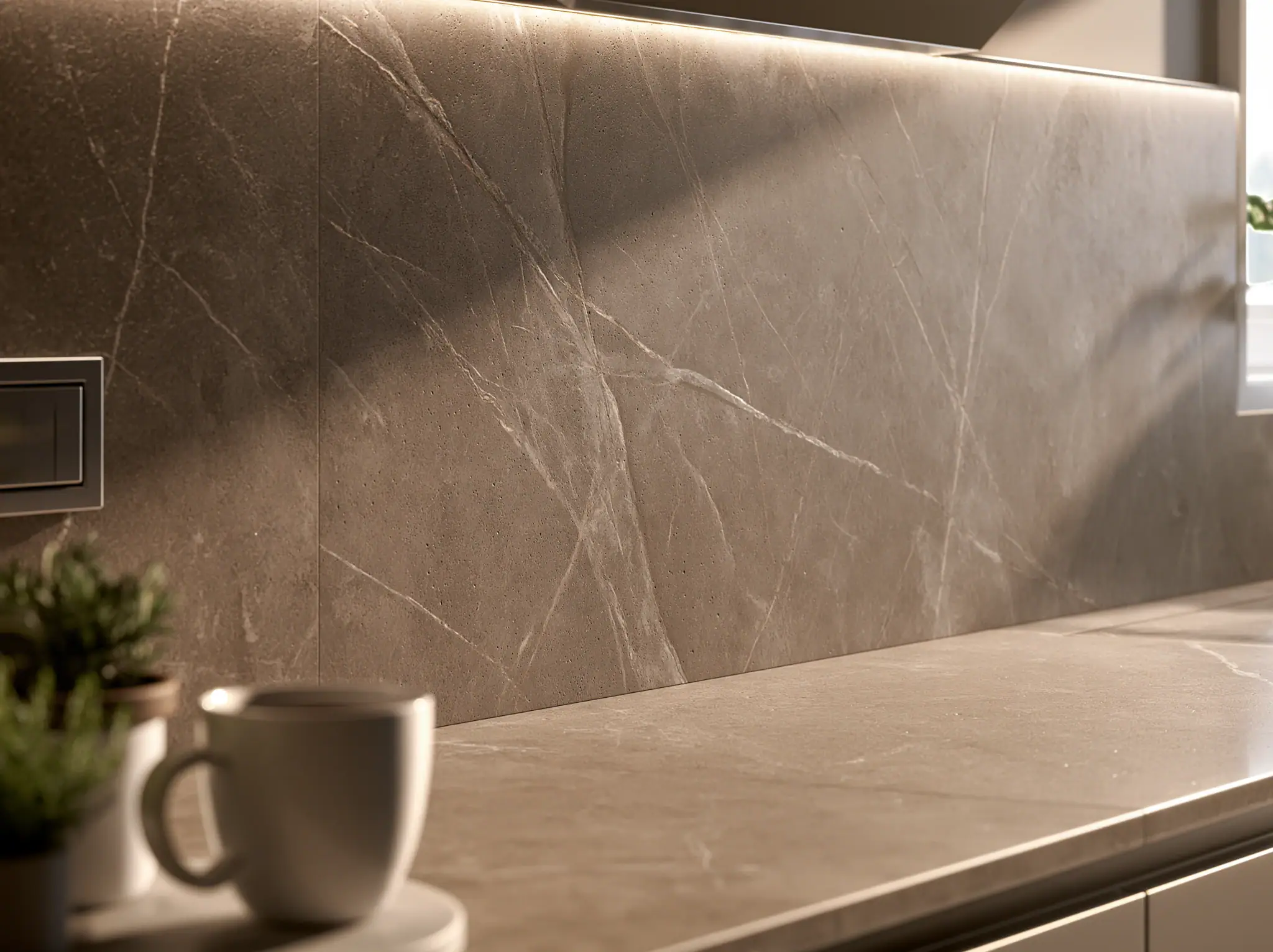
Stone with movement deserves light that grazes it rather than floods it. Warm LED strips beneath the upper cabinets bring out soft veining in taupe, greige, and cream. Choose 2700K to 3000K bulbs so the stone reads natural, not clinical.
Honed finishes soften reflections, while polished surfaces bounce more light, so add a dimmer. Set the strips about 2 inches (5 cm) back from the cabinet edge to hide the source. Against Benjamin Moore Swiss Coffee walls, the glow feels like late afternoon.
Weigh the Reality of Grout Maintenance
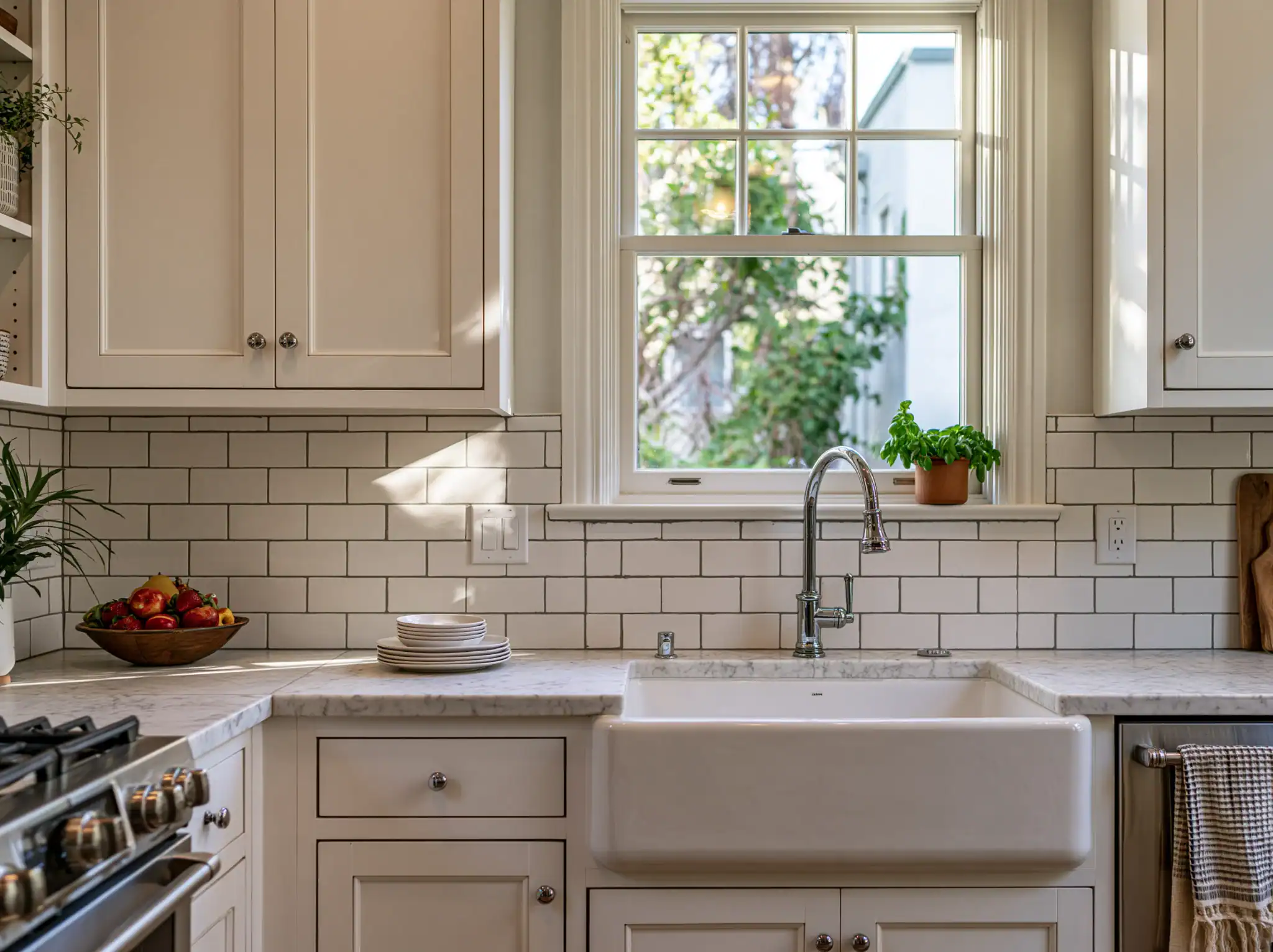
Traditional tile is beautiful, but every grout line is a small commitment. Cement-based grout is porous, so splatter and steam can darken it over time. Most homeowners reseal it yearly and scrub it more often than expected.
Ceramic subway tile often costs a few dollars per square foot before labor, while an installed slab backsplash can reach well into the double digits. Epoxy grout in a color-matched shade closes much of the maintenance gap. If budget leads your remodel, tile remains a sensible choice.
Ditch the Grout for Seamless Stone
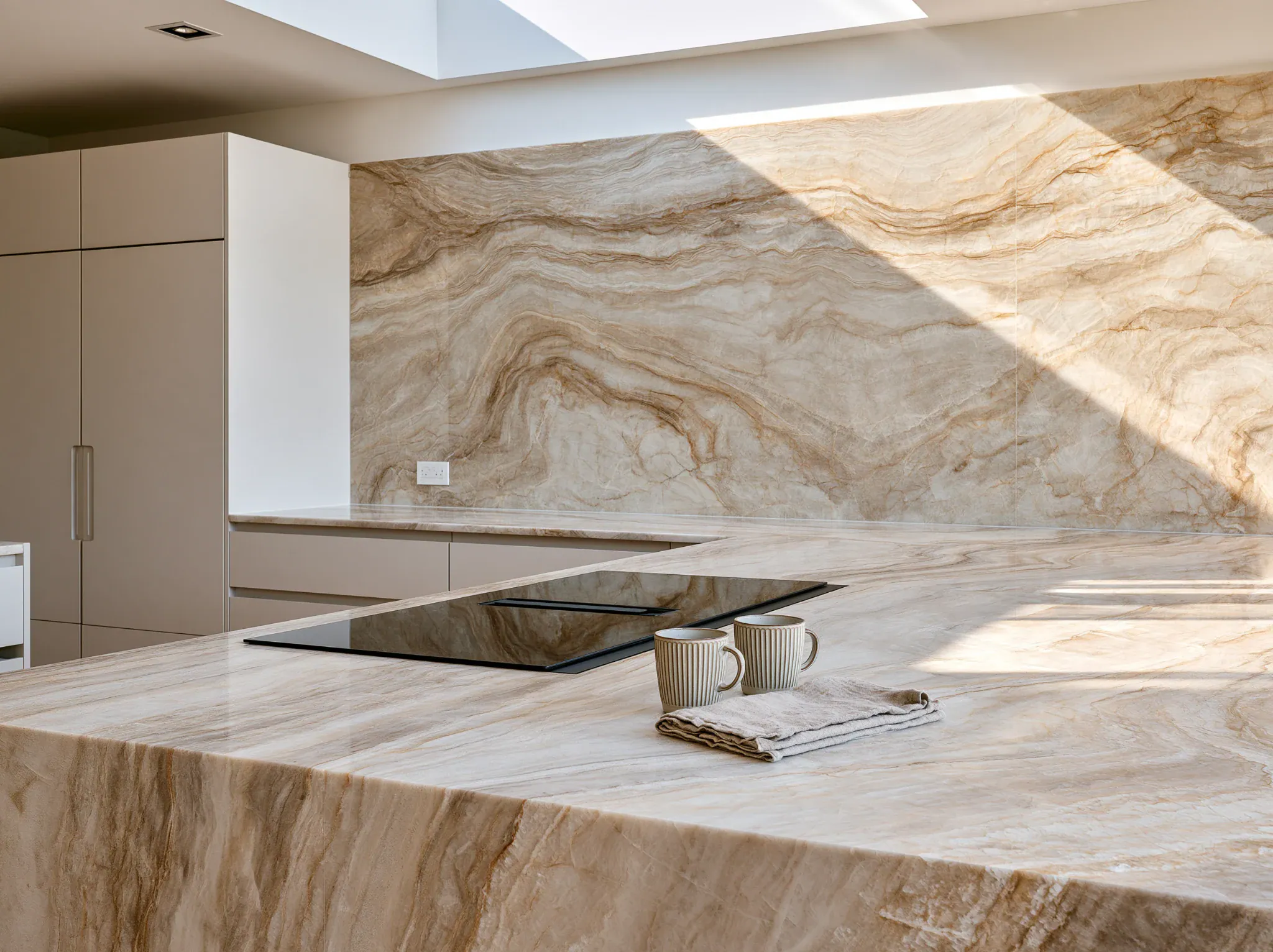
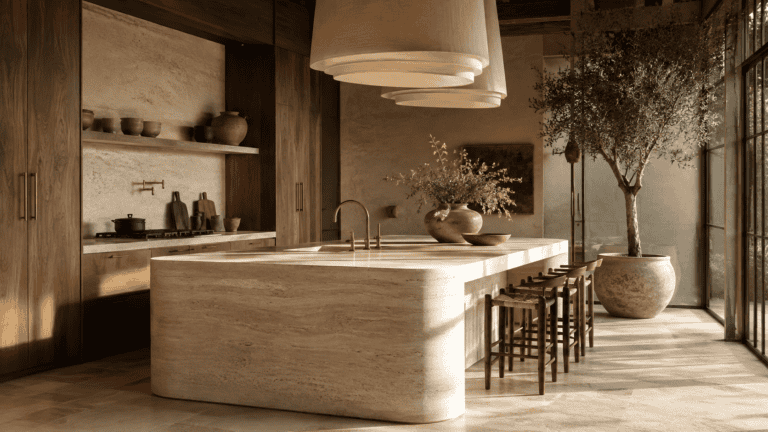
A beige marble-look slab shows how restful a kitchen can feel without interruption. The pattern carries across the wall, and the backsplash begins to read as architecture. This is the strongest case for seamless kitchen walls in open-plan homes.
Real marble etches near lemon juice, wine, and tomato, so porcelain and quartz are the easier path. Many porcelain slabs measure about 126 by 63 inches (320 by 160 cm). Ask your fabricator to show full slabs, not small samples.
Two Mistakes to Avoid
- Ordering before outlets and hood cutouts are measured.
- Skipping sealer on natural marble.
Two Tips Worth Keeping
- Request book-matched slabs from the same lot.
- Carry the slab to the ceiling for a clean edge.
Why Handmade Tile Still Holds Ground
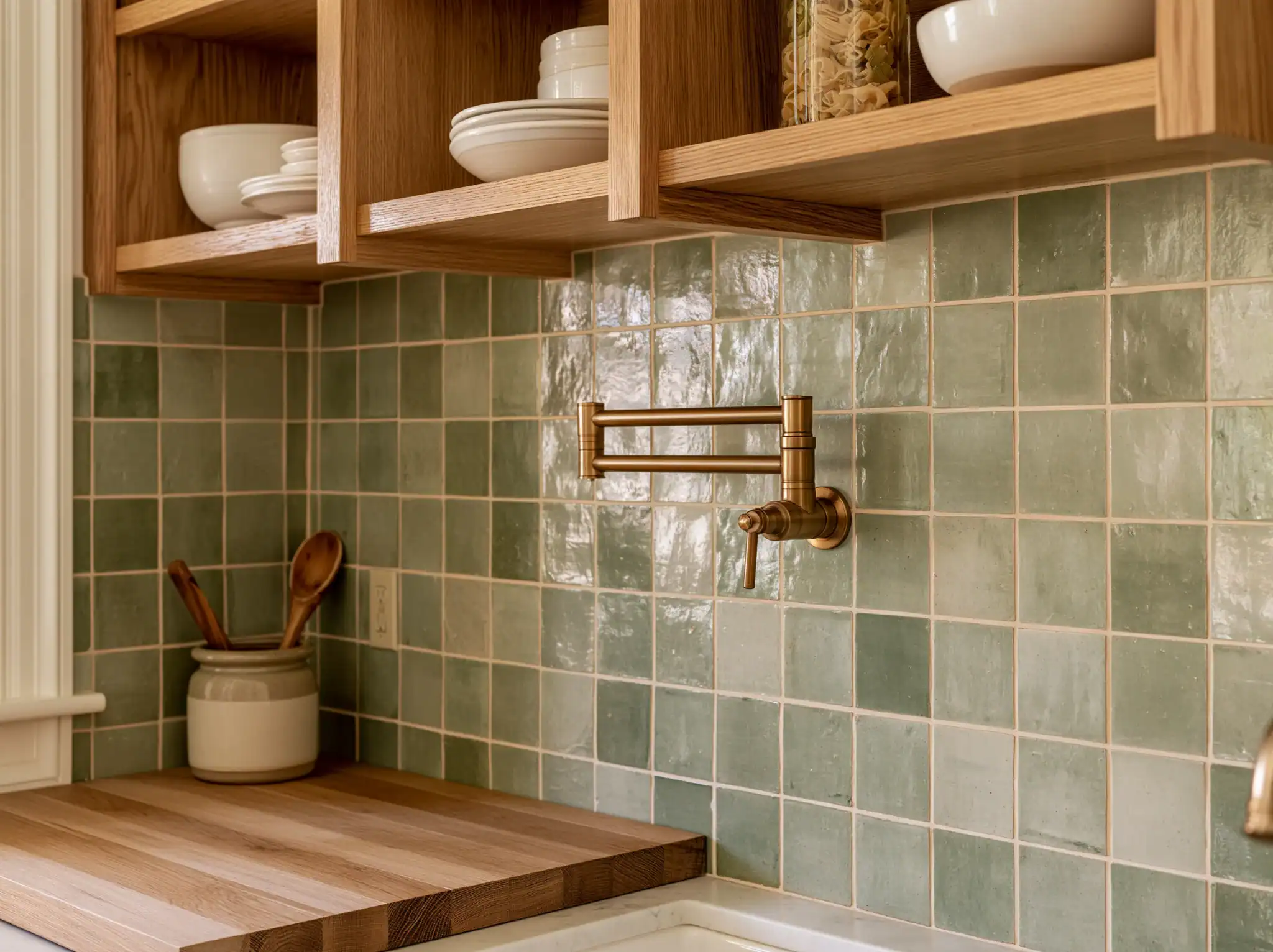
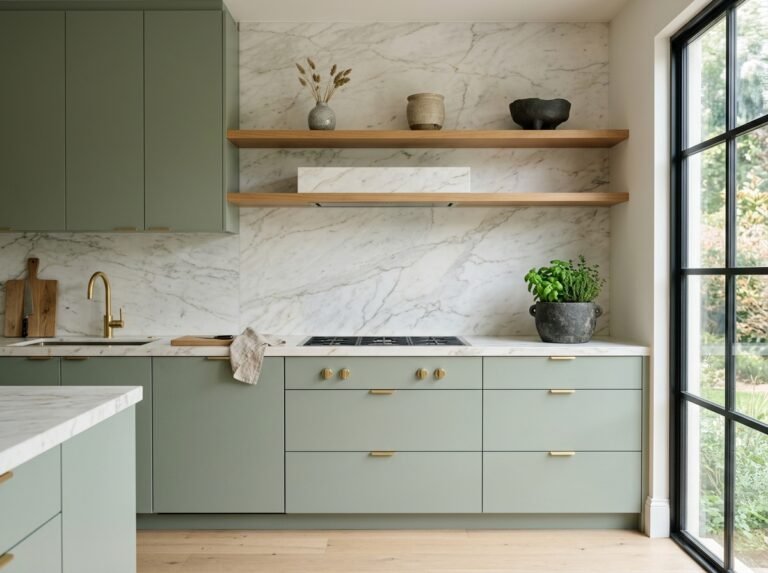
Not every kitchen wants to be quiet in the same way. Handmade tile in soft sage carries glaze variation that no slab can truly imitate. Each piece catches light a little differently, which gives the wall a lived-in warmth.
Zellige-style tile in 4 by 4 inch (10 by 10 cm) squares suits cottage and farmhouse kitchens beautifully. Pair it with color-matched grout to soften the grid. Tile on the main wall and a slab behind the range feels collected, much like rooms by Studio McGee.
Balance Polished Slabs with Warm Timber
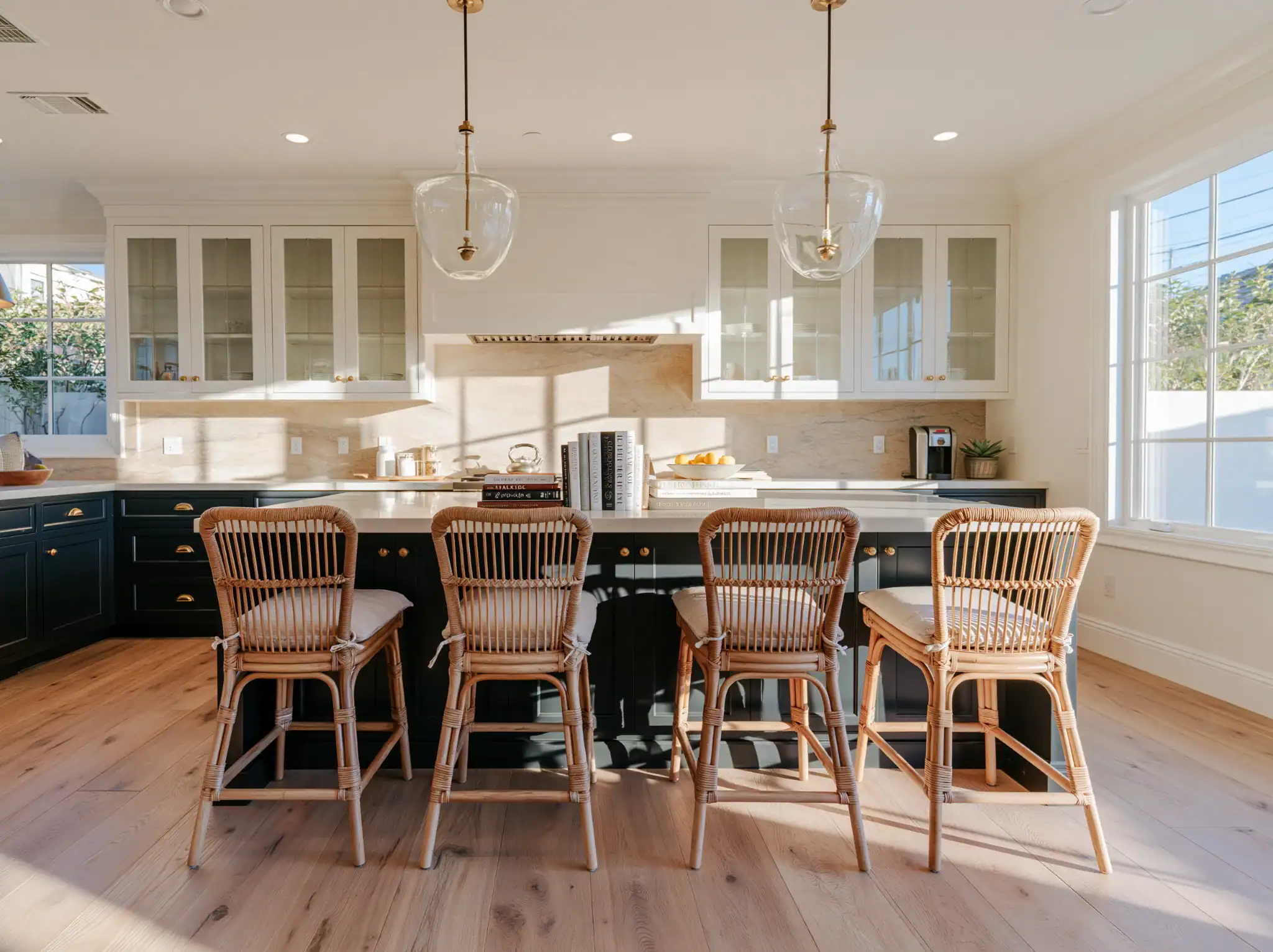
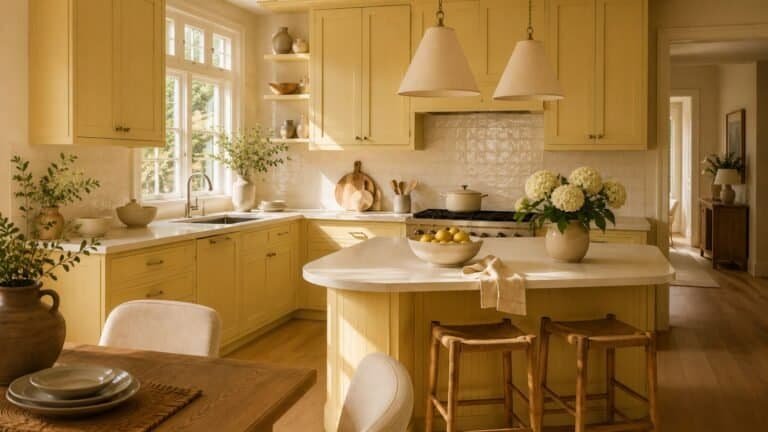
Polished stone can feel cool when it stands alone. A timber island, open oak shelving, or rattan counter stools add the warmth that keeps a seamless kitchen inviting. Morning light across hardwood floors softens the contrast further.
Keep to two or three wood tones within the same warm family. Stools with a 24- to 26-inch (61 to 66 cm) seat suit a 36-inch (91 cm) countertop. Add brass hardware and linen drapes, and the quiet wall does the rest.
Choosing Your Slab Backsplash
A slab backsplash offers calm, continuity, and easier cleaning, while tile offers charm and a friendlier price. Neither is wrong. The better choice suits how you cook and how long you plan to stay.
Hold the samples against your cabinets and baseboards at different hours. Trust the one that still feels right in the afternoon light.
Kitchen Design — Common Questions
Usually, yes. Fabrication and skilled installation raise the total, while basic ceramic tile stays far more affordable. Request quotes for both.
Porcelain and quartz need only a soft cloth, warm water, and a pH-neutral cleaner. Seal natural marble and wipe spills quickly.
Porcelain handles heat and stains best, which suits a range wall. Quartz offers more consistent patterns and a warmer look.