How to Make Your Living Room Look More Expensive Without Overdecorating
Start With Timeless Pieces
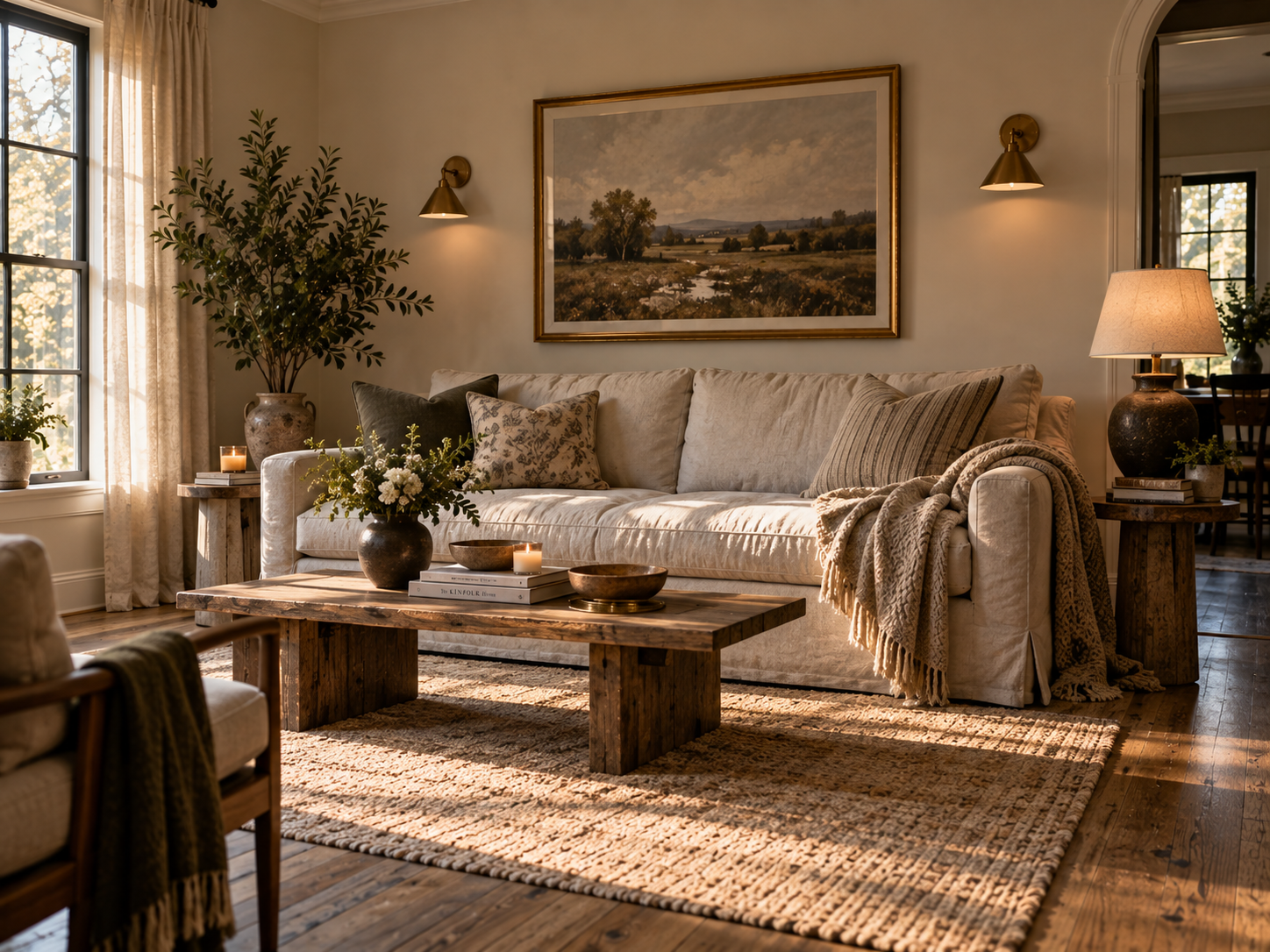
The most memorable living rooms usually feel intentional rather than expensive. Every piece has a purpose, and nothing feels added simply to fill space.
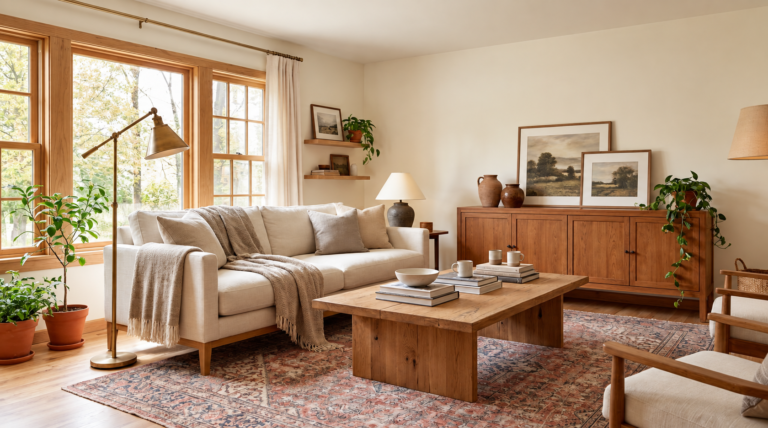
Start with timeless furniture: a well-proportioned sofa, a solid wood coffee table, or a comfortable armchair. These pieces create a lasting foundation and can help make a living room feel warm and inviting without relying on passing trends.
Pay attention to silhouette before colour or finish. Simple, well-proportioned furniture tends to look considered for much longer.
Bring In Natural Materials
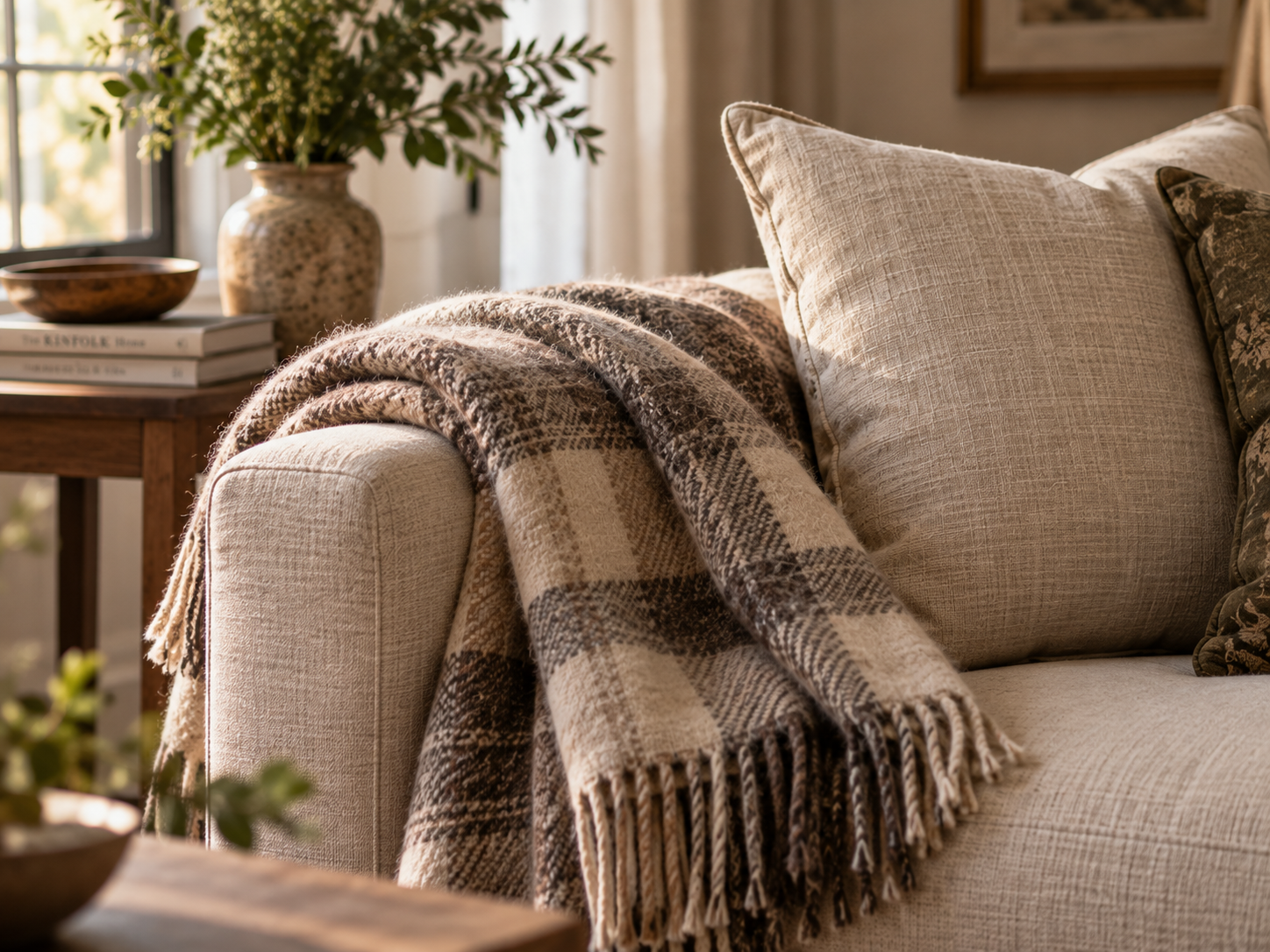
Natural materials bring warmth and texture that can make a living room feel more thoughtful. Wood, linen, stone, wool and rattan each add subtle variation.
Linen is especially useful because it softens natural light while keeping a relaxed appearance. It can also make a living room feel more personal and comfortable.
Try combining two or three natural textures instead of using many different finishes. The result feels layered without becoming busy.
Keep Surfaces Curated
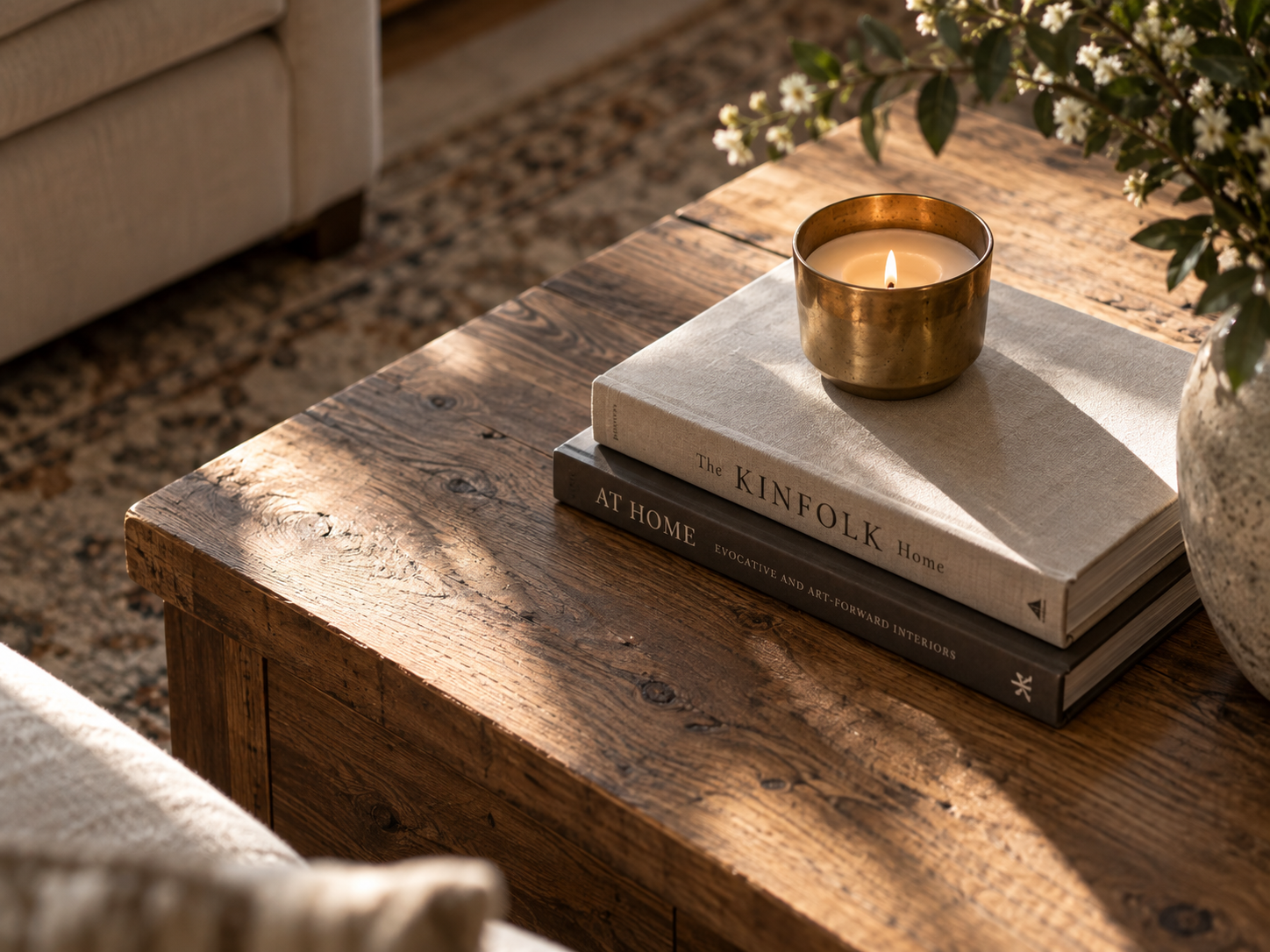
A few carefully chosen objects can have more impact than a crowded collection. Give coffee tables, shelves and consoles enough empty space around each item.
Choose objects for their texture, shape or meaning. A stone accent, a couple of beautiful books or one sculptural piece can make a surface feel finished without looking overdecorated.
This kind of restraint is especially useful when you want to make a living room look expensive without buying new furniture.
Further Reading
Create Layers of Light
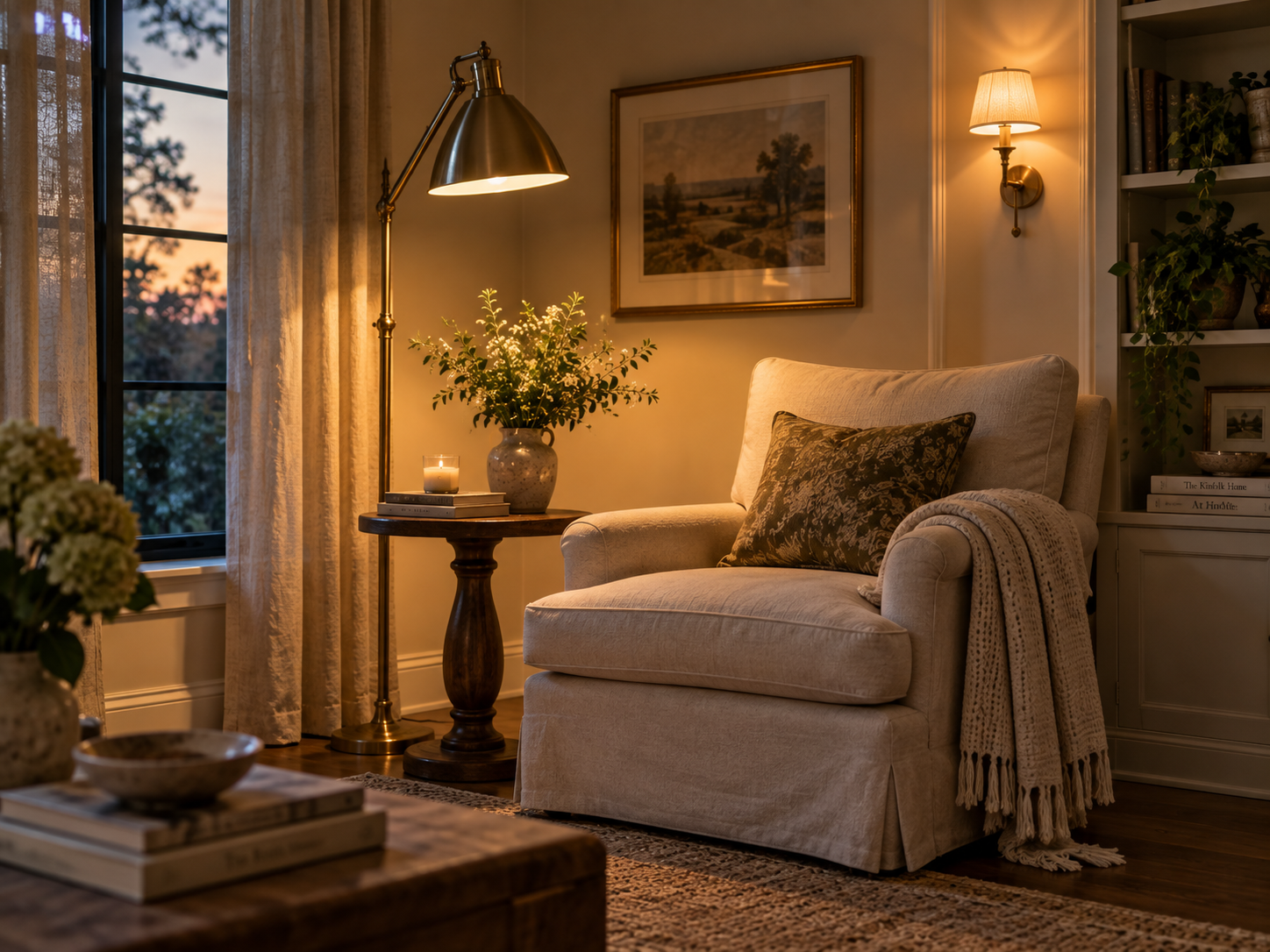
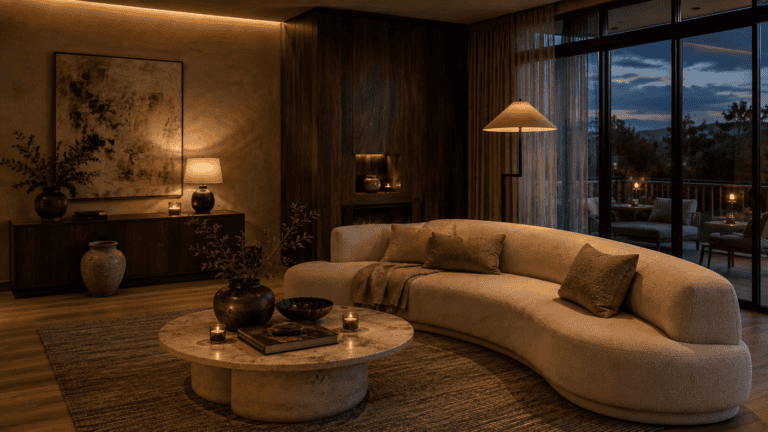
Lighting can completely change how a living room feels. A single overhead light often makes everything look flat and removes the softer atmosphere that layered lighting creates.
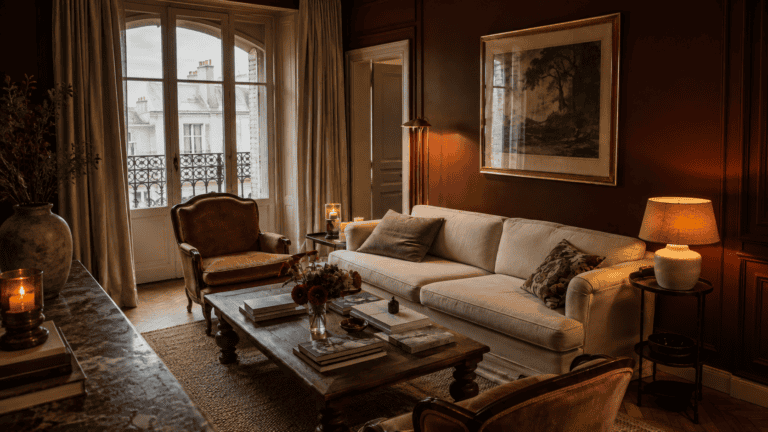
Use several sources throughout the room. Natural daylight, a floor lamp and a table lamp can create different pools of light as the day changes.
When creating a living room that feels considered and quietly luxurious, place lamps where they highlight useful or beautiful areas rather than simply making the entire room brighter.
Use Reflection With Purpose
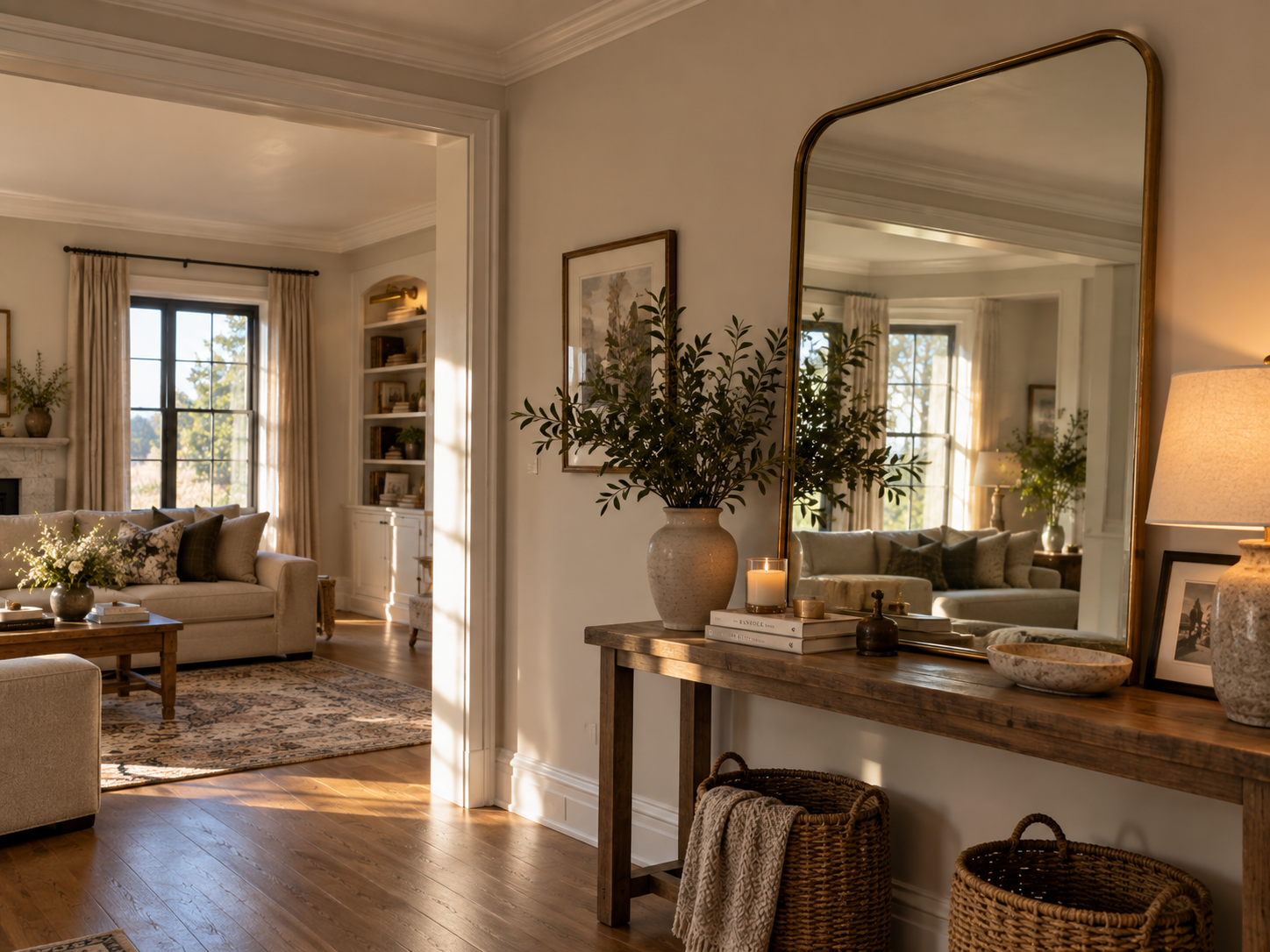
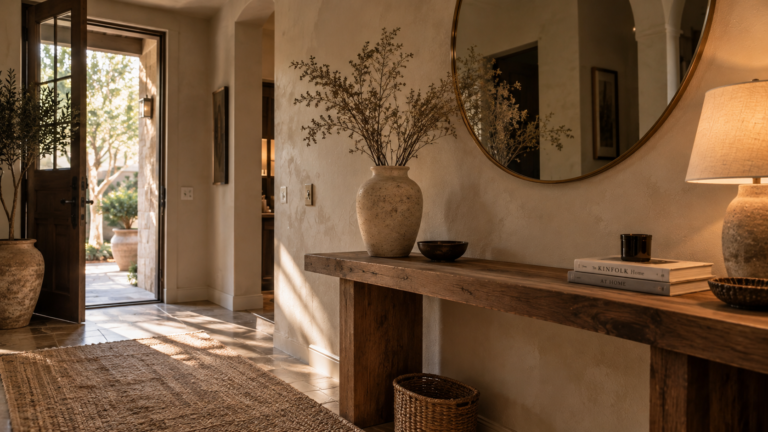
A well-placed mirror can make a living room feel brighter and more spacious. Positioning one near a window can help distribute natural light across the room.
You can also use a mirror to reflect an attractive lamp, architectural feature or view. This adds depth without introducing another piece of furniture.
Choose the frame according to the room’s character. Dark metal feels more restrained, while warm wood or aged finishes can add softness and history.
Give Furniture Room to Breathe
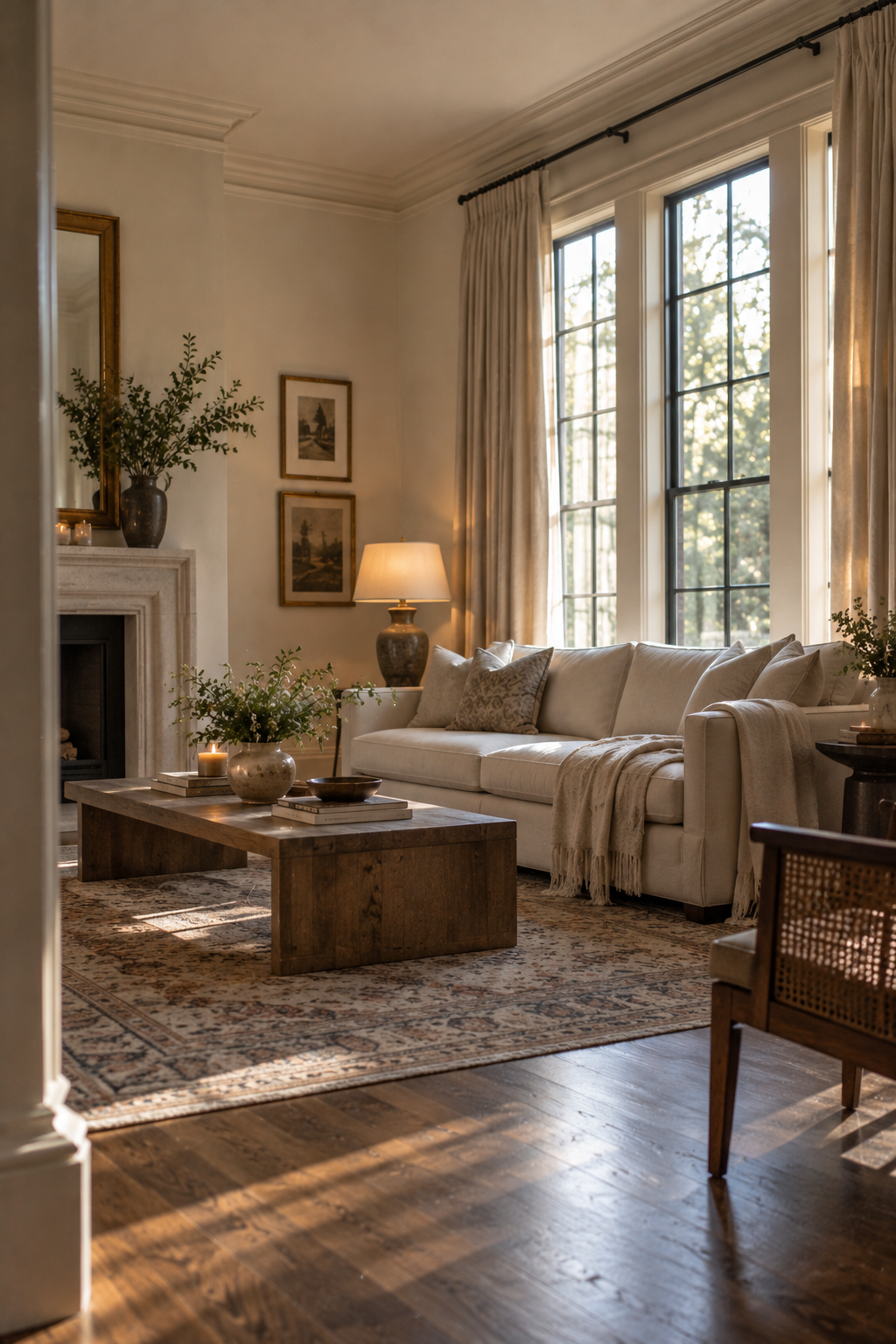
More furniture does not always make a living room more comfortable. Too many pieces can make movement difficult and cause the room to feel visually crowded.
Leave enough space around sofas, chairs and tables so each piece can be appreciated. Clear floor space can make even a small room feel calmer.
Negative space is part of the design. The empty area between furniture and walls can be just as important as the furniture itself.
Highlight What Already Exists
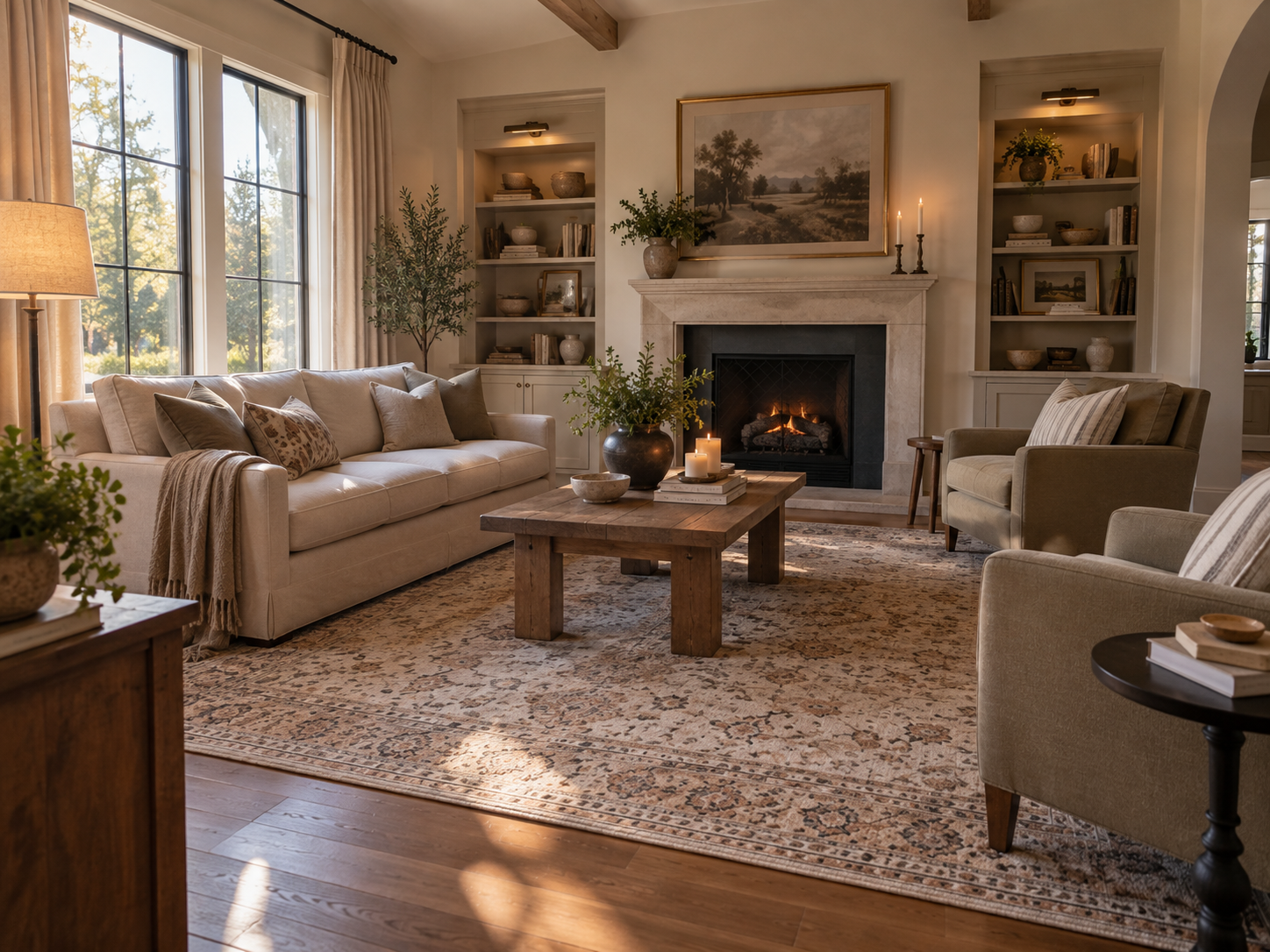
Before buying anything new, look at what your living room already does well. Natural light, original trim, a fireplace or an interesting floor can become part of the design.
Spend some time noticing where the light falls and which architectural details naturally attract attention. These observations can guide your furniture and styling choices.
Sometimes the easiest way to make a living room feel more like home is to simplify what is already there rather than redesign everything.