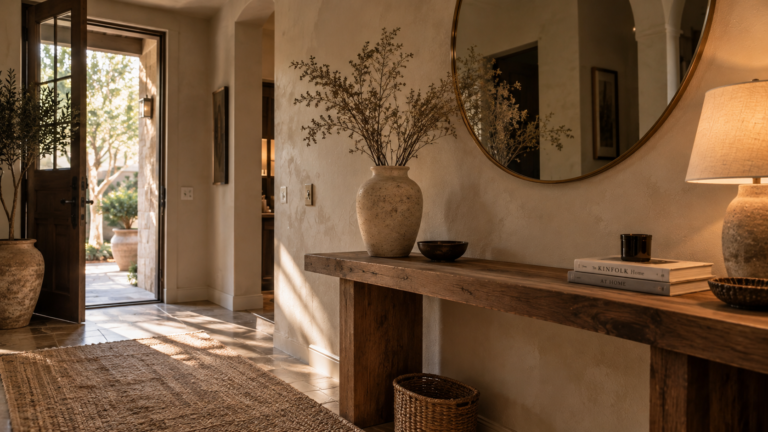
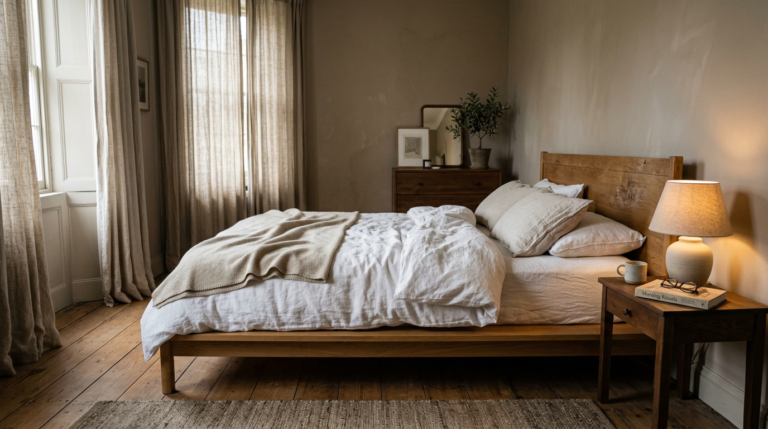
Interior Design Ideas That Make a Home Feel Expensive
Layer Warm Materials
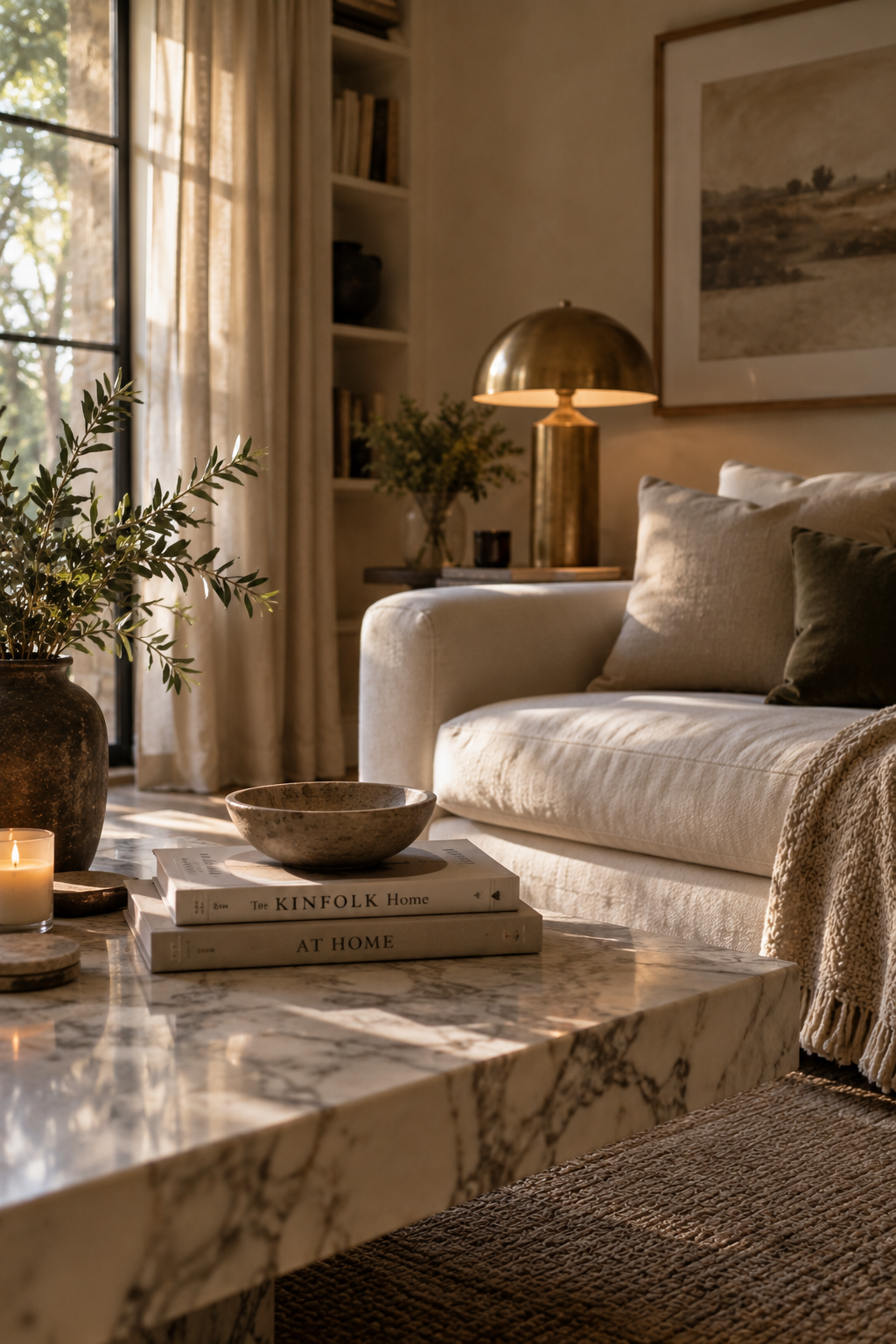 Wood, stone and texture add instant depth.
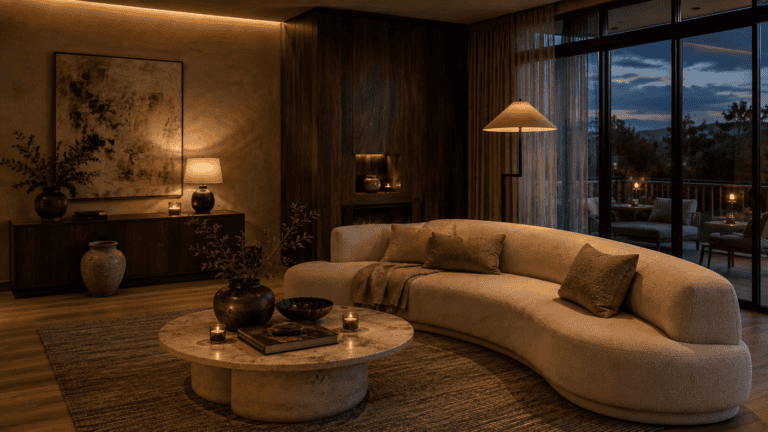
The rooms that feel most expensive are built from stone, timber, and linen rather than surfaces that imitate them. Layering warm natural materials shifts how a home feels instantly — no renovation required.
Two or three materials, tonally unified, will always outperform a room crowded with competing finishes. Natural materials age beautifully — linen softens, timber develops character, stone holds memory.
Key Points
Invest in Lighting
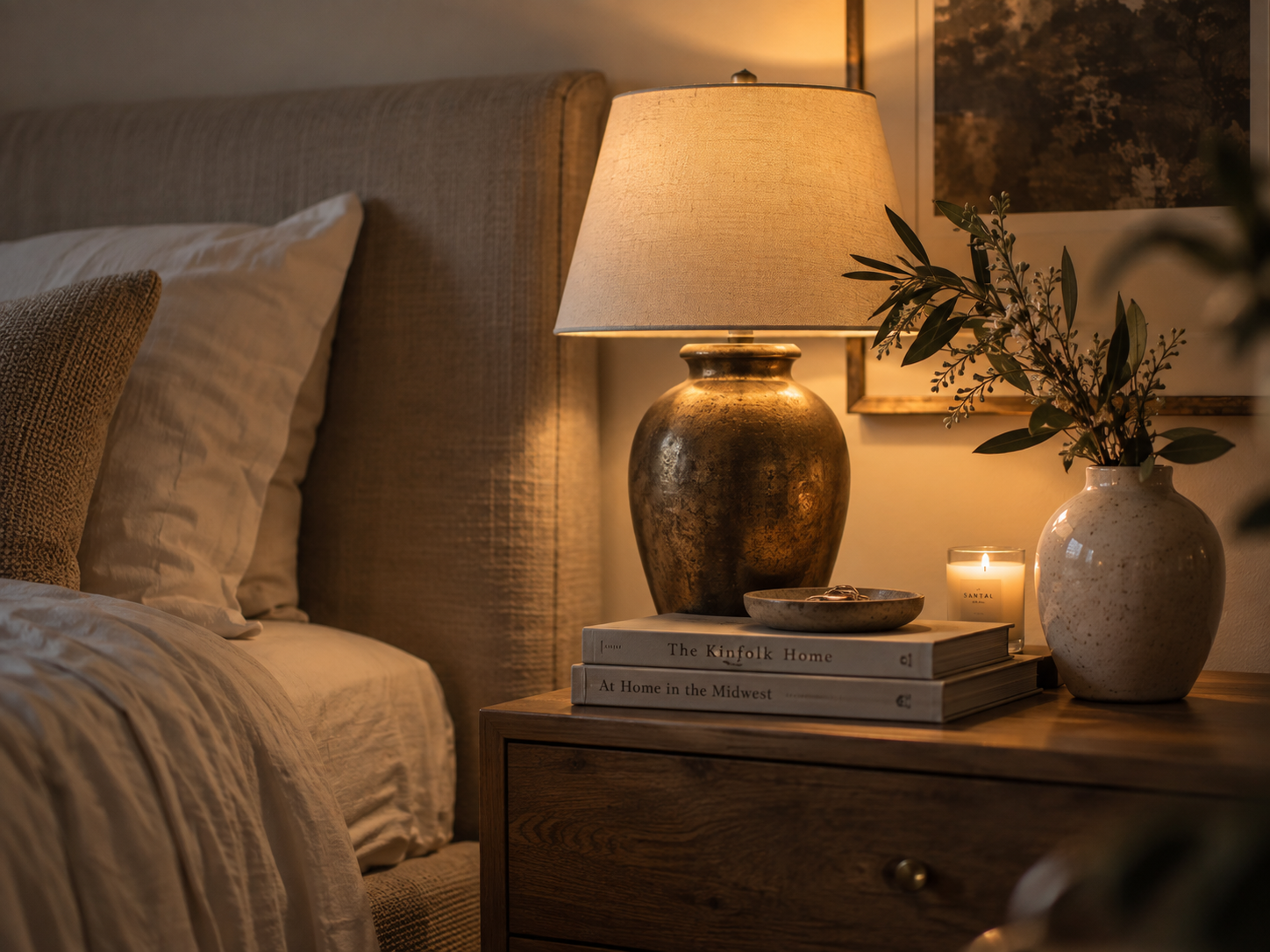 Warm lighting makes a room feel refined.
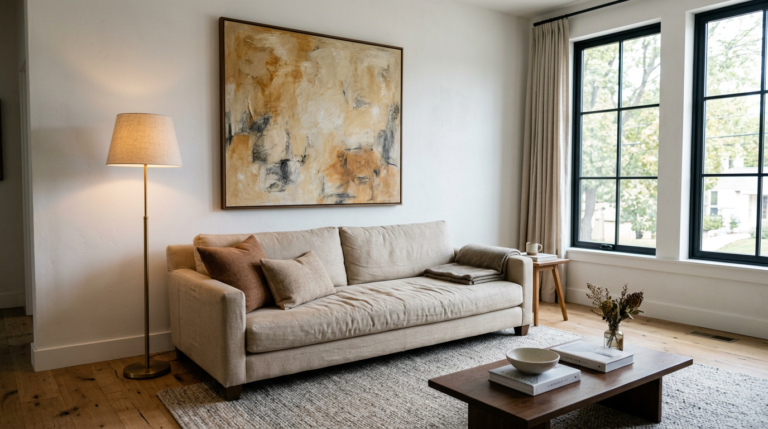
Nothing changes a room faster than its lighting. Layered ambient lighting — floor lamps, table lamps, warm-toned bulbs — creates an entirely different experience of the same space.
Warm white bulbs around 2700K cast soft golden light that feels inhabited rather than illuminated. Dimmer switches let a room shift from functional to atmospheric as the evening settles.
Choose Better Proportions
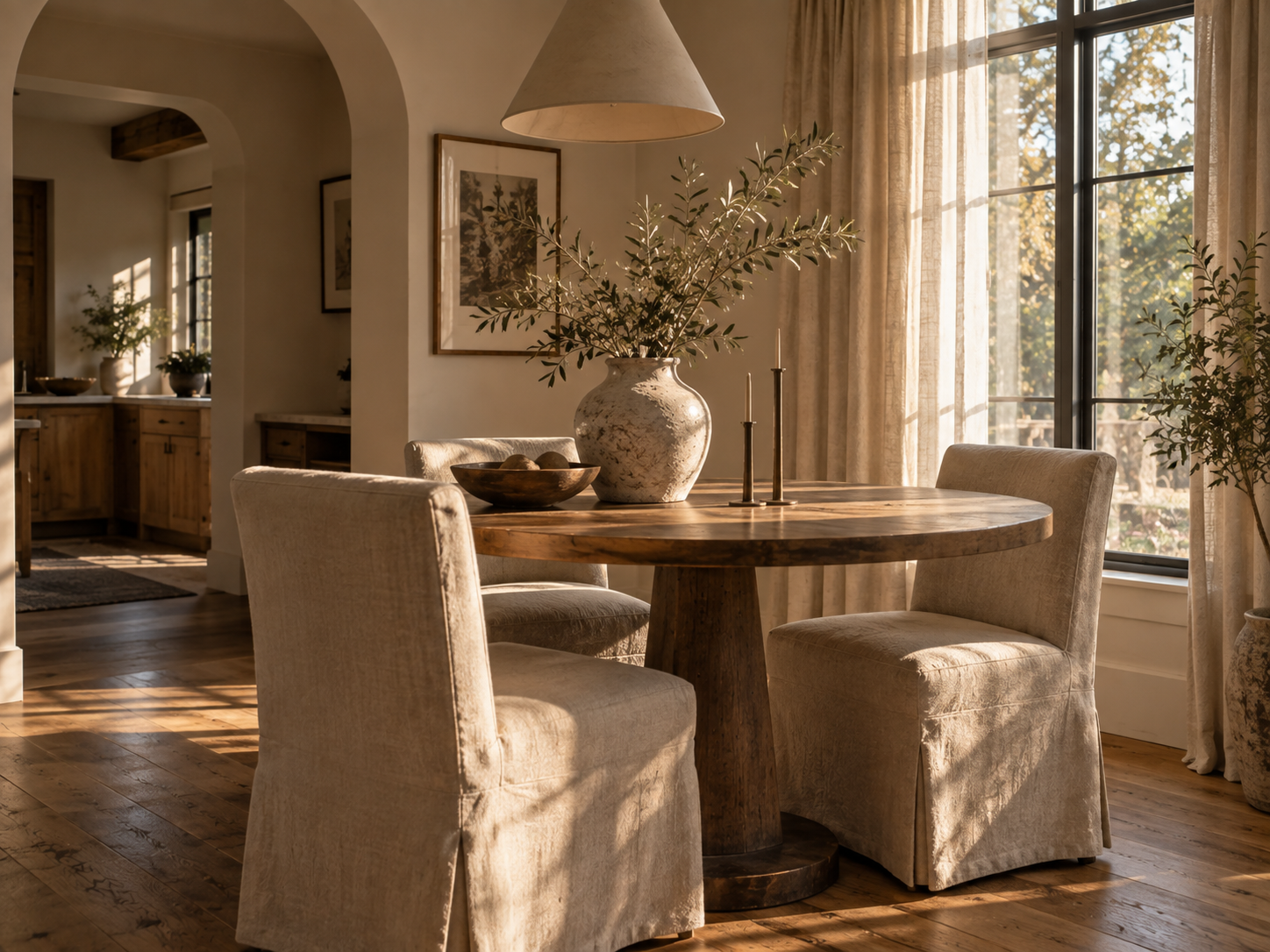 Scale can make simple furniture look expensive.
Scale is the most underestimated element in interior design. Choosing furniture with the right proportions costs nothing extra — it only requires patience to wait for the right piece.
Rooms that feel expensive have breathing room between pieces. Generosity of space is a form of luxury — and costs nothing beyond owning fewer, better things.
Style With Intention
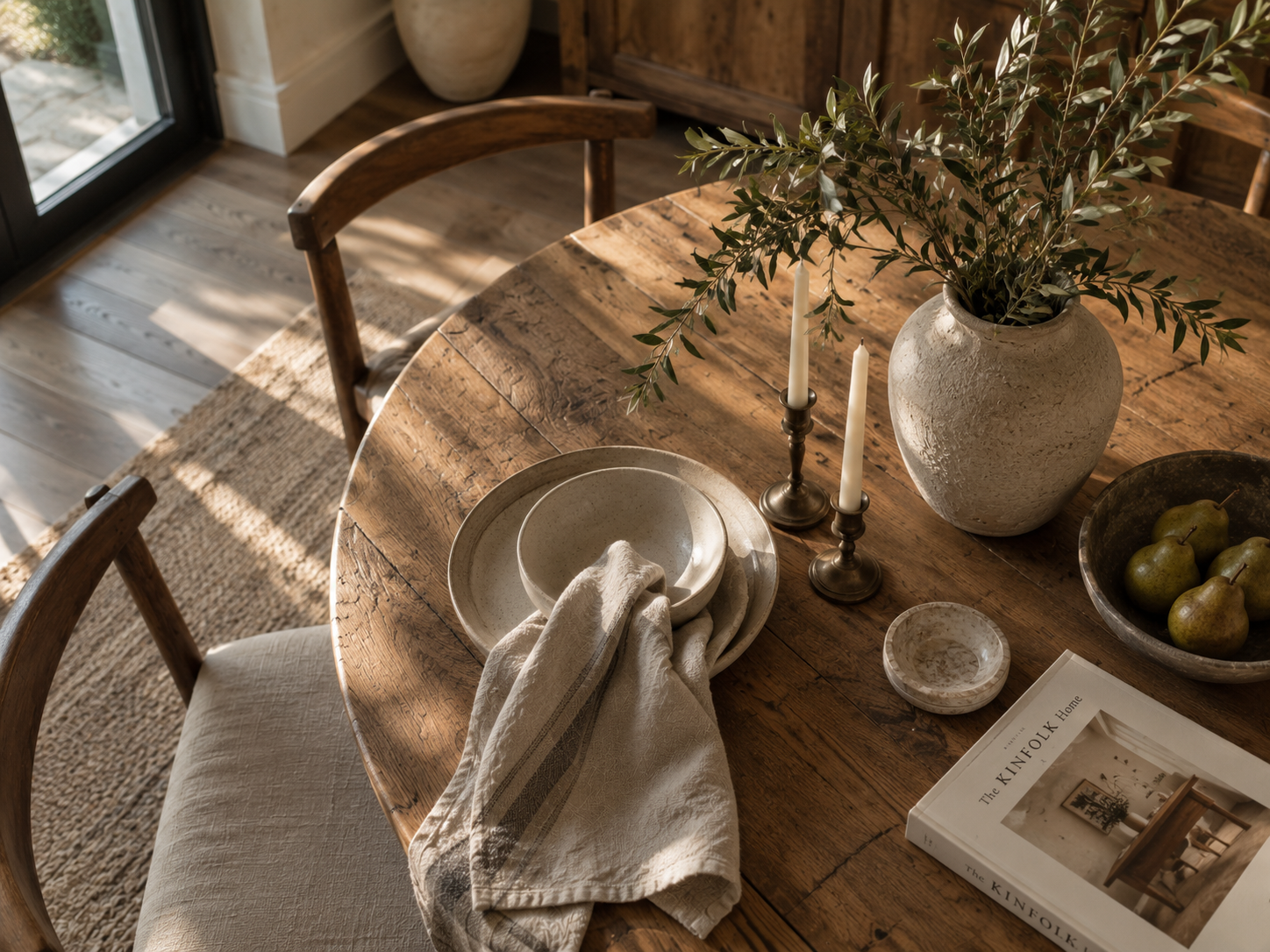 A few thoughtful details feel more elevated.
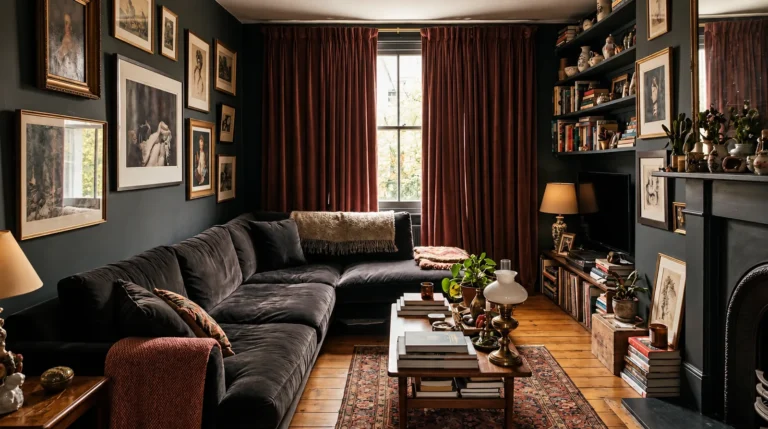
The most common mistake in decoration is too much. Intentional interior styling means editing as much as choosing — remove what does not contribute and what remains feels more valuable by having space around it.
Replacing builder-grade handles with solid brass or blackened steel makes an immediate difference. Small upgrades compound into a significant overall impression.
Create a Beautiful Everyday Space
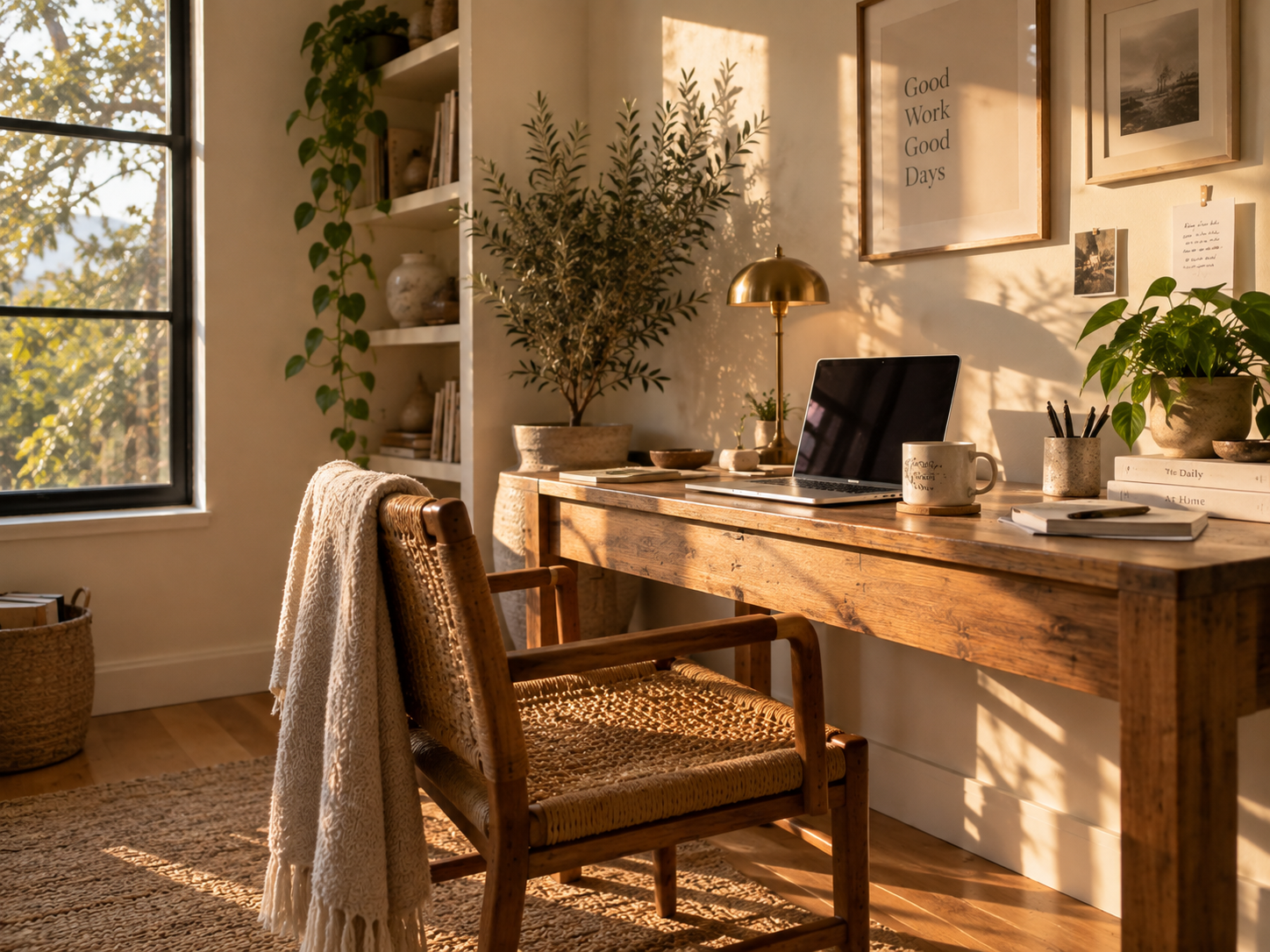 Function can still feel sophisticated.
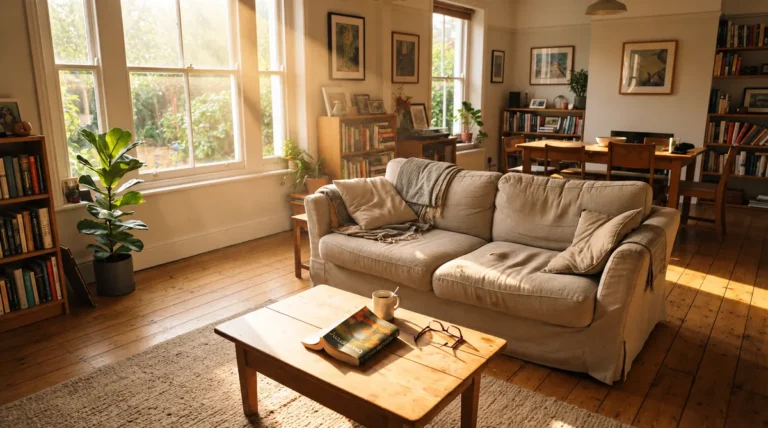
The finest homes feel refined where daily life happens. Creating a beautiful everyday home means extending discipline into functional spaces — a cleared counter, a considered entryway, a shelf arranged with care.
A small tray for keys, a clean floor, a single well-placed hook — minimal arrangements that signal chosen order, which always reads as a form of refinement.
Frequently Asked Questions
Lighting makes the most immediate difference. Switching from a single overhead light to multiple warm-toned lamps changes a room’s entire atmosphere within minutes — clear the surfaces too and the effect is instant.
Not always. A jute rug often costs less than a synthetic alternative yet communicates far more warmth. Solid timber bought secondhand frequently outperforms new manufactured pieces in both quality and character.
Remove everything from a surface and replace only what you genuinely miss. If you do not notice something is gone, it did not belong there — actively chosen objects always outperform passively accumulated ones.
Absolutely. Lighting, textiles, styling, and furniture arrangement require no permanent changes. A wool rug, a floor lamp, linen cushions, and a cleared entryway can transform a rental entirely.