What Is Scanditalia? The New Interior Aesthetic for Those Who Find Minimalism Too Cold
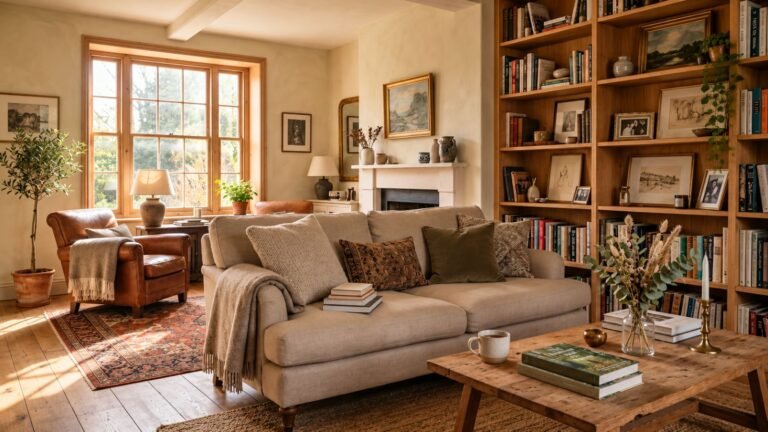
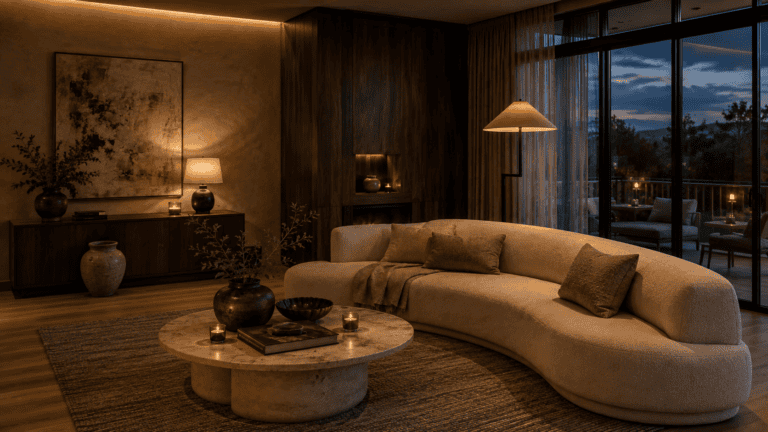
Scanditalia blends Scandinavian simplicity with Italian warmth. It favors natural materials, earthy tones and rooms that feel lived in. Here is how the style looks, room by room.
Scanditalia Living Rooms: Grounded, Warm Minimalism
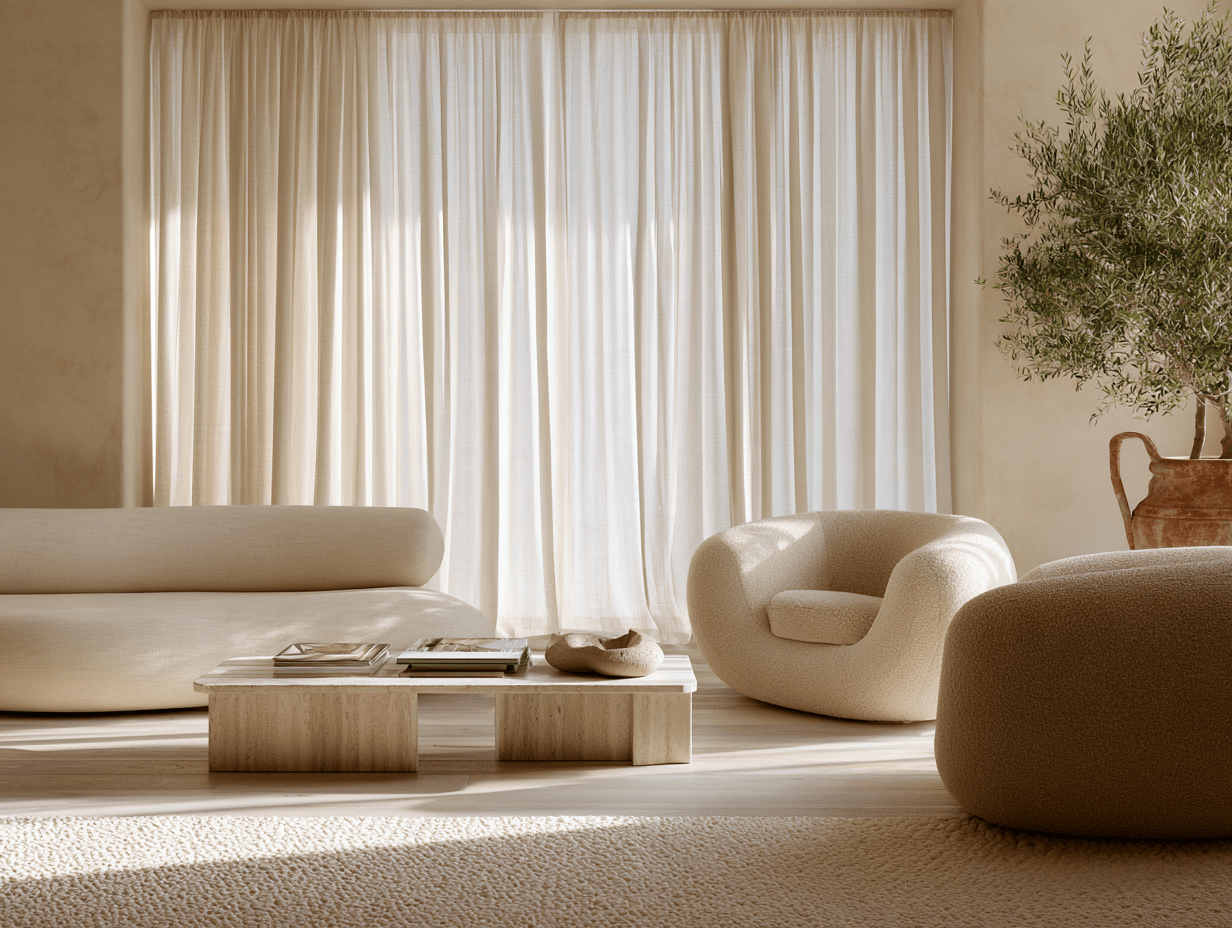
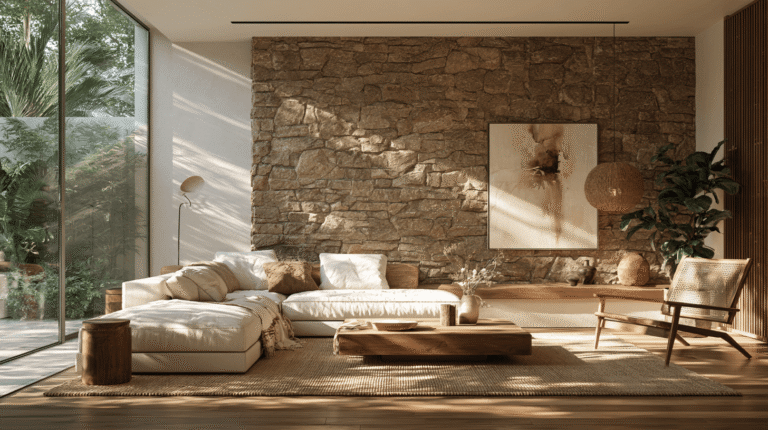
There is a difference between a room that looks empty and a room that feels calm. This living space understands that difference completely, leaning into Scandinavian interior design without ever feeling sparse or unfinished. Every surface has been left just open enough to breathe, yet nothing about it feels incomplete.
Soft daylight moves across the walls throughout the day, settling into corners and across the floor. At the center, a honed travertine table anchors the room, while curved bouclé chairs soften its straight lines. The furniture doesn’t compete for attention, allowing a minimalist living room design to feel inhabited rather than staged.
The easiest way to build a Scanditalia living room is to pair pale Scandinavian oak with the cool calm of Italian travertine. Keep the stone to one or two substantial pieces so it reads as a feature rather than a theme. Add curved seating, such as a bouclé chair, and finish with a wool or linen rug in warm cream so the stone never feels cold underfoot.
- Keep furniture low and grounded.
- Let a neutral color palette do the work.
- Keep only objects that earn their place.
Organic Dining Spaces Built for Lingering
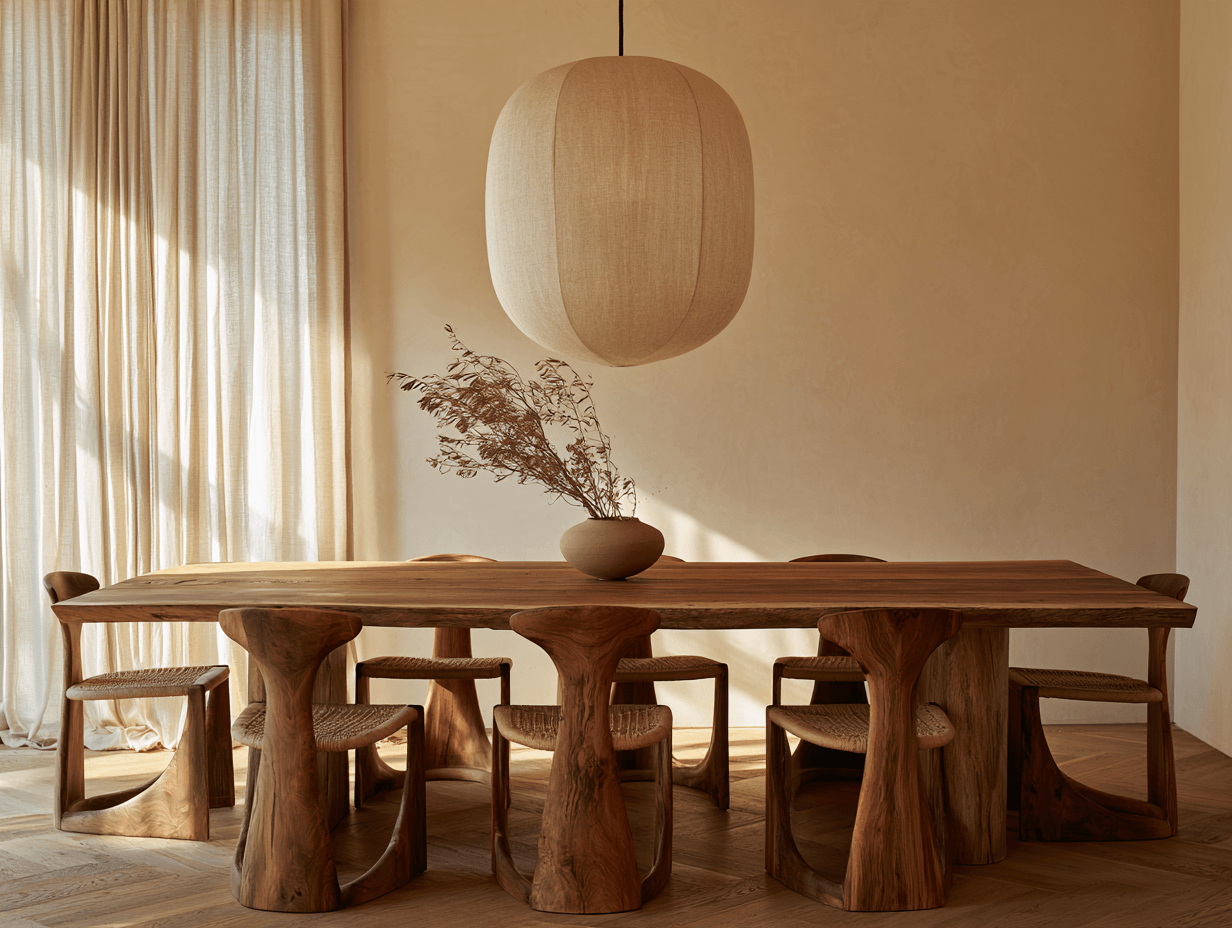
Some dining rooms exist only to be photographed, arranged once and never touched again. This one exists to be used, and it shows in the small details scattered across the table. The surface carries the slight imperfections of real wood, a quiet reminder that natural materials in interior design age with character rather than wear.
Sculptural, handcrafted timber chairs are pulled in just slightly off-center, as though someone has only just stepped away from a conversation. Their sculpted lines bring a touch of Italian craftsmanship to a table that is otherwise simple. It is this honesty that makes the room feel like it belongs to someone rather than to a catalog.
To balance the two traditions in a Scanditalia dining room, start with a solid table in light oak or warm walnut. Then add one Italian touch, such as sculptural chairs or a travertine or marble serving tray, so the room gains richness without turning formal. Keep the lighting low and warm, ideally a single linen or paper pendant over the table.
Serene Bedrooms: Natural Linens and Oak
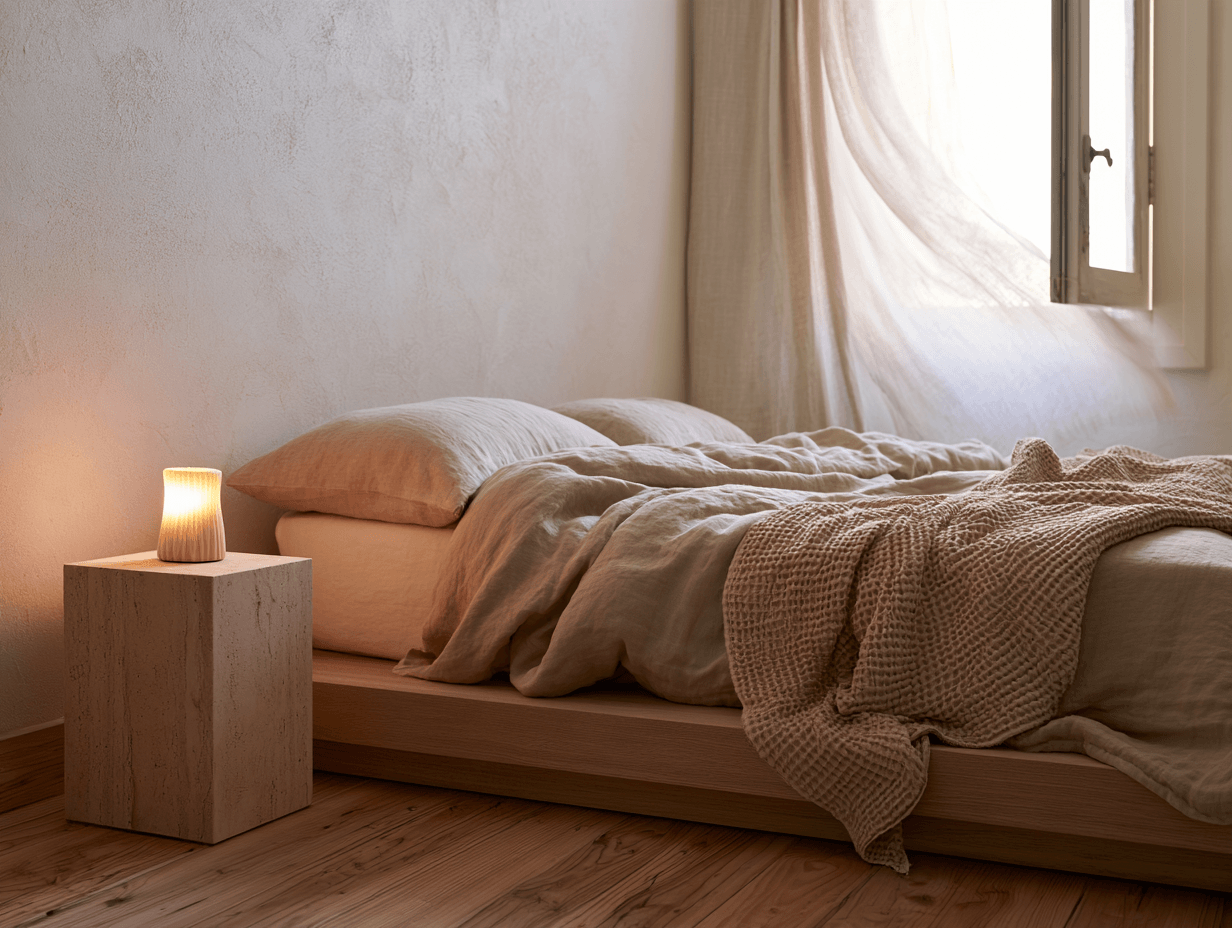
Bedrooms are often the first room to lose personality in pursuit of order, scrubbed clean until they feel like hotel rooms. Here, the opposite happens, and the space feels softer for it. Linen bedding, slightly rumpled, keeps the room from feeling clinical, offering a gentle lesson in cozy minimalist bedroom ideas.
The palette stays soft and restrained, built almost entirely from tones found in nature. Texture does the heavy lifting here, not color. Soft whites, oatmeal and pale oak sit side by side without any one tone asserting itself. Together they keep the room settled rather than cold.
For a Scanditalia bedroom, let a light oak bed frame or bedside table provide the Scandinavian backbone. Bring in the Italian side through one small stone detail, such as a honed travertine or marble lamp base or tray on the nightstand. Layer bedding in oatmeal, stone and soft white, and keep the walls a warm, plaster-like off-white.
Warm Kitchens: Flat-Panel Oak and Marble
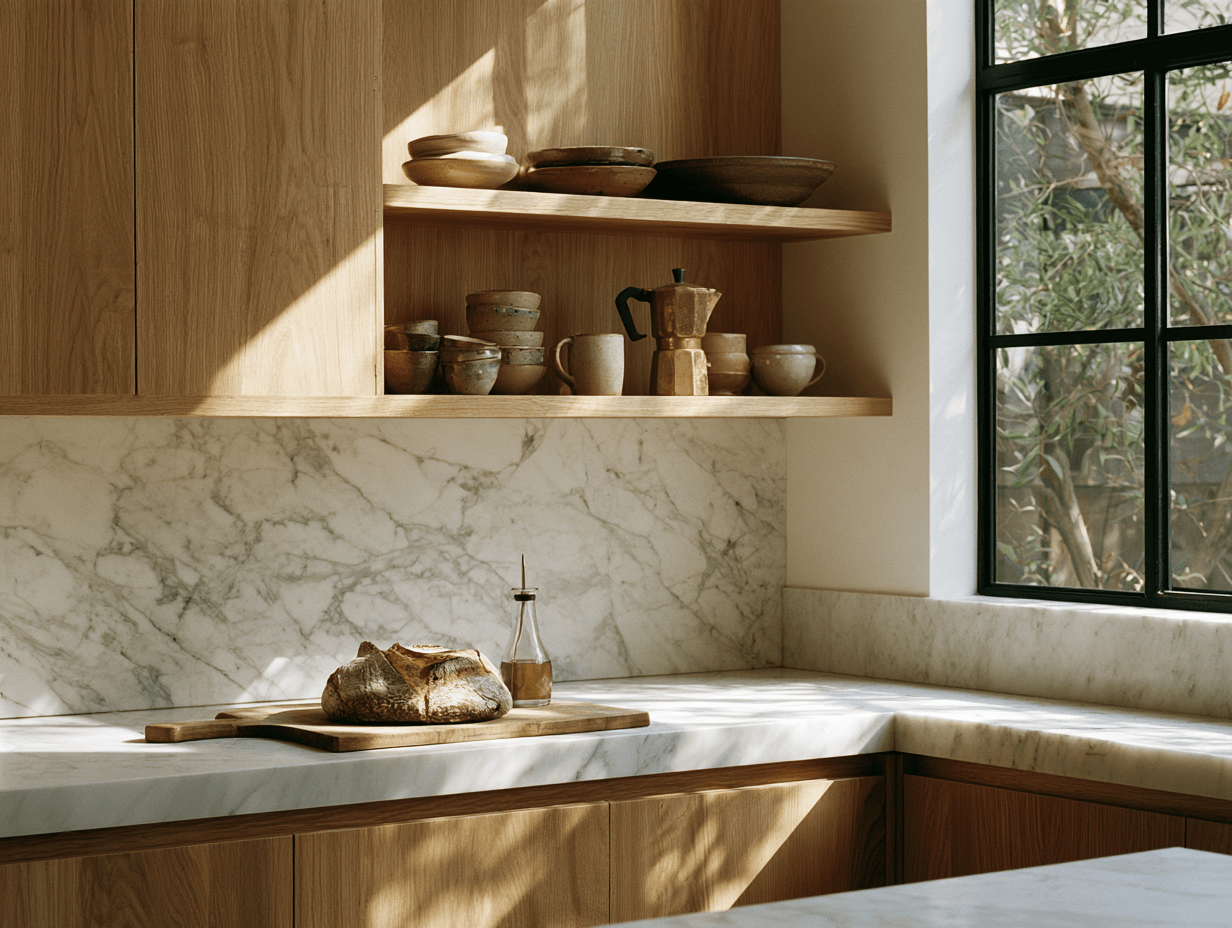
Kitchens built purely on function often forget to feel inviting, reduced to little more than clean surfaces and sharp edges. This one avoids that trap entirely by softening its clean lines with flat-panel oak cabinets and a Calacatta marble surface. It proves that a Scandinavian kitchen design can be efficient without feeling sterile.
Open shelving holds only what is genuinely used, each item placed with quiet intention rather than arranged for effect. A brass moka pot sits beside a simple ceramic jug, neither one competing with the other. The brass adds the only touch of shine in an otherwise matte, natural palette. Everything here has a job to do.
In a Scanditalia kitchen, keep the cabinetry in pale, flat-panel oak and let one Italian marble surface, such as the countertop or backsplash, carry the drama. The marble’s veining adds quiet movement against the straight grain of the oak. Choose warm brass hardware or a single brass accessory so the palette feels golden rather than stark.
Sculptural Reading Nooks for Quiet Living
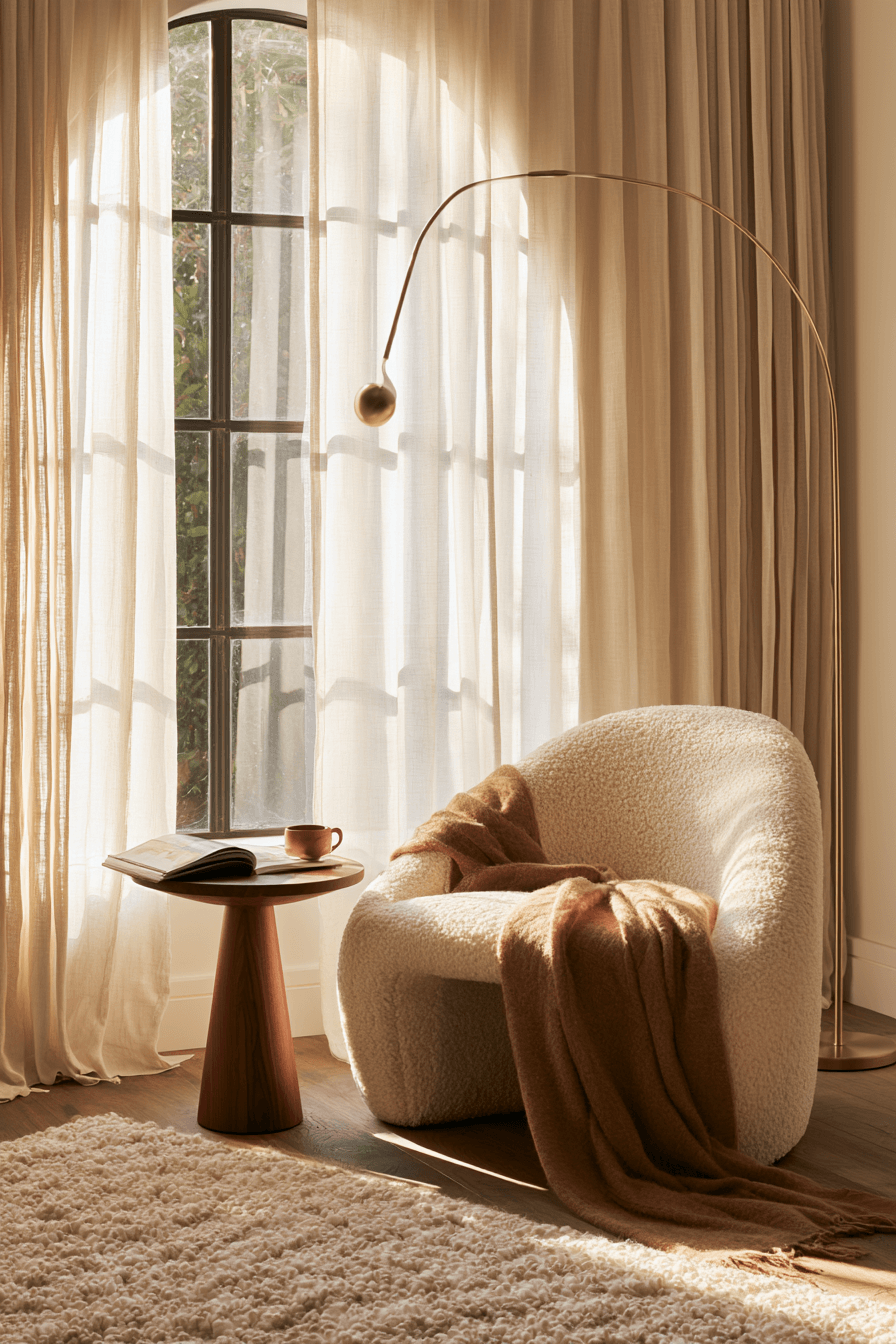
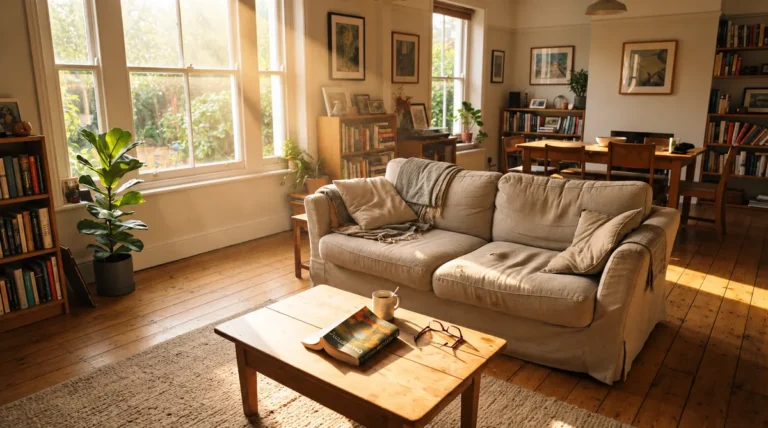
Every home benefits from one corner that asks for nothing. This reading nook does exactly that, tucked just out of the main flow of the room where light settles quietly in the afternoon. It offers a small lesson in reading nook design ideas for anyone seeking stillness at home.
A single curved bouclé chair, a soft throw and good light are enough to make the space feel complete. The rounded shape of the chair gives the corner a sculptural presence without adding any clutter. Nothing more is needed, because the corner was never meant to impress anyone. It was meant to be used, quietly and often.
A reading nook is the simplest place to try the Scanditalia mix at home. Choose a sculptural, rounded chair in bouclé for the Italian curve, and set it beside a slim oak side table for Scandinavian restraint. Add a small floor lamp with a warm bulb so the corner keeps glowing after the daylight fades.
Imperfect Decor Accents with Authentic Soul
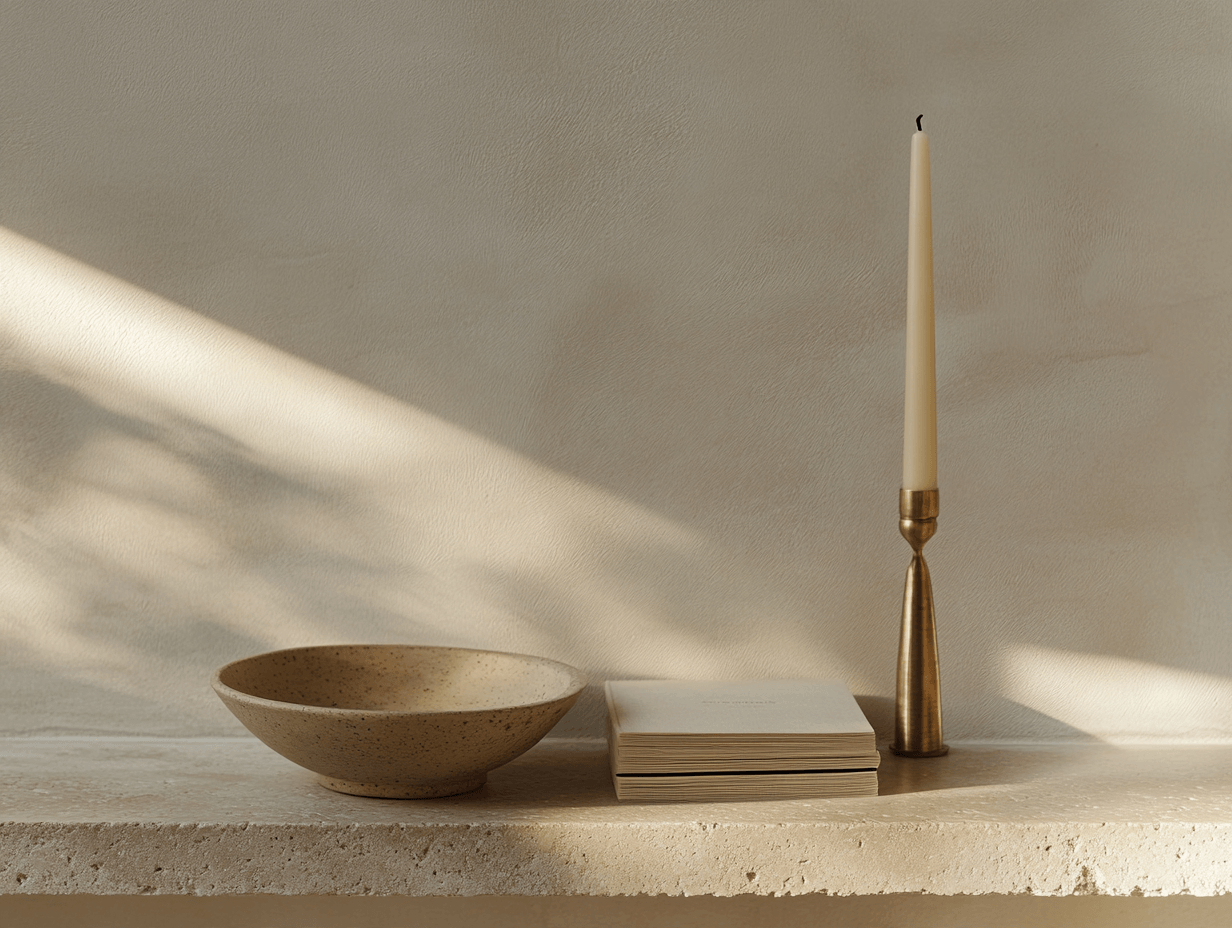
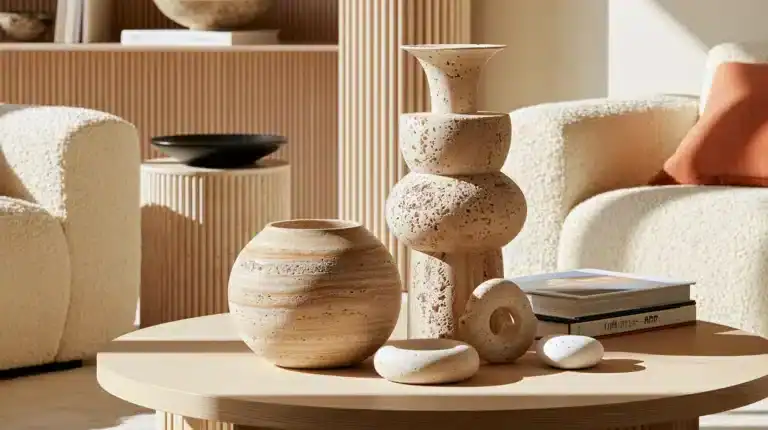
A slightly uneven ceramic bowl sits on a travertine ledge, catching the last light of the afternoon. A candle burned down unevenly rests beside it, never replaced simply for the sake of symmetry. These small, unplanned details reflect the quiet confidence of imperfect interior design details done well.
Perfection was never the goal in this home, and it never needed to be. Handmade ceramics in the spirit of wabi-sabi, the Japanese appreciation of imperfection, show where warmth really comes from. Each piece is allowed to sit slightly off-balance, which keeps the arrangement relaxed rather than styled.
In a Scanditalia home, choose ceramics in oatmeal, clay and soft white, and let the travertine ledge hold only three or four pieces at a time. Pair a handmade bowl with a pale oak tray so the Scandinavian wood and Italian stone each have a role. Leave generous empty space between objects, since the gaps are what keep the display calm.
What Is Scanditalia? Frequently Asked Questions
What is the difference between Scanditalia and Japandi?
Japandi blends Japanese wabi-sabi restraint with Scandinavian simplicity, so it leans toward low furniture, quiet woods and a very restrained palette. Scanditalia pairs the same Scandinavian functionality with Italian warmth, which brings in travertine, marble, curved furniture and a little more richness. Both styles value natural materials and calm rooms, but Scanditalia feels softer and more sculptural. If Japandi feels austere to you, Scanditalia is often the warmer alternative.
What are the key materials of Scanditalia style?
The core materials are light oak or walnut, honed travertine, Calacatta or other marble, linen, wool and bouclé. Wood supplies the Scandinavian warmth, while stone adds the Italian weight and depth. Soft textiles keep the stone from feeling cold. A touch of brass or a few handmade ceramics finishes the look.
What makes Scanditalia feel warm instead of cold?
Warmth comes from texture and material choices rather than color. Natural wood, honed stone, linen and wool soften a neutral palette, keeping the space inviting rather than clinical. Soft daylight and a few worn, handmade pieces complete the effect.
How do I bring Scanditalia into a small apartment?
Focus on fewer, well-chosen pieces rather than filling every surface. Light, natural materials and breathing room matter more than square footage. A single comfortable chair and good lighting can make even a small corner feel complete.
Is minimalism the same as having an empty home?
No, minimalism is about intention, not absence. A well-edited home can feel full of character while still appearing calm and uncluttered. Every object that stays should earn its place through use or meaning.
Why do imperfect details matter in a styled home?
Imperfections signal that a home is lived in, not staged. They add honesty and personality that polished, flawless interiors often lack. A handmade bowl or a half-burned candle can say more about a household than a perfectly matched set.