Interior Design Secrets That Make a Home Feel Expensive
The Power of Natural Materials
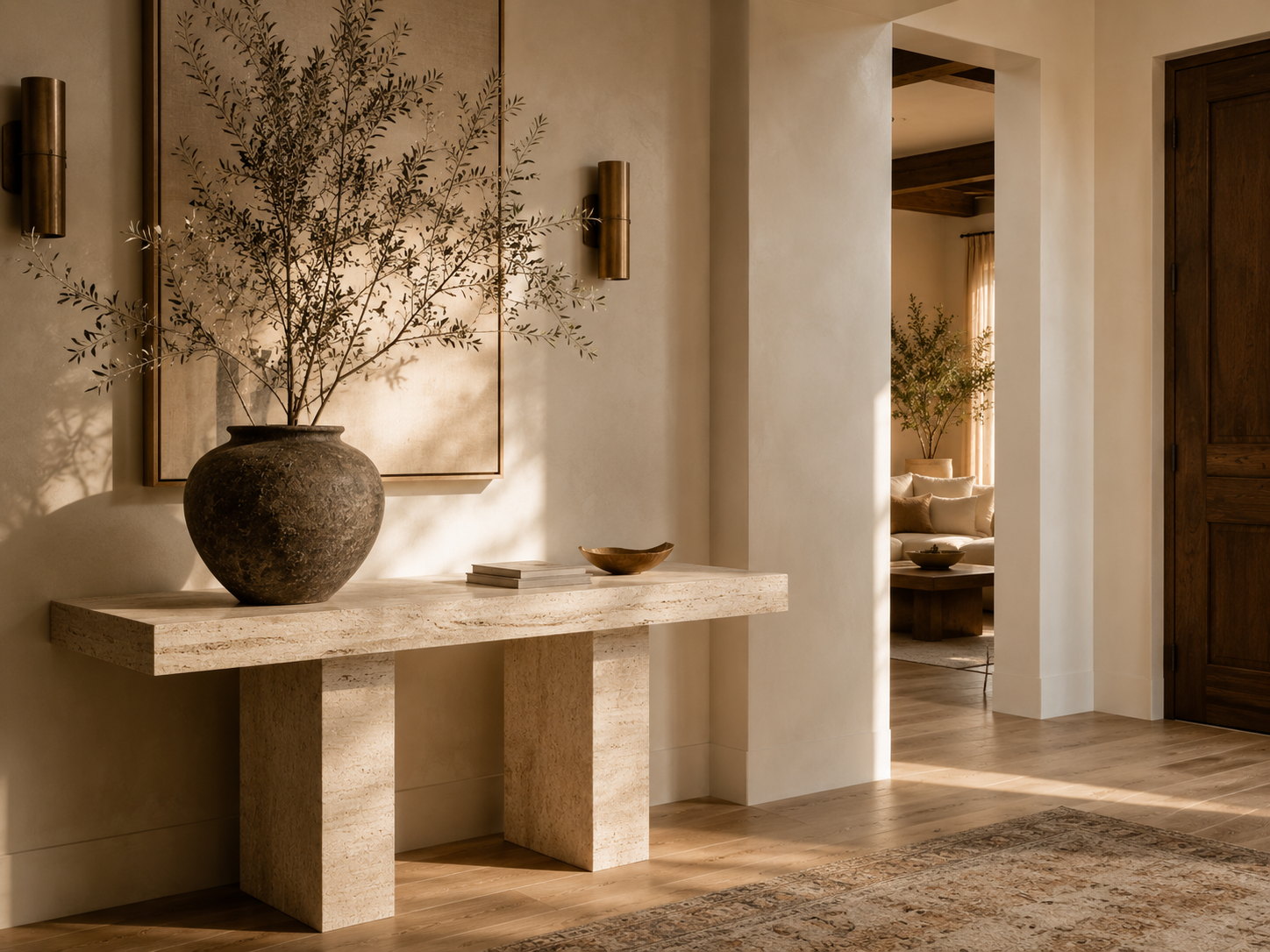
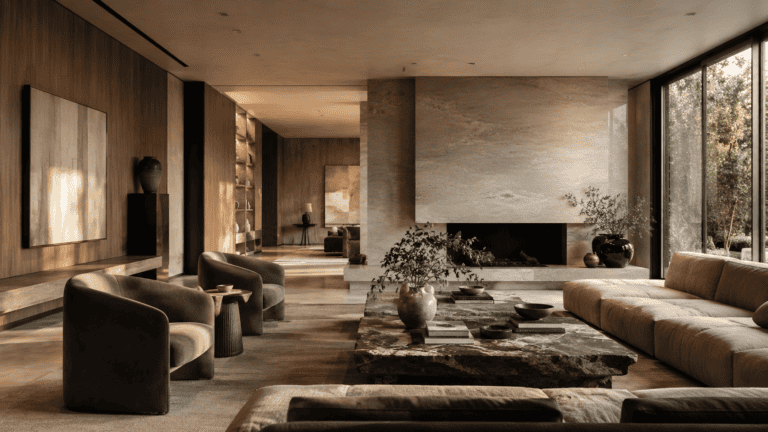
Stone does not try to impress. Neither does oak, linen, or a hand-plastered wall. Natural materials in interior design carry an honesty that synthetic alternatives can imitate but never truly replicate.
Travertine floors catch midday light differently than they did at dawn. Raw timber beams carry the imperfections of the forest they came from. What matters is not quantity but placement — a single slab of marble used with discipline carries more authority than a room overwhelmed with competing finishes.
Architectural Details Make the Difference
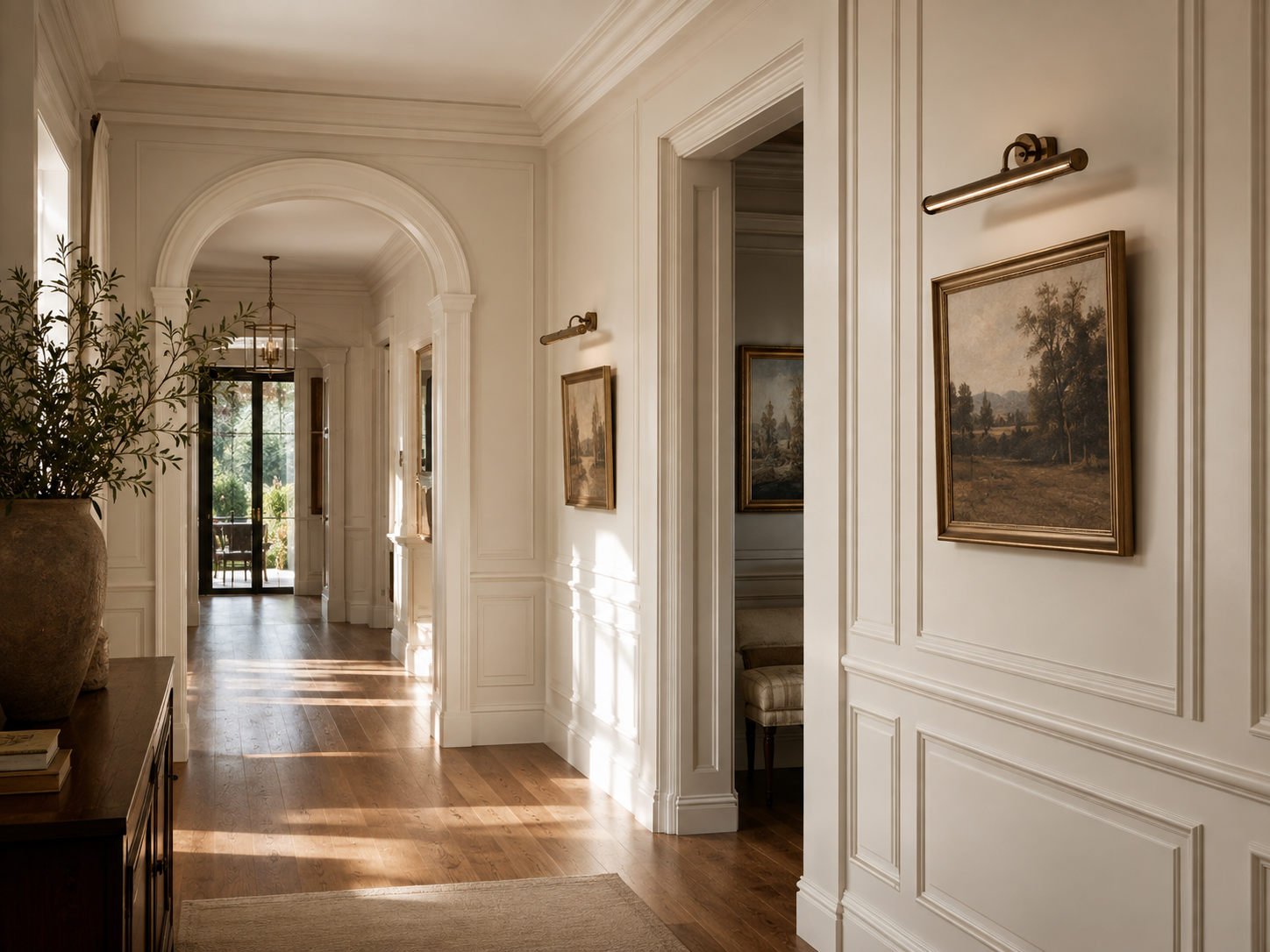
Furniture can be purchased anywhere. Architecture cannot — it must be considered, planned, and built into the bones of a home. This is precisely why architectural detailing remains the most reliable indicator of genuine luxury.
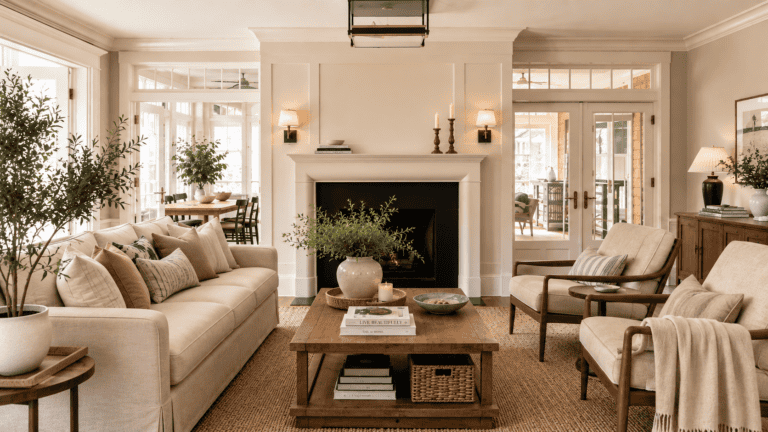
A corridor without cornicing reads as functional. The same corridor with restrained classical molding reads as intentional. Wall paneling is perhaps the single most transformative architectural investment available — where the floor meets the wall, where the wall meets the ceiling — these junctions, handled with care, separate a considered interior from a standard one.
Create a Sense of Space
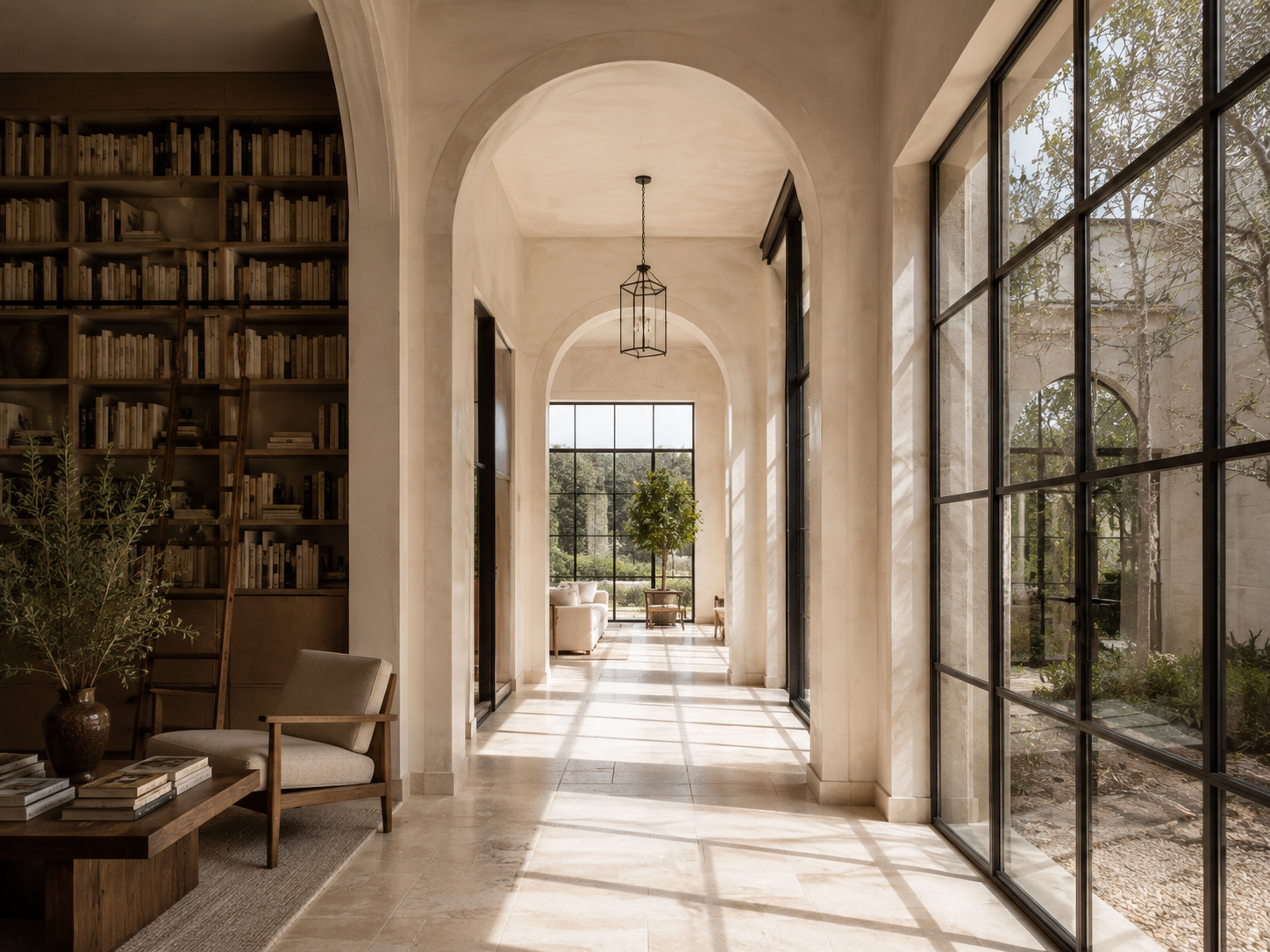
Space is perhaps the oldest luxury of all. The grandest homes were defined not by ornamentation but by the way air moved through them. The instinct to fill is the primary enemy of this quality.
Negative space in interior design is not emptiness — it is the breath that allows everything else to be seen properly. Natural light cannot be manufactured. Keep windows unobstructed. Expensive interiors are composed with sightlines in mind — a view through a doorway that reveals something beautiful.
Style With Less, But Better
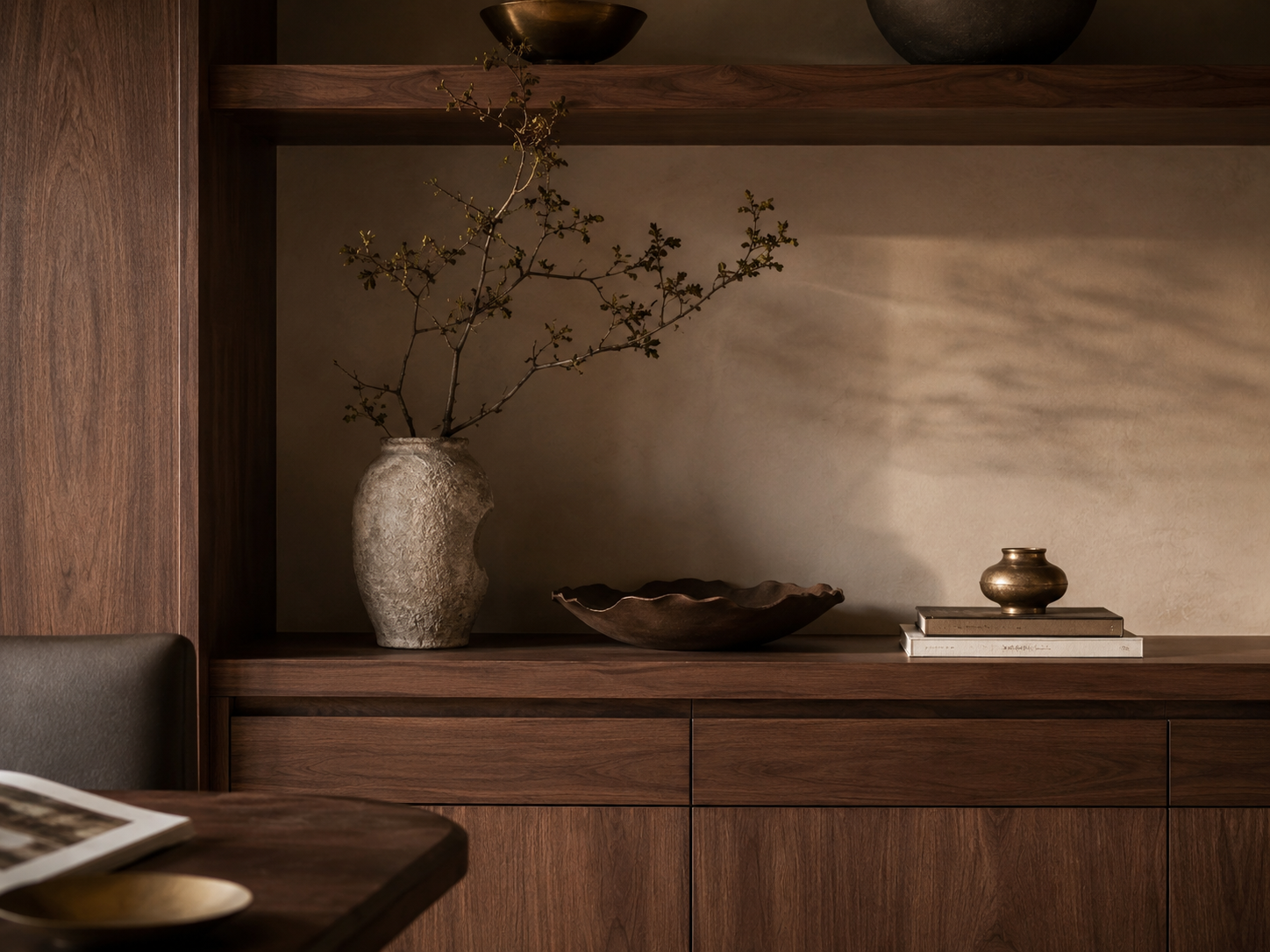
The most common mistake in interior decoration is not poor taste — it is abundance. A sideboard carrying three objects communicates intention. The same sideboard with eight suggests accumulation.
Curating a home with restraint means quality is always more visible than quantity when displayed with discipline. A single ceramic vessel on an empty surface reads as a considered artistic statement.
- Audit every styled surface — remove anything that does not contribute meaningfully
- Invest the saved budget in fewer, significantly better individual pieces
- Allow objects breathing room — proximity diminishes individuality
- Treat empty space as an active design element rather than a problem to solve
Let Lighting Set the Mood
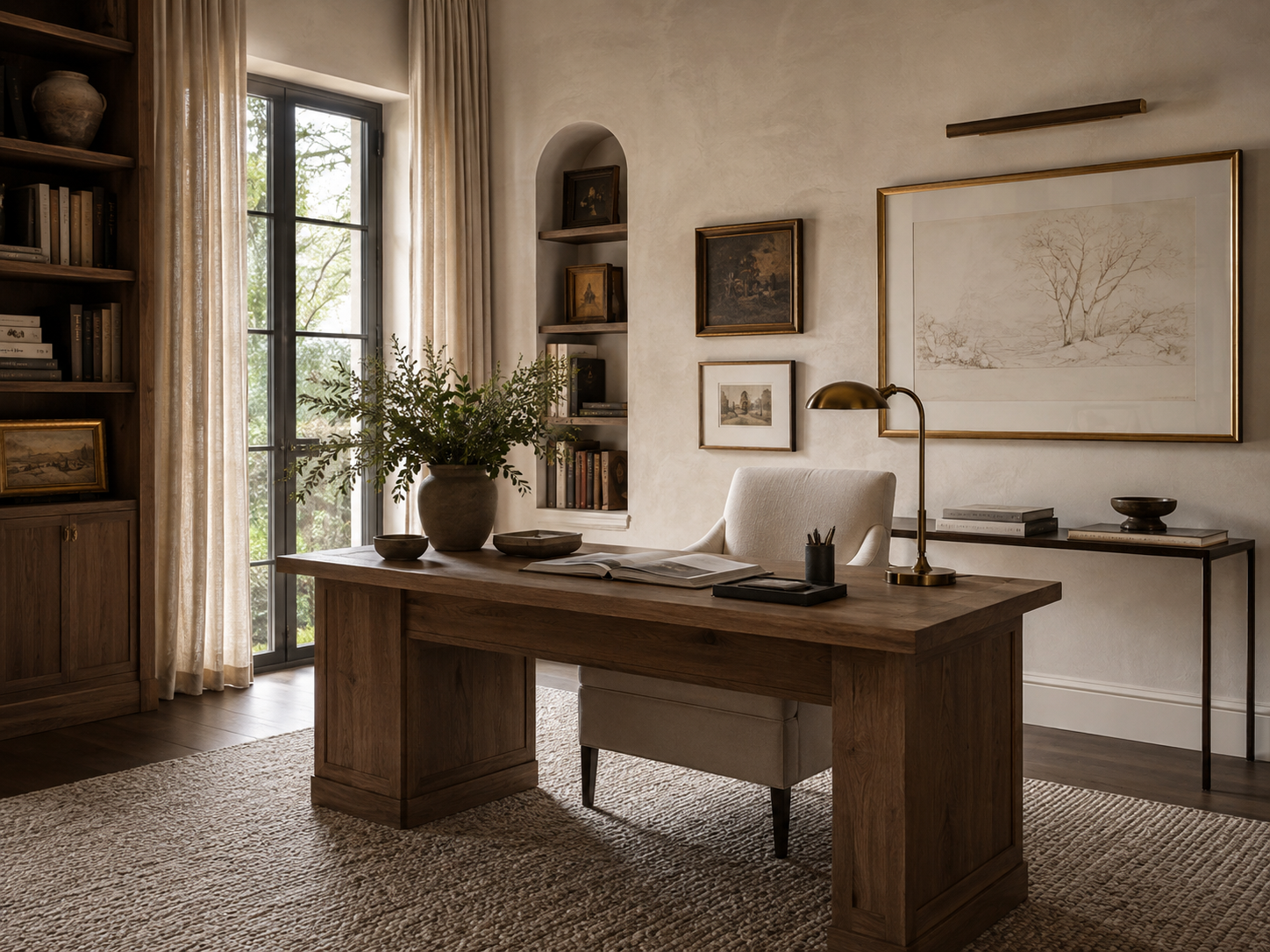
Walk into any hotel suite that commands genuine reverence and you will notice, before anything else, the light. It will be warm, layered, and impossibly flattering to the space. This is never accidental.
Layered lighting design is the most underinvested element in homes that aspire to luxury. Warm white light in the range of 2700K to 3000K is universally flattering — to materials, to faces, to the sense of welcome a room communicates. Install dimmer switches wherever possible.
Finish With Bespoke Details
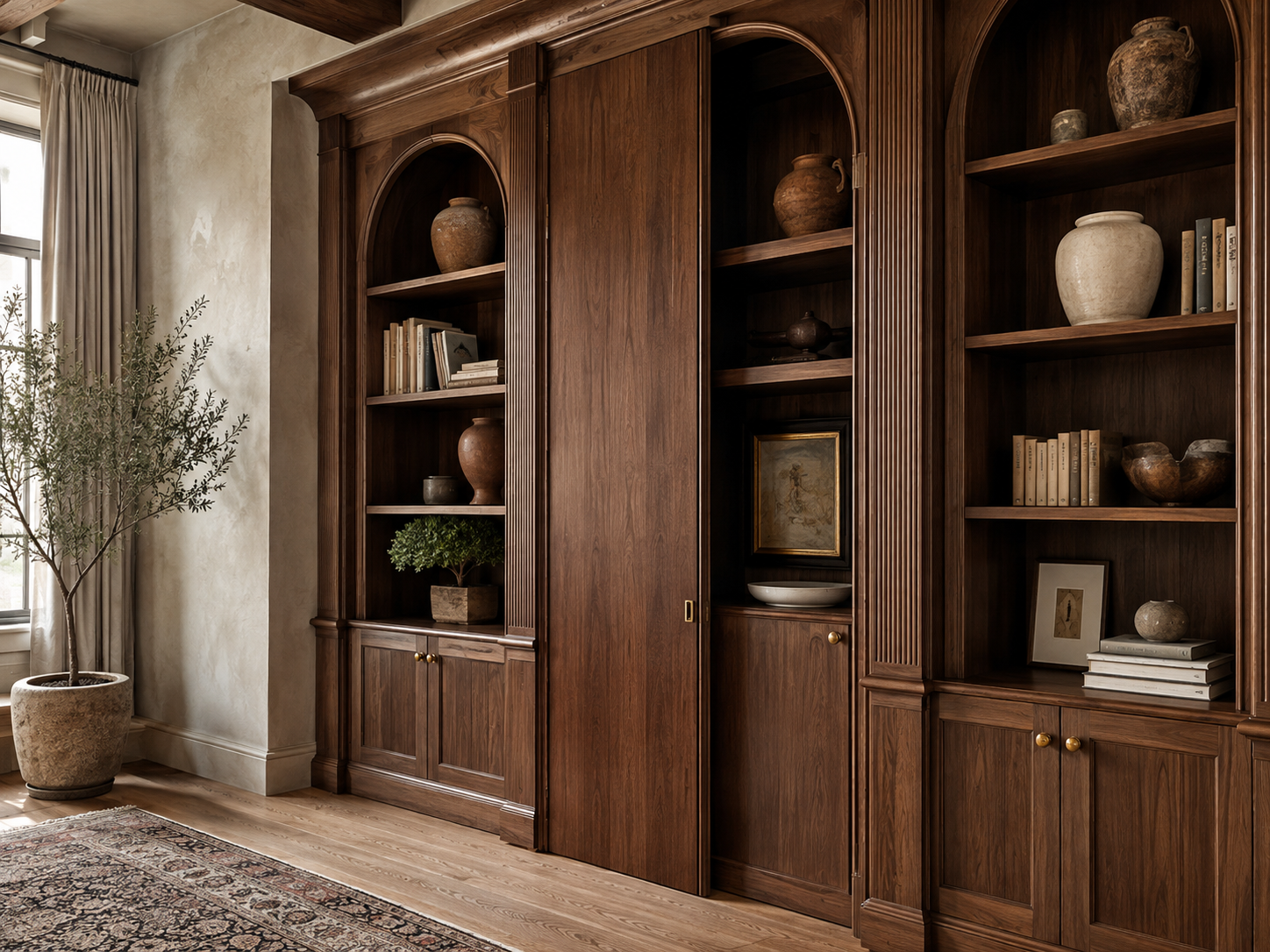
There is a moment in the experience of a truly exceptional home when the visitor realizes that nothing in the room could have been found in a catalogue. The cabinetry fits its wall with an exactness that suggests it was designed specifically for that space.
This is the defining quality of bespoke interior design — not extravagance, but specificity. Upgrading hardware from standard to considered is among the most cost-effective refinements available. Solid brass or blackened steel in simple, well-proportioned profiles will transform the experience of moving through a space.
Frequently Asked Questions
Not necessarily. The principles that create genuine luxury — restraint, considered proportion, and quality over quantity — are largely philosophical rather than financial. Strategic investment in architectural details and bespoke joinery will have the most lasting impact, but the foundation is always discipline in editing, selection, and restraint.
Lighting. Without question. A modestly furnished room lit with warmth and multiple layers will outperform a beautifully furnished room under a single overhead light source. Install dimmer switches, add floor and table lamps, and switch to warm white bulbs at 2700K to 3000K. The transformation is immediate.
Begin with the floor or a single dominant surface. Limit material families within a room to two or three. Allow each material sufficient area that it reads as a decision rather than an accent. Avoid combining too many organic textures simultaneously — stone and linen work beautifully together, but adding rattan and exposed brick begins to feel visually exhausting.
Remove before you add. Small rooms are consistently over-furnished. Choose fewer, larger pieces — a single generous sofa over two small chairs, one substantial artwork over a gallery wall of smaller frames. Keep the palette restrained, ensure windows are unobstructed, and allow lighting to come from multiple points at mid-height rather than solely from the ceiling.